 Leak Detection California
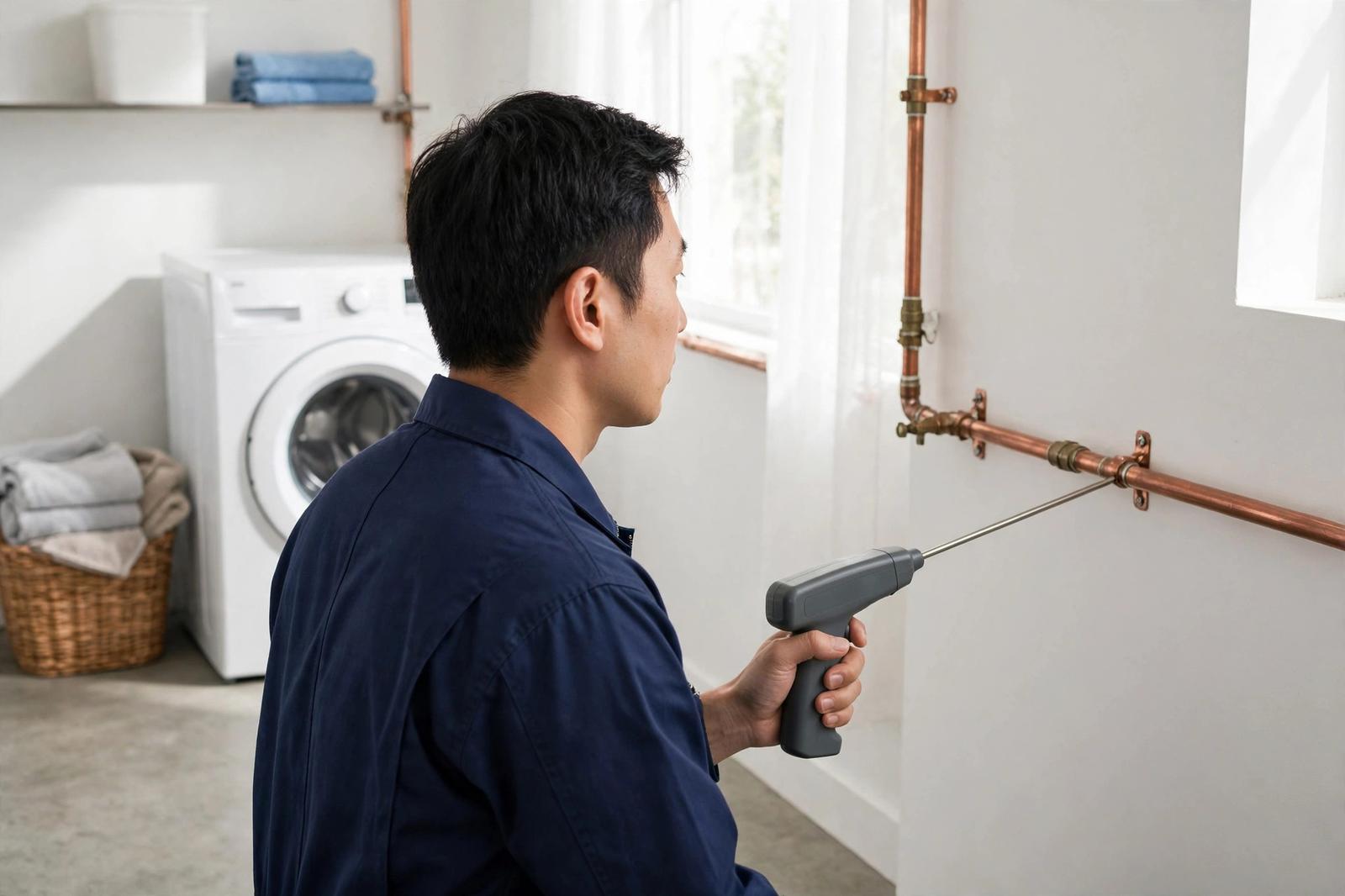
A laundry room leak often starts behind a washing machine, inside a wall cavity, or at a drain that only shows trouble during a wash cycle, and the first sign may be a musty smell, a soft patch of flooring near the machine, or a water bill that rises without a change in household routine. Laundry rooms combine pressurised supply hoses, a pump driven drain, and a large volume of water per cycle, so a small hose weakness or a partly blocked drain can release a surprising amount of water before anyone walks in and notices. The room is also easy to ignore, since many laundry rooms sit in a garage, a hallway nook, or a second floor closet, and a leak there may damage a ceiling below or a wall cavity long before it reaches a living space. This guide explains where laundry leaks hide, how to tell a supply hose problem from a drain problem, which checks are safe to do yourself, and when a meter test or a detection visit is the right next step. If water is flowing freely, a ceiling below sags, or the floor feels soft underfoot, call Leak Detection California at (833) 382-2711 and describe the machine, the cycle stage, and what you can see.
Washing Machine Hoses: The Most Common Source
Start with the two supply hoses at the back of the machine, and look at the full length of each hose, the fittings at the wall valves, and the fittings at the machine inlet. Look for bulging, cracking, corrosion on a metal fitting, a hose that feels stiff or brittle, and any mineral crust where a fitting meets a valve, because a crust often marks a joint that has wept for a long time. Run a cycle and watch the connections while the machine fills, since a hose leak may only appear under fill pressure and then stop once the tub is full. Also check the floor behind and beside the machine, and the wall behind it, because a drip at a valve can run down the wall and pool under the machine, where it stays hidden until the machine is moved. Keep a note of whether dampness appears during filling, during washing, or only during draining, because that timing points to a different part of the system each time.
Hoses age faster in warm rooms, in garages that heat up in summer, and in homes where the valves stay open all year, so a hose that looks fine at a glance can still be near the end of its useful life. Close the wall valves when the machine is not in use if that is practical for your household, and check the hoses whenever you change a load, even briefly, so a new bulge or damp fitting is caught early. If a hose bursts, close both wall valves at once, switch the machine off, and mop up what you can, because a burst hose under full pressure can flood a room quickly. A burst hose is also a reason to check the rooms below and beside the laundry, since water follows joists and wall plates and may appear some distance from the machine. The hidden leak signs guide explains how water travels inside walls and floors, and the emergency leak detection service covers what happens on an urgent visit.
Drain Problems: Overflows, Backups and Slow Leaks
A laundry drain problem usually shows itself during the drain or spin stage, when the pump pushes a large volume of water out in a short time. Watch the standpipe during a cycle, and look for water that rises near the top of the pipe, splashes onto the floor, or drains slowly and gurgles after the machine stops. Check the drain hose itself, including the point where it enters the standpipe and any clamp or tie that holds it in place, because a hose that slips out or sits too low in the pipe can spill water onto the floor with every load. Also check the floor drain, if the room has one, and look for a drain that stays damp, smells stale, or backs up when the machine discharges, since that pattern can point to a partial blockage further along the drain run.
A drain leak differs from a supply leak in an important way: it usually only appears while the machine runs, and a meter test with everything off will often show no movement, because the drain only carries water during a cycle. That is why timing notes matter so much in a laundry room. Record the cycle stage, the load size, and whether the problem appears on every load or only on large loads, because a problem that only appears on large loads often points to drain capacity or a partial blockage, while a problem on every load points closer to the hose or the standpipe connection. If water backs up repeatedly, stop using the machine until the drain is checked, since repeated overflows soak the subfloor and the wall base and invite mould growth in a cavity that rarely dries on its own. The bathroom leak article follows the same timing logic for toilets and showers, and the guide to how detection works explains which tests suit a drain side problem.
Second Floor Laundry Rooms and Ceilings Below
A second floor laundry room deserves extra care, because a leak there threatens the ceiling and walls of the room below, and the first visible sign may be a stain on a ceiling far from the machine itself. Check the ceiling below the laundry room regularly, and look for a stain that grows after wash days, bubbling paint, a sagging patch, or trim that pulls away from a wall. Also check the walls beside and below the laundry closet, and look for a musty smell in a closet or cupboard that shares a wall with the machine, since a slow drip inside a wall cavity often shows up as smell before it shows up as stain. If the laundry sits over a garage, check the garage ceiling too, because an unfinished garage ceiling often reveals a drip earlier than a finished room below.
A drain pan under the machine, where one is fitted, is worth checking as part of the same routine. Look for water sitting in the pan, a pan drain that looks blocked, and a pan that has rusted or cracked, since a failed pan offers no protection when a hose or a fitting finally gives way. Keep the area around the machine clear enough to see the floor, and avoid stacking storage hard against the back of the machine, because stored items hide the first damp patch and soak up water that would otherwise be visible. A ceiling and wall leak article explains how to read stains that appear below a wet room, and the ceiling and wall detection service covers what a visit tests when the source sits one floor up.
Flooring, Walls and Smell: Reading the Room
Laundry room flooring tells a story if you read it carefully. Look for boards that lift or curl near the machine, tiles with grout that darkens in one area, vinyl that bubbles, and a floor that feels soft or springy underfoot in one spot. Check the baseboards and the lower wall behind the machine, and look for paint that bubbles, a baseboard that swells, or a dark line where the wall meets the floor. A musty smell that returns after cleaning, especially near the machine or in a neighbouring closet, often points to damp inside a wall cavity or under flooring, even when no puddle is visible. That smell is worth taking seriously, because a cavity that stays damp can damage framing and finishes long before a stain breaks through paint.
- Inspect both supply hoses and their fittings each month, and look for bulging, cracking, stiffness, corrosion, or mineral crust.
- Watch the standpipe during a full cycle, and note whether trouble appears during filling, washing, or draining.
- Check the ceiling and walls below a second floor laundry after wash days, and look for stains, bubbling paint, or sagging.
- Keep the floor behind the machine visible, and move the machine periodically to check the floor and wall behind it.
- Record cycle stage, load size, and meter results, because those notes narrow the source before any testing starts.
| What you notice | Likely source | What to do next |
|---|---|---|
| Dampness during filling only | Supply hose or wall valve | Close the valves, inspect hoses, arrange a supply check |
| Water during drain or spin | Drain hose, standpipe, or partial blockage | Stop use if it repeats, check hose seating, arrange a drain check |
| Stain on a ceiling below | Leak from the laundry above | Note wash day timing, check the machine area, call promptly |
| Musty smell, no visible puddle | Damp wall cavity or subfloor | Run a meter test, check nearby rooms, arrange detection |
The meter test helps separate a supply leak from a drain leak in this room. Turn off every tap, appliance, and irrigation zone, note the reading, wait, and read it again. If the reading moves, water is leaving the supply system somewhere, and a laundry hose or valve is a strong candidate if the dampness sits near the machine. If the reading does not move, a drain problem becomes more likely, since drains only carry water during use. Either way, the timing notes you kept, filling versus draining, and the rooms that show stains, give a technician a clear starting point. The water meter check article walks through the test step by step, and the Sacramento leak detection page shows how a local visit is arranged.
When to Call for Laundry Room Leak Detection
Call for detection when dampness keeps returning after drying, when a hose looks bulged or corroded, when a drain backs up more than once, when a ceiling below stains after wash days, or when a musty smell persists near the machine or in a neighbouring closet. Also call promptly if the floor feels soft, if a baseboard swells, or if a meter test shows movement with everything off. Before the visit, note the cycle stage where trouble appears, the load sizes involved, and the rooms that show stains or smell, and close the wall valves if a hose is suspect and you can reach them safely. Keep the machine area clear so the hoses, valves, and drain are visible on arrival.
If laundry dampness keeps coming back, a drain backs up repeatedly, or a ceiling below stains after wash days, call Leak Detection California at (833) 382-2711. We will talk through your hose, drain, and meter checks, review the timing pattern, and arrange a detection visit to pinpoint the leak before it damages flooring, walls, or the room below.
Frequently Asked Questions
What is the most common laundry room leak source?
The washing machine supply hoses and their fittings. Look for bulging, cracking, stiffness, corrosion, or mineral crust, and watch the connections while the machine fills, since some hose leaks only appear under fill pressure.How do I tell a drain problem from a hose problem?
Note the cycle stage. Trouble during filling points to a hose or valve, while trouble during drain or spin points to the drain hose, standpipe, or a partial blockage. A meter test with everything off usually shows no movement for a drain problem.Why does a second floor laundry leak stain a ceiling below?
Water follows joists and wall plates, so the first visible sign may be a stain on a ceiling far from the machine. Check the ceiling below after wash days for stains, bubbling paint, or sagging.When should I call for laundry leak detection?
Call when dampness returns after drying, when a drain backs up more than once, when a ceiling below stains after wash days, or when a meter test shows movement. Call Leak Detection California at (833) 382-2711.More From the Blog

Water Leak Emergency: What to Do in the First 60 Minutes
Shut off the main valve, make the area safe, protect your belongings, and document damage. A clear first-hour plan for a California water leak emergency.
Read article →
Your Water Bill Spiked: Is It a Leak or Just Higher Rates?
A higher total does not always mean a leak. Compare usage with last year, do a simple meter check, and learn which culprits waste water silently and which are just rates.
Read article →
Why Slab Leaks Are So Common in Southern California
Clay soils, hard water, aging copper, and slab construction combine across Southern California. Here is why slab leaks cluster there and how they are found.
Read article →