 Leak Detection California
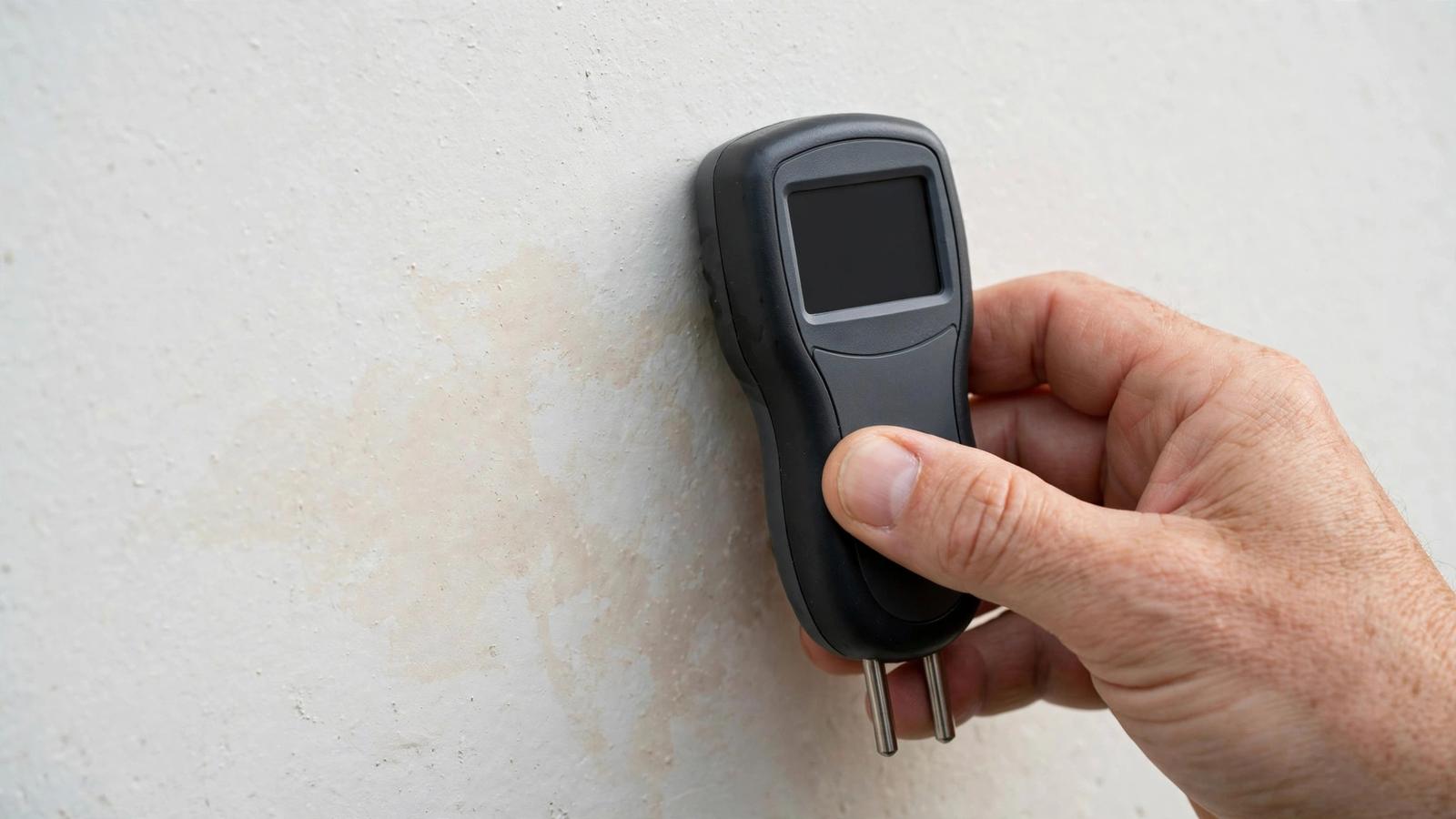
Ceiling and wall leak detection is the art of finding water hiding inside your home's structure. A brown stain blooming on the ceiling or paint bubbling off a wall is never where the story starts; it is where the story surfaces. The actual leak might be a pinhole in a copper supply line three studs over, a shower valve weeping inside the wall cavity, or a drain joint that only leaks when the upstairs tub drains.
Our technicians locate these concealed leaks with acoustic listening devices that hear pressurized water through drywall, thermal imaging cameras that see the cool signature of trapped moisture, and pinless moisture meters that map how far the dampness has spread. An endoscopic camera slipped through a tiny opening confirms the source visually before any drywall comes down. The result: a precise mark on the wall instead of exploratory demolition. Call (833) 382-2711 if your walls or ceilings are telling you something is wrong.
Common Sources of Leaks Inside Walls and Ceilings
Water inside a wall cavity almost always comes from one of a handful of sources. Knowing the lineup speeds up the search:
| Source | Typical location | How it behaves |
|---|---|---|
| Pressurized supply line | Walls feeding bathrooms and kitchens | Leaks constantly; often audible with listening equipment |
| Drain or waste line | Walls and ceilings below bathrooms | Leaks only when fixtures drain; intermittent staining |
| Shower or tub valve | Wet wall behind the shower controls | Worsens with shower use; grout and caulk look fine |
| Roof or flashing failure | Top-floor ceilings near exterior walls | Appears with rain; may travel along framing first |
| Condensation on cold lines | Walls with uninsulated cold-water pipe | Chronic dampness, worse in humid weather |
The behavior is the fingerprint. A stain that grows only after rain points up at the roof; one that never dries points at a pressurized line; one that pulses with shower use points at the valve or drain. We confirm the hypothesis with instruments rather than assumptions.
How We Pinpoint Leaks Without Tearing Out Drywall
Exploratory demolition is the expensive way to find a leak. Our non-invasive sequence finds it first:
- Moisture mapping. We scan the stained area and surrounding surfaces with pinless moisture meters, drawing a map of the damp zone. The wettest point is rarely the leak, but the shape of the zone points toward it.
- Thermal imaging. An infrared camera shows cooler, damp framing and insulation behind the drywall surface, revealing the water's path through the cavity.
- Acoustic listening. For pressurized supply leaks, sensitive microphones pressed to the wall hear the hiss of escaping water, and signal strength peaks directly over the failure.
- Endoscopic confirmation. Through a small, easily patched opening, a flexible camera shows us the actual pipe, fitting, or valve inside the cavity.
- Precise marking. The leak point is marked on the wall surface so the repair opening is inches, not feet.
This matters because every unnecessary square foot of opened drywall is texture matching, paint blending, and money. Precision at the detection stage is what keeps the repair bill small.
Reading the Clues: What Stains and Textures Tell Us
Before instruments come out, experienced eyes read the visible evidence:
- Brown or yellow rings with darker edges usually mean repeated wetting and drying from an intermittent source like a drain or roof leak.
- Bubbling or peeling paint signals moisture pushing outward from inside the wall, often a slow supply-line weep.
- Soft, spongy drywall that dents under finger pressure means the gypsum core is saturated and the leak is active or recent.
- A musty smell with no visible stain can mean water trapped behind an intact vapor barrier or inside insulation, invisible until opened.
- Stains that grow downward in a V shape typically trace water running down a stud or pipe from a source above.
These clues guide where we aim the instruments, but instruments deliver the verdict. A stain's appearance suggests; a moisture meter and a listening device confirm.
When the Stain Isn't a Plumbing Leak
Not every wall or ceiling stain comes from a pipe. Before declaring a plumbing failure, we rule out the lookalikes: roof leaks that enter far from the stain and travel along framing; condensation forming on uninsulated cold-water lines or from poorly vented bathroom exhausts; and HVAC condensate overflow from an air-handler pan above the ceiling. Each leaves a different signature. Roof-driven stains grow after rain and often sit near exterior walls. Condensation produces broad, shallow dampness with no distinct wettest point. A failed condensate drain leaves mineral-crusted staining directly below the air handler. Our moisture mapping and thermal imaging distinguish these in a single visit, which matters because calling a plumber for a roofing problem, or a roofer for a plumbing problem, wastes everyone's time. Accurate source identification is the entire point of detection: fix the right trade, once.
Get a Precise Diagnosis Before Any Repair
Too many wall and ceiling repairs start with a contractor cutting a big exploratory hole and hoping. Start with detection instead: a licensed and insured specialist, non-invasive instruments, same-day appointments available, and a marked, photographed location you can hand to any repair contractor with confidence.
- Acoustic, thermal, and moisture-mapping equipment on every visit
- Endoscopic visual confirmation inside the cavity
- Minimal-opening marking that keeps repair costs down
- Clear findings distinguishing supply, drain, roof, and condensation sources
Stop guessing behind the drywall. Call (833) 382-2711 now for precise ceiling and wall leak detection anywhere in California.
Reading a Ceiling Stain Like a Map
A ceiling stain is a record of everywhere the water has been, not just where it entered. The darkest ring marks the oldest pooling edge. A stain that grows a fresh ring after every shower points at the bathroom above, while one that spreads slowly all week suggests a pressurized line that never rests.
Technicians read these patterns before touching any equipment, because the stain usually rules out half the possible sources on sight. What the stain cannot do is give an exact point: water spreads along joists and drywall seams, so the entry point can sit well away from the visible damage. That final pinpointing is what the acoustic and moisture survey is for, and it is what keeps the eventual opening small.
Ceiling & Wall Leak Detection Across California
We provide this service in every corner of California, a few of the 988 cities we serve.

Related Services
Pair this service with related detection, or see all 15 services.

Outdoor Water Line Leak Detection
Outdoor water line leak detection covers the potable water lines that distribute water around your yard after…
Learn more →
Pool & Spa Leak Detection
Pool and spa leak detection is the diagnosis of water loss from swimming pools, spas, and their equipment: dis…
Learn more →Frequently Asked Questions
Will you have to cut into my drywall to find the leak?
Detection itself requires no demolition. We locate the leak with listening devices, thermal cameras, and moisture meters working from the surface. Only the repair needs an opening, and we mark it precisely so it stays small. A tiny camera port, easily patched, is sometimes used for visual confirmation.
How accurate is acoustic leak detection through a wall?
Very accurate for pressurized supply leaks, which produce a distinct hiss. By comparing signal strength across a grid of listening points, we can typically narrow the source to within inches. Drain leaks are quieter and rely more on moisture mapping and camera inspection.
My ceiling stain is dry now. Is the leak gone?
Not necessarily. Intermittent sources like drains and roof leaks dry between events, and even supply leaks can slow as corrosion temporarily seals a pinhole. Moisture meters can detect residual dampness in framing long after the surface looks dry, which is why it is worth checking anyway.
Could the stain be mold? Should I be worried?
Chronic wall-cavity moisture grows mold on drywall paper and wood framing, often before any stain appears. If there is a musty odor, assume microbial growth is possible until proven otherwise. Finding and fixing the moisture source comes first; remediation is a separate step.
How much does wall or ceiling leak detection cost?
It depends on the size of the affected area and how many potential sources must be ruled out. Call (833) 382-2711 and describe the stain and its location for an upfront quote.