 Leak Detection California
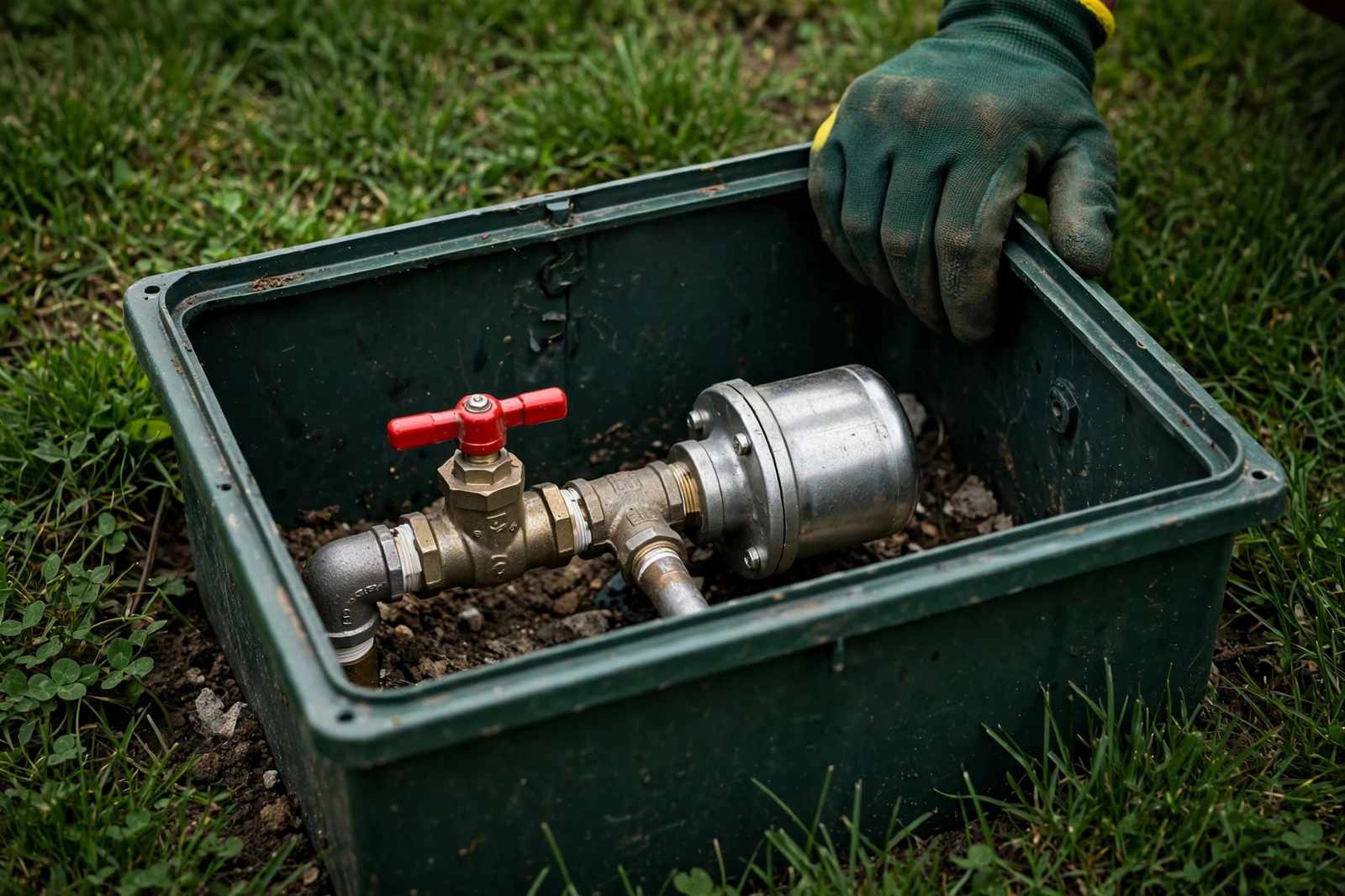
Yard meter box leak detection is meter-side diagnostics: the focused investigation of everything happening in and around the concrete or plastic box at your property line that houses the water meter. This small box is the boundary between the utility's world and yours, and it is where many leak mysteries get solved. A box full of water, a dial that will not sit still, or a hissing sound from underground near the meter each point to specific failures, and reading them correctly determines whether you, the utility, or nobody needs to act.
We open, pump out, inspect, and test meter boxes properly: reading the meter and leak-indicator dial, checking the curb stop and customer shutoff valves, and running the isolation test that proves whether the leak is on the house side or the street side of the meter. If your meter box is wet, noisy, or suspicious, call (833) 382-2711 and we will diagnose it at the source.
What the Meter Box Can Tell You
Every condition inside that box is evidence. Here is how to read it:
| What you find | What it usually means | Who typically acts |
|---|---|---|
| Box full of clear water, meter dry on top | Groundwater or irrigation infiltration, not necessarily a leak | Often nobody; monitor |
| Box full of water with active flow or hissing | Pressurized leak at the meter, curb stop, or nearby joint | Depends on which side of the meter |
| Leak-indicator dial spinning with house shut off | Leak between meter and house shutoff (service line) | Homeowner, usually |
| Dial still with house shut off, spinning with house open | Leak inside the house plumbing | Homeowner |
| Wet soil only on the street side of the box | Utility-side lateral leak | Water utility |
The single most useful test is the house-shutoff isolation: close the customer valve, watch the dial. Still means the service line is tight and the problem is indoors; moving means the service line itself is leaking. Five minutes, definitive answer.
Our Meter-Box Diagnostic Process
We treat the meter box as a crime scene: observe first, disturb second.
- Safe opening and pump-out. We open the box carefully, pump or bail standing water, and photograph the undisturbed condition first. Box lids are heavy and boxes harbor spiders and sharp edges, so this is not a bare-hands job.
- Meter and dial reading. We read the register, check the leak indicator, and note the meter's condition: fogged lens, damaged register, or corrosion all get documented.
- Valve check. We exercise the curb stop and customer shutoff gently, checking for weeping valve packing and frozen valves. A valve that will not turn is itself a finding you need to know about before an emergency.
- Isolation test. House shutoff closed, we watch the dial for several minutes. Then street-side versus house-side listening with acoustic equipment pinpoints which segment is noisy.
- Source determination. We identify whether the water in the box is a pressurized leak, groundwater infiltration, or irrigation runoff, and on whose side of the demarcation it falls.
You get a clear verdict: what is leaking, where, and whose responsibility it is, with documentation you can take to the utility if the problem is on their side.
House Side vs. Street Side: Why It Matters
The meter is the legal boundary in most districts, and the distinction decides who pays:
- Street side (utility): the lateral from the main to the meter. Leaks here are the water district's responsibility. Our documentation, meter-test proof and acoustic evidence, is what gets their crew dispatched instead of dismissed.
- Meter itself: a leaking meter body or register is utility property. We document it and direct you to their service line.
- House side (yours): from the meter to the house. This is a service line leak, and it becomes a standard detection and repair job on your side of the boundary.
- Neither (infiltration): groundwater or sprinkler runoff filling the box looks alarming but is not a leak at all. We verify with the isolation test rather than letting you pay for a repair you do not need.
Getting this wrong is expensive in both directions: paying for a utility-side repair yourself, or waiting on the utility for a leak that is actually yours while the bill climbs.
Keeping Your Meter Box Accessible
Your meter box needs to be reachable in an emergency, yet boxes get buried under mulch, paved over by landscaping, or packed with soil over the years. Keep the lid visible and clear of plantings, and check annually that the box is not filling with dirt. Never pour concrete or set pavers over the box: utility workers and emergency responders need instant access, and some districts penalize property owners for obstructed meters. If the lid is cracked or missing, replace it, since an open box is a trip hazard and lets debris foul the meter. A two-minute annual check keeps this small piece of infrastructure ready for the day you actually need it.
Get a Definitive Answer at the Meter
Meter-box mysteries resolve fast with the right approach. Our licensed and insured specialists carry pumps, acoustic equipment, and the experience to read every clue in that box correctly. Same-day appointments are available across California, and you will know before we leave whether the problem is yours, the utility's, or no leak at all.
- Full meter-box pump-out, inspection, and testing
- Leak-indicator reading and interpretation
- House-side versus street-side isolation proof
- Utility-ready documentation when the leak is on their side
Wet meter box or spinning dial? Call (833) 382-2711 now for yard meter box leak detection in California.
Why Meter Boxes Fill With Water
A meter box with water in it looks alarming, and sometimes it should. The box sits at the lowest point of the service assembly, so it collects everything: a weeping meter fitting, a cracked union on the house side, groundwater after heavy rain, and overspray from nearby irrigation.
Sorting out which one you have is a process of elimination. The box gets pumped dry, the fittings get inspected, and then everyone waits and watches which direction the water returns from. Water creeping back from the house side tells a different story than water rising from below. The answer decides whether you need a fitting tightened, a section of line replaced, or simply a note that your box drains poorly after storms.
Yard Meter Box Leak Detection Across California
We provide this service in every corner of California, a few of the 988 cities we serve.

Related Services
Pair this service with related detection, or see all 15 services.
Frequently Asked Questions
My meter box is full of water. Is that a leak?
Not necessarily. Boxes fill with groundwater and sprinkler runoff regularly, especially in low spots. The test is whether the water is pressurized and flowing, whether the leak dial moves with the house shut off, and whether you hear hissing. We run all three checks before calling it a leak.
Can I open the meter box myself?
You can, but be careful: lids are heavy, boxes contain spiders and sometimes sharp debris, and forcing a frozen valve can break it. Reading the dial through the lid window or with a quick look is fine; leave valve operation and pump-outs to us.
The dial spins even with my house shutoff closed. What does that mean?
The leak is between the meter and your house shutoff valve: the customer-side service line. That is a pressurized underground leak losing water constantly, and it needs a service line detection survey to pinpoint.
What if the leak is on the utility's side?
Then the water district repairs it at their expense. Our job becomes documentation: meter-test proof, acoustic evidence, and photographs of the location, packaged so their service team can act on it without a second investigation.
How much does meter box leak detection cost?
It is one of our most focused services and quoted accordingly. Call (833) 382-2711 for an upfront quote.