 Leak Detection California
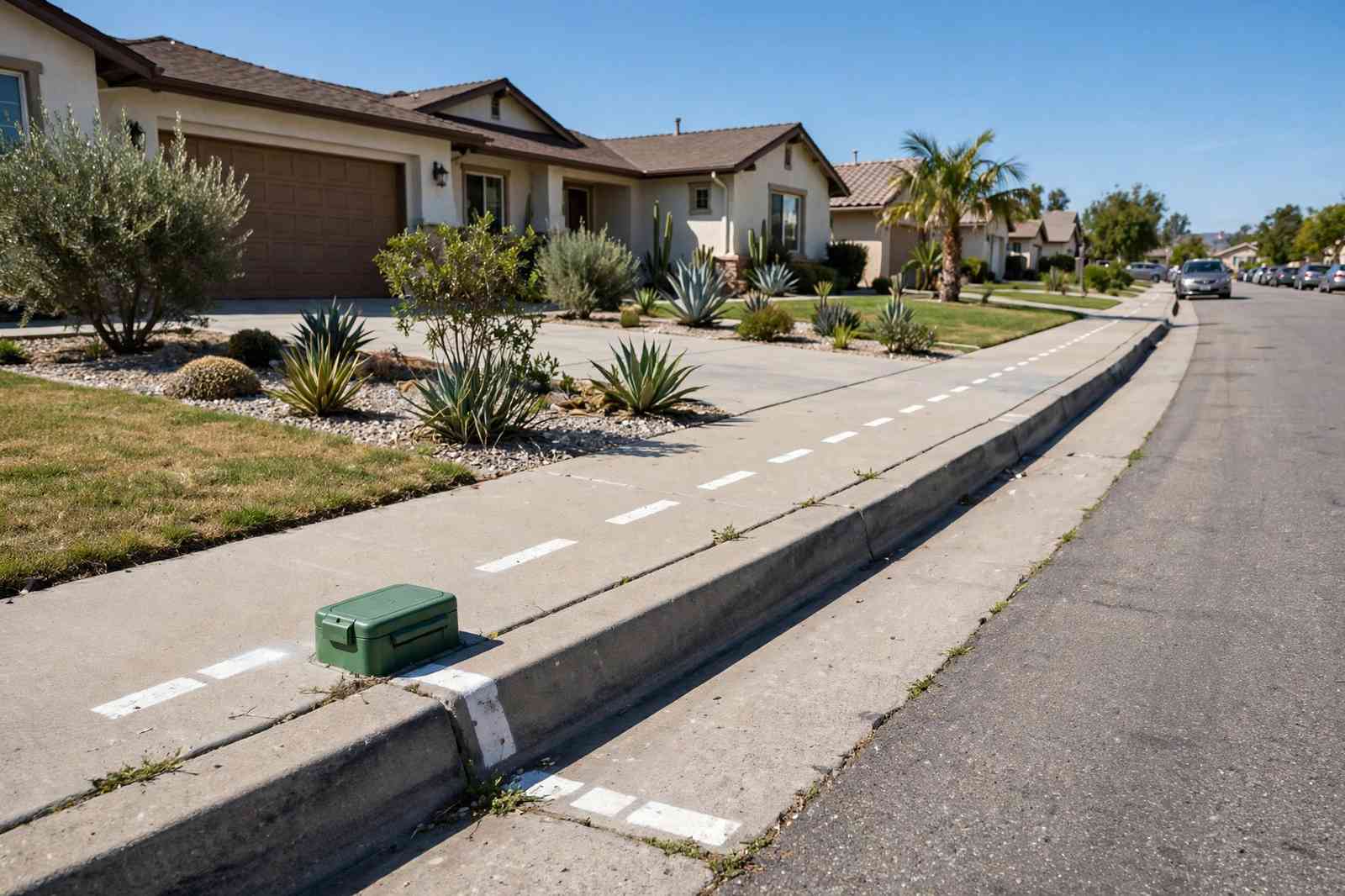
Water service line leak detection targets one specific pipe: the pressurized line running from the street's water main, or your meter, to your house. This is the artery of your entire plumbing system. Every gallon your household uses crosses it, it is pressurized around the clock, and when it fails, the symptoms are distinctive: a soggy stripe of ground following the pipe's path from curb to house, unexplained pressure loss at every fixture, and a water bill climbing for water that never reached a tap.
Service line leaks sit at a tricky intersection of responsibility, because part of the line may belong to the utility and part to you. Our job is to find the leak's exact position along the run so everyone knows whose pipe failed and where to dig. We trace the line electronically, pressure-test it, and pinpoint the break with acoustic equipment. If the ground between your meter and your house stays wet, call (833) 382-2711.
What the Water Service Line Is (and Isn't)
Confusion about the service line causes half the misdiagnosed calls we see. Here is the precise definition:
| Segment | From / to | Typical owner |
|---|---|---|
| Water main | Runs under the street | Utility, always |
| Service lateral, utility side | Main to the meter or curb stop | Utility in most California districts |
| Service line, customer side | Meter or curb stop to the house | Homeowner, in most districts |
| Yard distribution | House shutoff outward to bibbs and outbuildings | Homeowner (a different line entirely) |
The customer-side service line is our focus on this page: the single pressurized run from your meter to where it enters the house. Ownership rules vary by water district, so we always confirm with your utility's published policy rather than assuming. What does not vary is the physics: a leak here loses treated, pressurized water straight into the soil, 24 hours a day.
Telltale Signs of a Service Line Leak
Service line leaks paint a recognizable picture:
- A soggy, sunken, or unusually green stripe of ground running from the meter toward the house, following the pipe's path
- Water pooling or bubbling up near the meter box or curb stop
- Noticeable pressure loss at every fixture in the house simultaneously
- A water bill that climbs steadily with no indoor explanation
- The sound of running water at the meter or along the pipe path when the house is silent
- A sinkhole or soil depression forming over the line's route
- Foundation-adjacent dampness where the line enters the house
The stripe symptom is the giveaway. Indoor leaks do not make the front yard soggy in a line from the street, and irrigation leaks do not run constantly. When the wet path connects the meter to the house, the service line is the prime suspect.
How We Pinpoint a Service Line Break
A pressurized service line is an ideal acoustic target: it hisses constantly. Our sequence:
- Ownership check. We confirm which segments your district assigns to the homeowner versus the utility, so the right party pays for the right repair.
- Meter-side test. With the house shutoff closed, we watch the meter. Movement proves the leak is in the service line, not inside the house.
- Electronic route tracing. We trace the line's exact path from meter to house entry and mark it on the surface, including depth.
- Acoustic pinpointing. Listening along the traced route, the leak's hiss peaks directly over the break. On long runs we use correlation sensors to triangulate.
- Marked repair plan. The break point, the line route, and the depth are marked and documented, ready for your plumber or the utility crew.
If the break turns out to be on the utility's side of the demarcation, our documentation gives you exactly what the water district needs to act: location, evidence, and meter-test proof.
How Long Do Service Lines Last?
Service line lifespan depends heavily on pipe material:
| Pipe material | Typical lifespan | Common failure mode |
|---|---|---|
| Copper | Decades, varies with soil and water chemistry | Pinhole corrosion, electrolysis |
| Galvanized steel | Shorter; corrodes from the inside out | Rust restriction, then rupture |
| PVC / CPVC | Long, if properly bedded | Joint separation, shifting cracks |
| Polyethylene (PE) | Long and flexible | Fitting failures more than pipe |
If your home still runs on original galvanized service pipe and the line is past its prime, a single break is often the first of several. That is the key judgment call after detection: repair the one break, or replace the aging line once and be done. Our report includes the pipe material and condition we observe, so you and your plumber can make that call with facts instead of guesses.
Repair Paths for a Failed Service Line
Once the break is marked, the fix is usually straightforward:
- Spot repair: excavate at the marked point and replace the failed section. Sensible for a single break in otherwise sound pipe.
- Full line replacement: pull or trench a new line from meter to house. The right call for aging galvanized, polybutylene, or repeatedly failing pipe.
- Trenchless replacement: where soil and access allow, pipe-bursting or pulling methods replace the line with minimal trench damage to landscaping and driveways.
Our licensed and insured specialists deliver the diagnosis; your plumber or the utility executes the repair from our marks. Same-day appointments are available across California. Soggy stripe, weak pressure, rising bill? Call (833) 382-2711 now for water service line leak detection.
Yours or the City's? The Responsibility Line
Every service line has a dividing point, usually at the meter or the property line, and it decides who pays for the repair. The utility owns the street side. The homeowner owns everything from that point to the house, which in most California cities means the long buried run under the front yard.
When a leak is pinpointed, its position relative to that line is part of the report. A leak on the utility side becomes their work order once documented. A leak on your side is yours to repair, but with an exact location marked, the job is a targeted excavation instead of an exploratory one. Knowing which side you are on before calling anyone saves a full round of phone calls.
Water Service Line Leak Detection Across California
We provide this service in every corner of California, a few of the 988 cities we serve.

Related Services
Pair this service with related detection, or see all 15 services.
Slab Leak Detection
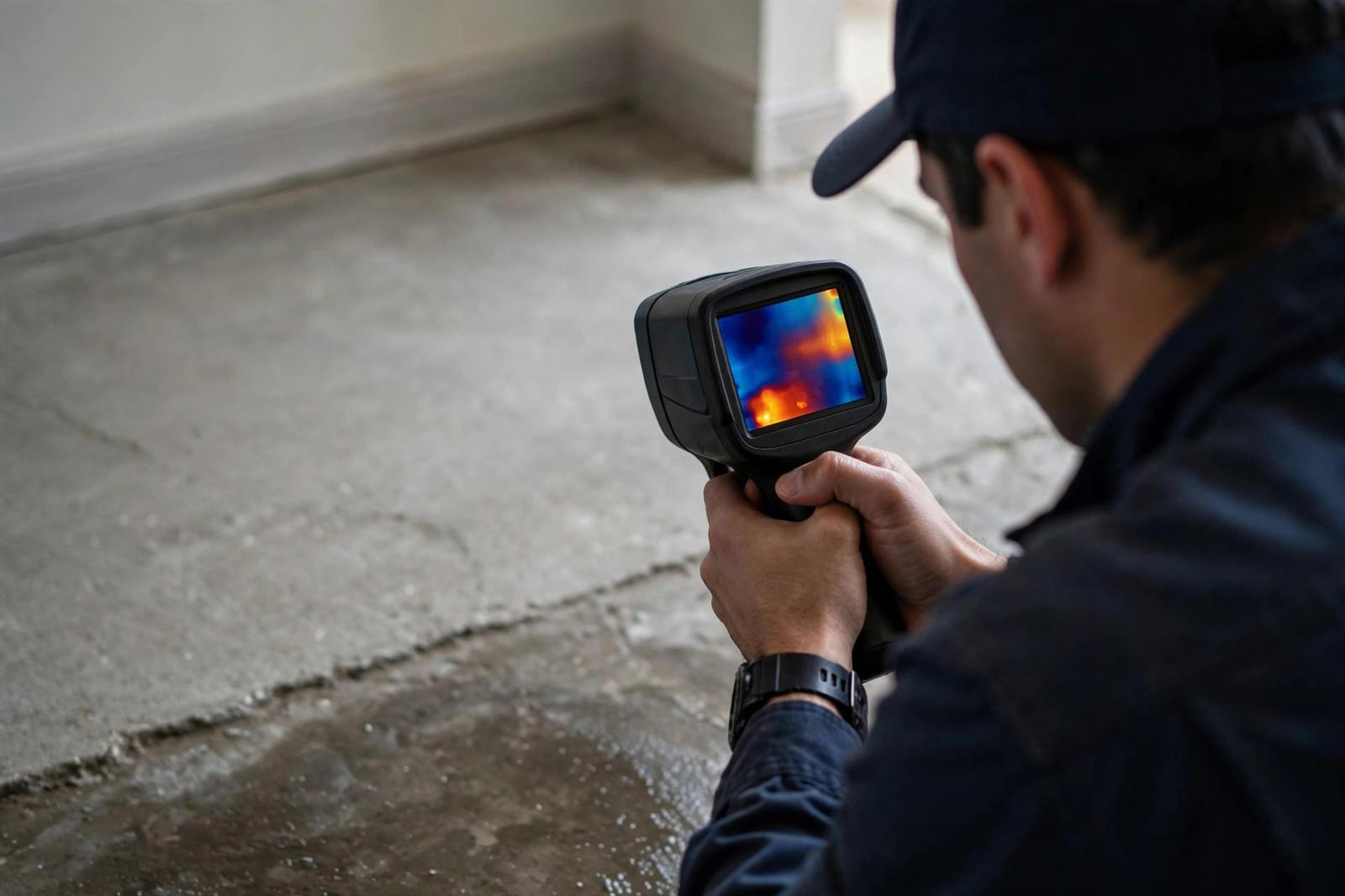
A slab leak is a leak in the water supply or drain lines that run beneath your home's concrete slab foundation…
Learn more →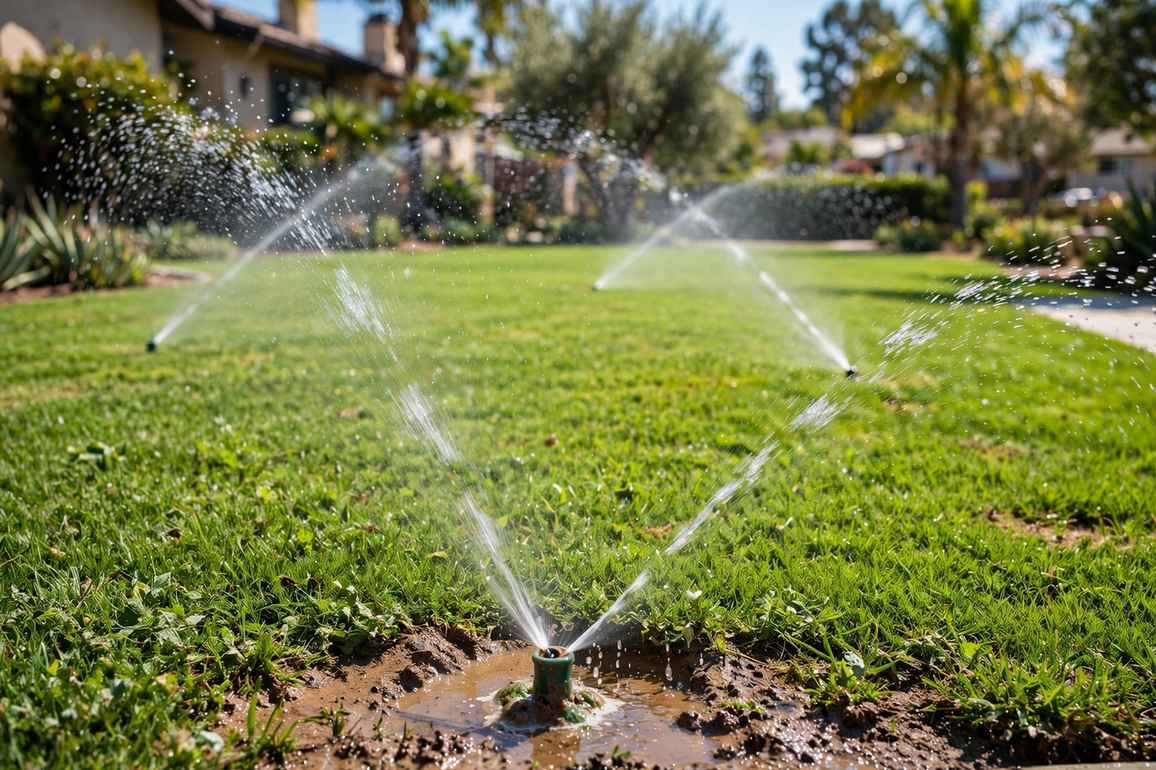
Irrigation & Sprinkler Leak Detection
Irrigation and sprinkler leak detection is the process of finding water losses in landscape watering systems:…
Learn more →Frequently Asked Questions
Who is responsible for the service line: me or the water utility?
It depends on your water district. In most California districts, the utility owns the main and the lateral up to the meter or curb stop, and the homeowner owns from there to the house. Some districts differ, so we verify against your utility's published policy during the visit rather than guessing.
How do you know the leak isn't inside my house?
The meter-side test settles it. With your house shutoff valve closed, any meter movement proves water is escaping between the meter and the shutoff, which is the service line by definition. No movement means the leak is inside, and we redirect the search there.
Will my yard be torn up to fix it?
Detection involves no digging at all. The repair excavation is limited to our marked point for a spot repair. Full replacements disturb more ground, but trenchless methods can often pull a new line with only small entry and exit pits.
Can a service line leak cause foundation damage?
Yes, if it runs long enough near the house. Constant soil saturation erodes support, and water entering along the foundation can find its way inside. A service line leak near the house entry deserves fast attention for this reason.
How much does service line leak detection cost?
It depends on the length of the run and how much tracing is required. Call (833) 382-2711 for an upfront quote.