 Leak Detection California
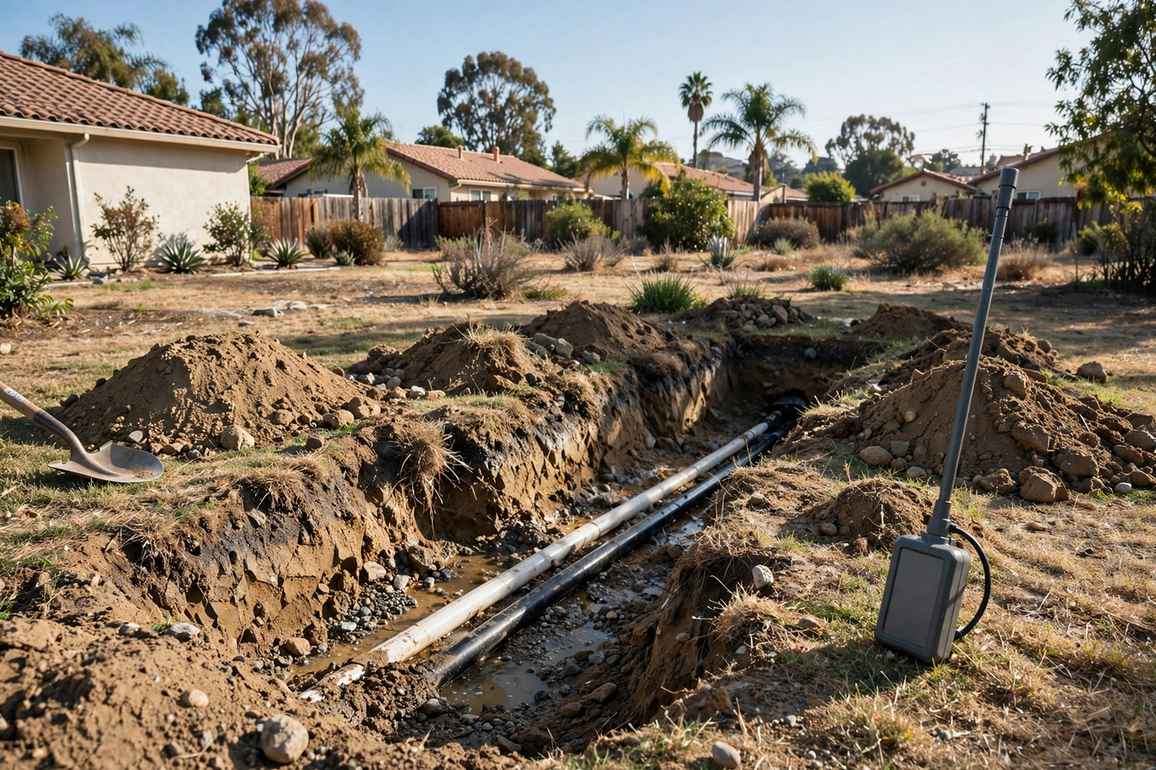
Underground pipe leak detection is the tracing, locating, and leak-pinpointing of buried water lines: the deep runs beneath yards, driveways, and commercial sites whose routes are often unknown, unmapped, or long forgotten. This service is as much about finding the pipe as finding the leak. Before anyone can fix a buried line, someone has to answer: where does it run, how deep is it, and exactly where along its length is it failing.
We answer those questions with electronic line tracing, depth locating, acoustic correlation, and tracer gas. We map unknown pipe routes from the surface, measure their depth, and then pinpoint the leak along the traced path, all without exploratory digging. The result is a marked route and a marked leak point your excavator or plumber can work from directly. Call (833) 382-2711 when the pipe is buried and the problem is not.
Tracing and Locating: Finding the Pipe Itself
Half of underground work is cartography. Properties accumulate buried lines over decades: original service lines, abandoned runs, reroutes, and additions nobody documented. Our locating toolkit maps them from the surface:
| Locating method | How it works | What it reveals |
|---|---|---|
| Electronic line tracing | A transmitter signal is applied to the pipe; a receiver follows it above ground | The pipe's exact route, even under concrete and asphalt |
| Depth locating | Signal strength geometry calculates burial depth | How deep to dig, avoiding utility strikes |
| Pipe and cable avoidance scan | Passive sweep for energized lines and metallic pipes | What else is buried nearby before excavation |
| Acoustic correlation | Sensors at two points triangulate the leak's noise | Leak position along long straight runs |
Metallic pipes take a direct signal beautifully. Non-metallic lines like PVC and polyethylene are traced with a push-rod sonde or located indirectly through the water column. Either way, the route gets painted on the surface before any digging is discussed.
When You Need Underground Locating
Call for underground pipe detection when:
- A buried line is losing water but its route is unknown or uncertain
- You are planning excavation and must know what is below first
- A wet area, sinkhole, or lush stripe suggests a deep leak with no surface pipe visible
- A property changed hands and nobody knows where the lines run
- A previous repair rerouted pipe and the old abandoned line complicates the picture
- Pressure testing shows a loss but indoor inspection finds nothing
- You need depth measurements for a safe, efficient dig plan
Pre-excavation locating deserves emphasis: digging blind around unknown utilities and water lines is how gas lines get struck and projects get expensive. A locating survey before the backhoe arrives is cheap insurance. In California, remember to also call 811 for public utility marking; our locating covers your private lines, which 811 does not mark.
Our Underground Diagnostic Sequence
Deep buried lines get a disciplined, layered approach:
- Records and interview. We gather any plot plans, prior repair notes, and your observations about where symptoms appear. Even rough history narrows the search.
- Pressure isolation. We determine which buried run is losing pressure and rule out everything above ground first.
- Route tracing. Electronic locating maps the suspect line's full path and depth, marked on the surface with paint and flags.
- Leak pinpointing. Acoustic listening along the traced route, correlation on long runs, or tracer gas for deep or quiet leaks narrows the failure to a precise point.
- Dig-ready marking. You get the route, the depth, and the leak point clearly marked, plus notes on nearby utilities we detected, ready to hand to your excavator.
This sequence is why our underground jobs rarely involve exploratory digging. By the time a shovel hits soil, everyone knows exactly where it should land.
What Your Locating Report Includes
You receive more than paint on the ground. Every underground survey ends with a locating report containing: the traced route of each located line drawn over a site sketch or aerial reference; measured burial depths at key points along the route; the pinpointed leak location with its depth; photographs of all surface markings; notes on other buried utilities or metallic objects detected nearby; and a recommended excavation plan covering where to dig, how deep, and what to avoid. This package goes straight to your excavator or plumber, eliminating the pre-dig guesswork that causes utility strikes and oversized trenches. Keep a copy with your property records: the next time anyone needs to dig on the property, that map is worth its weight in avoided disasters.
Map It Before You Dig It
Underground work rewards preparation and punishes guessing. Our licensed and insured specialists carry full electronic locating, depth-finding, acoustic, and tracer-gas equipment, and same-day appointments are available across California. Whether you are chasing a deep leak or mapping lines before a project, you will know the route, the depth, and the failure point before anyone digs.
- Electronic tracing of known and unknown buried routes
- Depth locating for safe excavation planning
- Acoustic and tracer-gas pinpointing along the traced path
- Surface marking and dig-ready documentation
Buried pipe, unknown route, active leak? Call (833) 382-2711 now for underground pipe leak detection in California.
How Sound Travels Through Soil and Pipe
An underground leak makes noise twice. Water escaping under pressure vibrates the pipe itself, and that vibration travels along the pipe wall in both directions. It also pushes into the surrounding soil, creating a fainter sound that rises roughly above the leak point. Ground microphones listen for the second sound, while correlators time the first one between two points on the pipe.
Soil changes everything. Sound carries cleanly through compacted clay and dies quickly in loose sand, and California has both, sometimes on the same street. Experienced technicians adjust for the ground they are standing on, which is why a careful surface survey still beats a fast one on buried lines.
Underground Pipe Leak Detection Across California
We provide this service in every corner of California, a few of the 988 cities we serve.

Related Services
Pair this service with related detection, or see all 15 services.


Frequently Asked Questions
How deep can you trace a buried pipe?
Electronic locating reliably traces typical residential and commercial water lines at their usual burial depths, and deeper in favorable soil conditions. Depth capability depends on pipe material, soil, and interference, but most water service and distribution lines fall well within range. We measure and report the actual depth we find.
How accurate is the marked leak location?
On a well-traced line with a clear acoustic signal, we typically mark within a couple of feet, often closer. Correlation on long straight runs and tracer gas on deep lines tighten that further. The mark is a dig target, not a guess.
Can you find a pipe if nobody knows where it runs?
Often, yes. If we can get a signal onto the pipe from an exposed point like a meter, valve, or bibb, we can trace its full route even with no records. Abandoned lines without any accessible connection point are harder, but passive sweeps and systematic acoustic work still find many of them.
Do you do the digging and repair?
We specialize in detection and locating: route, depth, and leak point, clearly marked and documented. Your plumber or excavator does the digging and repair from our marks, which keeps their work fast and your yard mostly intact.
How much does underground pipe locating cost?
It depends on the length of line, depth, soil conditions, and how much is unknown. Call (833) 382-2711 for an upfront quote based on your property.