 Leak Detection California
Professional leak detection is the science of finding hidden water leaks without tearing your property apart. Using acoustic sensors, thermal imaging, tracer gas, and other non-invasive instruments, trained specialists pinpoint the exact source of a leak, under a concrete slab, behind drywall, beneath a yard, or inside pool plumbing, so repairs can target one small area instead of guesswork demolition.
Leak Detection California brings that expertise to homes and businesses across the entire state, from San Diego to the Oregon border. If your water bill jumped for no reason, you hear running water when every fixture is off, or you see the warning signs of moisture where it should not be, one call starts the process: (833) 382-2711.
Our Leak Detection Services
Fifteen specialized services, every kind of hidden water leak, found without demolition.
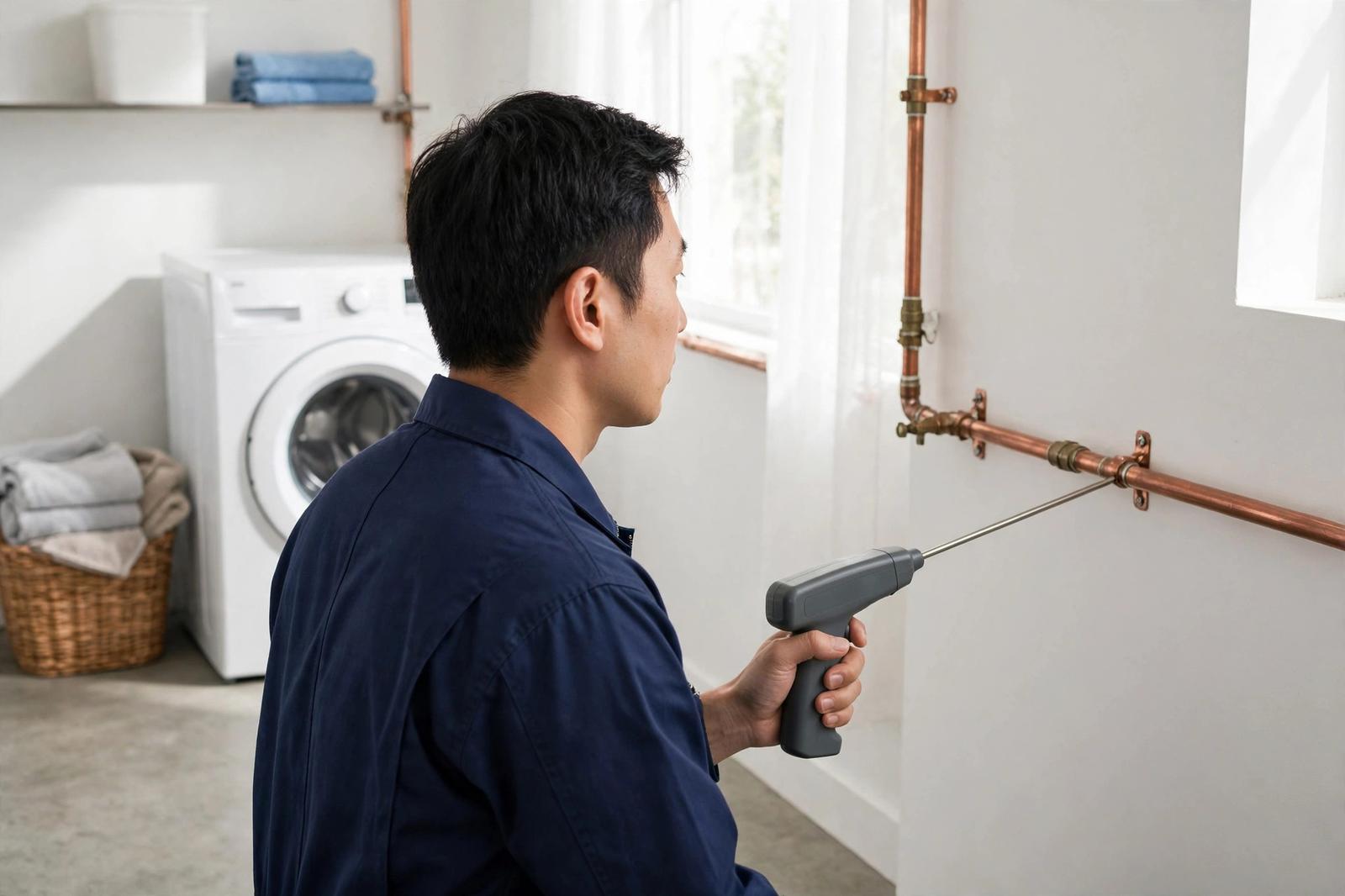
Water Leak Detection
Water leak detection is the specialized process of finding hidden plumbing leaks with non-invasive technology…
Learn more →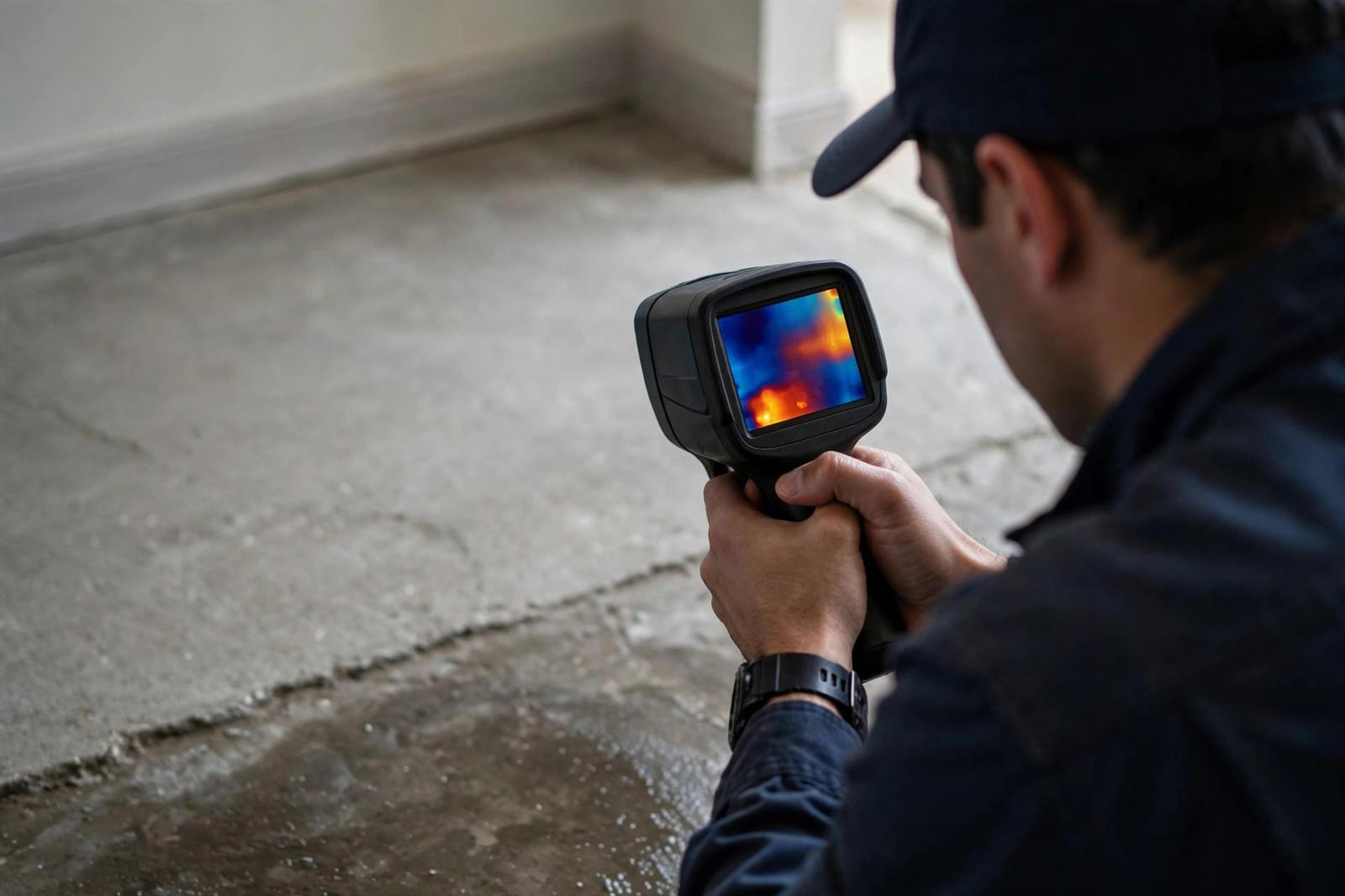
Slab Leak Detection
A slab leak is a leak in the water supply or drain lines that run beneath your home's concrete slab foundation…
Learn more →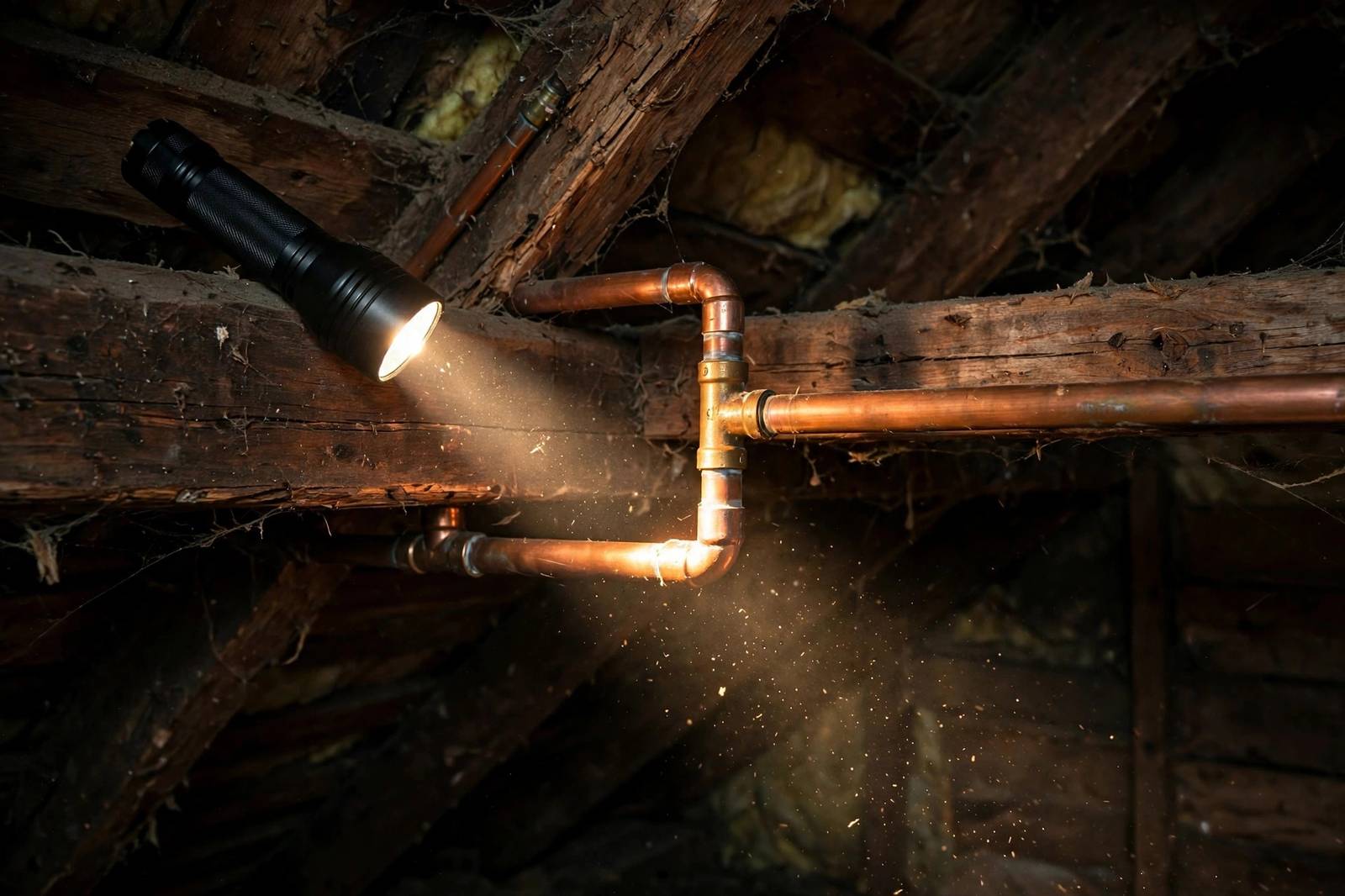
Attic Leak Detection
Attic leak detection is the process of tracing moisture found in an attic back to its true source. It is trick…
Learn more →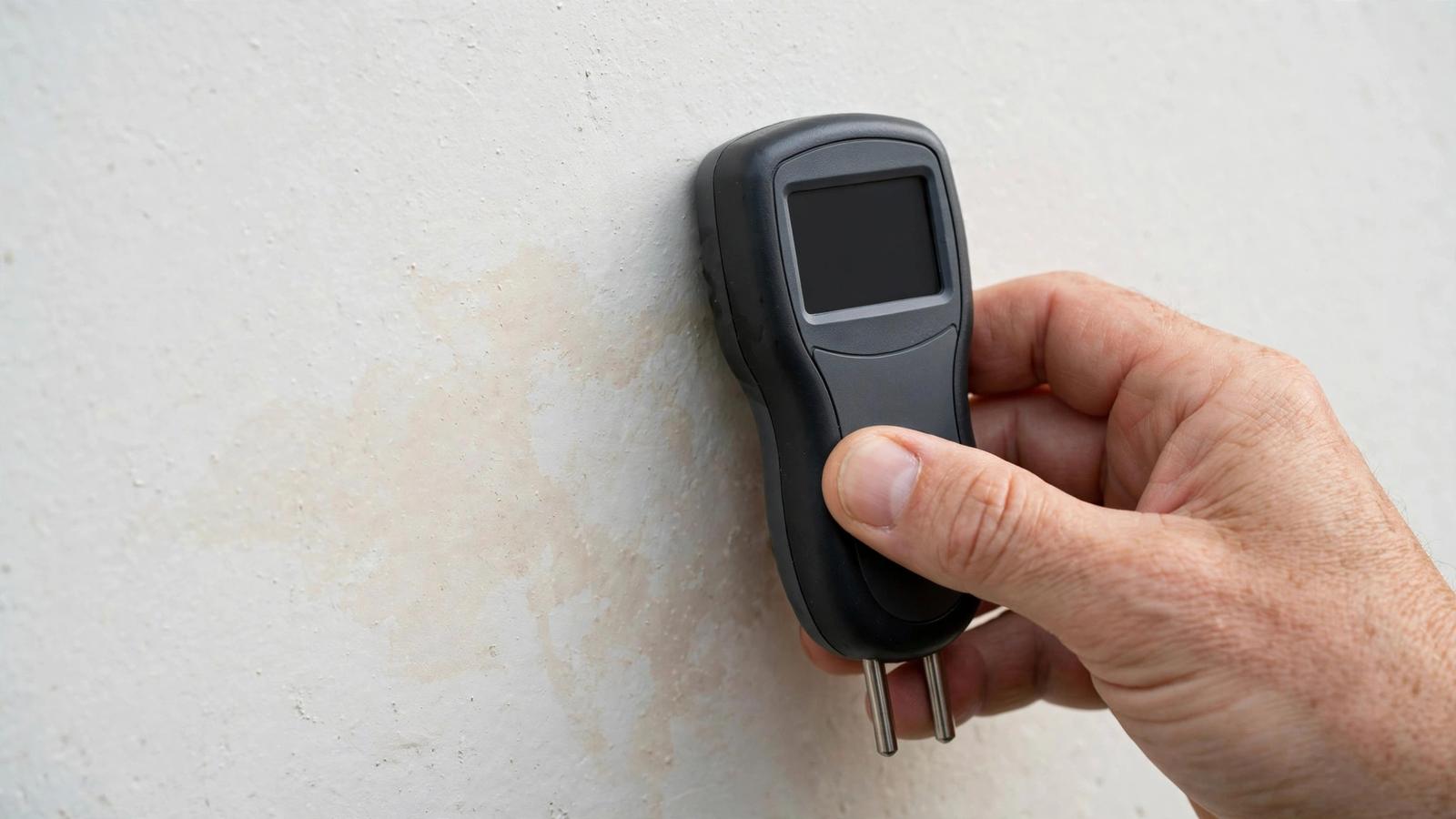
Ceiling & Wall Leak Detection
Ceiling and wall leak detection is the art of finding water hiding inside your home's structure. A brown stain…
Learn more →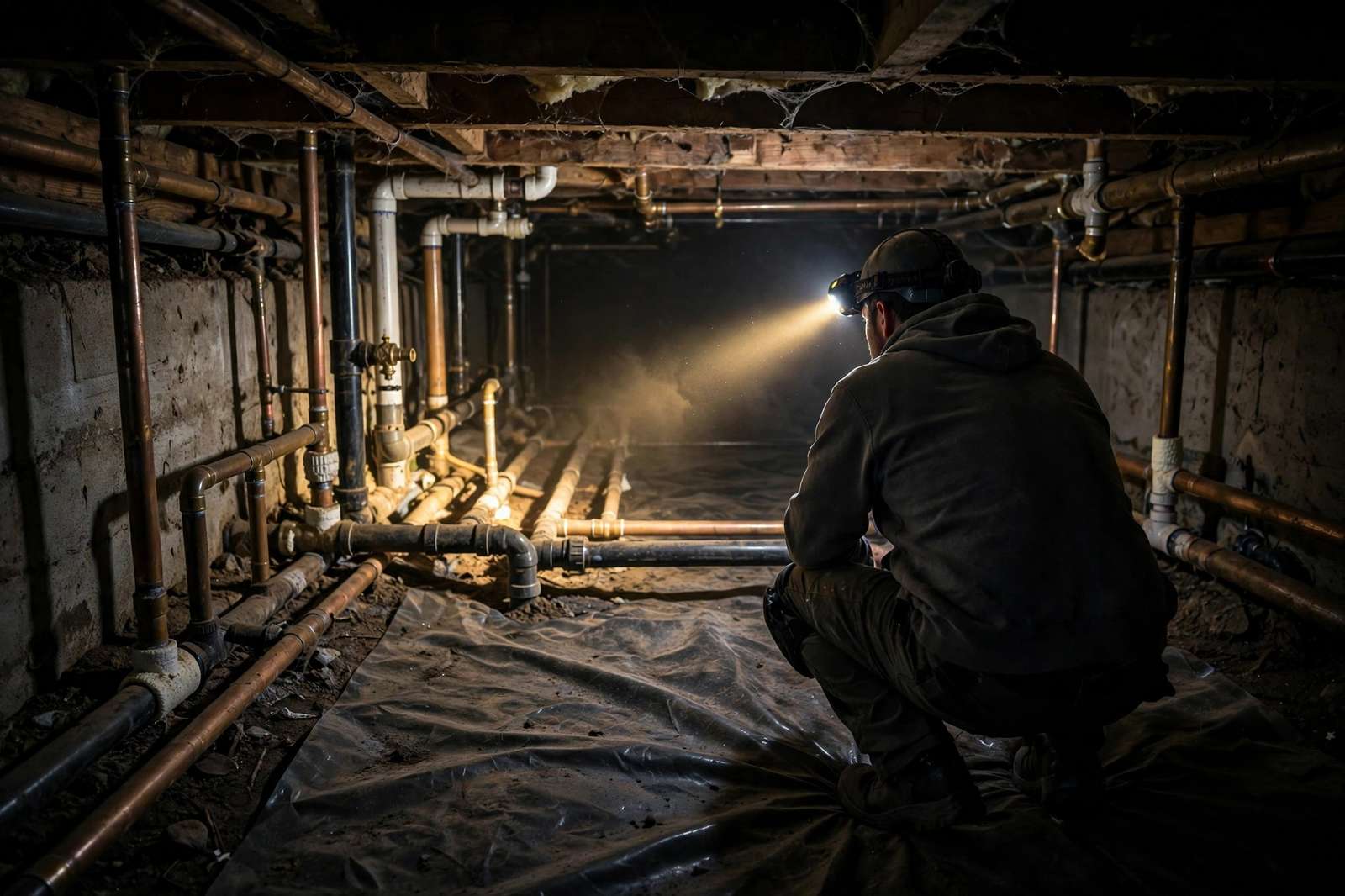
Crawlspace Leak Detection
Crawlspace leak detection is the inspection and diagnosis of water intrusion beneath homes built over a crawls…
Learn more →
Commercial Leak Detection
Commercial leak detection is the location of hidden water leaks in non-residential properties: office building…
Learn more →
Emergency Leak Detection
Emergency leak detection is rapid-response diagnosis when water is actively damaging your property right now:…
Learn more →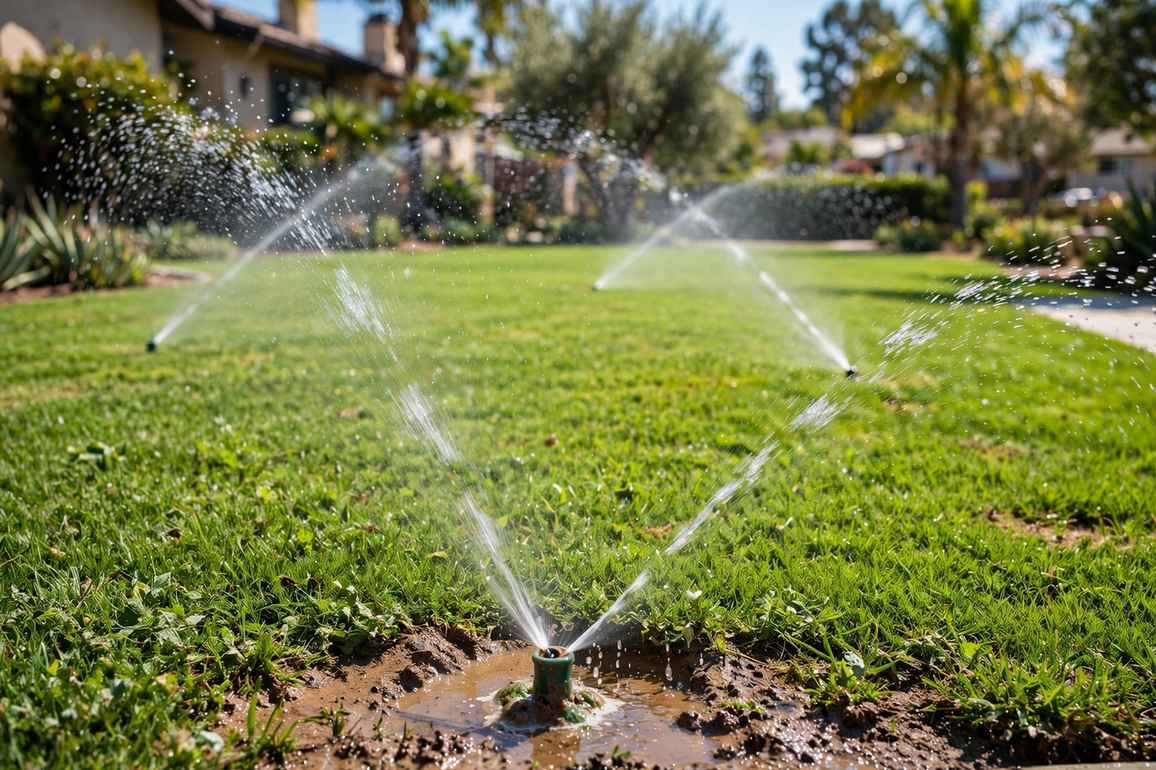
Irrigation & Sprinkler Leak Detection
Irrigation and sprinkler leak detection is the process of finding water losses in landscape watering systems:…
Learn more →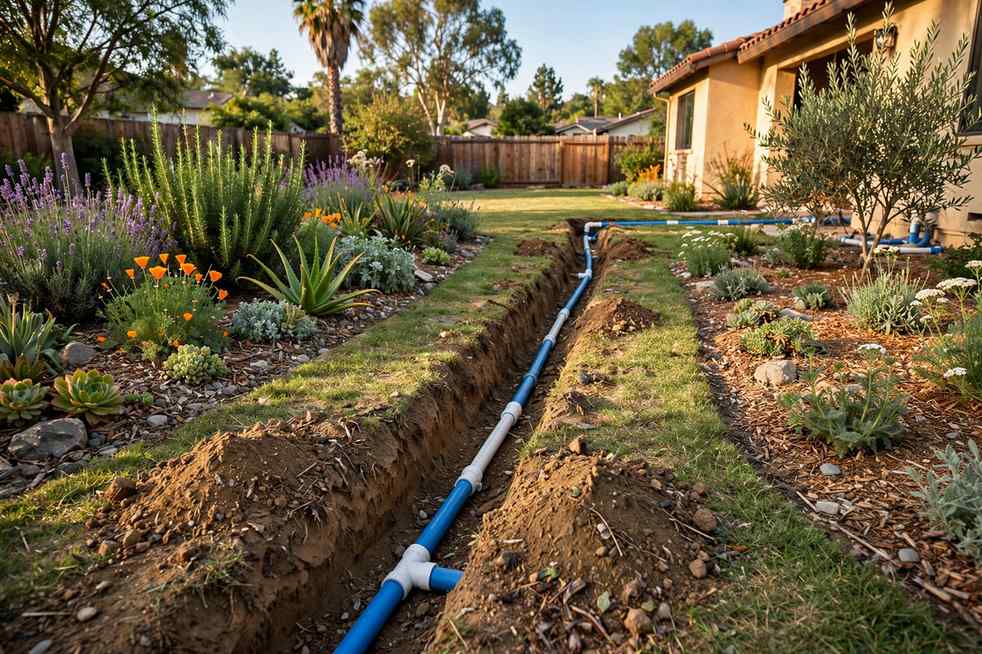
Outdoor Water Line Leak Detection
Outdoor water line leak detection covers the potable water lines that distribute water around your yard after…
Learn more →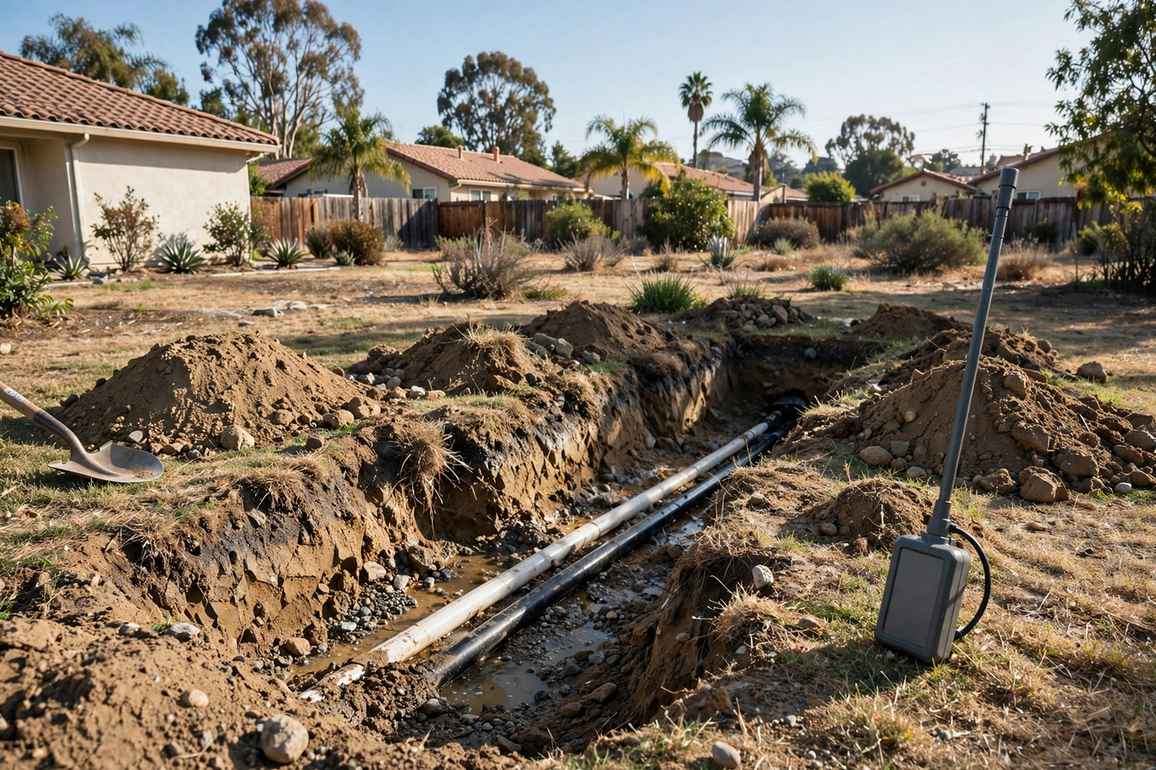
Underground Pipe Leak Detection
Underground pipe leak detection is the tracing, locating, and leak-pinpointing of buried water lines: the deep…
Learn more →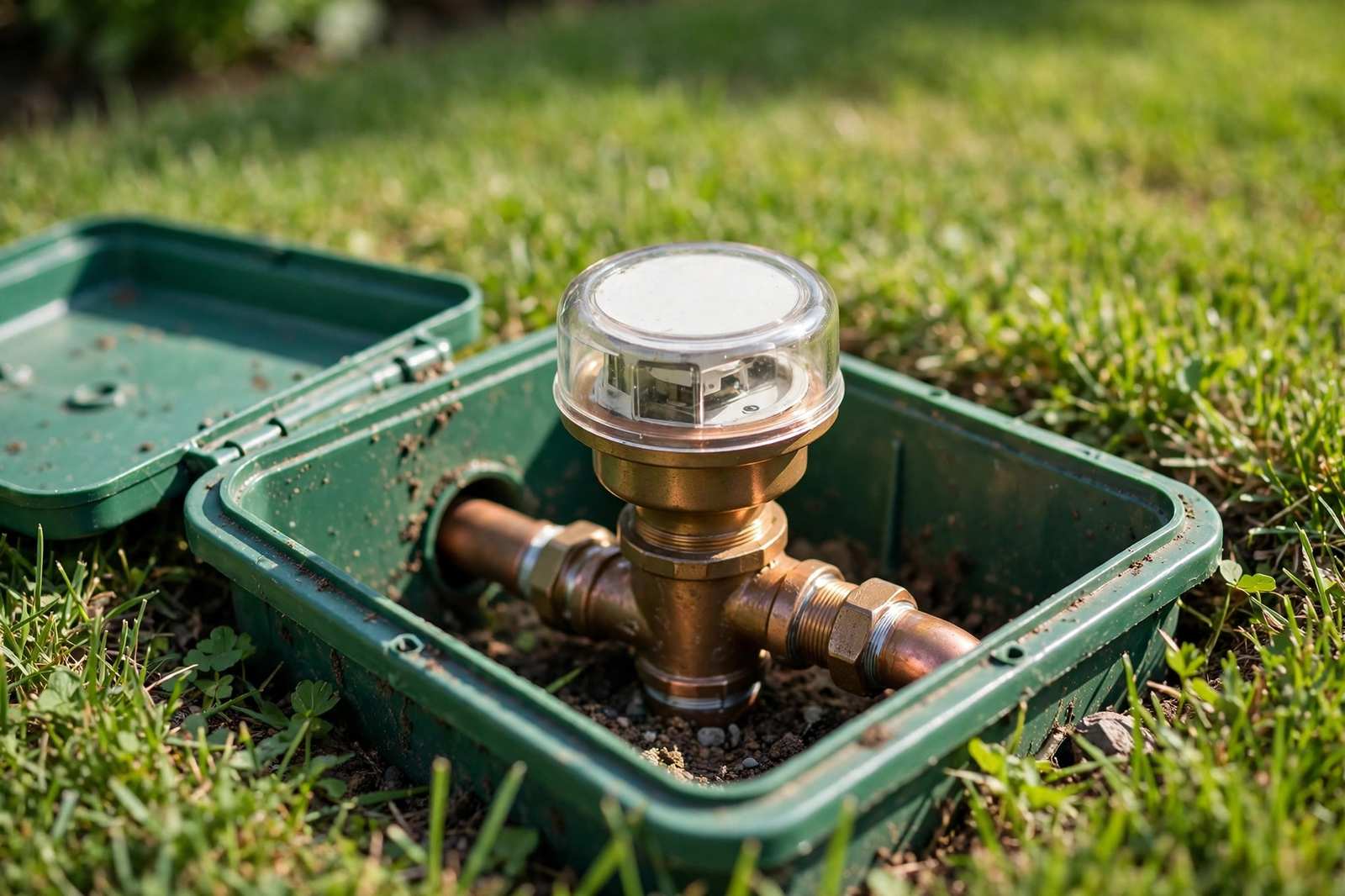
Water Meter Leak Detection
Water meter leak detection is the use of your water meter as a diagnostic instrument. That unassuming dial or…
Learn more →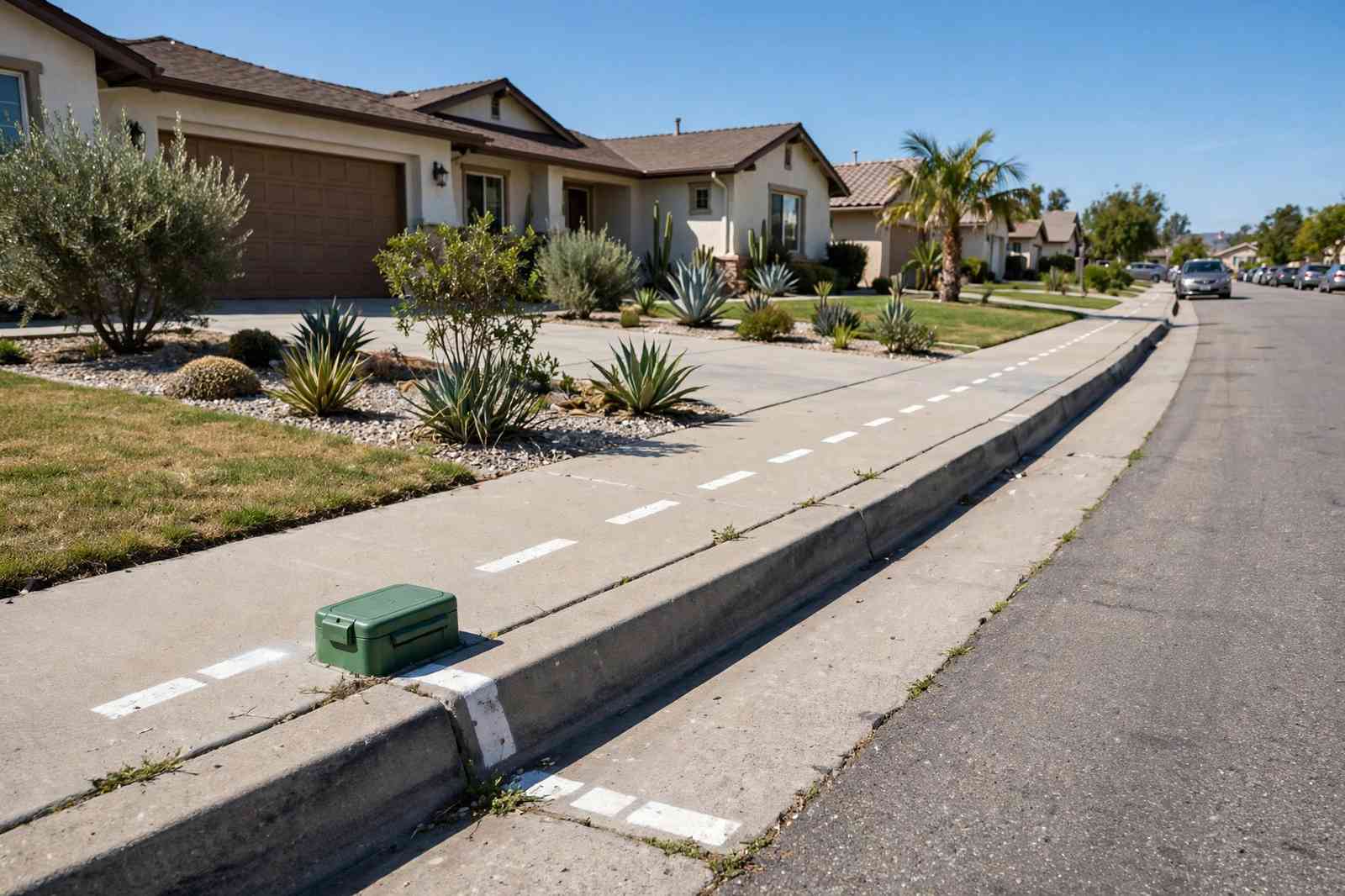
Water Service Line Leak Detection
Water service line leak detection targets one specific pipe: the pressurized line running from the street's wa…
Learn more →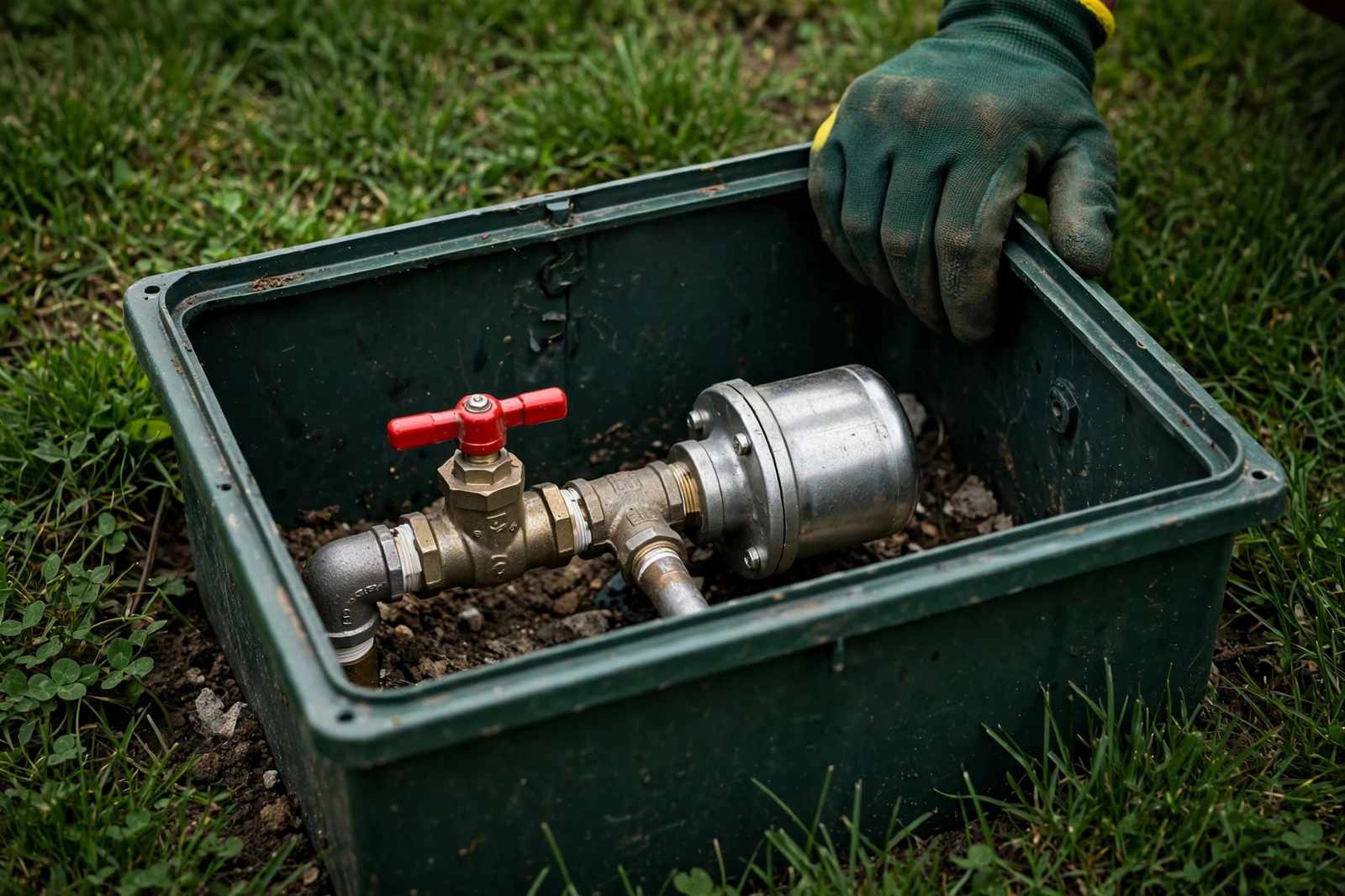
Yard Meter Box Leak Detection
Yard meter box leak detection is meter-side diagnostics: the focused investigation of everything happening in…
Learn more →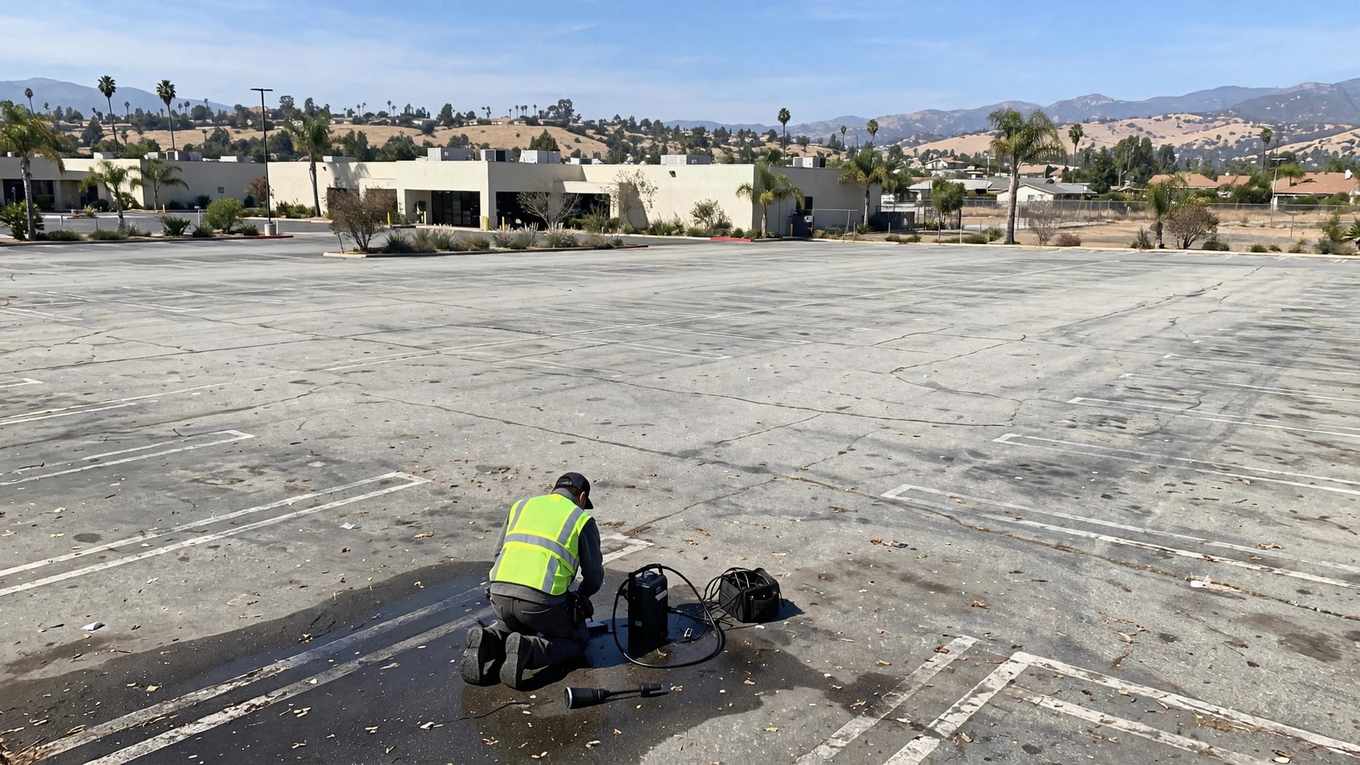
Parking Lot Leak Detection
Parking lot leak detection is the location of subsurface water leaks beneath paved commercial lots: the buried…
Learn more →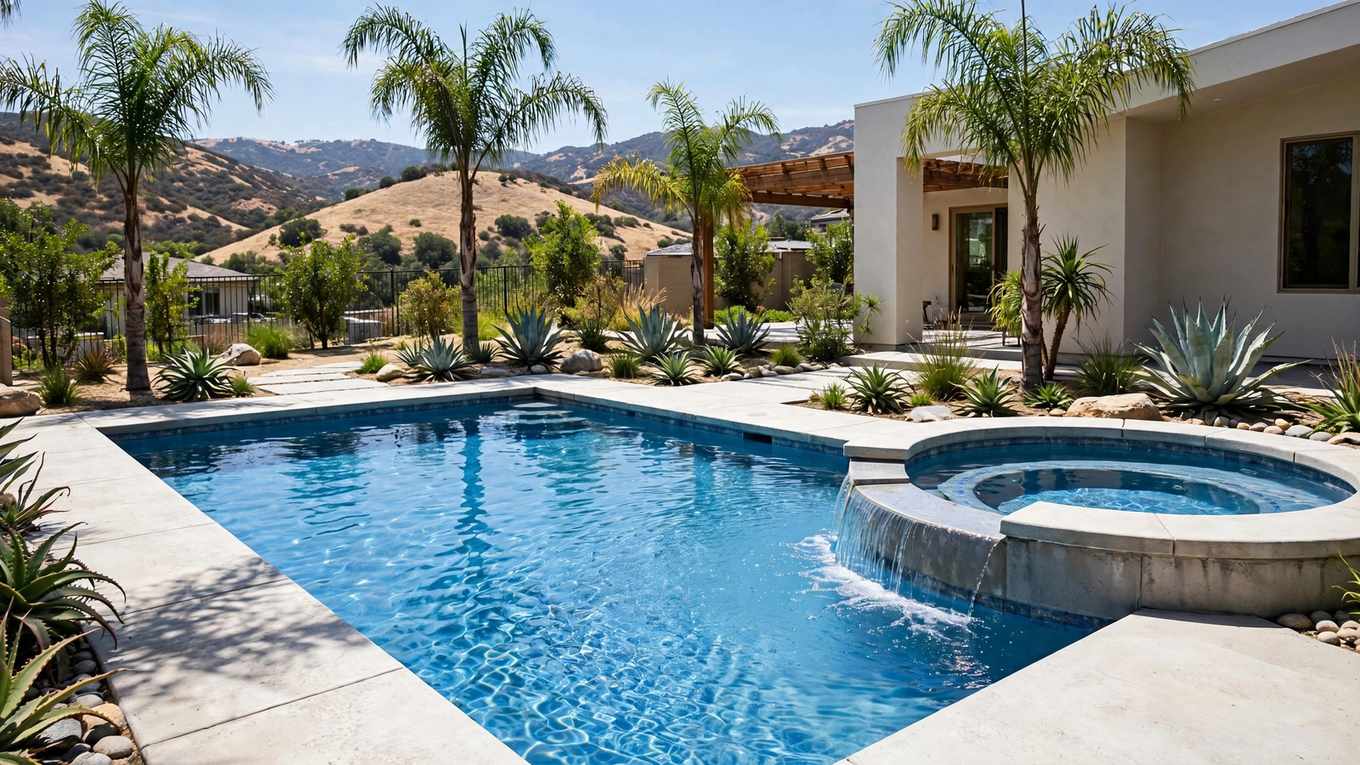
Pool & Spa Leak Detection
Pool and spa leak detection is the diagnosis of water loss from swimming pools, spas, and their equipment: dis…
Learn more →How It Works
From first call to pinpointed leak, usually in a single visit.
Tell us the symptoms
Call (833) 382-2711 and describe what you're seeing, a spiking water bill, a damp spot, the sound of running water. We'll ask a few quick questions to understand the situation.
Book a same-day visit
We schedule a convenient appointment, often the same day you call. Our technician arrives with a full kit of non-invasive detection equipment.
We pinpoint the leak, without tearing things apart
Using acoustic listening, thermal imaging, tracer gas, pressure testing, and electronic line tracing, we locate the exact source of the leak, usually within an hour.
You get a clear report and next steps
We show you exactly where the leak is, explain what caused it, and outline your repair options, so any plumber can fix it fast, with minimal damage.
Why Choose Us
The specialist California homeowners call when a leak hides.
Licensed & Insured
Professional leak detection specialists operating across California, licensed and insured for your peace of mind.
Non-Invasive Methods
Acoustic listening, thermal imaging, and tracer gas find leaks behind walls, under slabs, and underground, without demolition.
Same-Day Availability
Most calls get a technician the same day. Fast response limits water damage and keeps repair costs down.
Serving All of California
988 cities and more than 2,200 ZIP codes covered by experienced local leak detection specialists.
What Professional Leak Detection Actually Is
Most water leaks never announce themselves with a dramatic flood. The expensive ones hide: a pinhole in a copper line inside a wall cavity, a cracked pipe under a slab foundation, a slow seep at a pool fitting that drains thousands of gallons over a season. By the time you see staining, smell mildew, or feel a warm patch on the floor, the leak has often been active for weeks or months.
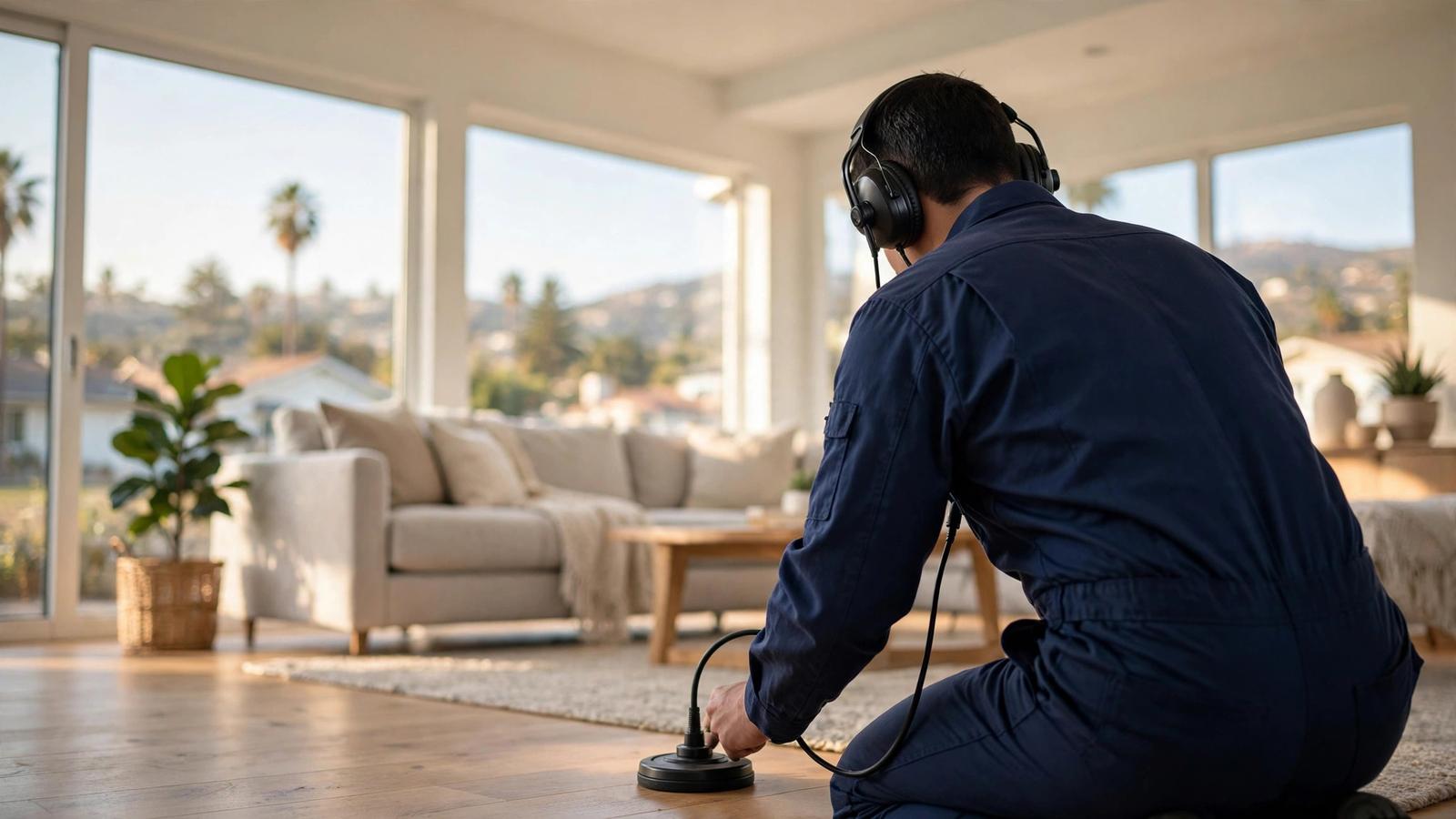
Professional leak detection exists to close the gap between symptom and source. Instead of opening walls at random or breaking concrete on a hunch, a detection specialist works like a diagnostician. The visit starts with your symptoms, the bill spike, the sound, the damp spot, and proceeds through a sequence of tests that narrow the search: pressure tests that confirm whether the plumbing system is actually losing water, acoustic listening that hears pressurized leaks through concrete and soil, thermal imaging that reveals temperature patterns left by escaping water, and moisture mapping that traces how far dampness has traveled.
The result is a confirmed location, usually marked on the floor or wall, with a plain-language description of what was found. That report is what a repair plumber needs to fix the problem with minimal demolition, one surgical opening instead of exploratory destruction. Detection and repair are different trades, and getting the diagnosis right first is what keeps the total job small.
Why Hidden Leaks Hit California Homes Especially Hard
California households pay some of the highest water rates in the country, which turns even a modest hidden leak into a budget problem fast. A toilet flapper leaking silently into the bowl, a drip inside a wall, or a cracked irrigation lateral can waste an enormous volume of water between billing cycles, and in a state where every gallon is metered and tiered pricing punishes heavy use, the financial pain arrives long before any visible damage.
Construction patterns add to the risk. Slab-on-grade foundations dominate California housing, especially in tracts built from the 1960s onward. Water lines run beneath or within that concrete, so a failing line has nowhere to show itself except as a warm floor tile, a faint hissing, or a bill that climbs month after month. Expansive clay soils in many parts of the state swell and shrink with wet and dry seasons, shifting foundations just enough to stress rigid pipe joints over decades.
Age matters too. Millions of California homes still carry original galvanized steel or early copper plumbing now well past its intended service life. Add hard water in inland regions, which accelerates interior corrosion, and the recipe for pinhole leaks is complete. Attics add another California-specific wrinkle: water heaters and supply lines routed through superheated attic spaces in summer endure brutal thermal cycling.
Then there is the landscape. California yards lean heavily on irrigation, and outdoor supply lines, sprinkler laterals, and pool plumbing run for hundreds of feet where nobody looks. A broken sprinkler head is obvious; a cracked lateral feeding it underground is not, it just shows up as a soggy strip of lawn and a bill that makes no sense. With pools common across the warmer regions, pool and spa plumbing ranks among the most frequent hidden-leak sources our specialists investigate.
For businesses the stakes scale up: a leaking main under a parking lot or a failing line in a commercial building can disrupt operations and trigger water damage across tenant spaces. Whether residential or commercial, the California equation is the same, expensive water, hidden infrastructure, and construction that conceals problems until they are costly. Early, accurate diagnosis is the counterweight.
How We Find Leaks: Methods and What Each One Detects
No single instrument finds every leak. A proper inspection layers methods, each answering a different question, until the evidence converges on one spot. Here is how the toolkit maps to the problem:
| Detection method | What it finds | Typical use |
|---|---|---|
| Acoustic listening (ground microphones, correlators) | The hiss or vibration of pressurized water escaping a pipe | Slab leaks, underground supply lines, service lines |
| Thermal imaging (infrared cameras) | Temperature differences caused by escaping hot or cold water | Hot-water slab leaks, moisture behind walls and ceilings |
| Tracer gas (hydrogen-nitrogen mix) | Escaping gas molecules at the exact breach point in a sealed system | Tiny leaks other methods miss, pool plumbing, isolated runs |
| Pin and pinless moisture meters | Moisture content inside drywall, wood framing, and concrete | Mapping how far water traveled; confirming active vs. old damage |
| Video pipe inspection | Cracks, root intrusion, offsets, and collapses inside drain lines | Drain and sewer diagnostics before repair decisions |
| Static pressure testing | Whether a system holds pressure, proving a leak exists and isolating the zone | Whole-property confirmation; supply-side vs. fixture problems |
| Dye testing | Cross-connections and slow drain-to-leak paths made visible with tracer dye | Toilet flapper leaks, pool and spa leaks, shower pan failures |
| Electromagnetic line locating | The buried route of metallic pipes and tracer-wired lines | Mapping pipe paths under yards, slabs, and parking lots |
| Water meter analysis | Whether the meter advances with all water off, the simplest proof of a leak | First-pass triage for any unexplained bill increase |
In practice, a visit combines several of these. A suspected slab leak might start with meter analysis and pressure testing to confirm the loss is on the supply side, continue with acoustic listening to narrow the zone, and finish with thermal imaging to mark the precise spot. The layered approach is what keeps accuracy high and demolition low, most confirmed leaks end up needing only a single, small access opening for repair.
Warning Signs You Need Leak Detection
Call sooner rather than later if you notice any of the following. Each is a classic symptom our specialists investigate every day:
- A water bill that jumps without explanation. Compare the last few statements. A sudden increase with no change in household habits is the single most common reason people call us.
- The sound of running water when everything is off. Stand quietly near walls, floors, and the water heater. Hissing or trickling with no fixture running points to a pressurized leak.
- Warm or damp spots on floors. A hot-water line leaking under a slab often announces itself as a patch of tile or concrete that feels warm underfoot.
- Musty odors or visible mold. Persistent dampness feeds microbial growth inside wall cavities and under flooring long before stains appear.
- Staining, bubbling paint, or sagging drywall on ceilings and walls, especially below bathrooms, kitchens, and laundry areas.
- Foundation cracks, or soil that stays wet. Water escaping underground erodes soil and can shift slabs and footings over time.
- Low water pressure at fixtures with no municipal work in the area, part of your supply may be escaping before it reaches the tap.
- A water meter that moves with everything shut off. This two-minute check is the fastest at-home confirmation; our guide walks through it step by step.
- Lush or soggy patches in the yard while surrounding grass looks normal, a signature of an outdoor line or irrigation leak.
- A pool that needs frequent refilling beyond normal evaporation, or persistently soggy soil around pool equipment.
One sign is enough to justify an inspection. Hidden leaks do not improve on their own, they only get more expensive. Call (833) 382-2711 and describe what you are seeing; we will tell you honestly whether an inspection is the right next step.
Residential vs. Commercial Leak Detection
Homes and commercial properties share the same physics, water under pressure finds the weak point, but the jobs differ in scale, access, and scheduling.
Residential work centers on living spaces: slab foundations, attics, crawlspaces, walls and ceilings, water heaters, irrigation, and pools. Homeowners usually call after a bill spike or a visible symptom, and the priority is accuracy with minimal disruption, one small opening, no torn-up rooms, and a clear explanation of what was found so a repair plumber can act on it.
Commercial properties bring larger systems and higher stakes. Office buildings, retail centers, restaurants, hotels, and industrial sites run longer pipe networks, often with multiple zones, booster pumps, and irrigation covering large grounds. A leak in a commercial main can waste dramatic volumes overnight and threaten tenant spaces below. Scheduling matters more: inspections can be timed around business hours, and parking-lot or landscape work is planned to keep operations running.
Our commercial service also covers the exterior infrastructure businesses depend on, underground supply lines, meter assemblies, irrigation networks, and paving-adjacent plumbing, using the same non-invasive toolkit scaled to bigger pipe and longer runs. If you manage a property and suspect a leak, call (833) 382-2711 to discuss timing that fits your operations.
How It Works: From Your First Call to a Confirmed Location
- Call (833) 382-2711. Tell us what you are seeing, the bill, the sound, the damp spot. We ask a few quick questions to understand the likely category.
- Get a straight answer on next steps. If your symptoms point to a hidden leak, we schedule an on-site inspection. If something else looks more likely, a running toilet, a visible fixture drip, we say so rather than book a visit you do not need.
- The specialist arrives with the full toolkit. Acoustic sensors, thermal camera, moisture meters, pressure gauges, and tracer equipment come to every appropriate job; the exact methods depend on what your symptoms indicate.
- Testing narrows the search. Pressure tests confirm the leak and isolate the zone. Listening, imaging, and moisture mapping converge on the source. You can watch the process and ask questions as it happens.
- The leak location is marked and documented. You get a precise mark, on the floor, wall, or soil, plus a plain-language description of the finding that any repair plumber can work from.
- You decide the repair path. With the source confirmed, fixing it becomes a small, targeted job instead of exploratory demolition. We explain what the repair typically involves so you can get accurate quotes.
One Team Serving 988 California Cities and 2,200+ ZIP Codes
Leak Detection California operates statewide. Our dispatch data covers 988 cities and more than 2,200 ZIP codes across California, from major metros like Los Angeles, San Diego, San Jose, San Francisco, Fresno, Sacramento, and Bakersfield to the small towns between them. If your property has a California ZIP code, you are in our service area.
Coverage is organized by ZIP code, which keeps scheduling honest: when you call, we confirm your ZIP, match it to the right service zone, and set a visit window that reflects real travel rather than guesswork. Coastal cities, Central Valley towns, desert communities, mountain towns, and dense urban neighborhoods all get the same inspection process and the same equipment.
Because demand shifts by season, irrigation leaks spike in summer, attic and pipe stress follows heat waves, winter rains expose drainage-adjacent issues, calling ahead secures the earliest window. Same-day and next-day availability is common in most zones. Call (833) 382-2711 with your ZIP code ready and we will take it from there.
What a Leak Detection Service Includes, Start to Finish
A leak detection service is a diagnosis, not a repair. You are paying for certainty: proof of whether a leak exists, which line it is in, and a mark on the exact spot where it is failing. Everything in the visit is organized around those three answers, and that is what separates a professional inspection from guesswork with a sledgehammer.
A complete inspection includes a symptom interview and meter verification, an acoustic and thermal survey of the suspect areas, pressure isolation testing to prove which line is losing water, the pinpoint itself, and a plain-language summary of findings you can hand to your repair plumber or insurer. From there the specialties branch: slab leak detection under concrete, pool and spa leak testing, emergency leak detection for active flooding, and a dozen more. The full menu is on our leak detection services page.
Choosing between them is mostly matching the symptom to the specialty, and you do not have to get it right alone. Callers describe what they see, the sound, the stain, the bill, and triage by phone matches the visit to the problem before anyone is dispatched.
Leak Detection Near You: Coverage and Booking, Explained Simply
Searching for leak detection near me in California usually means one of two things: water is actively causing damage right now, or a bill or meter says something is wrong and you want a local answer fast. Our coverage is organized to answer both. The service area is the whole state, divided into zones by ZIP code, so a caller in Temecula and a caller in Sacramento come through the same door and get the same inspection process.
Booking works entirely by phone, because the first conversation is part of the diagnosis. You describe the symptoms, we confirm your ZIP and match it to a service zone, and you get the earliest realistic window for that zone. Same-day and next-day availability is common in most zones, and active emergencies are routed first. To check whether your city is listed, browse leak detection in your city, or simply call (833) 382-2711 and ask.
A Note on California Homes and Water
California housing is several different eras stacked on top of each other. Pre-war homes with galvanized pipe that has been quietly narrowing for decades. Post-war tracts on slabs with copper runs underneath. Newer developments plumbed in PEX with manifolds. Each era fails in its own way, and a good leak inspection starts by asking which era your house belongs to.
That is also why we do not quote outcomes sight unseen or recommend demolition as a first step. The right first move on any hidden leak is the same regardless of era: find it precisely, prove the location, and let the repair be exactly as big as the problem and no bigger.
Popular Service Areas
A few of the 988 California cities we serve.
Sacramento
Serving 100 ZIP codes
View area →Los Angeles
Serving 94 ZIP codes
View area →San Diego
Serving 76 ZIP codes
View area →Fresno
Serving 58 ZIP codes
View area →San Jose
Serving 57 ZIP codes
View area →San Francisco
Serving 29 ZIP codes
View area →Oakland
Serving 26 ZIP codes
View area →Long Beach
Serving 27 ZIP codes
View area →Pasadena
Serving 25 ZIP codes
View area →Bakersfield
Serving 22 ZIP codes
View area →Anaheim
Serving 17 ZIP codes
View area →Riverside
Serving 17 ZIP codes
View area →Proudly Serving All of California
From San Diego to Sacramento, we bring professional, non-invasive leak detection to 988 California cities covering more than 2,200 ZIP codes.
Frequently Asked Questions
How long does a leak detection visit take?
Most residential inspections run one to three hours, depending on property size and how many zones need testing. A single suspected slab leak is often confirmed within the first hour; larger commercial properties or multi-zone mysteries take longer. You will know the findings before we leave.
Will finding the leak damage my walls or floors?
No. Detection is non-invasive by design, sensors, cameras, and meters, not demolition. We mark the precise location so that any opening made later is small and targeted. The whole point of the service is to prevent unnecessary tearing apart of your property.
Can you find leaks under a concrete slab?
Yes, slab leaks are among our most common calls in California. Acoustic listening hears pressurized leaks through concrete, thermal imaging spots the heat signature of hot-water line failures, and pressure testing confirms which zone is losing water before we ever mark a spot.
My water bill suddenly doubled. Is that definitely a leak?
Not always, but it is the most common cause. Seasonal irrigation changes, a silently running toilet, or a rate change can also explain it. A two-minute meter check, everything off, watch the dial, separates real losses from billing quirks, and our specialists start every bill-spike visit by confirming the loss is real.
Do you offer emergency leak detection?
Yes. Active leaks that threaten damage, water spreading across floors, a meter spinning fast, a burst line, get priority scheduling. Call (833) 382-2711 and describe the urgency; emergency calls are routed first.
Which parts of California do you serve?
All of it. We cover 988 cities and more than 2,200 ZIP codes statewide, every major metro and the smaller communities between them. Give us your ZIP code when you call and we will confirm your zone and schedule.