 Leak Detection California

Emergency leak detection is rapid-response diagnosis when water is actively damaging your property right now: a burst pipe, a flooding bathroom, water pouring through a ceiling, or a supply line break filling a yard. In these moments the priority flips. Instead of a careful scheduled survey, you need someone who arrives fast, finds the source under pressure, and tells you exactly what to shut off and who to call next.
Our emergency response pairs speed with the same professional toolkit as a standard visit: acoustic listening devices, thermal imaging, moisture meters, and pressure isolation, deployed in triage order. We find the source, help you stop the water, document the damage path, and give you a clear handoff for repairs and restoration. If water is flowing where it should not be, call (833) 382-2711 immediately.
What Counts as a Leak Emergency
Not every leak needs an emergency call, and knowing the difference saves everyone time. Treat it as an emergency when:
| Situation | Why it is urgent | First action |
|---|---|---|
| Burst or split supply pipe | Pressurized water floods fast, gallons per minute | Shut the main water valve immediately |
| Water through a ceiling | Ceiling collapse risk; electrical hazard above | Shut water, avoid the area, kill power to the room if safe |
| Flooding bathroom or kitchen | Water migrates under flooring within minutes | Shut fixture valves, then the main if it continues |
| Yard geyser or street-side break | Erosion undermines soil, driveways, and foundations | Shut the main; call the utility if it is on their side |
| Water heater rupture | 40-plus gallons plus continuous refill | Shut water and the heater's power or gas |
A slow drip under a sink or a stain that has been there for months is important but not an emergency; book a standard detection visit for those. Active, flowing water is always the emergency.
What to Do in the First Five Minutes
Before we arrive, these steps limit the damage more than anything else:
- Shut off the water. Know where your main shutoff valve is before you need it: usually near the water meter, in the garage, or on an exterior wall. Turn it clockwise until it stops. If the leak is at one fixture, its individual shutoff valves under the sink or behind the toilet work faster.
- Protect electricity. If water is near outlets, switches, or a ceiling with light fixtures, switch off the breaker for that area. Never touch electrical devices standing in water.
- Move valuables. Lift electronics, documents, and rugs out of the water's path. Open cabinet doors under a sink leak to ventilate.
- Contain what you can. Towels, buckets, and mops buy time. Do not waste the critical minutes on perfect cleanup; stopping the source matters more.
- Call us. The sooner we are rolling, the sooner the source is found and the water stops for good.
If you cannot find your main shutoff, call us anyway and we will walk you through locating it while we dispatch. Many callers find it with two minutes of phone guidance.
How Emergency Triage Works When You Call
The emergency visit starts on the phone, not at your door. The first questions are always the same, because the answers decide everything that follows: Is water still flowing right now? Where is it showing up? Have you shut anything off yet, and did it work? A call with water actively running and no working shutoff goes to the front of the queue, ahead of every scheduled inspection.
While you talk, triage does two jobs at once. You get immediate instructions matched to your situation: which valve to try, which breaker to leave alone, what to move first. At the same time the visit is being scoped, which equipment the truck needs, whether the water heater or a supply line is the likely failure, and what access notes matter, such as gates, pets, or a locked meter box. Have your address and those access details ready when you call, and if you do not know where your main shutoff is, say so early. Talking a homeowner to the meter box by phone is a normal part of the call, not an interruption of it.
Shutting Off the Water: Three Places to Try, in Order
If the first five minutes list above was the summary, this is the full version. Work through the shutoffs in this order:
- The fixture valve. Most sinks, toilets, and water heaters have their own valves on the supply lines feeding them. A lever handle that turns a quarter turn is a ball valve and closes completely. An oval handle is usually an older gate valve, which may only close partway after years without use. If the fixture valve works, the rest of the house keeps its water.
- The house main. Look on the wall facing the street, in the garage, or in a ground box near the meter. Closing the main stops everything, which makes it the right answer when you cannot tell which line failed. Turn gate valves clockwise until they stop, and do not force a corroded handle past firm resistance.
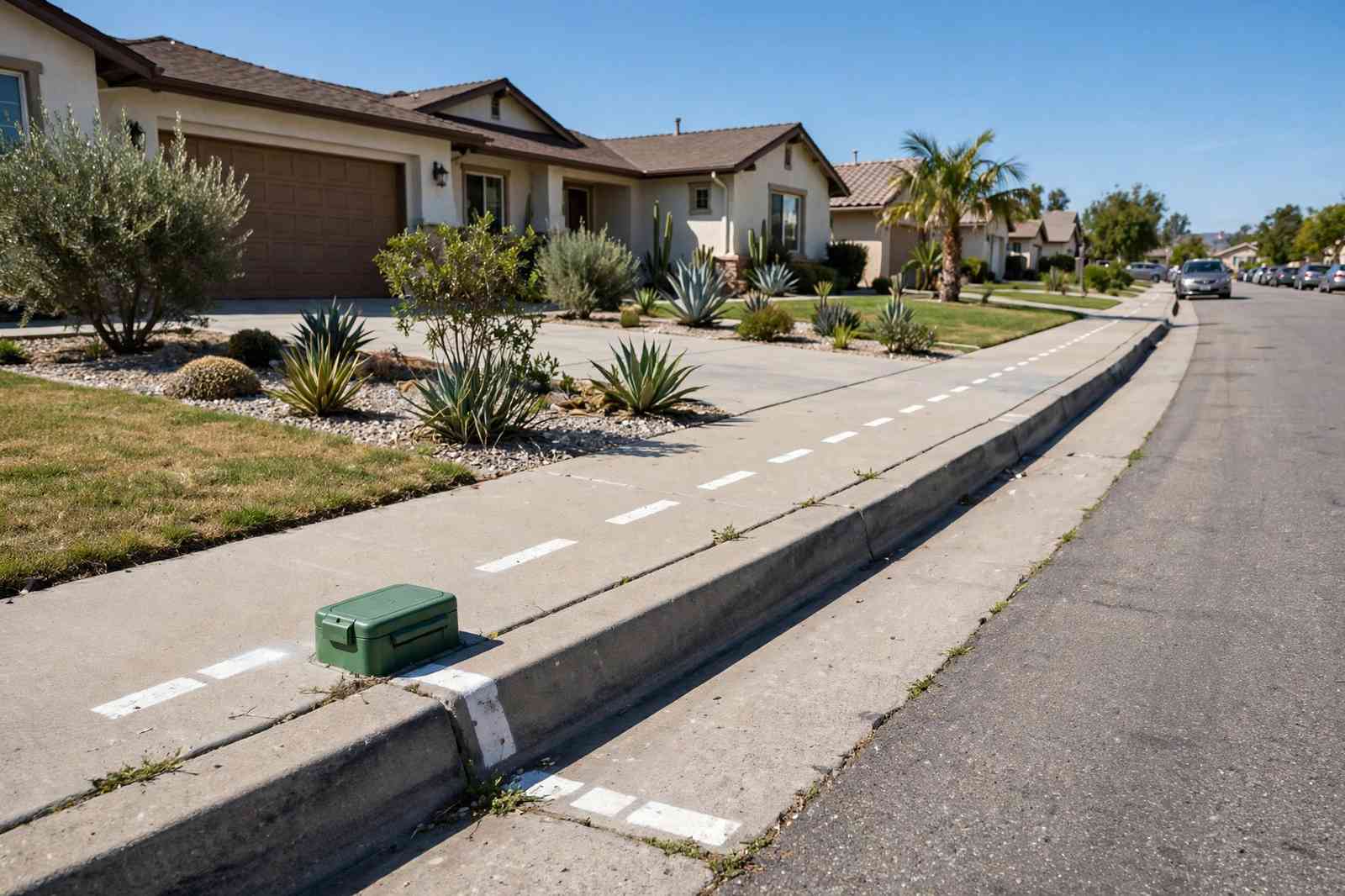
- The meter box. At the curb, the box holds the meter and usually a customer-side valve you can close with a meter key or a wrench. The valve on the street side belongs to the utility; if that is the only one that will move, call the utility rather than forcing it.
If none of the three stops the flow, call us and keep containing what you can. A leak that cannot be shut off is exactly the call this page exists for.
What Happens When We Arrive
Emergency visits run a compressed version of our standard process, in triage order:
- Source isolation first. We confirm the water is stopped or isolate the failed section, so the flooding ends even before the full diagnosis is done.
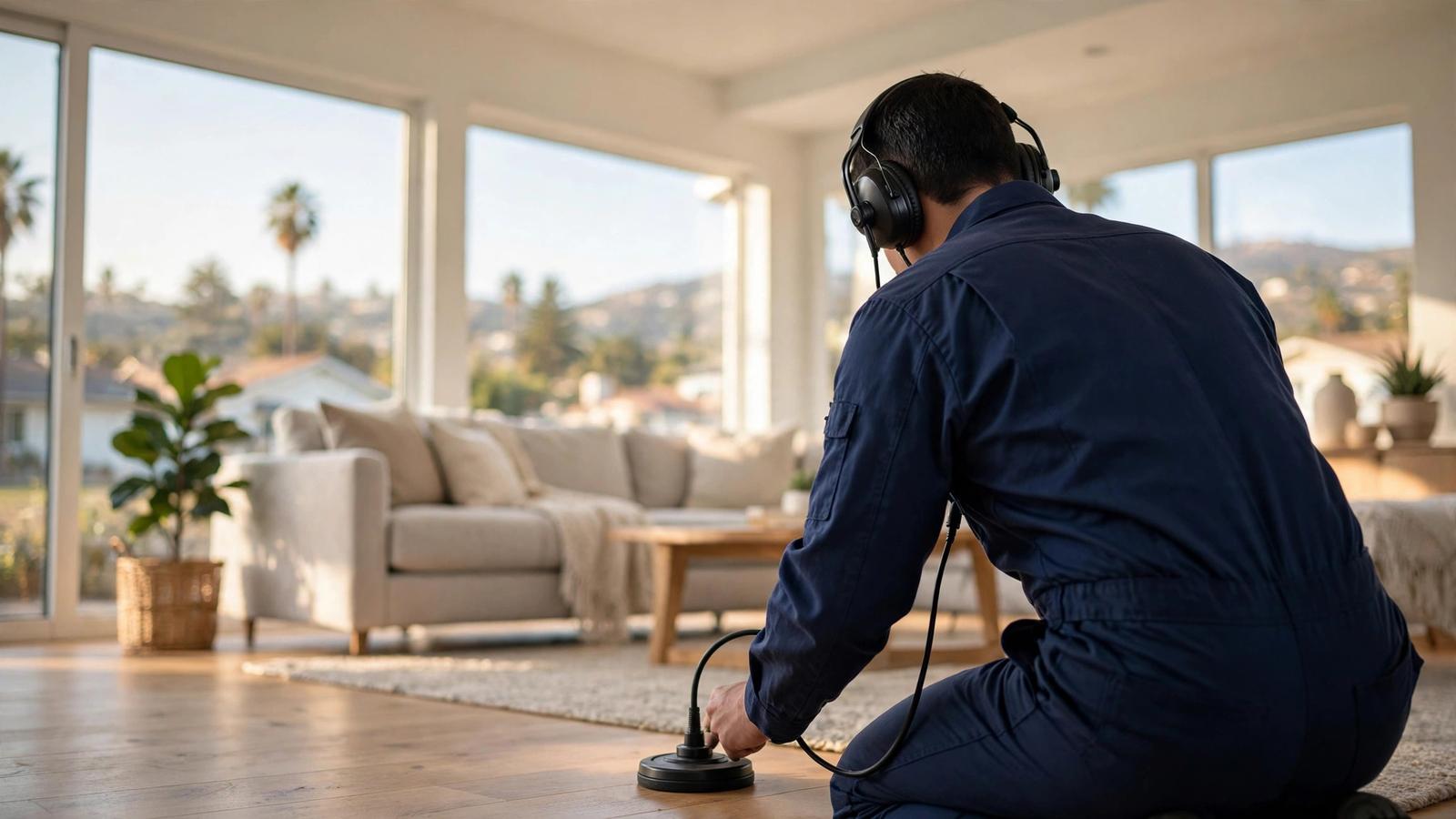
- Rapid pinpointing. Acoustic listening and thermal imaging locate the break fast; active leaks are loud and thermally obvious, which works in our favor.
- Damage-path documentation. We moisture-map the affected walls, floors, and ceilings so you know the full extent, not just the visible puddle. This documentation is invaluable for insurance claims.
- Clear handoff. You get the leak location marked, an explanation of what failed, and guidance on next steps: plumber for the repair, restoration company for drying, and what to tell your insurer.
We are detection specialists, which means our job is finding the source fast and accurately. We do not perform the plumbing repair or the water extraction, but our marked location and documentation make both of those jobs faster and cheaper.
After the Water Stops: What Comes Next
Once the source is isolated and the leak is marked, the clock starts on recovery. Standing water should be extracted quickly; porous materials like carpet padding, drywall, and insulation that stayed wet beyond a day or two often need removal rather than drying. Run dehumidifiers and air movers, and keep the space ventilated. Document everything for insurance: our moisture map and photographs plug directly into your claim file. Watch for mold in the following weeks, since musty odors returning after drying mean moisture remains trapped somewhere. Finally, fix the failed component properly rather than patching it twice. Our marked location lets your plumber go straight to the break, and our documentation lets your restoration company scope the drying correctly the first time.
Get Help Right Now
When water is flowing, every minute matters. Our emergency response is staffed by licensed and insured specialists carrying full acoustic, thermal, and moisture-mapping equipment, and same-day appointments are available across California. One call gets a specialist rolling to your property with everything needed to find the source and stop the damage.
- Rapid dispatch for active leaks and flooding
- Source isolation guidance by phone while we travel
- Full damage-path moisture documentation for insurance
- Marked leak location ready for your plumber
Water flowing where it should not be? Call (833) 382-2711 now. We will find the source and help you stop it.
The First Thing We Do When We Arrive
On an emergency call, the first job is not detection. It is confirming the water is actually off and staying off. Valves that were closed in a hurry sometimes only close partway, and a slow feed can keep adding water while everyone assumes the emergency is over. We verify the shutoff at the meter before anything else.
Once the flow is stopped, the inspection starts with the areas water reaches first: the lowest rooms, the walls behind wet fixtures, and anywhere flooring meets a wall. Finding the source quickly matters, but so does mapping how far the water already traveled, because that map is what your repair and drying decisions get built on.
Emergency Leak Detection Across California
We provide this service in every corner of California, a few of the 988 cities we serve.
Related Services
Pair this service with related detection, or see all 15 services.
Frequently Asked Questions
Where is my main water shutoff valve?
Common locations: near the water meter at the property line, in the garage on the wall facing the street, in a utility closet, or on an exterior wall. It is usually a round wheel or lever on the pipe entering the house. If you cannot find it, call us and we will guide you by phone while we dispatch.
Should I call a plumber or a leak detection specialist first?
If you know exactly what burst, a plumber. If water is appearing and the source is unclear, for example water through a ceiling or flooding with no visible break, detection first saves the plumber from exploratory demolition and gets the repair started faster.
Will my homeowner's insurance cover the damage?
Sudden and accidental water damage from a burst pipe is typically covered, while long-term slow leaks often are not. Our moisture mapping and photographic documentation of the source and damage path give your adjuster exactly what the claim needs. Check your policy for specifics.
How fast can you get here?
We dispatch as rapidly as routing allows, and same-day appointments are available across our California service area. When you call, we will give you a realistic arrival window and phone guidance for limiting damage while you wait.
How much does emergency leak detection cost?
Emergency visits are quoted upfront like any other job, accounting for the urgency and timing. Call (833) 382-2711 now and we will quote you before dispatching, no surprises.