 Leak Detection California
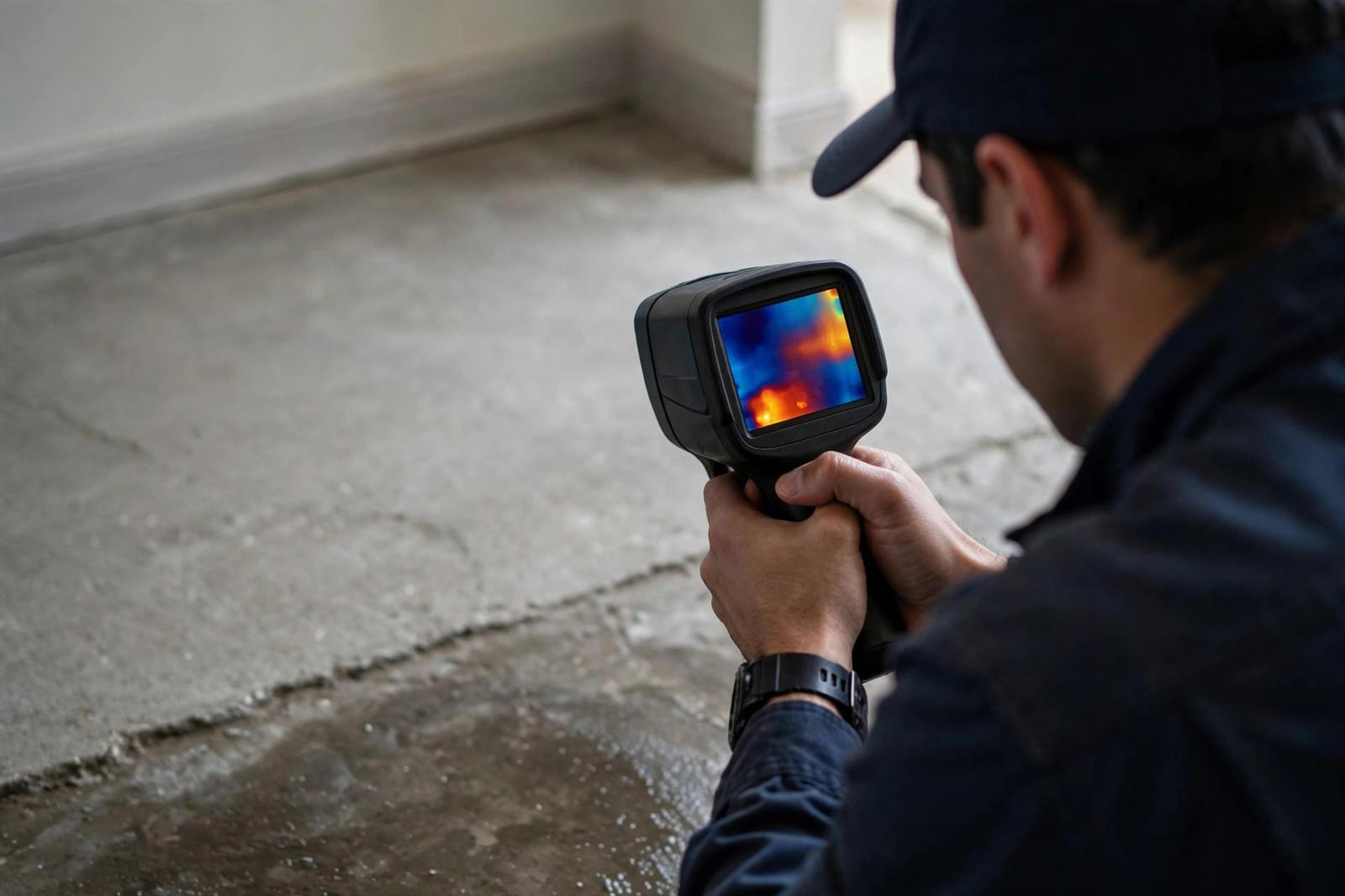
A slab leak is a leak in the water supply or drain lines that run beneath your home's concrete slab foundation. It is one of the most common and most destructive hidden leaks in California, where countless homes were built with copper water lines embedded in or buried under the slab. Because the pipe is encased in concrete and soil, the leak itself is invisible: you only see the effects, from a warm patch on the floor to a water bill that suddenly doubles.
Slab leak detection is the process of pinpointing that buried leak to within inches without jackhammering exploratory holes across your floor. Our specialists use thermal imaging cameras, acoustic listening devices, pressure isolation, and tracer gas to find the exact point of failure. Once it is marked, your plumber can open one small, precise area instead of demolishing half a room. If you suspect a slab leak, call (833) 382-2711 right away.
What Causes Slab Leaks
Slab leaks rarely happen without a reason. Understanding the cause helps predict whether you are dealing with a single failure or a system that is reaching the end of its life:
| Cause | Why it happens | What it means |
|---|---|---|
| Copper corrosion | Aggressive soil chemistry and minerals in water eat pinholes in copper over decades | Often the first of several; more leaks may follow |
| Electrolysis | Stray electrical current or dissimilar metals accelerate pipe deterioration | Can attack long runs of pipe at once |
| Abrasion | Pipes rub against concrete or rebar as they expand and contract with temperature | Usually a single wear point |
| Soil movement | Shifting or settling soil stresses buried pipe and joints | Common after drought-then-rain cycles in California |
| Poor original installation | Kinked pipe, nicked lines, or bad joints fail early | Often shows up within the first years of a home's life |
Hot-water lines fail first in most homes because heat accelerates corrosion and expansion. That is why the classic slab-leak symptom is a warm spot on the floor: it is almost always the hot side letting go.
Signs of a Slab Leak
Because the leak is buried, you have to read the secondary clues. Call for a detection survey if you notice any of these:
- A warm or hot spot on a tile, wood, or concrete floor
- The sound of running water when all fixtures and appliances are off
- A water bill that spikes without explanation
- Damp carpet, warped flooring, or a musty smell near the floor
- Low water pressure, especially on the hot side
- Cracks in walls or flooring, or a floor that feels uneven
- Your water heater running constantly to keep up
- Mildew or excess moisture along baseboards
One warm spot plus the sound of running water is the textbook combination. Do not wait for visible flooding: by the time water pushes up through the slab, it has already been saturating the soil and eroding support beneath your foundation for weeks.
How We Pinpoint Slab Leaks Without Guesswork
Finding a leak under six inches of concrete takes layered technology. Our process typically runs in this order:
- Thermal imaging sweep. For hot-water lines, an infrared camera shows the heat plume spreading through the slab from the leak point, often narrowing the search to a few square feet in minutes.
- Acoustic listening. Ultra-sensitive ground microphones pick up the hiss of pressurized water escaping the pipe. We grid the floor and compare signal strength point by point.
- Pressure isolation. We isolate the hot side from the cold side, and individual runs from each other, to prove which line is actually losing pressure before anyone picks up a jackhammer.
- Tracer gas confirmation. For leaks too small to hear, we purge the line and introduce a hydrogen-nitrogen mix, then trace the gas as it rises through the concrete with a sensitive sniffer.
Each layer confirms the last. By the time we mark the floor, the location is typically accurate to within inches, which is the difference between a one-square-foot opening and a trench across the room.
Detection Methods Compared: What Each One Proves
Homeowners ask which machine finds slab leaks, and the honest answer is that no single one does. Each method proves something different, and a confident mark comes from methods agreeing:
| Method | How it works | Best for | Its limit |
|---|---|---|---|
| Acoustic listening | Ground microphones amplify the sound of pressurized water escaping the pipe | Supply leaks under slab and soil | Very small or low-pressure leaks can be nearly silent |
| Thermal imaging | An infrared camera maps temperature patterns spreading through the floor | Hot-water line leaks | Cold lines leave little thermal trace |
| Pressure isolation | Lines are separated and pressure-tested one at a time | Proving which line is guilty before pinpointing | Locates the line, not the exact point |
| Tracer gas | A safe hydrogen and nitrogen mix is introduced and traced as it rises through the concrete | Quiet leaks that acoustic gear cannot hear | Needs the line drained and isolated first |
| Electromagnetic locating | Traces the buried route of the pipe itself | Knowing where lines run before listening along them | Finds the pipe, not the leak |
The sequence matters as much as the tools. Isolation proves the guilty line, locating maps its route, listening and imaging narrow the stretch, and a second method confirms the mark before anyone talks about opening the floor.
After the Pinpoint: What Happens Next
The visit ends with three things in your hands: a physical mark on the floor at the leak point, a plain-language explanation of which line failed and why it likely failed, and written findings you can pass on. That handoff is where detection stops and repair planning starts, and it goes more smoothly when you know what each party does with it.
Your repair plumber uses the mark to scope the options in the next section, from a single spot repair to a reroute, and to quote the job from a known location instead of an open-ended search. Many homeowners also share the findings with their insurer, since a documented leak location and date is the core evidence most claim files are built around; what any individual policy covers is a question for the insurer, not for the detection report. While you wait for the repair, keep the failed line isolated if your plumber advises it, watch the meter for changes, and dry any damp flooring or baseboards promptly, so a found leak does not keep doing quiet damage after the diagnosis.
Repair Options After the Leak Is Found
Detection is only the diagnosis; the repair is a separate decision you will make with your plumber. Knowing the options ahead of time helps you have that conversation:
| Option | What it involves | Best when |
|---|---|---|
| Spot repair | Open the slab at the marked point and fix the single failed section | Newer plumbing, first leak, isolated failure |
| Reroute overhead | Abandon the under-slab line and run a new line through walls or attic | Older copper with a history of pinhole leaks |
| Whole-house repipe | Replace all supply lines, usually with PEX routed overhead | Multiple slab leaks or system-wide corrosion |
If your home has already had two or more slab leaks, plumbers generally recommend rerouting or repiping rather than chasing the next pinhole. A single first-time leak in otherwise healthy pipe is usually a good candidate for a spot repair. Either way, precise detection keeps the repair as small as the situation allows. Call (833) 382-2711 now and we will pinpoint your slab leak fast, so the fix stays surgical.
Why We Map the Pipe Run Before Anything Else
Under a slab, pipes do not run randomly. They follow the logic of the original build: from the service entry to the water heater, then out to the kitchen, bathrooms, and laundry in runs a plumber laid out decades ago. Before pinpointing a slab leak, our technicians reconstruct that layout from the fixture positions, the heater location, and the sound pattern the leak makes along the floor.
Mapping first matters because the repair that follows is only as small as the location is precise. A leak marked within a few inches means a small opening exactly where it counts. A leak marked somewhere in this room means exploratory demolition. The extra minutes spent mapping are what keep the repair surgical.
Slab Leak Detection Across California
We provide this service in every corner of California, a few of the 988 cities we serve.

Related Services
Pair this service with related detection, or see all 15 services.

Frequently Asked Questions
How accurate is slab leak detection?
With layered methods, acoustic and thermal findings cross-checked by pressure isolation, the mark is typically within inches of the actual break. That accuracy is the reason the survey layers methods instead of trusting one reading: a location confirmed two different ways is a location a plumber can open with confidence, and it is what keeps the repair opening small.
Should I repair the slab leak or reroute the line?
It depends on the age and condition of your plumbing. A first-time pinhole in newer pipe usually justifies a spot repair. If the system is older copper with a history of leaks, rerouting the line overhead avoids future jackhammering. Our detection report gives your plumber the exact location and context needed to recommend the right option.
Will finding the leak damage my floors?
Detection itself is non-invasive: thermal cameras, listening devices, and gas tracing all work from the surface. Only the actual repair requires opening the floor, and because we mark the leak within inches, that opening stays as small as possible.
Can you detect a slab leak through tile or wood flooring?
Yes. Thermal imaging reads heat through tile, stone, and thin floor coverings, and acoustic equipment works through any hard surface. Thick carpet and padding can muffle sound slightly, but pressure isolation and tracer gas confirm the location regardless of what is on top of the slab.
How long does slab leak detection take?
Most slab leak surveys take one to three hours. A clear hot-water leak with a strong thermal signature can be found quickly; a tiny cold-side leak may require tracer gas and take longer. We stay until the leak is pinpointed.
What if there are multiple leaks under the slab?
It happens, especially with aging copper. Our pressure-isolation process tests each run separately, so we can identify every failing section, not just the loudest one. That complete picture is what lets you choose wisely between spot repair, reroute, or repipe.