 Leak Detection California
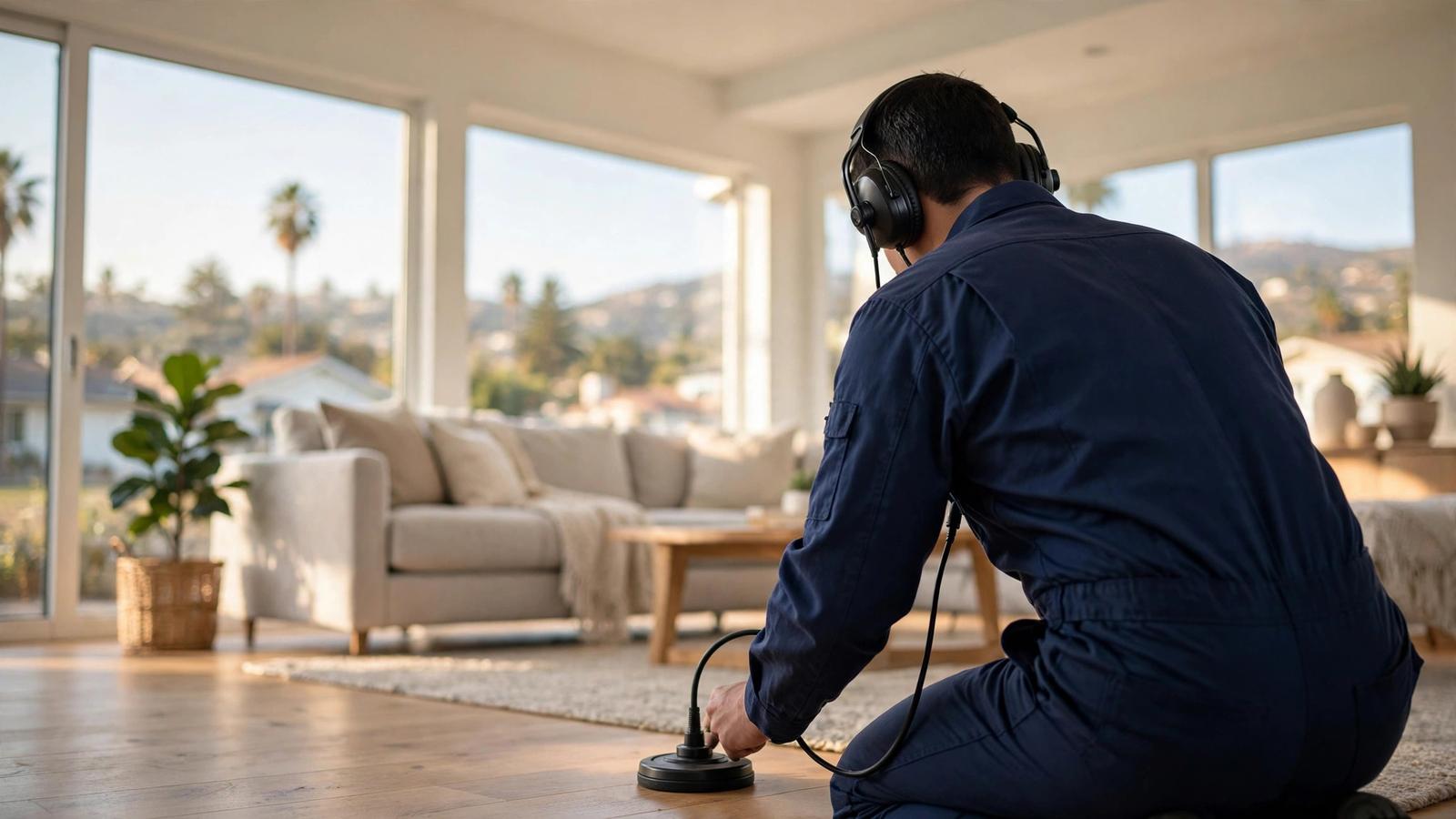
Water doesn't pause while you weigh your options, so a leak you found this morning shouldn't have to wait until next week. That's why we keep same-day appointments available for Bakersfield: call, describe what you're seeing or hearing, and a technician can often be at your door the same day to track the problem to its source.
Speed matters because every hour of an active leak is another hour of water where it doesn't belong, soaking framing, feeding mold, undermining soil beneath the slab. Our leak detection visits are built for urgency without corner-cutting: the same acoustic, thermal, and pressure methods, the same careful pinpointing, just scheduled today instead of next Tuesday. We serve all 22 ZIP codes in the Bakersfield area, and a suspected break doesn't get cheaper over the weekend, so neither should the wait for answers.
Leak Detection Notes for Bakersfield Homes
Bakersfield combines valley heat, hard water, and a housing stock that spans older central neighborhoods and fast growing tracts on the outskirts, and each part fails a little differently. Older homes may carry galvanized or aging copper that narrows and weakens over time, while newer slab homes carry the familiar under floor risk, with warm spots and climbing bills as the early signs. Hard water adds a slow background load on every fitting in the house.
The dry climate means leaks rarely announce themselves with surface water. Sandy and silty valley soils drain a buried loss away, and summer irrigation can mask a yard leak entirely, since wet ground in July looks normal here. In Bakersfield, the meter is the most reliable witness: a dial that creeps with every fixture closed, or a bill that steps up across two or three cycles, is reason enough to pinpoint before the loss has run a whole season.
Leak Detection Services in Bakersfield
Specialized detection for every kind of leak, see all 15 services.
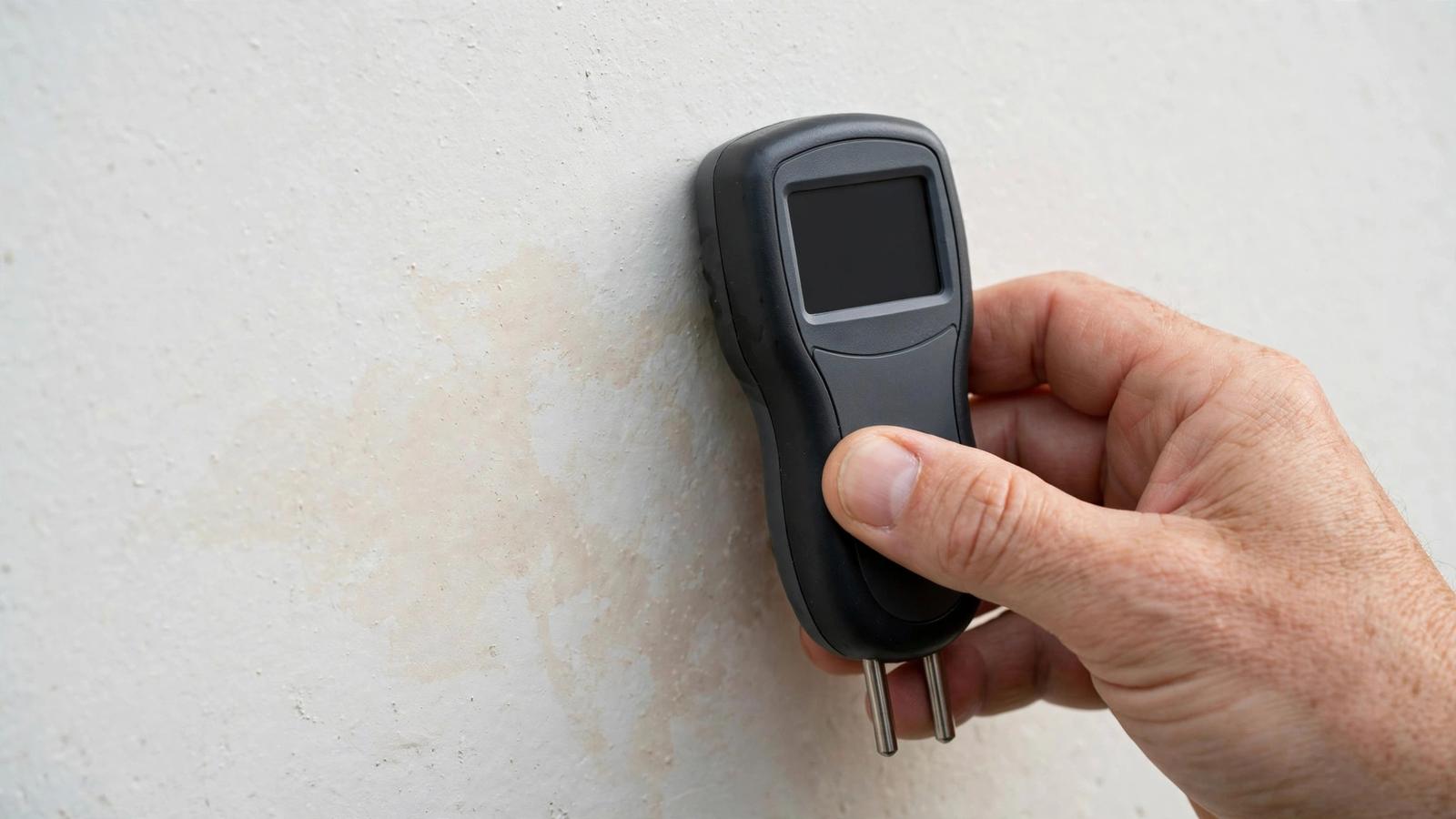
Ceiling & Wall Leak Detection
Ceiling and wall leak detection is the art of finding water hiding inside your home's structure. A brown stain…
Learn more →
Commercial Leak Detection
Commercial leak detection is the location of hidden water leaks in non-residential properties: office building…
Learn more →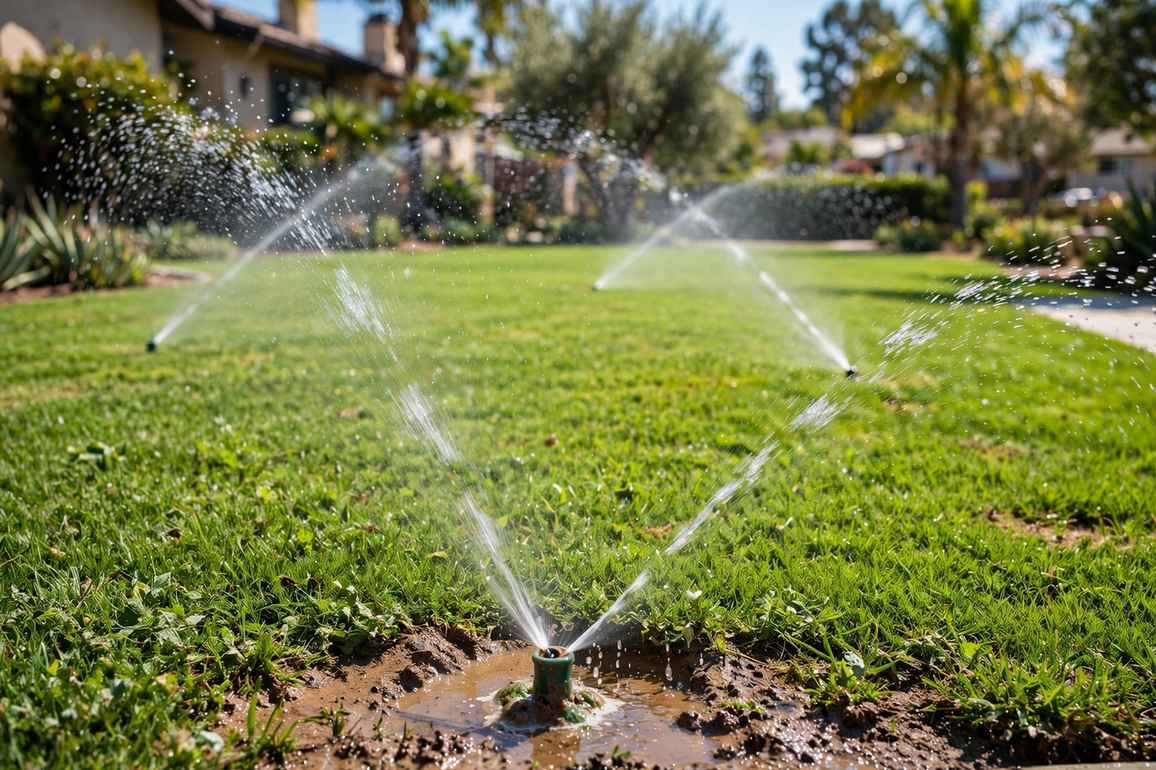
Irrigation & Sprinkler Leak Detection
Irrigation and sprinkler leak detection is the process of finding water losses in landscape watering systems:…
Learn more →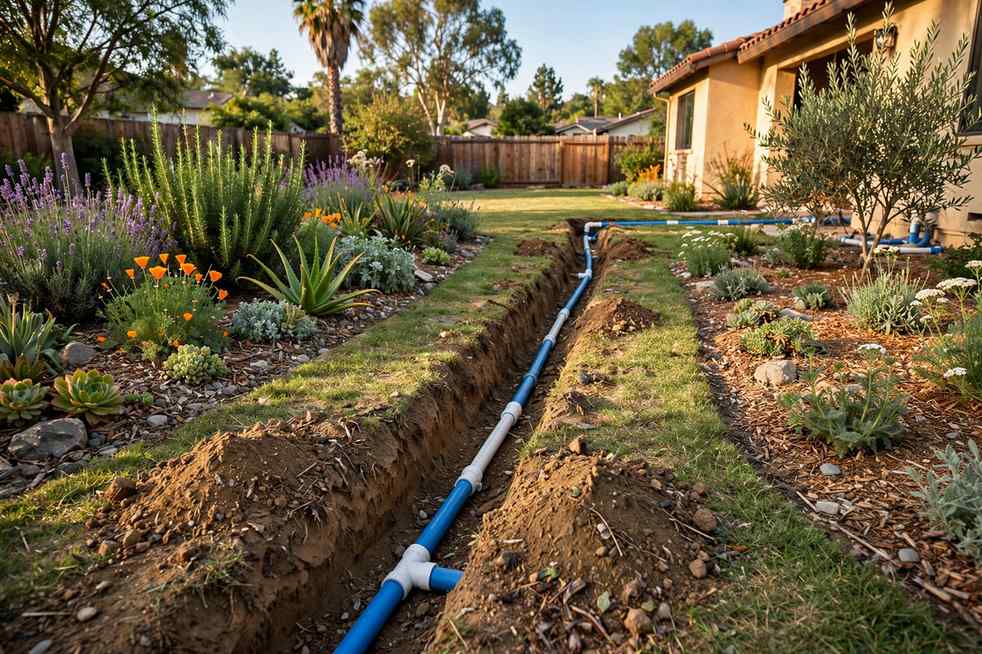
Outdoor Water Line Leak Detection
Outdoor water line leak detection covers the potable water lines that distribute water around your yard after…
Learn more →Signs You May Need Leak Detection in Bakersfield
Not every leak happens indoors. Between irrigation systems, pool plumbing, and main service lines, Bakersfield properties have plenty of buried water lines, and outdoor leaks can waste enormous volumes before anyone notices, because there's no wall to stain and no floor to warp. Outdoor warning signs include:
- A pool losing water faster than evaporation can explain
- Soggy or spongy lawn areas that never seem to dry out
- One patch of grass growing noticeably faster and greener than the rest
- Water pooling near the foundation or along walkways
- The meter spinning with the house shut off but irrigation valves open
- Hissing or running water audible near hose bibs or valve boxes
- Settling or cracking in driveways and patios, from soil washing away underneath
Outdoor leaks get their own toolkit, line tracing, pressure testing, and acoustic equipment tuned for soil. If your Bakersfield yard is telling this kind of story, a targeted outdoor inspection will sort irrigation trouble from a supply-line break without digging up the whole property.
How We Find Leaks in Bakersfield
Half the battle with a buried leak is knowing where the pipe even runs. Electronic line tracing solves that: a signal is induced onto the pipe, and a receiver above ground follows it, mapping the line's exact path and depth. On Bakersfield properties where original plumbing plans are long gone, this map is what makes everything else possible, you can't pinpoint a break on a line you can't find.
Once the path is known, moisture meters take over the confirmation work. Pin and pinless meters measure moisture content in drywall, wood, and concrete, drawing a contour map of the wet zone that shows both the epicenter and how far water has traveled. For drain-side problems, shower pans, tub overflows, toilet bases, dye testing is the simple, decisive tool: colored dye goes in the fixture, and if it appears where it shouldn't, the path is proven.
This is non-invasive leak detection done properly: confirm before you cut. Mapping the line, measuring the moisture, and proving the path with dye means the repair crew opens exactly the right spot, and nothing else. That discipline is the difference between a one-day fix and a week of exploratory demolition.
What a Leak Detection Visit Looks Like
Knowing what happens during a visit takes the mystery out of it. Here is how a typical leak detection appointment unfolds:
- The call: you describe the symptoms, bill spike, sounds, stains, and we schedule, often for the same day.
- Meter check on arrival: the technician verifies water is actually escaping by watching the meter with fixtures off, establishing there's a real leak to find.
- Systematic sweep: acoustic listening, thermal imaging, and moisture readings work across the suspected area, narrowing from rooms to square feet to inches.
- Pinpoint and mark: the confirmed location is marked directly on the floor or wall, so there's no ambiguity later.
- Findings and next steps: you get a clear explanation of what was found and where, plus guidance on getting the repair itself scheduled.
Most visits wrap up in a single appointment, and because the methods are non-invasive, your home looks the same when we leave as when we arrived, minus the mystery of where the water was going.
Areas We Serve in Bakersfield
Our technicians provide leak detection throughout Bakersfield, California, covering 22 zip codes:
Show all 22 zip codes we serve in Bakersfield
- 93301
- 93302
- 93303
- 93304
- 93305
- 93306
- 93307
- 93308
- 93309
- 93311
- 93312
- 93313
- 93314
- 93380
- 93383
- 93384
- 93385
- 93386
- 93387
- 93388
- 93389
- 93390
Nearby Cities We Serve
Also serving neighboring communities around Bakersfield, see all 988 California cities.
Why Homeowners in Bakersfield Call Us
California is all we serve, and that focus shows in the work. Slab foundations, irrigation networks, pool plumbing, older galvanized lines, these are the patterns our technicians read every day, so Bakersfield jobs benefit from experience matched to how homes here are actually built. Every appointment leads with non-invasive methods, offers same-day scheduling, and ends with a clearly marked, documented location. Licensed, insured, and equipped with the full professional toolkit, that's the standard for leak detection on every visit, in every ZIP code we cover. When detection is all you do, you get very good at it.