 Leak Detection California
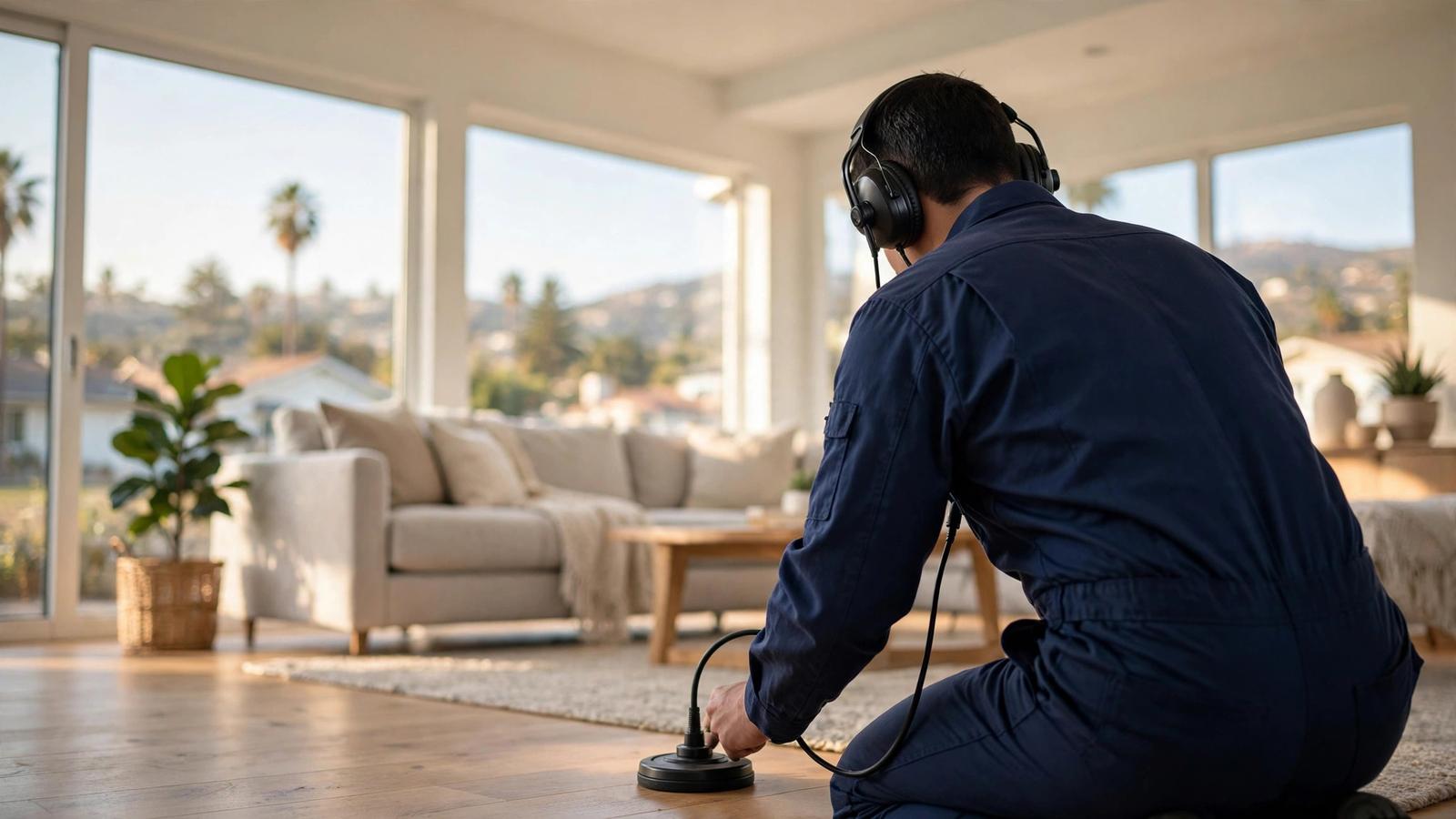
Not every hidden leak is the same, and neither is the search. A warm spot on a slab floor, a spinning water meter, a soggy strip of lawn, and a pool that keeps losing water each point to different plumbing, different tools, and different expertise. That is why Leak Detection California organizes its work into 15 specialized services across four categories: interior, exterior and underground, water-system specific, and commercial and specialty.
Every service uses the same non-invasive approach, acoustic listening, thermal imaging, pressure testing, moisture mapping, and tracer methods, applied to the specific system in question. Browse the categories below, use the symptom lookup table to match what you are seeing to the right specialty, or skip the research and call (833) 382-2711: we will route you to the right one.
Our Leak Detection Services
Fifteen specialized services, grouped by where the leak hides.
Interior Leak Detection
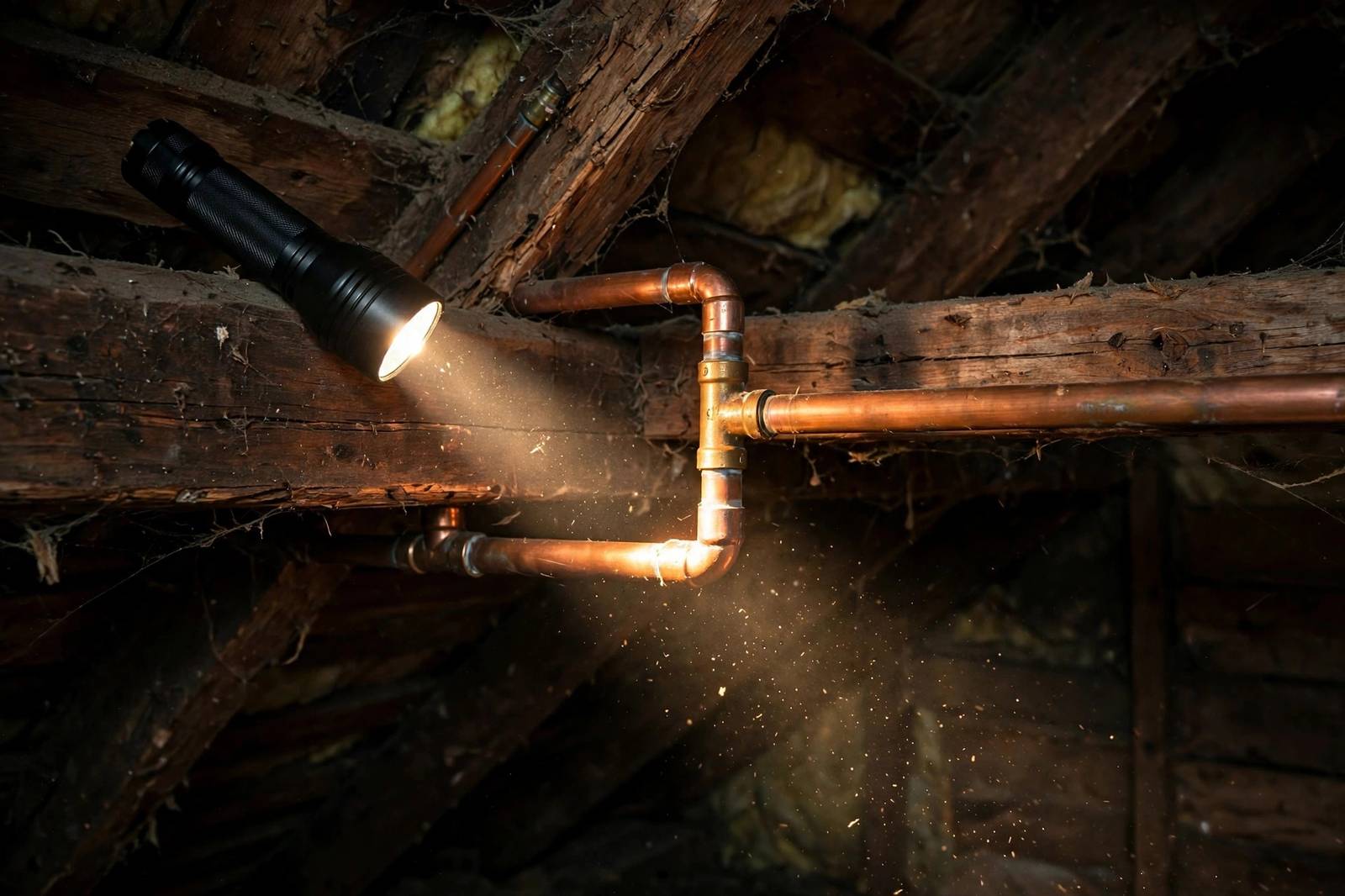
Attic Leak Detection
Attic leak detection is the process of tracing moisture found in an attic back to its true source. It is trick…
Learn more →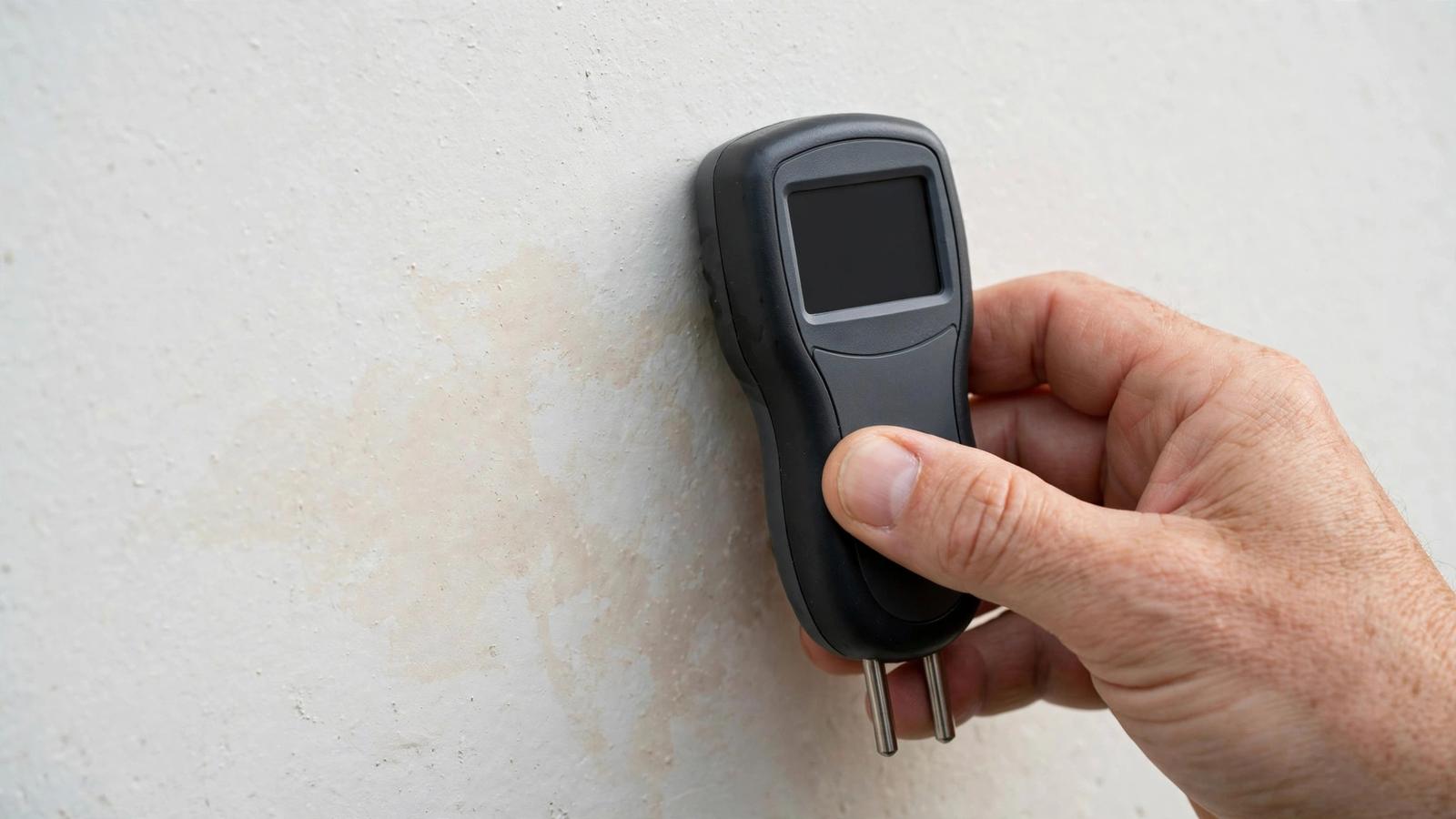
Ceiling & Wall Leak Detection
Ceiling and wall leak detection is the art of finding water hiding inside your home's structure. A brown stain…
Learn more →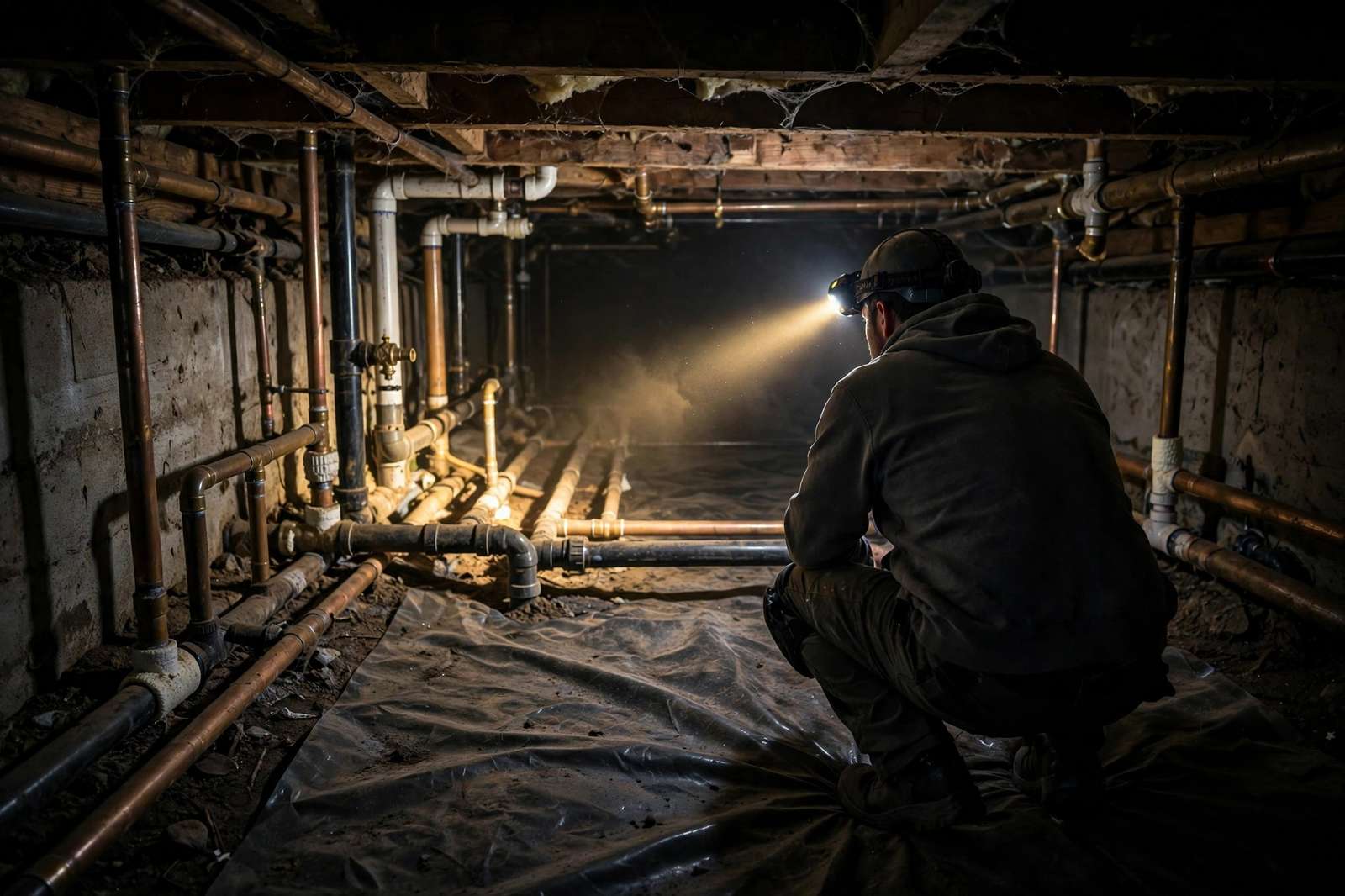
Crawlspace Leak Detection
Crawlspace leak detection is the inspection and diagnosis of water intrusion beneath homes built over a crawls…
Learn more →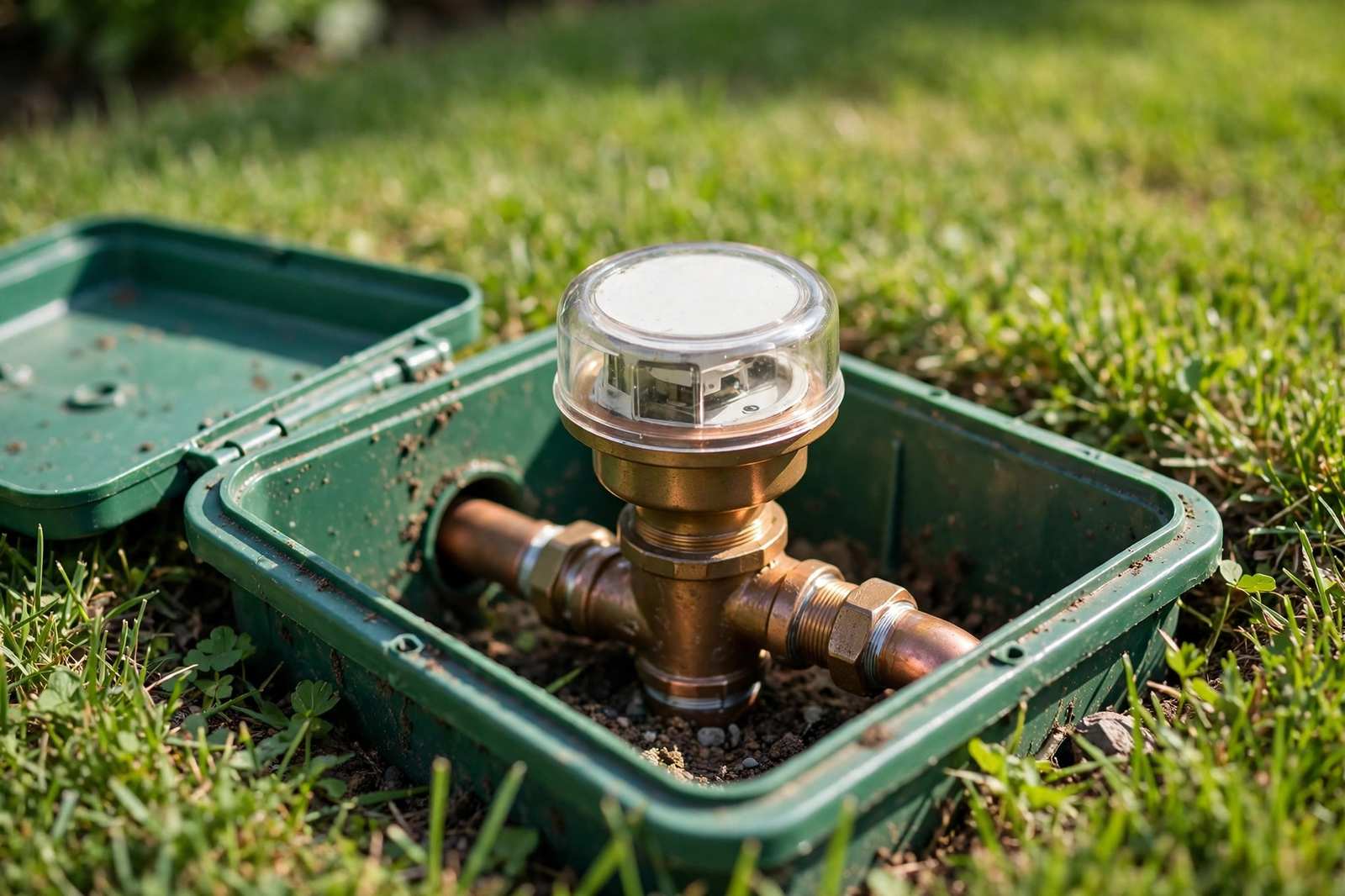
Water Meter Leak Detection
Water meter leak detection is the use of your water meter as a diagnostic instrument. That unassuming dial or…
Learn more →Exterior & Underground
Slab Leak Detection
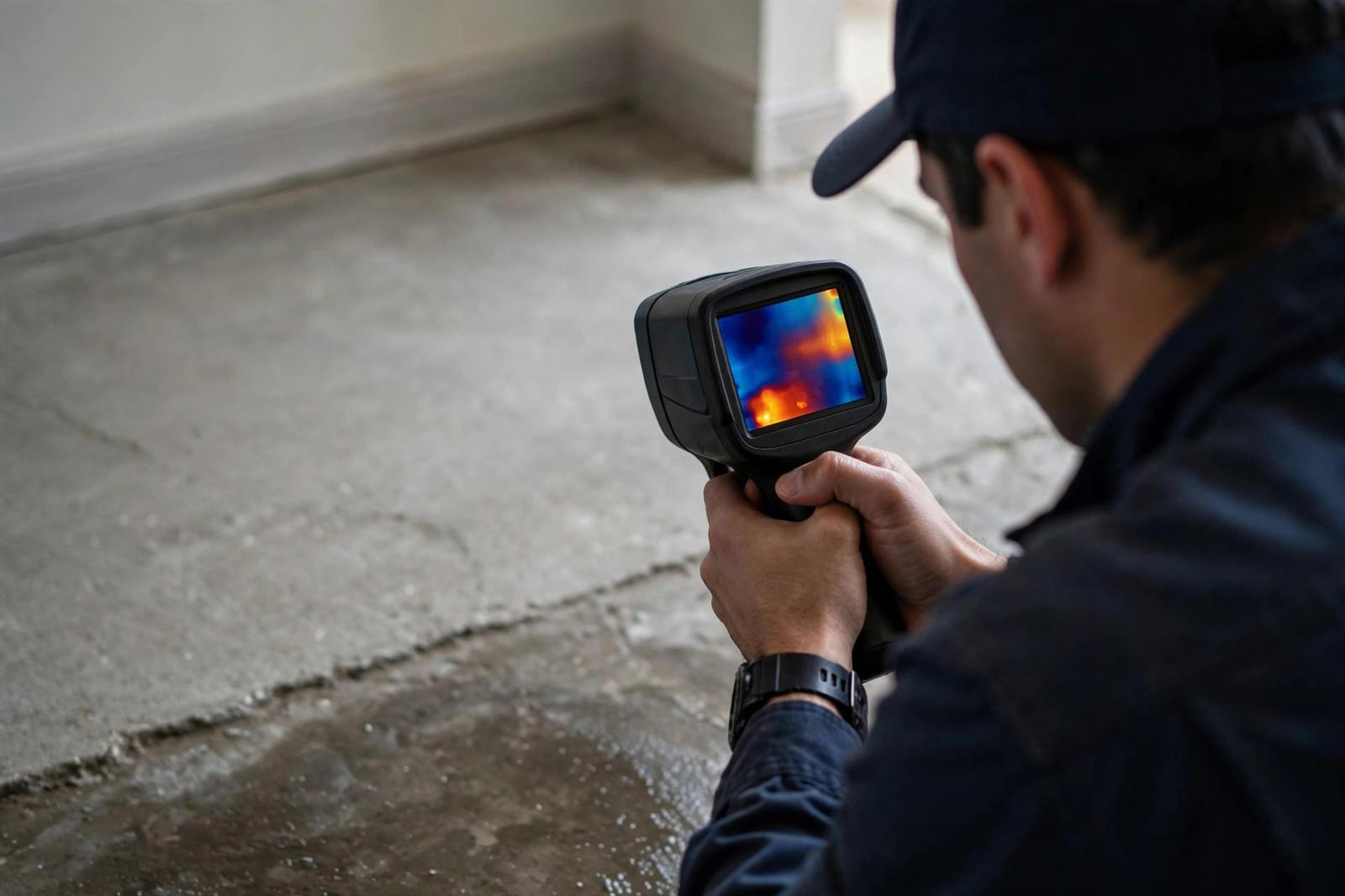
A slab leak is a leak in the water supply or drain lines that run beneath your home's concrete slab foundation…
Learn more →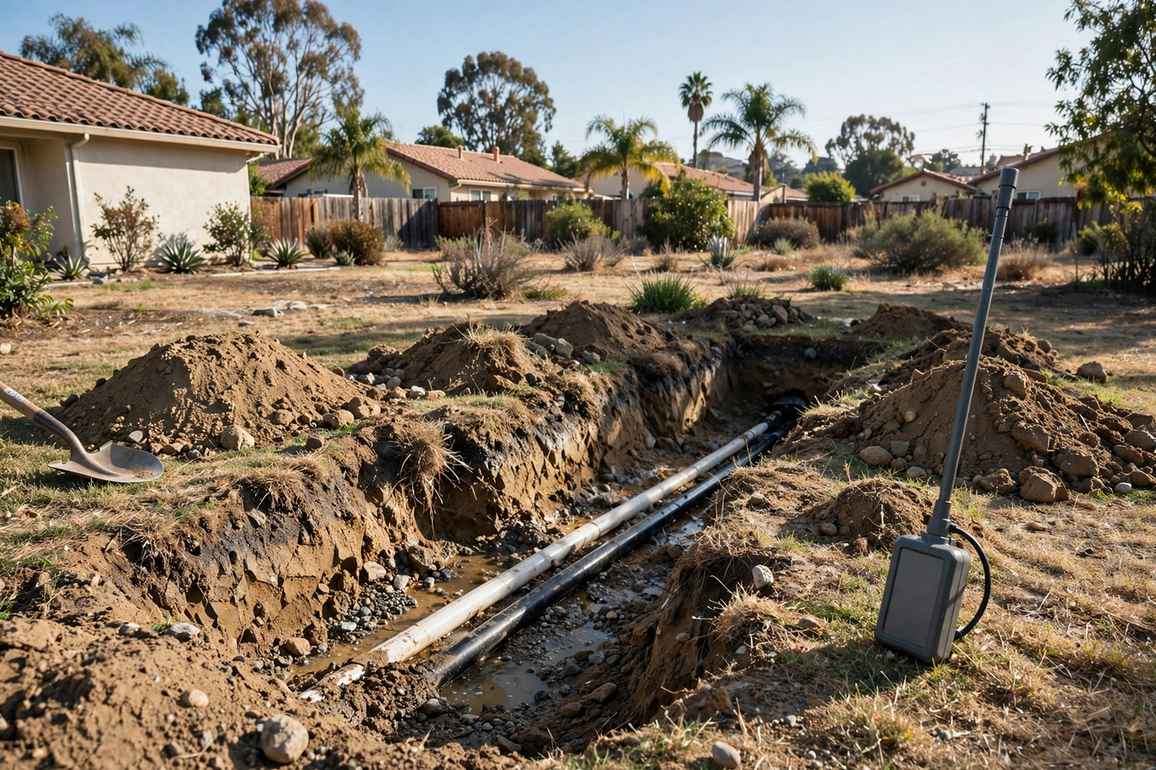
Underground Pipe Leak Detection
Underground pipe leak detection is the tracing, locating, and leak-pinpointing of buried water lines: the deep…
Learn more →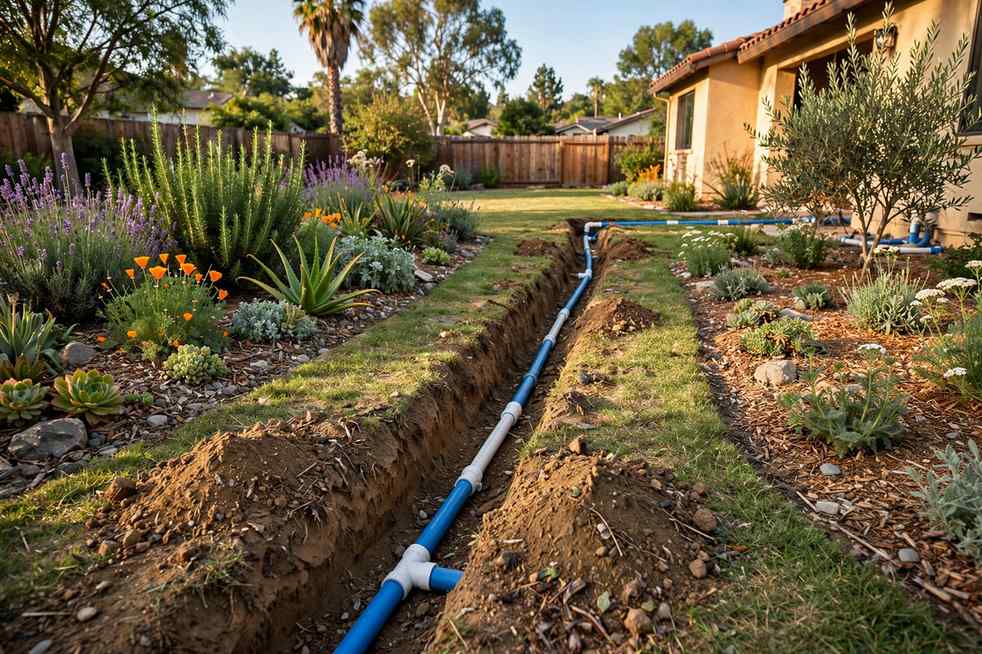
Outdoor Water Line Leak Detection
Outdoor water line leak detection covers the potable water lines that distribute water around your yard after…
Learn more →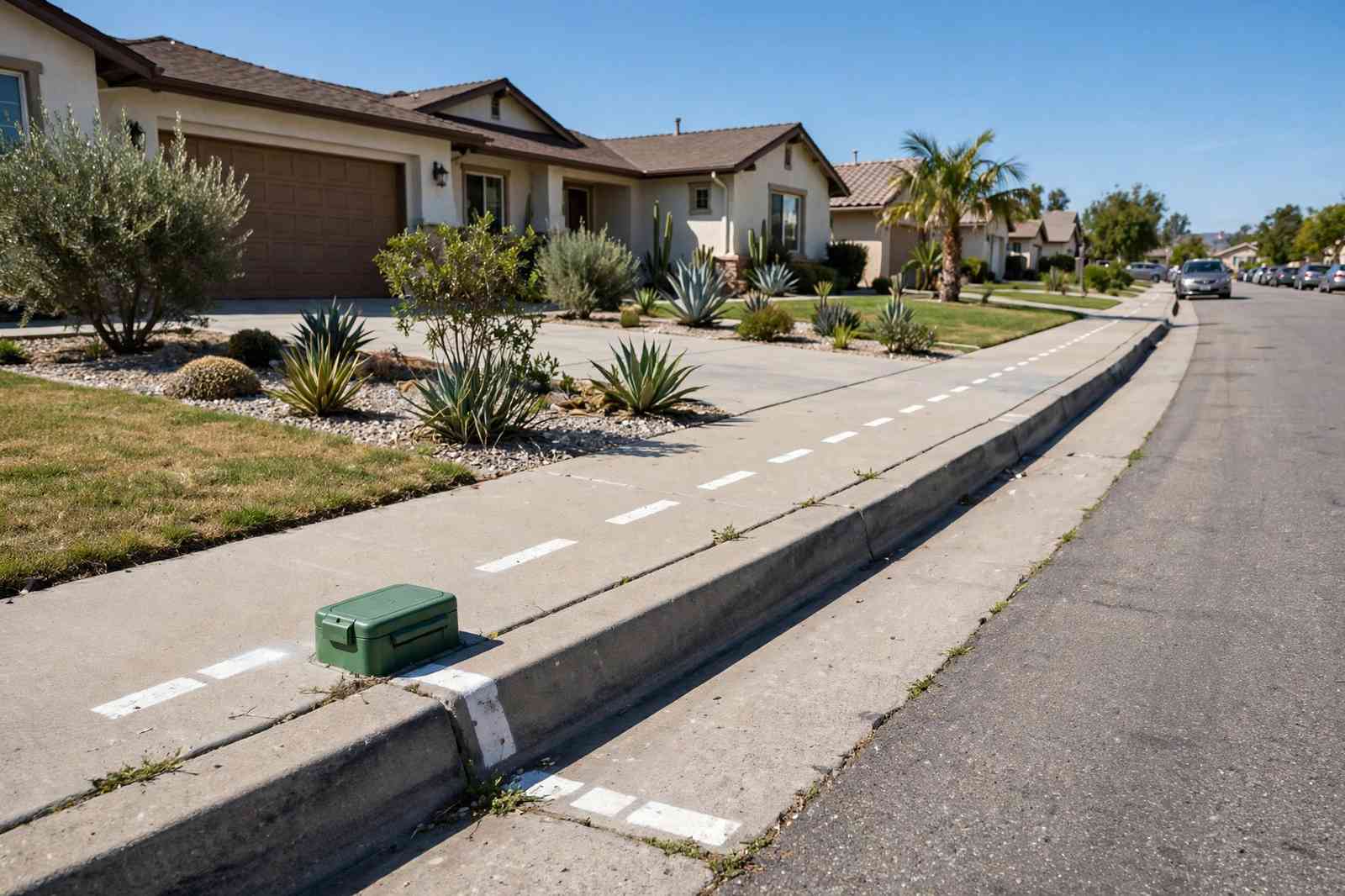
Water Service Line Leak Detection
Water service line leak detection targets one specific pipe: the pressurized line running from the street's wa…
Learn more →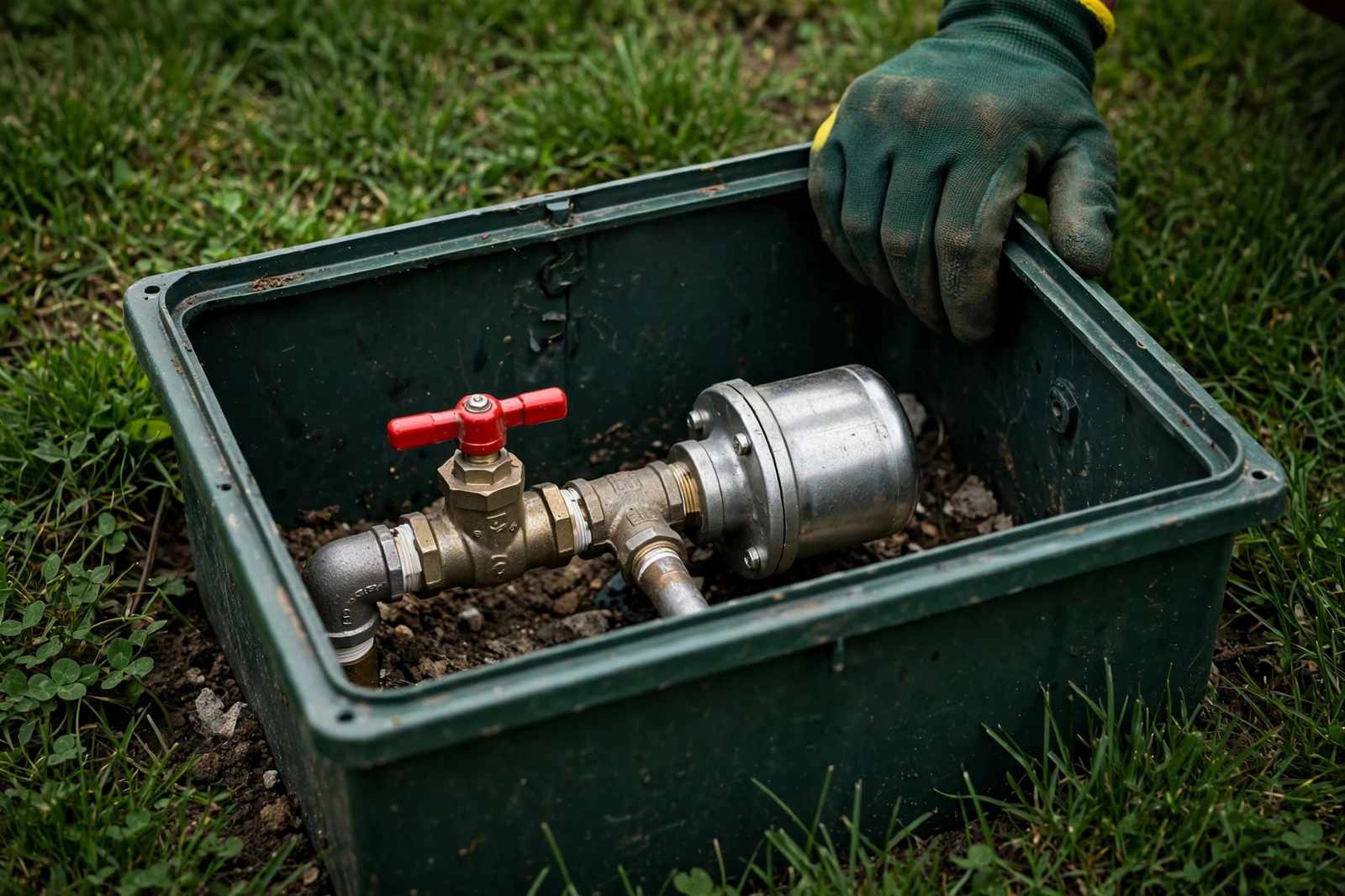
Yard Meter Box Leak Detection
Yard meter box leak detection is meter-side diagnostics: the focused investigation of everything happening in…
Learn more →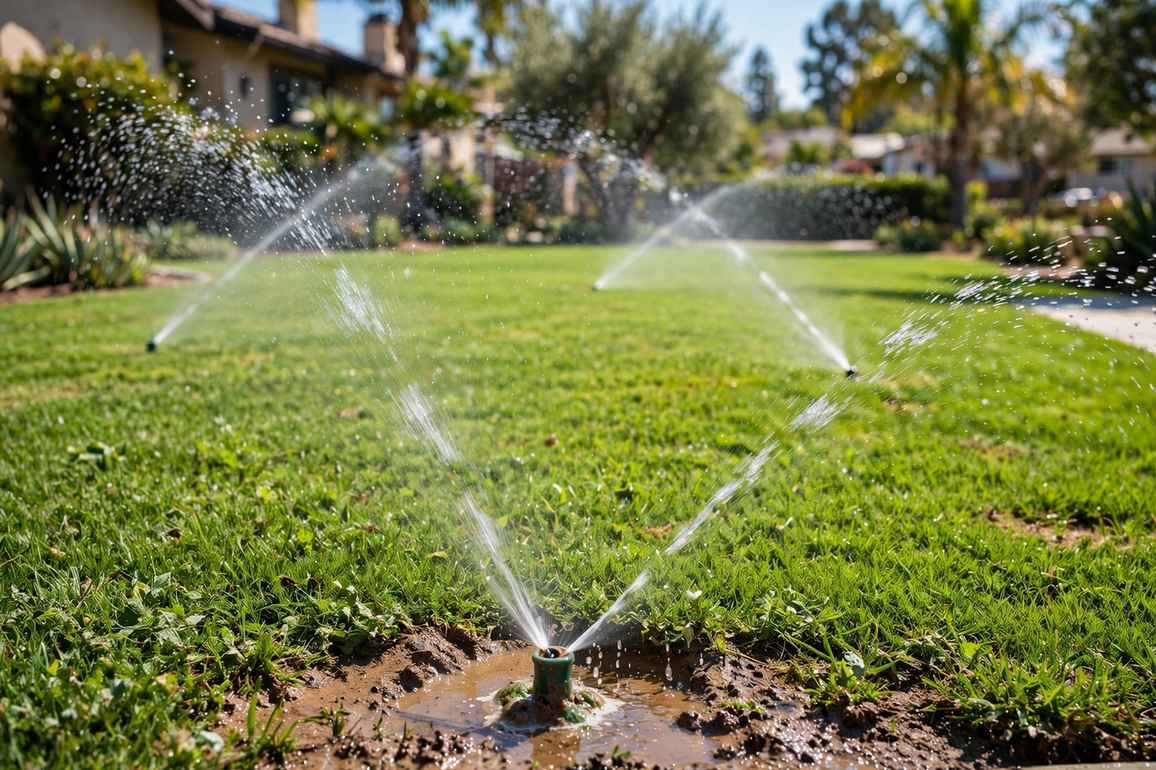
Irrigation & Sprinkler Leak Detection
Irrigation and sprinkler leak detection is the process of finding water losses in landscape watering systems:…
Learn more →Water-System Specific
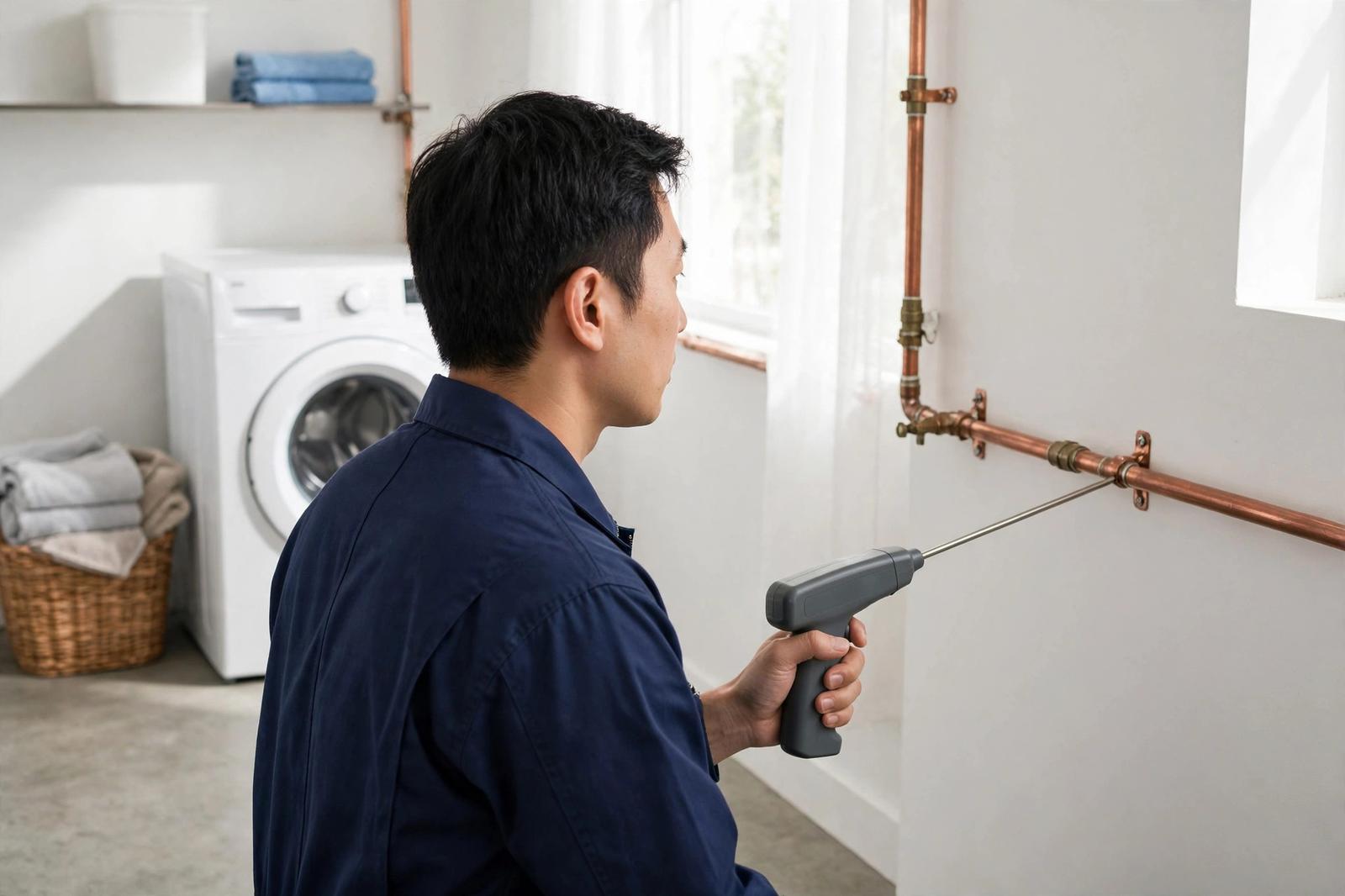
Water Leak Detection
Water leak detection is the specialized process of finding hidden plumbing leaks with non-invasive technology…
Learn more →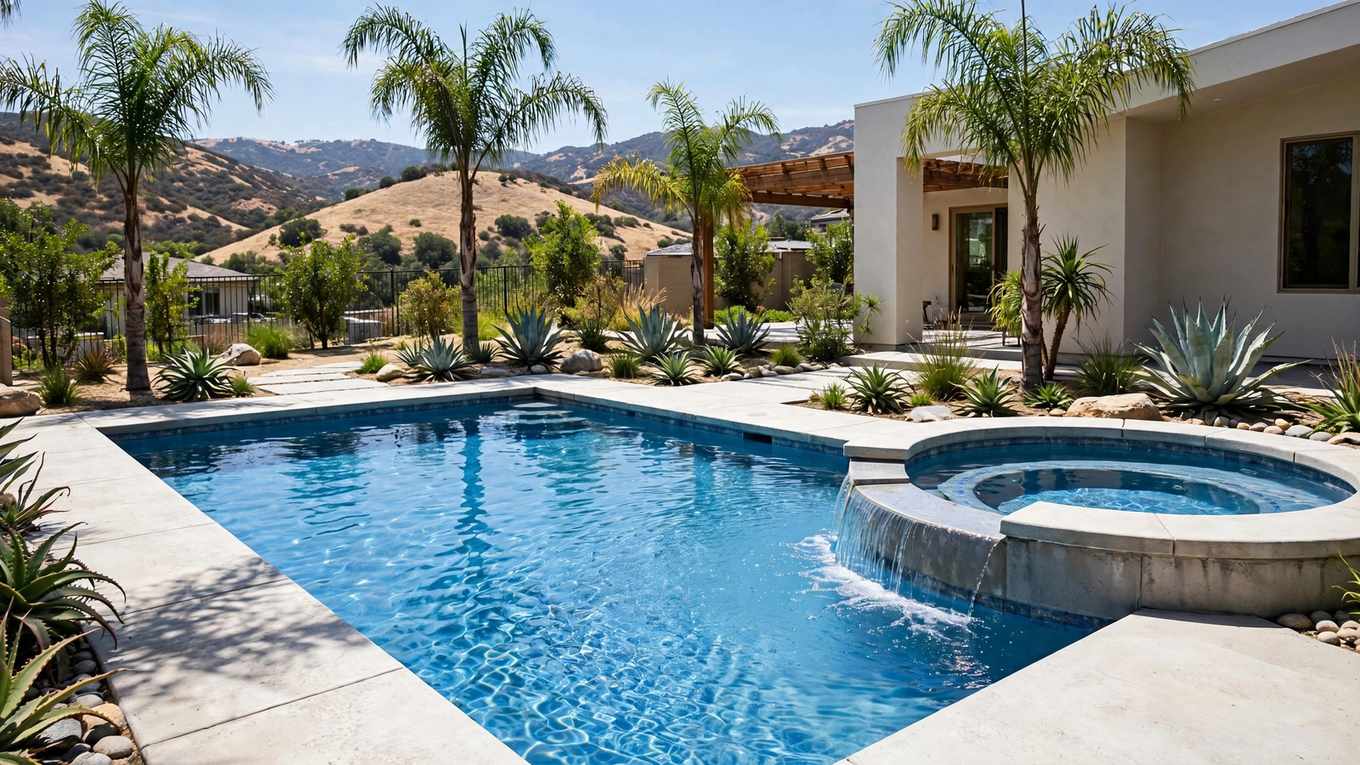
Pool & Spa Leak Detection
Pool and spa leak detection is the diagnosis of water loss from swimming pools, spas, and their equipment: dis…
Learn more →
Emergency Leak Detection
Emergency leak detection is rapid-response diagnosis when water is actively damaging your property right now:…
Learn more →Commercial & Specialty

Why We Specialize Instead of Generalizing
A leak under a slab and a leak at a pool skimmer are both “water leaks,” but they share almost nothing in how they are found. Slab work leans on acoustic listening through concrete and thermal imaging of hot-water lines. Pool work leans on pressure testing isolated plumbing loops and dye verification at fittings. Send the wrong toolkit, or the wrong mental model, and the diagnosis suffers.
Specialization also prevents the most common misdiagnosis in the trade: confusing where the water shows up with where it originates. Water travels along pipes, framing, and soil before it surfaces, so a ceiling stain two rooms from the actual breach is routine. Each of our 15 services trains on the failure patterns of its own system, which is what lets a specialist look past the symptom and test the true source.
California housing makes this matter more. The state mixes slab-on-grade tracts, raised-foundation bungalows, hillside homes with complex drainage, mid-century plumbing, new PEX manifolds, sprawling irrigation, and pools, sometimes all on one street. Matching the specialty to the system is how an inspection stays fast, accurate, and minimally invasive.
Interior Leak Detection
Leaks inside the building envelope hide in attics, wall cavities, ceiling assemblies, and crawlspaces, and the meter that measures it all keeps the score. Interior work is detective work in finished spaces, where the goal is a confirmed location with zero unnecessary damage.
- Attic leak detection: finds supply-line and water-heater leaks routed through attic spaces, plus plumbing penetrations near the roof, before moisture ruins insulation and the ceilings below.
- Ceiling and wall leak detection: traces stains, bubbling paint, and sagging drywall back to the exact fitting or pipe section behind the surface, typically below bathrooms, kitchens, and laundry rooms.
- Crawlspace leak detection: investigates the damp, hard-to-access zone beneath raised foundations, where supply and drain leaks feed mold, rot, and structural damage unseen for years.
- Water meter leak detection: starts from the meter itself: verifying whether it advances with all water off, then isolating whether the loss is on the house side, the service line, or one specific zone.
Exterior and Underground Leak Detection
More pipe runs outside the house than inside it, under slabs, through yards, along the service lateral from the street. These six specialties cover every buried and outdoor scenario, each with a genuinely different diagnostic angle.
- Slab leak detection: pinpoints pressurized leaks in water lines running beneath or within concrete slab foundations, the classic California tract-home problem, using acoustic and thermal methods.
- Underground pipe leak detection: traces and locates failures in deep buried pipe runs, where acoustic correlation and electromagnetic line locating do the heavy lifting.
- Outdoor water line leak detection: covers yard and landscape supply lines: hose bibbs, garden lines, and secondary runs that surface as soggy patches and inexplicable usage.
- Water service line leak detection: focuses on the main lateral from the street or meter to the house, the highest-volume line on most properties, where a break wastes the most water fastest.
- Yard meter box leak detection: meter-side diagnostics: distinguishing failures in the meter assembly and its connections from downstream problems, right at the box itself.
- Irrigation and sprinkler leak detection: zone-by-zone testing of sprinkler laterals, valves, and heads to find the cracked line or stuck valve behind a flooding or dead zone.
Water-System Specific Detection
Some calls are about a whole system rather than a spot, or about urgency itself.
- Water leak detection: the general, whole-property diagnostic. When you know water is being lost but the symptoms do not point anywhere specific, this systematic survey narrows it down to the right specialty.
- Pool and spa leak detection: pressure testing and dye work on pool plumbing, skimmers, returns, and equipment pads to separate genuine leaks from normal evaporation.
- Emergency leak detection: priority response for active, damage-threatening leaks: burst lines, rapidly spreading water, meters spinning at full tilt.
Commercial and Specialty Detection
Bigger pipes, longer runs, occupied buildings, and exterior infrastructure, commercial work scales the same non-invasive toolkit to business properties.
- Commercial leak detection: offices, retail, restaurants, hotels, and industrial sites: multi-zone systems inspected on a schedule built around your operations.
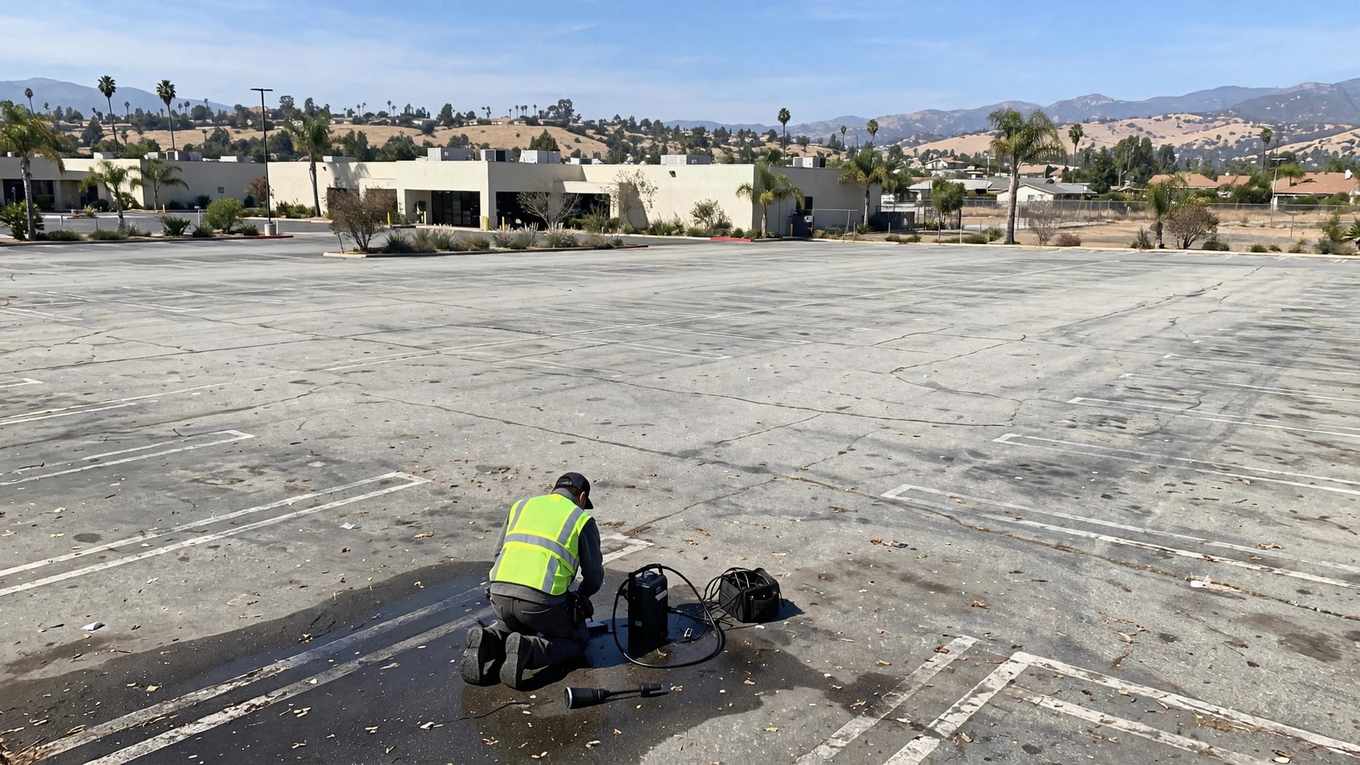
- Parking lot leak detection: underground lines beneath asphalt and concrete paving, where ponding, sinkholes, or sub-base saturation signal a failing line that cannot simply be dug up on a guess.
Property managers dealing with a suspected main-line failure or unexplained common-area usage can call (833) 382-2711 to plan an inspection around tenants and business hours.
How Every Inspection Works, Regardless of Specialty
Whichever specialty you book, the inspection follows the same disciplined sequence. It starts with your symptoms and a walkthrough of the property, so the specialist sees what you have seen. Next comes confirmation: meter analysis and pressure testing establish whether water is actually being lost and narrow it to the supply side, the drain side, or a specific zone, because there is no point hunting a leak that turns out to be a running toilet or an irrigation timer issue.
Then the search narrows. Depending on the system, that means acoustic listening through slab and soil, thermal imaging across floors and walls, moisture mapping to trace how far dampness has traveled, tracer gas for elusive breaches, or dye and camera work for drains and pools. Methods layer until the evidence converges on one spot.
Finally, the confirmed location is marked on the floor, wall, or soil, and documented in plain language you can hand to any repair plumber. You will know what was found, where it is, and what the repair typically involves, before the specialist leaves your property.
How Booking Works: One Call, Any Service
You do not need to know which of the 15 services your leak belongs to before you call. Booking starts with the symptom, not the specialty. One call to (833) 382-2711 reaches triage: you describe what you are seeing, we ask a few narrowing questions, and the visit gets matched to the right specialty and equipment before anyone rolls.
Every service on this page includes the same foundations: a meter or pressure check that proves water is being lost, a non-invasive survey with acoustic and thermal equipment, a marked location when a leak is confirmed, and written findings you keep. If the first specialty turns out to be the wrong one, the findings say so honestly and point at the right next step instead. And if water is actively spreading while you read this, skip the comparison entirely and go straight to emergency leak detection.
New to the company? The Leak Detection California homepage explains how the whole process fits together, from first call to confirmed location.
Which Service Matches Your Symptoms?
Match what you are seeing to the right specialty. When in doubt, start with the general diagnostic or call us, triage by phone is honest and quick.
| Symptom | Likely service |
|---|---|
| Water bill spike; meter advances with everything off | Water meter |
| Stains on a ceiling below a bathroom; bubbling paint on walls | Ceiling and wall |
| Musty smell in the attic; damp insulation; stained roof decking | Attic |
| Earthy odor under the house; sagging or uneven floors | Crawlspace |
| Warm spot on the floor; faint hissing under concrete | Slab |
| Soggy strip in the yard; one band of grass far greener than the rest | Outdoor water line |
| Low pressure at every fixture; wet soil between meter and house | Water service line |
| Hissing near the meter box; wet soil right at the meter | Yard meter box |
| One sprinkler zone floods while another stays dry | Irrigation and sprinkler |
| Deep buried line suspected; long run with no surface clues | Underground pipe |
| Pool needs frequent refilling; air in the pump basket | Pool and spa |
| Water spreading now; burst pipe; fast-spinning meter | Emergency |
| Suspected leak in an office, retail, or warehouse building | Commercial |
| Ponding or depressions in asphalt; saturated sub-base | Parking lot |
| Unexplained loss with no clear symptom pointing anywhere | Whole-property diagnostic |
Not Sure Which Service You Need?
Most callers do not know the name of their leak, and they should not have to. Start from the symptom instead. Water where it should not be, with no visible source, is a job for general water leak detection. A warm floor or a bill climbing for months points at the slab service. A pool losing level faster than evaporation explains is pool and spa work.
If the symptom is a meter that will not sit still, start with the meter and service line pages. And if water is actively spreading right now, skip the reading: the emergency page and a phone call are the whole decision. Every service ends at the same place anyway, a marked location and a clear explanation of what happens next.
Frequently Asked Questions
How do I know which of the 15 services I need?
Describe your symptoms when you call, the symptom table above covers the common cases. If nothing matches cleanly, the general whole-property diagnostic is the right starting point: it systematically narrows any unexplained loss to the correct specialty.
Can one visit cover more than one suspected area?
Often, yes. If you have a bill spike plus a damp ceiling, for example, the specialist brings the full toolkit and works both. Mention every symptom when scheduling so the right time and equipment are allocated.
Do you repair the leak after finding it?
Our specialty is accurate, non-invasive diagnosis: confirming and marking the exact location with a plain-language description any repair plumber can work from. That focused report is what keeps the repair itself small and targeted.
How fast is emergency service?
Active, damage-threatening leaks get priority scheduling. Call (833) 382-2711, describe the urgency, water spreading, a burst line, a fast-spinning meter, and emergency calls are routed first.
Can commercial inspections avoid disrupting our business?
Yes. Commercial visits are planned around your operations, early, late, or off-hours windows, exterior-first sequencing for parking lots and landscaping, and clear communication with property managers throughout.