 Leak Detection California
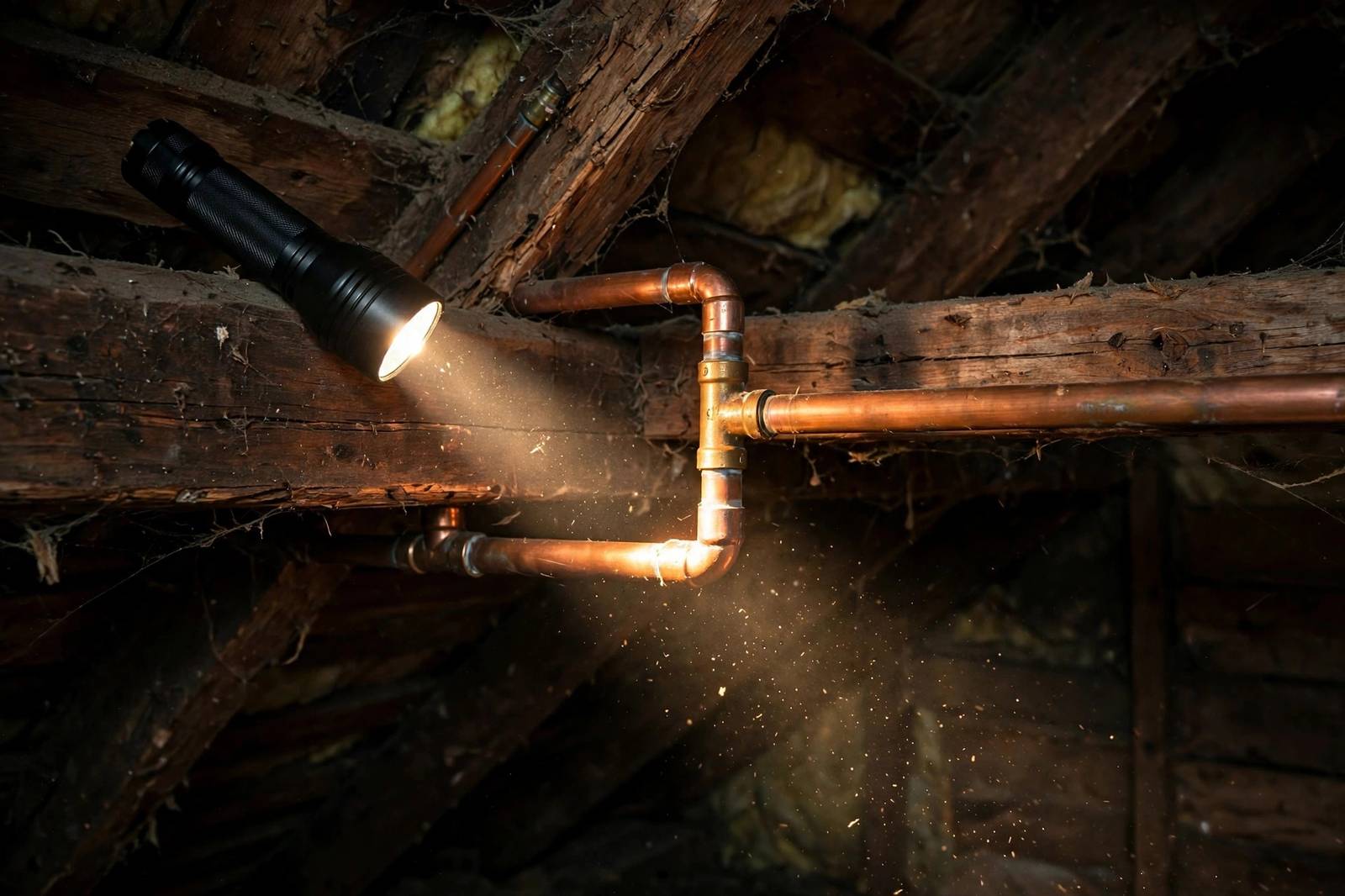
Attic leak detection is the process of tracing moisture found in an attic back to its true source. It is trickier than it sounds, because an attic collects water from several directions at once: roof leaks that travel along rafters before dripping, plumbing vents and supply lines that run through the space, air-conditioning condensate drains, and plain condensation that forms when warm indoor air meets a cold roof deck. A stain on your ceiling might originate twenty feet from where it appears.
Our specialists inspect attics with moisture meters, thermal imaging cameras, and bright, methodical visual inspection of every penetration, flashing, and pipe run. We distinguish active roof leaks from condensation, find plumbing failures hiding under insulation, and document exactly what we find so you can fix it once instead of guessing twice. If something is wet up there and should not be, call (833) 382-2711.
Roof Leak vs. Condensation vs. Plumbing: What Is It Really?
Most attic moisture mysteries turn out to be one of three things, and each demands a completely different fix. This is why accurate diagnosis matters more in an attic than almost anywhere else in the house:
| Source | Typical clues | When it shows up | The fix direction |
|---|---|---|---|
| Roof leak | Stained or rotted roof sheathing, water trails along rafters, damp insulation under a penetration | During or just after rain | Roofing repair at the entry point |
| Condensation | Uniform dampness on the underside of the roof deck, frost in winter, wet insulation with no single trail | Cold mornings, regardless of rain | Ventilation and air-sealing, not roofing |
| Plumbing leak | Wet insulation around a vent stack or supply line, corrosion on fittings, localized soaking | Constant, rain or shine | Plumbing repair of the failed pipe or joint |
We see homeowners pay for a new roof when the real culprit was a ten-dollar condensate drain line, and vice versa. Moisture meters and thermal imaging tell these apart definitively: a roof leak leaves a trail from a point of entry, condensation spreads broadly with no trail, and a plumbing leak stays stubbornly local to the pipe.
The Usual Suspects We Check in Every Attic
Attics have a short list of repeat offenders. On every inspection we work through them systematically:
- Roof penetrations: plumbing vent boots, exhaust flues, and skylight curbs are the most common roof-leak entry points. Cracked rubber boots around vent pipes fail silently for years.
- Flashing: step flashing where the roof meets a wall, and valley flashing where two roof planes join, corrode or lift and admit wind-driven rain.
- Supply lines and valves: in California homes, water lines and shutoff valves sometimes run through attic spaces, and a slow joint leak soaks insulation for months before staining a ceiling.
- HVAC condensate drains: air handlers in attics produce gallons of condensate; a clogged or disconnected drain line dumps it straight into insulation.
- Bathroom exhaust fans: fans vented into the attic instead of outdoors pump warm, moist air directly onto the cold roof deck, creating chronic condensation that looks exactly like a leak.
Insulation itself is both victim and evidence. Wet, compressed, or discolored insulation marks the path water took, and we read those marks like a map back to the source.
How Our Attic Inspection Works
An attic inspection is part detective work, part building science. Here is our sequence:
- Interior interview. We start below, noting every ceiling stain, its position, and whether it grows after rain, so we know what to correlate upstairs.
- Safe attic entry. We protect flooring, use proper lighting, and walk only on joists and decking to avoid putting a foot through your ceiling.
- Visual sweep of penetrations. Every vent boot, flashing, flue, and skylight gets a close look for cracking, lifting, rust, and daylight showing through.
- Moisture mapping. Pin and pinless moisture meters test sheathing, rafters, and insulation in a grid, building a moisture map that points uphill to the source.
- Thermal imaging. An infrared camera reveals damp areas invisible to the eye and shows whether moisture is active, drying, or long-standing.
- Plumbing and HVAC check. We trace every pipe, valve, and condensate line in the space, feeling fittings and checking drain terminations.
You receive a plain-language report of what we found, photographs of the evidence, and a clear statement of whether you need a roofer, a plumber, or an insulation and ventilation contractor.
Why Attic Moisture Cannot Wait
Attics are out of sight, which lets small problems become structural ones. Persistent moisture rots roof sheathing and rafters, compresses insulation until it stops insulating, and grows mold across surfaces you never see until the smell reaches the living space. In California's climate, a winter rain leak can run undetected through the dry summer and return worse the next season.
There is also an energy angle: wet insulation loses a large share of its R-value, so your heating and cooling bills climb while the attic slowly deteriorates. Catching the source early usually means a targeted repair instead of sheathing replacement and a full insulation redo. If your attic smells musty or your ceiling is staining, call (833) 382-2711 now and we will find exactly where the water is coming from.
Roof Leak or Pipe Leak? Telling Them Apart
Water in an attic has two usual suspects, and they behave differently. A roof leak follows weather: it appears during or just after rain, and it often stops completely in dry weeks. A pipe leak follows usage: it tracks showers, laundry, and the water heater, and it ignores the forecast entirely.
The quickest home test is timing. If the drip or stain grows during a dry spell, suspect plumbing. Inside the attic, the source still needs proper tracing, because water travels along rafters and insulation before it shows itself. The wettest visible spot is often feet away from the actual failure, which is why the inspection follows the water uphill, not down.
Attic Leak Detection Across California
We provide this service in every corner of California, a few of the 988 cities we serve.

Related Services
Pair this service with related detection, or see all 15 services.

Irrigation & Sprinkler Leak Detection
Irrigation and sprinkler leak detection is the process of finding water losses in landscape watering systems:…
Learn more →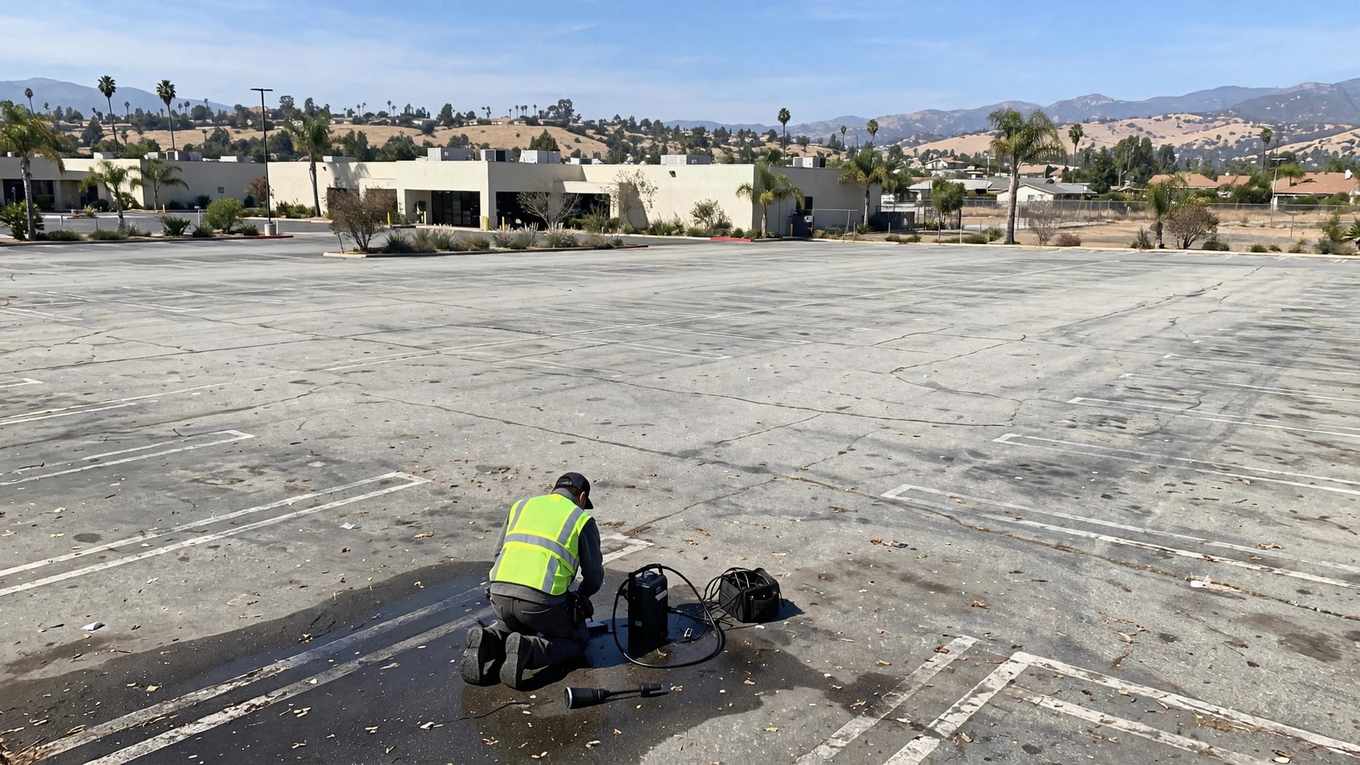
Parking Lot Leak Detection
Parking lot leak detection is the location of subsurface water leaks beneath paved commercial lots: the buried…
Learn more →Frequently Asked Questions
How can you tell if it's a roof leak or condensation?
Pattern and timing. Roof leaks leave a trail from a specific entry point and appear with rain; condensation spreads broadly across the roof deck with no single trail and appears on cold mornings regardless of rain. Moisture meters and thermal imaging confirm which pattern we are looking at.
Can you find the exact spot where the roof is leaking?
We trace the water's path uphill to the penetration, flashing, or roof section where it enters, and we photograph the evidence. Note that water can travel along rafters before dripping, so the entry point is often feet away from the ceiling stain. Our report shows both.
Is attic mold dangerous, and do you handle it?
Mold in an attic signals ongoing moisture and should be taken seriously, especially for anyone with allergies or respiratory issues. We identify and document the moisture source, which must be fixed first; mold remediation itself is a separate specialty we can point you toward.
How long does an attic leak inspection take?
Most attic inspections take one to two hours, depending on attic size, accessibility, and how many suspect areas need moisture mapping. Larger or multi-zone attics take longer, but we are thorough rather than fast.
How much does attic leak detection cost?
It depends on the size and accessibility of the attic and the complexity of the moisture problem. Call (833) 382-2711 for an upfront quote before we schedule anything.