 Leak Detection California
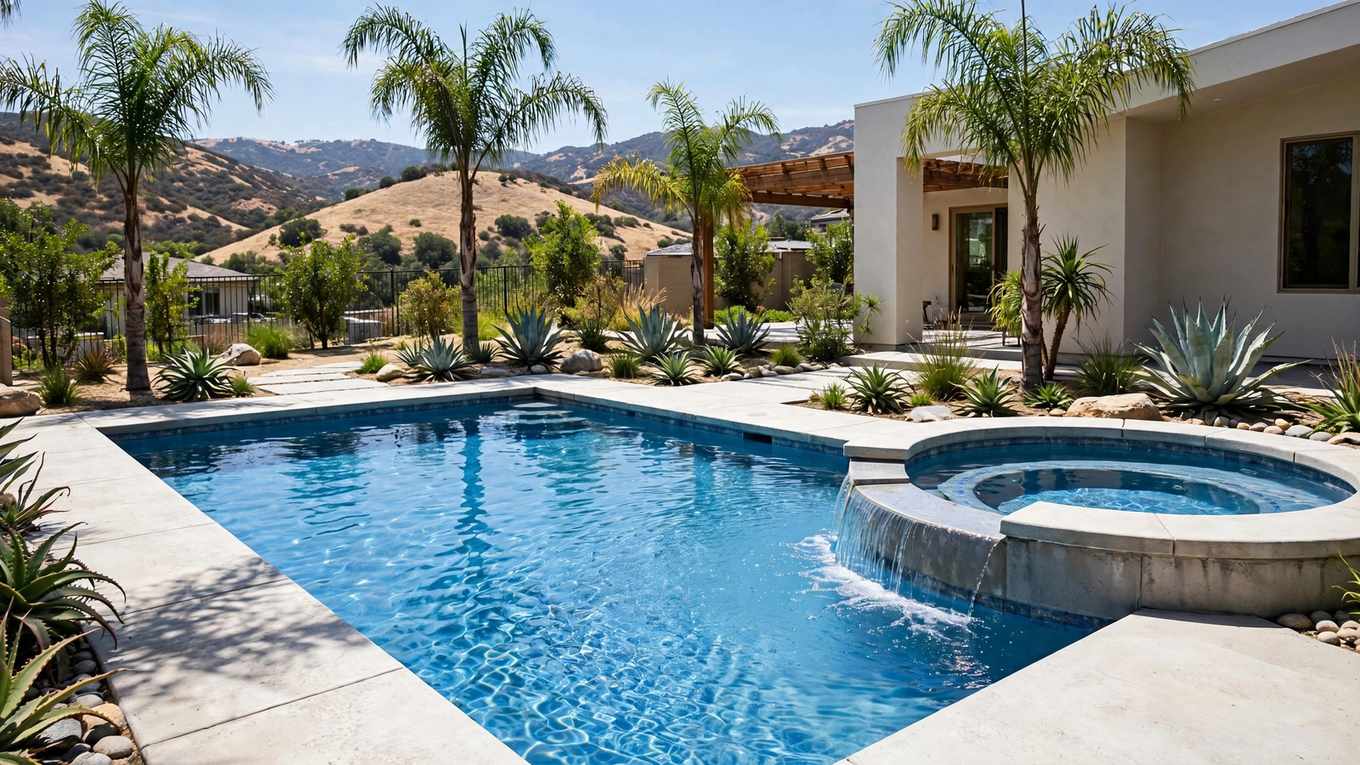
Pool and spa leak detection is the diagnosis of water loss from swimming pools, spas, and their equipment: distinguishing normal evaporation from a real leak, then finding whether the water is escaping through the shell, the plumbing, or the equipment pad. In California's heat, every pool loses water to evaporation, which makes pool leaks the most misdiagnosed water problem in the backyard. Owners refill for months, blaming the sun, while a cracked skimmer throat or a split underground return line quietly drains thousands of gallons.
We settle the question scientifically, starting with the bucket test, then pressure-testing each plumbing run independently and dye-testing the shell and fittings to watch water get pulled into the exact failure point. The result is a definitive answer: evaporation or leak, and if leak, precisely where. If your pool needs topping off more often than it should, call (833) 382-2711.
Evaporation or Leak? The Bucket Test Decides
Before any instruments come out, this simple test separates the two:
| Step | What to do | Why it matters |
|---|---|---|
| 1. Fill a bucket | Place a 5-gallon bucket on a pool step and fill it to match the pool's water level | Creates a control sample exposed to identical weather |
| 2. Mark both levels | Mark the waterline inside the bucket and on the pool wall or tile | Gives you two precise reference points |
| 3. Run normally for 24-48 hours | Keep the pump on its normal schedule; no swimming, no refilling | Reproduces real operating conditions |
| 4. Compare the drop | Measure how far each level fell | Equal drop means evaporation; the pool losing more means a leak |
As a rule of thumb, pools in California commonly evaporate around a quarter inch per day in summer heat, more with wind, water features, or heating. If your pool drops an inch or more daily while the bucket barely moves, you have a leak, not weather. Run the test with the pump on, then repeat with the pump off: a leak that slows with the pump off points to pressure-side plumbing, while one that continues points to the shell or suction side.
How to Do a Bucket Test for a Leaking Pool: The Full Walkthrough
The table above is the short version. This is the full walkthrough of a bucket test for a leaking pool, done the way a technician would want the results reported:
- Set up honestly. Turn off any automatic filler. Bring the pool to its normal level, place a large bucket on a step, fill it with pool water so the inside level matches the pool level outside, and weight it so it cannot tip.
- Mark both levels. Put a tape mark at the waterline inside the bucket and another on the pool tile or wall, and note the time. A ruler reading to the nearest fraction of an inch makes the comparison far more useful than eyeballing it.
- First run, pump on. Leave the pump on its normal schedule for a full day. No swimming, no refilling, no backwashing. Then measure how far each level fell.
- Second run, pump off. Refill both to the marks and repeat for another day with the pump off the whole time. Rain during either run spoils the comparison, so pick a dry stretch of weather.
Reading the results: if both containers fell by the same amount in both runs, that is evaporation, and the pool is holding its water. If the pool fell further than the bucket only while the pump ran, the loss sits in plumbing that is pressurized when the pump runs. If the pool fell further in both runs, the loss is there even at rest, which points at the shell, the fittings, or the suction side. Either way, write down the extra daily drop the pool showed beyond the bucket. That single number, the rate of loss, tells the technician more before arrival than any description of where the yard looks wet.
Where Pools and Spas Actually Leak
Once the bucket test confirms a leak, the suspects line up in rough order of frequency:
- Skimmer throat and mouth: the joint where the skimmer meets the pool shell cracks from ground movement. The single most common pool leak we find.
- Return fittings and wall penetrations: lights, returns, and cleaner lines each penetrate the shell, and each penetration is a potential separation point.
- Underground plumbing: suction and return lines buried between the pool and the equipment pad split from soil movement, root pressure, or age.
- Equipment pad: pump seals, filter housings, heater cores, and above-ground valves leak visibly, and are the easiest to rule in or out.
- Shell cracks: structural cracks in plaster, fiberglass, or vinyl liners, from hairline to obvious.
- Autofill and overflow: a stuck autofill masks a leak by refilling constantly, while a misadjusted overflow drains good water silently.
Note the autofill trap: many owners never notice a leak because the autofill hides it, and the only symptom is the water bill. If your autofill runs constantly, treat it as a leak indicator, not a convenience.
How We Pinpoint Pool Leaks
Pool diagnosis layers three proven techniques:
- Equipment pad inspection. We check every pump, filter, heater, valve, and visible joint first. Pad leaks are common, visible, and cheap to confirm, so they are ruled out before anything exotic.
- Plumbing pressure testing. Each underground run, skimmer line, main drain, and return circuit, is isolated and pressure-tested independently with specialized plugs and gauges. The line that will not hold pressure is the leaking one, and the pressure drop rate hints at the break's size.
- Dye testing. With the pump off and water still, we release dye near each suspect fitting, crack, and penetration. If water is escaping there, the dye gets visibly drawn into the gap. It is simple, definitive, and surprisingly precise.
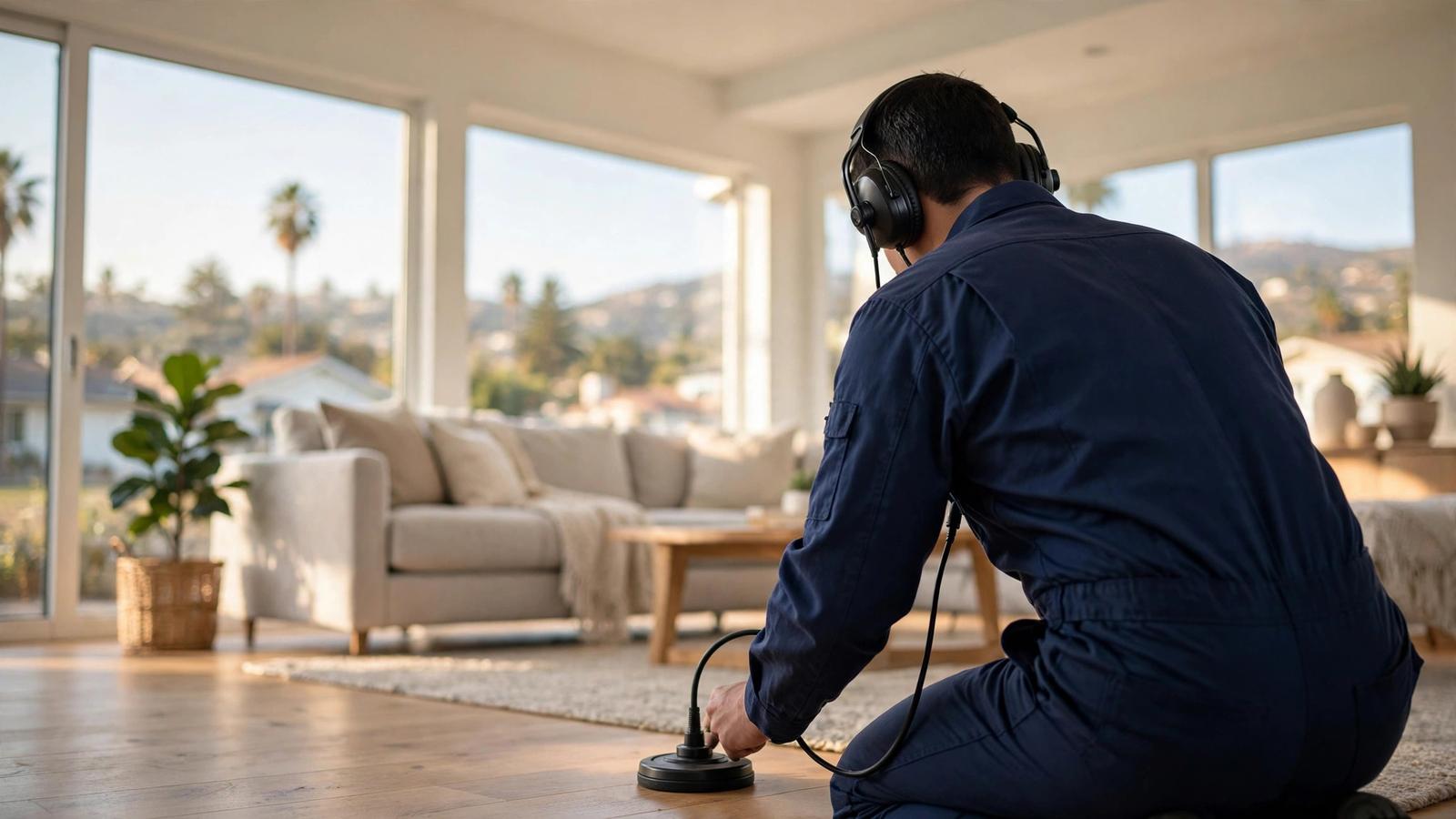
- Acoustic listening for plumbing. On pressurized underground pool lines, listening equipment traces the run and peaks over the break, just like a service line leak.
Spas get the same treatment on a smaller scale, with extra attention to jet fittings and the equipment connections that see the most thermal cycling. You receive a report naming the failed component or line section, marked for your pool service professional to repair.
Stop Refilling and Start Fixing
A leaking pool is a water bill problem, a chemical balance problem, and eventually a structural problem, as escaping water erodes the soil supporting the shell. Our licensed and insured specialists diagnose pools and spas with the bucket test, pressure testing, dye testing, and acoustic equipment, and give you a definitive answer instead of another season of refilling. Same-day appointments are available across California.
- Bucket-test interpretation and evaporation baselining
- Independent pressure testing of every plumbing run
- Dye testing of shell, skimmer, and fittings
- Marked failure points ready for your pool professional
Losing more water than the sun explains? Call (833) 382-2711 now for pool and spa leak detection in California.
Evaporation or a Leak? The Bucket Test
Before booking a pool leak inspection, there is a simple test worth doing yourself. Fill a bucket with pool water, set it on a step so the water levels inside and outside roughly match, mark both levels, and check again in 24 hours with the pump off. If the pool dropped further than the bucket, the water went somewhere other than the air.
California sun and wind can take a surprising amount off a pool in a day, especially in the inland valleys, so a single day of level watching proves nothing. The bucket test controls for weather because both containers share it. If your test shows a real loss, that number also helps the technician: the rate of drop points toward the shell, the plumbing, or the equipment pad.
Pool & Spa Leak Detection Across California
We provide this service in every corner of California, a few of the 988 cities we serve.
Related Services
Pair this service with related detection, or see all 15 services.
Frequently Asked Questions
How much water loss is normal for a pool?
In California summer heat, around a quarter inch per day is typical, more with wind, waterfalls, or heating. An inch or more per day is not evaporation. The bucket test is the definitive check: if the pool drops significantly more than the bucket, water is escaping somewhere it should not.
What is dye testing and does it stain my pool?
Dye testing releases a small amount of colored dye near a suspected leak point while the water is still; escaping water draws the dye visibly into the crack or gap. The dye is pool-safe, dissipates quickly, and does not stain plaster or liners when used properly.
Can you find leaks in underground pool plumbing?
Yes. We isolate and pressure-test each buried run independently to identify the failing line, then trace and acoustically pinpoint the break along its route. This avoids digging up the entire equipment-to-pool trench to find one split.
My autofill runs all the time. Is that normal?
No. A constantly running autofill is compensating for water loss, which means you have a leak, an overflow misadjustment, or both. It also hides the leak's severity, since the pool level never visibly drops. Get it diagnosed rather than letting it run.
How much does pool leak detection cost?
It depends on pool size, the number of plumbing runs, and whether the equipment pad, shell, or underground lines need testing. Call (833) 382-2711 for an upfront quote.