 Leak Detection California
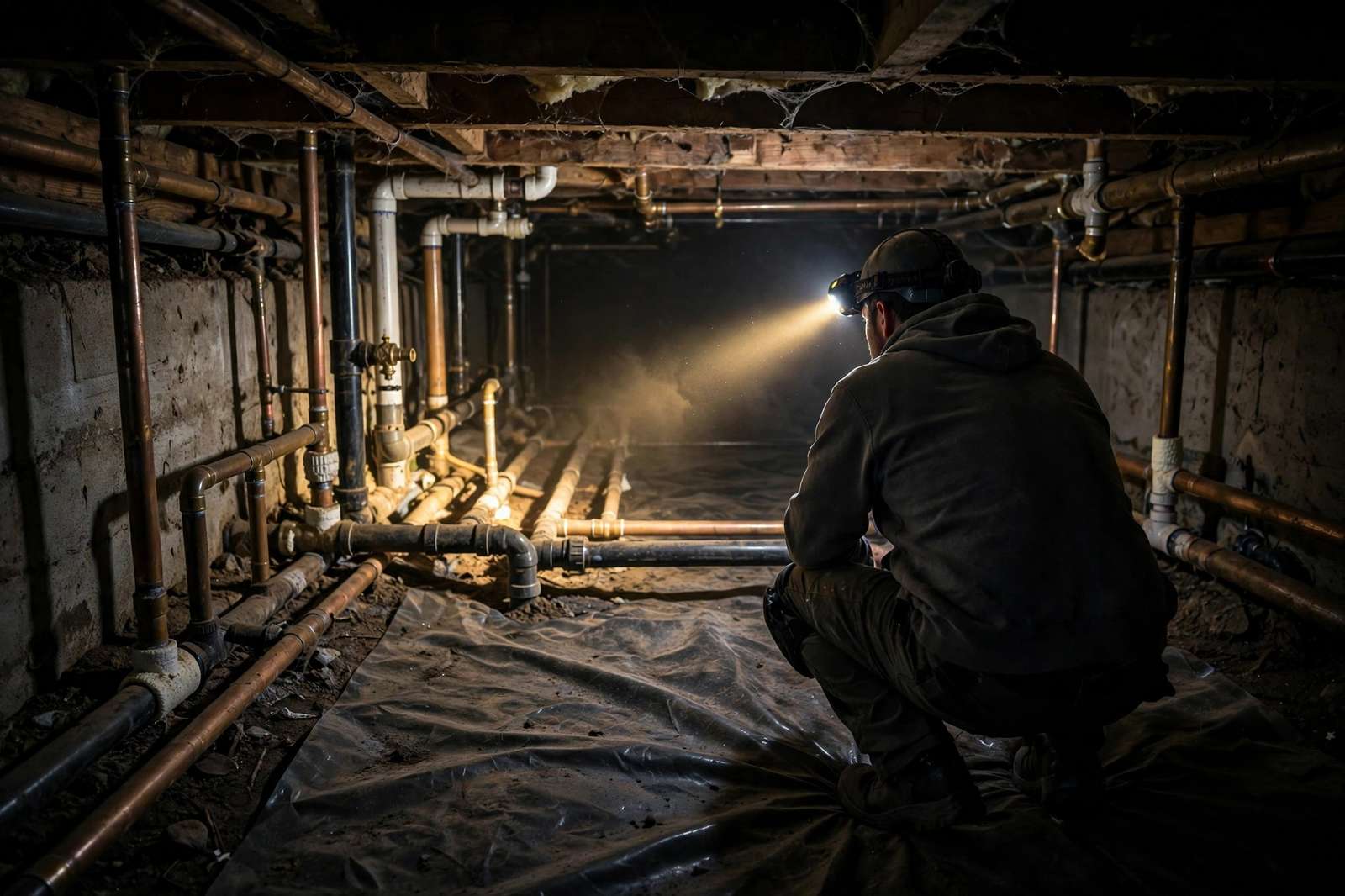
Crawlspace leak detection is the inspection and diagnosis of water intrusion beneath homes built over a crawlspace rather than a slab. It is a uniquely difficult environment: dark, cramped, often with standing water, sagging insulation, and a cocktail of musty odors that mask where any single leak begins. Yet what happens in the crawlspace does not stay there. Moisture wicks upward into floor framing and subflooring, feeds mold colonies, and announces itself inside the living space as damp floors, musty smells, and warping wood.
Our technicians enter crawlspaces equipped with high-intensity lighting, pin-type moisture meters, thermal imaging cameras, and protective gear, and they know how to read the space: water trails on the vapor barrier, mineral staining on foundation walls, rust patterns on ductwork, and rot in sill plates each point to a different source. If your home sits over a crawlspace and something smells or feels damp, call (833) 382-2711 and we will find out what is happening underneath.
Why Crawlspaces Hide Leaks So Well
A crawlspace is where several water problems converge and disguise each other. Understanding the categories is the first step to an accurate diagnosis:
| Water category | Typical sources | Distinguishing evidence |
|---|---|---|
| Plumbing leaks | Supply lines, drain lines, and valves running beneath the floor | Localized wet soil or puddling under a specific fixture; active dripping |
| Groundwater intrusion | High water table, poor grading, failed drainage | Standing water across wide areas, worse after rain |
| Condensation | Warm humid air meeting cold ducts, pipes, and soil | Beading on ductwork and pipes; damp with no distinct source |
| Exterior entry | Foundation cracks, unsealed vents, missing gutters | Water trails or staining on foundation walls |
More than one category is often active at once. A dripping supply line raises the humidity that then condenses on everything else, so the visible symptom, widespread dampness, can mislead you away from the single plumbing failure that started it.
Signs of Trouble Under Your Home
You may never enter your crawlspace, but your house reports on it constantly. Watch for:
- Persistent musty or earthy odors, especially near floor level
- Cupping, crowning, or warping hardwood floors
- Cold, damp-feeling floors in winter
- Visible mold on baseboards or lower wall sections
- Spiking water bills with no visible leak indoors
- Sagging or fallen insulation visible from the access hatch
- Increased allergy or respiratory symptoms at home
- Wood-destroying insect activity, which thrives in damp framing
Any one of these justifies a look underneath. Several together make it urgent: chronic crawlspace moisture does not stabilize on its own, and every season of delay is more rot, more mold, and more compromised insulation.
How We Inspect a Crawlspace
Crawlspace work demands both the right instruments and the right safety practices. Our inspection follows a set routine:
- Exterior assessment first. We check grading, gutter discharge, vent condition, and foundation walls from outside, since much crawlspace water starts outdoors.
- Safe entry. Our technicians wear respirators, protective suits, and headlamps, and we verify clear access before entering. Tight or hazardous spaces are documented and reported rather than forced.
- Moisture grid. Pin-type meters test sill plates, joists, subflooring, and soil in a grid pattern, building a moisture map of the entire space.
- Source tracing. We follow every water line, drain, and valve, feeling joints and listening for active drips, and we trace water trails on the vapor barrier back uphill to their entry.
- Thermal confirmation. An infrared camera highlights active wet areas versus old staining, separating today's problem from yesterday's history.
- Condition report. You get findings with photographs: the leak source, the extent of moisture damage, mold observations, and recommended next steps in priority order.
We do not sell remediation, so the report is diagnostic, not a sales pitch. You can take it to any plumber, drainage contractor, or encapsulation specialist with confidence.
What Happens After the Inspection
Detection is the diagnosis; what follows depends on what we found. A plumbing leak goes to your plumber with our marked location and photographs. Groundwater intrusion calls for a drainage contractor to address grading, gutters, and possibly a sump or French drain. Chronic condensation responds to ventilation improvements, sealed vents, and a properly installed vapor barrier. Damaged insulation gets replaced only after the moisture source is fixed, never before. If our moisture readings show wood moisture content high enough for rot or mold, we flag the affected framing so a contractor can assess structural impact. We prioritize everything in the report: stop-the-bleeding items first, preventive improvements second. And because we do not sell repairs, the priority list is honest. One inspection, one clear roadmap, no upsell.
Protect Your Home From the Ground Up
A dry crawlspace protects everything above it: the floors you walk on, the air you breathe, and the framing that holds the house up. Our inspections are performed by licensed and insured specialists who enter properly equipped, document everything photographically, and give you a prioritized action plan instead of vague warnings. Same-day appointments are available across California.
- Full moisture mapping of soil, framing, and subfloor
- Plumbing, groundwater, condensation, and exterior sources all evaluated
- Photographic report with prioritized next steps
- Independent diagnosis: we find leaks, we do not sell repairs
Do not let what is happening under your home stay a mystery. Call (833) 382-2711 now for expert crawlspace leak detection in California.
What Standing Water Under a House Does Over Time
A crawlspace leak rarely announces itself upstairs until it has been running a while. Under the floor, though, the damage compounds quietly: subfloor decking stays damp and softens, joists hold moisture against their grain, and the warm wet air feeds mold on every surface it touches.
The other cost is structural patience. By the time a floor upstairs feels spongy, the leak underneath is usually old. That is why a crawlspace inspection pairs the pinpointing with a moisture survey of the framing: finding the leak stops the cause, but knowing what the water already reached decides what needs drying, treating, or replacing afterward.
Crawlspace Leak Detection Across California
We provide this service in every corner of California, a few of the 988 cities we serve.

Related Services
Pair this service with related detection, or see all 15 services.
Frequently Asked Questions
Is it safe for your technicians to enter my crawlspace?
Yes, with proper precautions. Our technicians use respirators, protective clothing, and high-intensity lighting, and we assess access and hazards before entering. If a space is too tight or unsafe, we document what we can from the access point and tell you honestly what a limited inspection could and could not rule out.
Can a crawlspace leak cause mold inside my living space?
Absolutely. Air moves upward from the crawlspace into the home through gaps around plumbing, wiring, and ductwork, carrying moisture and mold spores with it. Musty odors at floor level are the classic sign. Eliminating the moisture source is the essential first step before any mold cleanup.
What does a damaged vapor barrier mean?
A torn, displaced, or missing vapor barrier lets ground moisture evaporate straight into the crawlspace air. During inspection we note its condition, because even a perfect plumbing system will read damp over bare soil. Replacing or repairing the barrier is often part of the recommended fix.
How often should a crawlspace be inspected?
Once a year is a sensible rhythm, ideally before the rainy season, plus any time you notice musty odors, floor changes, or an unexplained water bill increase. Crawlspaces change slowly until they do not, and annual checks catch problems while they are small.
How much does a crawlspace leak inspection cost?
It depends on the size of the crawlspace, accessibility, and how extensive the moisture mapping needs to be. Call (833) 382-2711 for an upfront quote.