 Leak Detection California

A hidden leak is one of the few household problems that reliably gets more expensive the longer it's ignored. What starts as a pinhole in a copper line becomes saturated drywall, then swollen baseboards, then a musty room that needs remediation, not just plumbing. Each stage multiplies what the final fix demands in materials, labor, and disruption to your home.
Finding the source early is what breaks that chain. A Cupertino leak detection visit that locates a break this week can mean a single wall patch; the same leak discovered months later can mean flooring, framing, and mold work. If your bill has crept up or something smells damp in your Cupertino home, calling sooner is simply the cheaper move. We cover 2 ZIP codes across the area, and early answers beat late repairs every single time.
Leak Detection Notes for Cupertino Homes
Cupertino is a Santa Clara County city in Silicon Valley, where mid century tract homes, newer subdivisions, and hillside builds sit on flat valley floor rising toward the Santa Cruz Mountains. Slab foundations, aging tract plumbing, and large landscaped lots shape its leak work: copper lines under slabs are a common failure point in the older tracts, hillside lots add long buried runs, and extensive irrigation can mask a slow loss. Many homes have been expanded, mixing new pipe with original runs.
Cupertino homeowners should watch for a warm patch on a floor, a bill that climbs without a change in watering, and a meter that moves when the house is quiet. Pausing irrigation for a couple of days and rechecking the meter separates a sprinkler loss from a house line loss in a practical first step.
Leak Detection Services in Cupertino
Specialized detection for every kind of leak, see all 15 services.

Emergency Leak Detection
Emergency leak detection is rapid-response diagnosis when water is actively damaging your property right now:…
Learn more →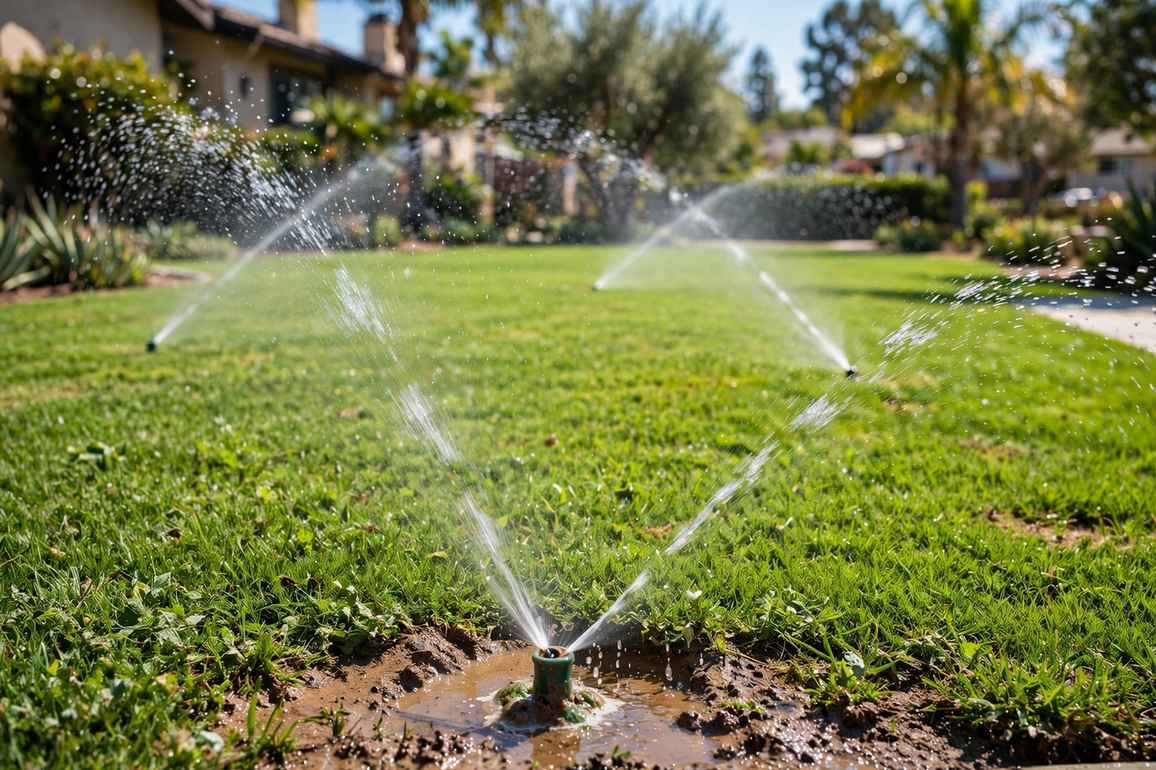
Irrigation & Sprinkler Leak Detection
Irrigation and sprinkler leak detection is the process of finding water losses in landscape watering systems:…
Learn more →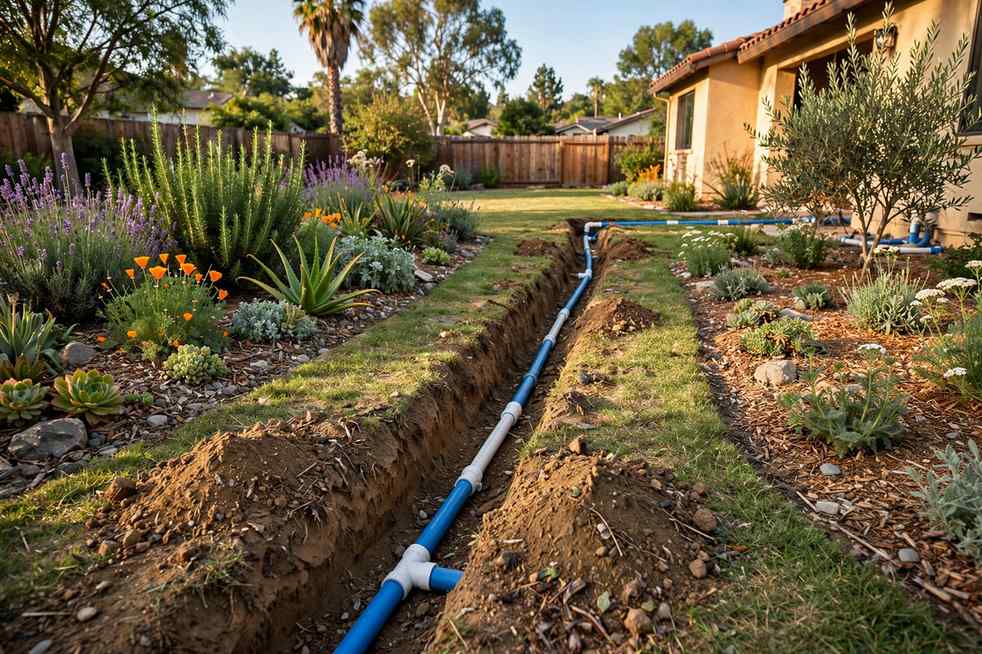
Outdoor Water Line Leak Detection
Outdoor water line leak detection covers the potable water lines that distribute water around your yard after…
Learn more →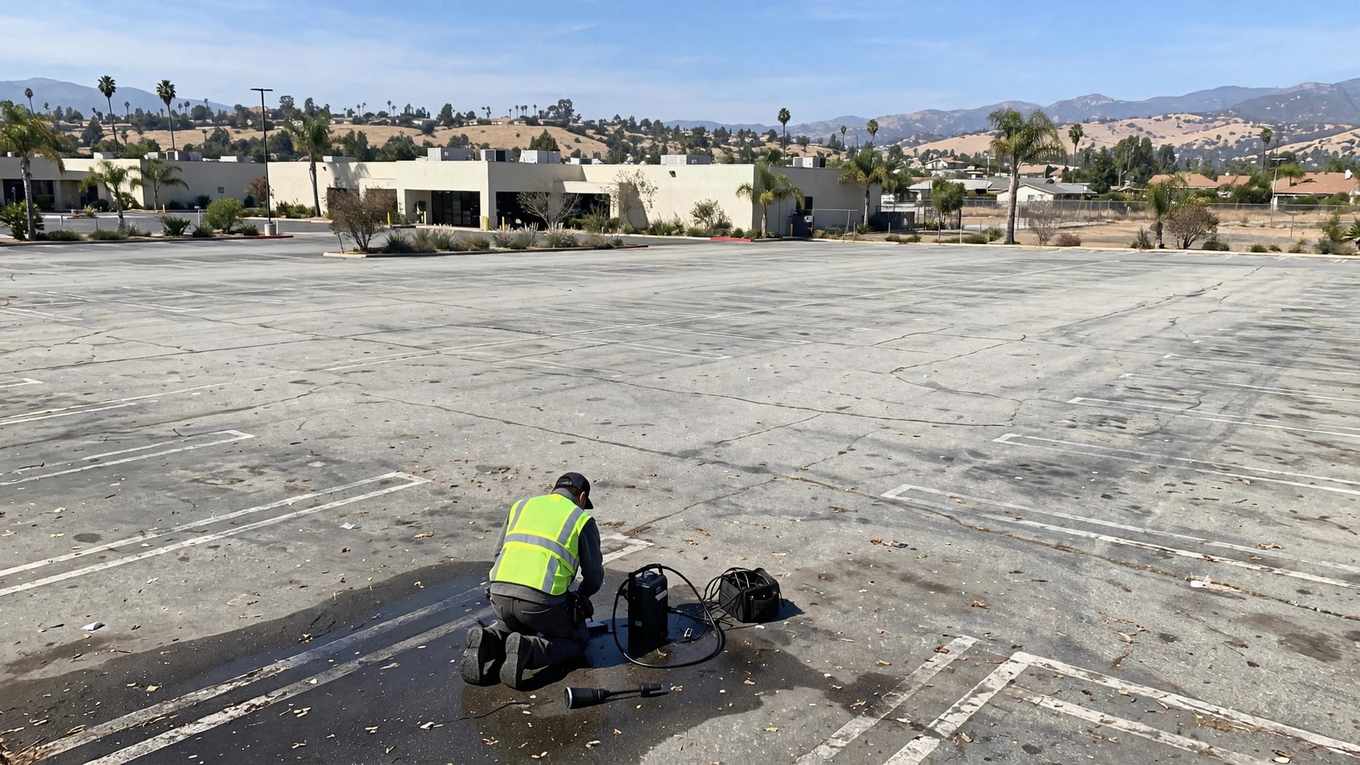
Parking Lot Leak Detection
Parking lot leak detection is the location of subsurface water leaks beneath paved commercial lots: the buried…
Learn more →Signs You May Need Leak Detection in Cupertino
Leaks rarely announce themselves directly. More often they leave a trail of small, easy-to-dismiss clues, and in Cupertino, the earlier you connect the dots, the less damage the water does in the meantime. Watch for these:
- Water bill climbing with no change in your household's usage
- Meter still spinning after every fixture and appliance is shut off
- Running-water sounds behind walls when nothing is on
- Low pressure at faucets that used to flow strongly
- Warm spots on the floor, often a sign of a hot-water line leaking under the slab
- Suspiciously lush grass in one patch of an otherwise ordinary yard
- Musty odor in a room with no obvious moisture source
- Stains or bubbling paint on ceilings and walls
One sign alone can have an innocent explanation; two or more pointing the same way is worth investigating. Our leak detection visits for Cupertino homes start from exactly these symptoms, and each one tells the technician where to aim the instruments first.
How We Find Leaks in Cupertino
Half the battle with a buried leak is knowing where the pipe even runs. Electronic line tracing solves that: a signal is induced onto the pipe, and a receiver above ground follows it, mapping the line's exact path and depth. On Cupertino properties where original plumbing plans are long gone, this map is what makes everything else possible, you can't pinpoint a break on a line you can't find.
Once the path is known, moisture meters take over the confirmation work. Pin and pinless meters measure moisture content in drywall, wood, and concrete, drawing a contour map of the wet zone that shows both the epicenter and how far water has traveled. For drain-side problems, shower pans, tub overflows, toilet bases, dye testing is the simple, decisive tool: colored dye goes in the fixture, and if it appears where it shouldn't, the path is proven.
This is non-invasive leak detection done properly: confirm before you cut. Mapping the line, measuring the moisture, and proving the path with dye means the repair crew opens exactly the right spot, and nothing else. That discipline is the difference between a one-day fix and a week of exploratory demolition.
What a Leak Detection Visit Looks Like
Knowing what happens during a visit takes the mystery out of it. Here is how a typical leak detection appointment unfolds:
- The call: you describe the symptoms, bill spike, sounds, stains, and we schedule, often for the same day.
- Meter check on arrival: the technician verifies water is actually escaping by watching the meter with fixtures off, establishing there's a real leak to find.
- Systematic sweep: acoustic listening, thermal imaging, and moisture readings work across the suspected area, narrowing from rooms to square feet to inches.
- Pinpoint and mark: the confirmed location is marked directly on the floor or wall, so there's no ambiguity later.
- Findings and next steps: you get a clear explanation of what was found and where, plus guidance on getting the repair itself scheduled.
Most visits wrap up in a single appointment, and because the methods are non-invasive, your home looks the same when we leave as when we arrived, minus the mystery of where the water was going.
Areas We Serve in Cupertino
Our technicians provide leak detection throughout Cupertino, California, covering 2 zip codes:
Show all 2 zip codes we serve in Cupertino
- 95014
- 95015
Nearby Cities We Serve
Also serving neighboring communities around Cupertino, see all 988 California cities.
Why Homeowners in Cupertino Call Us
What sets a leak detection visit apart is what happens after the instruments come out: certainty. Our process is built to confirm, not assume, each reading is cross-checked with a second method before a location is marked, so the mark on your floor is a promise your plumber can trust. Because we specialize in detection only and never sell repairs, there's no incentive to exaggerate or invent problems. Add same-day availability, licensed and insured technicians, and full coverage across California including Cupertino, and you get answers you can act on, fast, honest, and precise.