 Leak Detection California
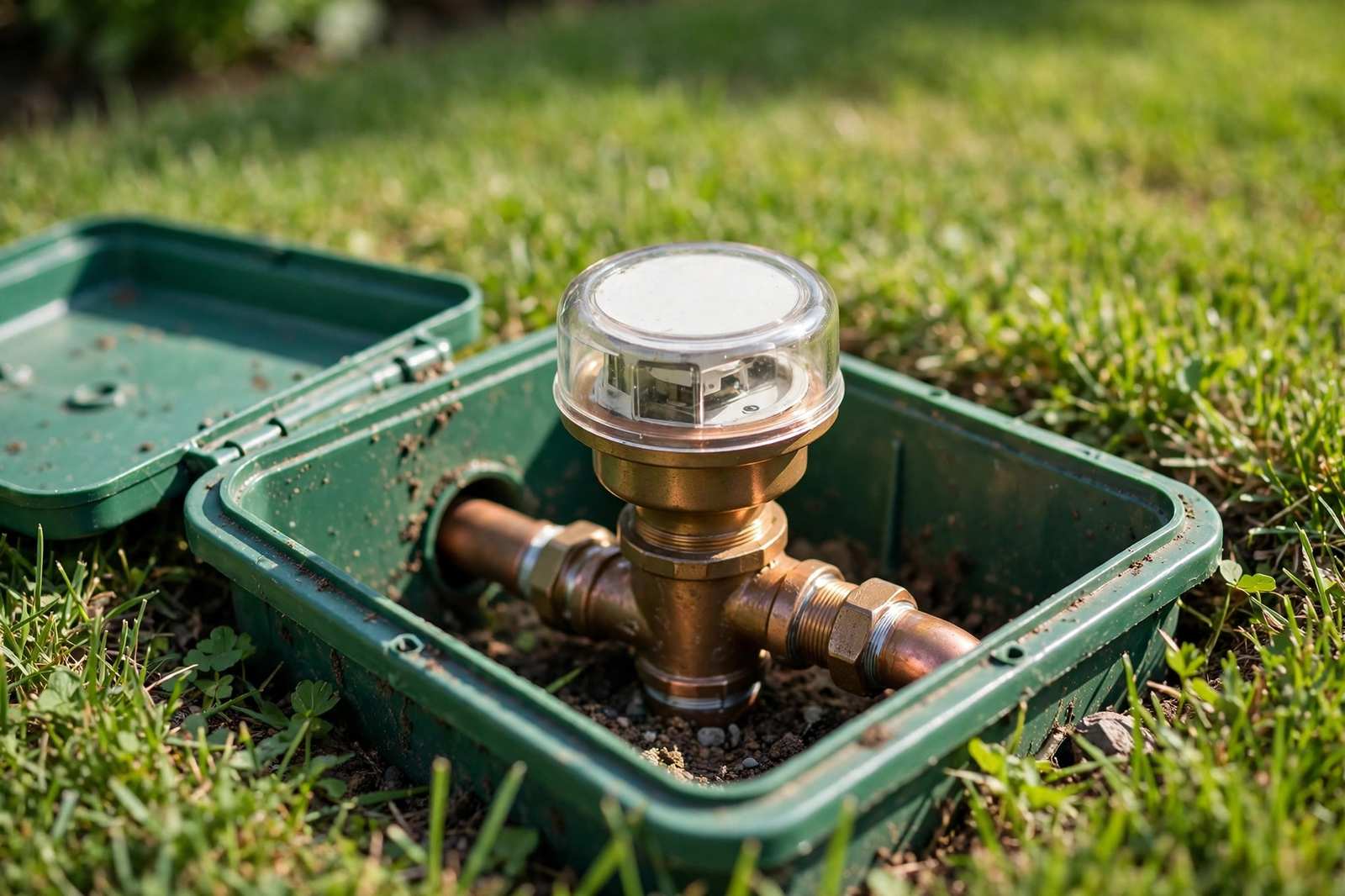
Water meter leak detection is the use of your water meter as a diagnostic instrument. That unassuming dial or digital display at your property line is the single most honest witness in any leak investigation: it measures every gallon entering your property, and it cannot be fooled by hidden pipes or silent leaks. When a bill spikes and nobody can find the cause, the meter test is where professionals start, because it answers the foundational question before anything else: is water actually escaping somewhere right now?
We walk you through the meter test, read the leak-indicator dial, and interpret what the meter is telling us: a steady creep means a constant leak, intermittent movement suggests a cycling fixture, and a dead-still meter with a high bill points to a billing or meter-read error instead. Then we isolate house side from street side to aim the search. If your bill jumped and you want proof before you spend another dollar, call (833) 382-2711.
Your Water Meter Is a Leak Detector Already
Most property owners walk past their meter for years without realizing what it can tell them. Here is what each element means:
| Meter feature | What it shows | Leak clue |
|---|---|---|
| Main register (numbers or digital readout) | Total gallons consumed | Compare readings 2 hours apart with water off; any increase is a leak |
| Leak-indicator dial or triangle | Tiny flows too small to move the main register | Any movement with fixtures off means water is escaping |
| Sweep hand (analog meters) | Flow rate in real time | Creeping hand with everything off confirms active flow |
| Flow-rate display (digital/smart meters) | Current gallons-per-minute | Non-zero flow with no usage is definitive |
The leak-indicator dial deserves special attention: it is designed to catch flows as small as a slowly dripping faucet. If that little triangle is turning while your house is silent, you have a leak. No further debate needed.
The Two-Hour Meter Test: Do It Yourself Tonight
You do not need us for the basic test. Here is the exact procedure:
- Pick a quiet window. Choose a two-hour period when nobody will use water: no toilets, faucets, ice makers, or irrigation. Overnight works well.
- Read the meter. Lift the meter box lid, note the full register reading, and photograph it. Note the leak-indicator position too.
- Shut off everything you can. Make sure dishwashers, washing machines, and irrigation controllers will not cycle during the window.
- Wait two hours. Do not use any water. This is the hard part.
- Read it again. Photograph the register. Any increase, even a single gallon, proves water left the system while nothing was using it.
- Watch the indicator. If the leak dial moved at all during the window, the leak is real and likely small and constant.
Bring us those two readings and we skip straight to the interesting part: finding where the water is going. A positive meter test is the green light for a full detection survey.
What the Results Mean
Not every meter result means the same thing:
- Steady register increase, indicator moving: a constant leak, likely a pressurized supply line, a running toilet, or a weeping valve. This is the classic hidden-leak signature.
- Indicator twitches intermittently: a cycling source, such as a toilet that refills periodically or an irrigation valve opening on schedule.
- Large jump, then still: something used a lot of water once, a hose left on, a pool autofill stuck open, rather than a continuous leak.
- High bill but meter reads normal: suspect a misread, an estimated bill, or a previous leak already fixed. Check the bill's read dates against your own readings.
- Meter foggy, buried, or unreadable: common with older boxes. We clean, excavate, and read it properly as part of the visit.
One more possibility: the meter itself can fail and over-register, though this is uncommon. If our testing shows zero actual flow but the bill insists otherwise, we will tell you the meter is the suspect and explain how to request a utility accuracy test.
Smart Meters and Online Usage Portals
Many California utilities now install smart meters that record hourly usage, and most offer online portals where you can see it. These portals are leak-detection gold: a home with no overnight usage should show zero consumption between midnight and 5 a.m., and a flat, non-zero baseline across those hours is a leak signature you can spot from your couch. Some utilities even send automatic high-usage alerts. Check whether your district offers hourly data and alerts, and review the portal after any bill spike before assuming the worst. When you call us, having a screenshot of that overnight baseline gives our technician a head start on the diagnosis.
From Meter Proof to Leak Location
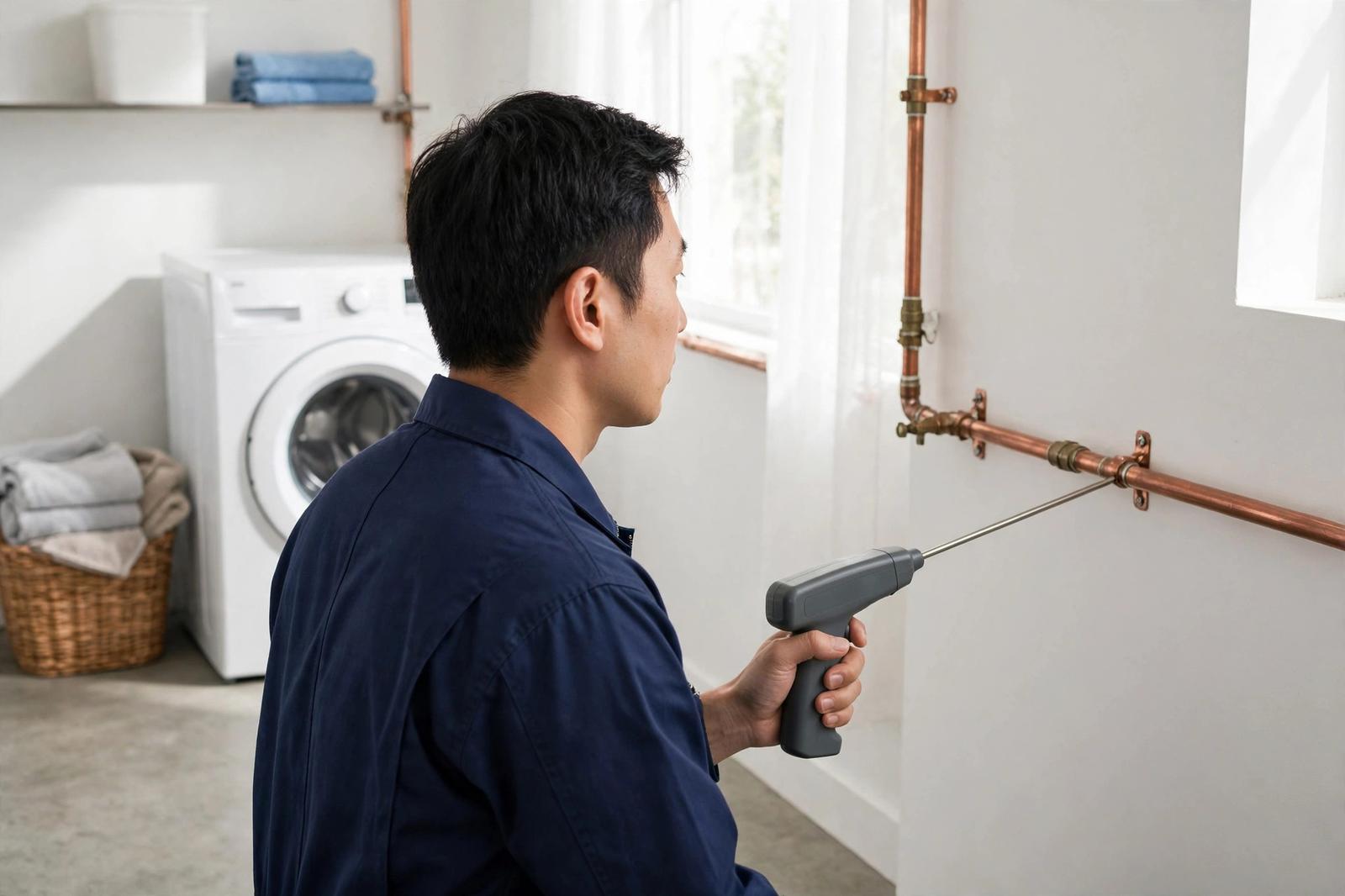
A positive meter test proves a leak exists; our full detection survey finds it. Our licensed and insured specialists take it from there: isolating the house side from the street side at the shutoff valves, pressure-testing each section, and deploying acoustic listening, thermal imaging, and tracer gas to pinpoint the source. Same-day appointments are available across California, and every visit ends with a clear written finding.
- Professional meter reading and leak-indicator interpretation
- House-side versus street-side isolation
- Full acoustic, thermal, and pressure-testing survey
- Written findings suitable for utility leak-adjustment claims
High bill, spinning meter, no visible leak? Call (833) 382-2711 now and we will prove it and find it.
What Your Meter Is Telling You Between Visits
Your water meter keeps a running record of everything your property uses, including the water nobody used. Most modern meters have a low flow indicator, a small dial or digital icon that moves whenever any water passes, even a trickle too small to feel at a tap.
That indicator is the homeowner's best friend. If it moves while every fixture, appliance, and irrigation zone is off, water is leaving the system somewhere it should not. A meter survey builds on that signal: isolating the house from the yard, then branch by branch, until the moving needle points at one section of pipe. The meter found the leak first; the technician just makes it give up the address.
Water Meter Leak Detection Across California
We provide this service in every corner of California, a few of the 988 cities we serve.

Related Services
Pair this service with related detection, or see all 15 services.

Frequently Asked Questions
How do I read my water meter?
Open the meter box at your property line and lift the meter lid. Analog meters show a register of numbers (read left to right) plus a small leak-indicator triangle or dial. Digital meters display the reading on an LCD, sometimes cycling through multiple screens; the flow-rate screen is the useful one for leak checks. Photograph everything so you have a timestamped record.
The leak indicator is spinning but I can't find any leak. Now what?
That is exactly when to call us. A moving indicator with no visible leak means the water is escaping somewhere hidden: under a slab, inside a wall, or underground. Our detection survey picks up where your eyes leave off.
Can a running toilet really move the meter that much?
Easily. A toilet with a bad flapper can waste hundreds of gallons a day, and because it refills in cycles, the indicator twitches rather than spins steadily. Dye tablets in the tank are a quick home check: color in the bowl without flushing means the flapper is leaking.
My meter is digital. Does the test still work?
Yes, and it is easier. Most digital meters show live flow rate, so you can see instantly whether water is moving with everything off. Some utilities also offer online hourly usage portals; a flat non-zero baseline overnight is a leak signature you can spot from your couch.
How much does water meter leak detection cost?
A meter-based diagnostic visit is one of our most straightforward services. Call (833) 382-2711 for an upfront quote.