 Leak Detection California
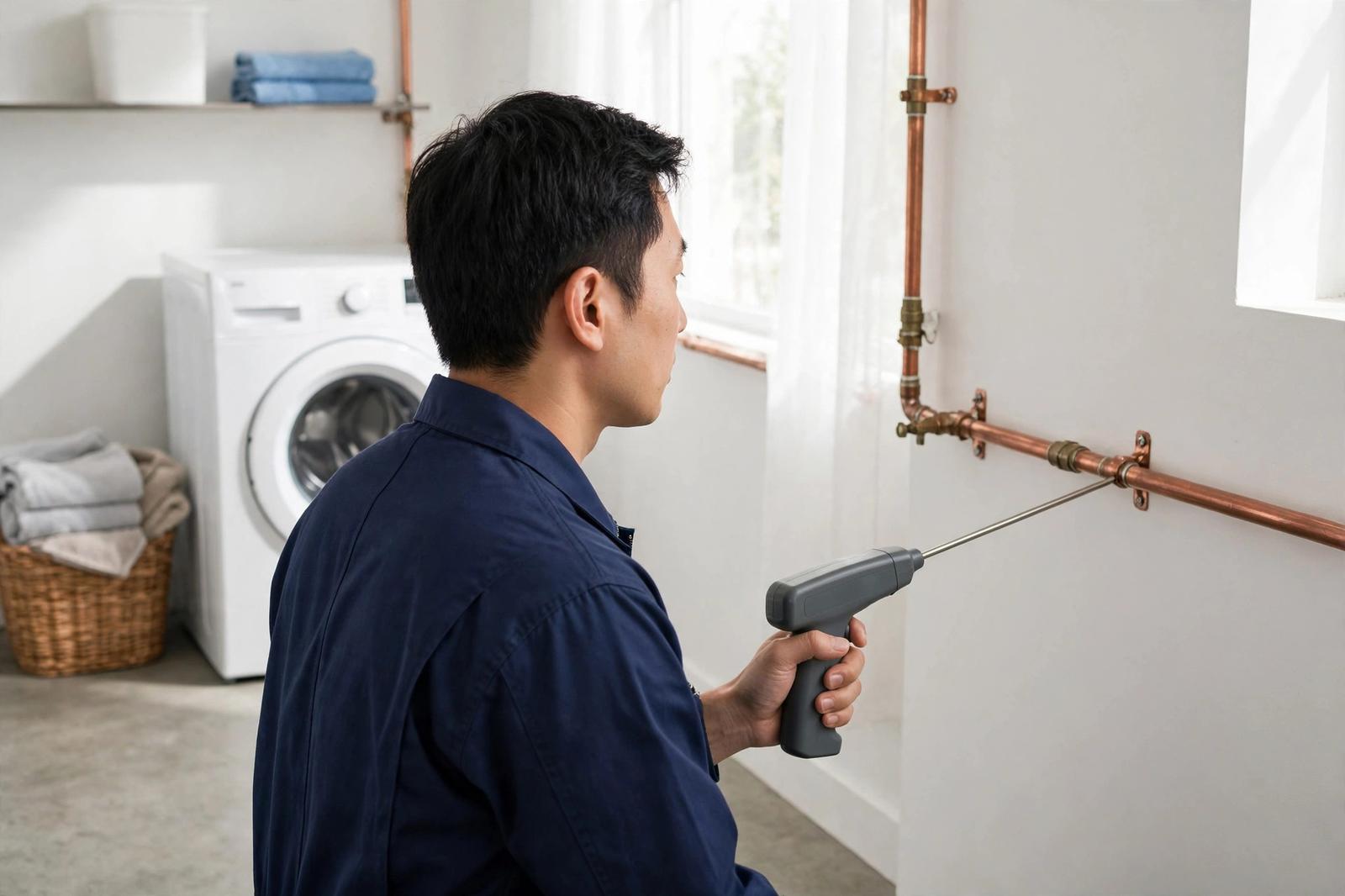
A bathroom can hide a leak for a long time, because water in a bathroom always has a plausible explanation. A wet floor after a shower, a damp grout line, or a faint smell near a toilet can all look like normal bathroom use. The difference between normal damp and a real leak is pattern: a leak returns to the same place, grows over time, or shows up in a room below or beside the bathroom. This guide walks through toilet, shower, tub, and sink leaks, the signs that separate them, the checks you can do at home, and the point where a detection visit makes more sense than another round of resealing.
Toilet Leaks: The Quiet Ones That Waste Water and Soak Floors
Toilets leak in two main ways, and both are easy to miss. An internal leak lets water move from the tank into the bowl without a flush, often because a flapper or fill valve no longer seals properly. The toilet may refill on its own at intervals, run for a short burst in the night, or make a faint hissing sound when the room is quiet. A food colouring test in the tank can reveal this kind of leak: if colour appears in the bowl without flushing, water is passing through when it should not be. That test only checks the internal path, so a clear result does not rule out a leak at the base or a supply connection.
A base leak shows up differently. Look for a floor that stays damp around the toilet, grout or caulking that darkens in one area, a toilet that rocks slightly when pressed, or a smell that returns after cleaning. A wax ring or a mounting bolt problem can let water escape at the base with every flush, and the water then soaks into the subfloor rather than pooling visibly. Over time, that slow soaking can soften flooring, stain a ceiling below, or warp trim in the room next door. If the toilet rocks, do not keep tightening bolts in the hope of fixing it, because overtightening can crack the base. Note the movement, keep the area dry, and have the seal and mounting checked.
Supply and fill connections deserve a look too. Check the shutoff valve, the supply line, and the connections at the wall and at the tank for dampness, mineral build up, or a slow drip. A drip that only appears after a flush, or that worsens when the valve is opened fully, points to a connection problem rather than a tank fault. Wipe the connections dry, place a dry paper towel beneath them, and recheck after a few flushes. A water leak detection visit can confirm whether the source is the toilet itself, a supply line in the wall, or a drain connection that only leaks under use.
Shower and Tub Leaks: Grout, Seals, and Hidden Pipework
Shower and tub leaks often start at a seal, a grout line, or a fixture, then travel behind tile where they cannot be seen. A shower door seal that gaps, a tub edge that no longer meets the wall cleanly, or grout that stays dark after the shower has dried can all let water past the waterproof layer. The first sign may not be in the bathroom at all. It may be a stain on the ceiling below, bubbling paint on the wall beside the shower, or a musty smell in a cupboard that shares the shower wall.
Check the shower systematically. Look at grout lines for cracks, missing pieces, or sections that stay dark long after use. Look at the seal where the tub or shower tray meets the wall, and at the seal around the shower valve and the tub spout. Run the shower and watch, from outside if possible, whether water escapes at a door track or a corner. Then check the rooms below and beside the bathroom for new damp, a stain that grows after showers, or flooring that feels soft near the shared wall. A pattern that follows shower use, and fades when the shower is not used for a day or two, points strongly toward the shower enclosure or its drain.
Drain and pipework leaks behave differently. A shower drain that leaks may only show when a larger volume of water runs through it, so a quick rinse may look fine while a longer shower produces a stain below. A tub overflow, a valve body in the wall, or a pipe joint behind tile can leak only under pressure or only when hot water runs. That is why a single check is rarely enough. Note which fixture was used, how long it ran, and when the stain or damp appeared. That timing helps a technician decide whether to test the enclosure, the drain, or the supply pipework first. Our guide to signs of a hidden water leak explains how to log those clues so the pattern is clear.
Sinks, Vanities, and Supply Lines in the Bathroom
Bathroom sinks hide leaks in a small, dark space that is rarely inspected closely. Open the vanity doors and look, with a torch, at the trap, the supply connections, and the base of the cabinet. A slow trap leak may leave a white or green mineral trace, a warped cabinet base, or a faint smell that cleaning does not remove. A supply line leak may drip only when the tap is running, or only when the shutoff valve is open, so check with the tap on and again after it has been off for a while. Store as little as possible under the sink, because stored bottles hide a damp patch and soak up the first evidence.
Also check the tap itself. A tap that drips constantly, a handle that feels loose, or water that appears at the base of the tap when it runs can mean a seal or a connection problem at the fixture. A pedestal sink can hide a leak behind its column, so look at the floor and the wall behind it for damp or discolouration. A wall mounted sink can hide a leak inside the wall, where it may only show as bubbling paint or a stain in the room next door. If you find damp under a sink, dry the area, place a dry towel or paper beneath the trap, and recheck after normal use. A fresh damp patch after a short period tells you the leak is active, not historic.
Bathroom leaks can also come from a source that is not a bathroom fixture at all. A ceiling or wall leak from an attic pipe or a roof source can appear in a bathroom ceiling, and a slab leak can show as damp at a bathroom wall base or a warm patch on the bathroom floor. When the clues do not line up with one fixture, widen the check: look at the ceiling above the bathroom, the floor below it, and the meter test result. A meter that moves with every tap and appliance off suggests a pressurised line leak somewhere in the system, and that search needs detection equipment rather than another sealant tube.
What a Bathroom Leak Does If It Is Left Alone
Left alone, a bathroom leak does not stay in the bathroom. Water soaks into subflooring, framing, and wall cavities, where it softens materials and creates a damp environment that is hard to dry from the surface. Flooring may lift or warp, tiles may loosen, and grout may crack further, which lets more water through. A ceiling below may stain, sag, or bubble, and trim in neighbouring rooms may swell. Each of those changes makes the eventual repair larger, because drying and repair must reach the full extent of the damp area, not just the visible stain.
A slow leak also makes diagnosis harder over time. As more areas become damp, it becomes difficult to tell which area was first and which areas are secondary. A stain that started near a shower may, after weeks, appear in two rooms, and a technician must then work backwards through a wider area. Early notes help here: a dated photograph of the first stain, a note about which fixture was used, and a meter reading all narrow the search later. If you are already seeing damage in more than one room, do not assume the worst room is the source. The source is often the fixture or joint that feeds the damp area, not the place where the damage looks most severe.
There is also a practical reason to act early. Bathroom repairs often involve tile, waterproofing, and finishing work, and a repair that starts with a precise location is far simpler than one that starts with a guess. A detection report that names the leak location, the method used to find it, and the areas ruled out gives a repairer a clear starting point. It also gives you a record of when the problem was found and what was checked, which is useful if the same area causes trouble again. For a fuller picture of how that process works, read how leak detection works, which explains acoustic listening, thermal imaging, and pressure testing in plain terms.
Home Checks That Help, and Checks to Avoid
A few careful checks can narrow a bathroom leak without causing damage. Start with the meter test, with every tap, appliance, and irrigation zone off, and note whether the reading moves. Then check each fixture in turn, drying connections first so a fresh drip is easy to spot. Use the colour test for a suspected toilet tank leak, check shower seals and grout after a shower, and look under sinks with a torch. Keep a simple log: date, fixture used, what you saw, and whether the stain or damp changed.
- Test one fixture at a time, so a change can be linked to that fixture rather than to general bathroom use.
- Dry a connection or a floor area before testing it, so a new damp patch is clearly fresh.
- Check the rooms below and beside the bathroom, not just the bathroom itself, after each test.
- Look for a second clue in the same area, such as a musty smell, warped trim, or a toilet that refills on its own.
- Keep the area ventilated and clear, but do not paint over a stain or seal a damp wall before the source is found.
- Switch off power to a room where water sits near outlets or light fittings, and keep clear of any sagging ceiling.
Avoid checks that open up the structure or force a fixture. Do not cut into tile or drywall to look for a pipe, do not overtighten a rocking toilet, and do not keep resealing a shower that keeps leaking in the same place. Repeated resealing can hide the pattern, trap water behind tile, and delay the real fix. Also avoid pouring a sealant or a leak stopping product into a drain or a supply line unless a professional has advised it for that specific problem, because a product that seals one joint can complicate a later repair. The table below summarises the clues that tend to point to each bathroom source.
| Clue you notice | Points toward | Useful next check |
|---|---|---|
| Toilet refills on its own | Tank valve or flapper | Colour test in the tank |
| Damp floor around toilet base | Base seal or mounting | Check for rocking and floor damp |
| Stain below grows after showers | Shower seal, grout, or drain | Check grout, seals, and ceiling below |
| Damp inside vanity cabinet | Trap or supply connection | Dry, then recheck after tap use |
| Meter moves with everything off | Pressurised line leak | Detection visit with listening equipment |
When to Call for Bathroom Leak Detection
Call promptly when a bathroom sign keeps returning, when a stain appears in a room below, when a toilet rocks or a floor stays damp, or when a meter test shows movement with everything off. Call urgently when water flows actively, when a ceiling sags, or when water sits near electrical fittings. A prompt call matters even for a small sign, because a bathroom leak that is still contained is easier to pinpoint than one that has spread through framing and subflooring. If you have already resealed a shower or replaced a toilet seal and the same sign returns, that return is itself a clue that the source has not been found yet.
Before the visit, gather the notes you have made: when the sign first appeared, which fixture seems linked to it, what the meter showed, and photographs of the stain or damp area over time. Note any recent work in the bathroom, such as a new seal, a replaced valve, or tile work, because that history can point to a joint or a connection that was disturbed. Clear access under sinks and around the toilet if you can do so safely, and keep the rooms below accessible too, since the technician may need to listen or scan from below as well as from inside the bathroom.
If a toilet, shower, tub, or sink in your California home keeps showing the same damp patch, stain, or smell, call Leak Detection California at (833) 382-2711. We will talk through which fixture seems involved, what your meter test showed, and what to check next, then arrange a detection visit to pinpoint the source before the next repair step.
Frequently Asked Questions
How do I check a toilet for an internal leak?
Put food colouring in the tank and wait without flushing. If colour appears in the bowl, water is passing from tank to bowl when it should not be, often because a flapper or fill valve no longer seals. That test only checks the internal path, so a clear result does not rule out a base or supply leak.What signs point to a shower or tub leak?
Look for grout that stays dark after the shower has dried, a seal that gaps at a tub edge, and a stain on the ceiling below that grows after showers. A pattern that follows shower use and fades when the shower is not used for a day or two points toward the enclosure, its drain, or its pipework.Why does a bathroom leak show up in another room?
Water travels inside walls and floors before it shows on a surface. A shower leak can stain a ceiling below, a toilet base leak can soak a subfloor, and a sink leak can dampen a neighbouring wall. Check the rooms below and beside the bathroom, not just the bathroom itself.When should I call for bathroom leak detection?
Call promptly when a bathroom sign keeps returning, when a stain appears in a room below, when a toilet rocks or a floor stays damp, or when a meter test shows movement with everything off. You can reach Leak Detection California at (833) 382-2711.More From the Blog

Water Leak Emergency: What to Do in the First 60 Minutes
Shut off the main valve, make the area safe, protect your belongings, and document damage. A clear first-hour plan for a California water leak emergency.
Read article →
Your Water Bill Spiked: Is It a Leak or Just Higher Rates?
A higher total does not always mean a leak. Compare usage with last year, do a simple meter check, and learn which culprits waste water silently and which are just rates.
Read article →
Why Slab Leaks Are So Common in Southern California
Clay soils, hard water, aging copper, and slab construction combine across Southern California. Here is why slab leaks cluster there and how they are found.
Read article →