 Leak Detection California
A spiked water bill in California usually comes from one of two places: you were charged differently or used more water, or water is escaping somewhere you cannot see. Comparing the usage on your bill with the same period last year, then doing a simple meter check with everything off, will usually tell you which family of causes to chase first.
Two Families of Causes Behind a Sudden Spike
It helps to sort every possible cause into two families before you start worrying. The first family is billing and usage. Your provider may have raised rates, adjusted a tier structure, or changed how a billing period is counted. Tiers matter in California because water often costs more per unit once your use passes a set threshold. A modest increase in use during a hot month can push part of your bill into a higher tier, so the total rises faster than the amount of water you actually used.
Season is part of this family too. A bill covering a hot, dry stretch will reflect more irrigation, pool evaporation, showers, and laundry than a cool month, even with no leak at all. Billing periods also shift, and an estimated reading corrected by an actual reading can make one bill look startling while two bills together are unremarkable.
The second family is water leaving the system where it should not. That includes a toilet that runs between flushes, a leaking irrigation valve, a crack in the main service line between the meter and the house, and a slab leak under the floor. These leaks share one trait. They use water on a schedule you did not choose, often around the clock, and they do not stop when your habits return to normal.
The practical difference is persistence. A usage spike falls back when guests leave, watering is cut back, or the weather cools. A leak spike stays, and often grows, month after month until the fault is fixed. That is why the comparison and meter steps below matter more than the size of any single bill. One high bill is a question. A pattern is evidence.
Start With Your Bill: Read Usage, Not Just the Total
Before calling anyone, sit down with the bill itself and find the usage figure. Most California water bills show use in gallons or in CCF, which is a billing unit many utilities use. The total amount you owe blends that usage with rates, tiers, and fixed service charges, so the total alone can mislead you. The usage line tells you whether your home actually consumed more water.
Compare like with like. Set this bill beside the previous bill and beside the bill from the same period last year. Last year matters most, because it matches the season, your irrigation needs, and roughly the same household routine. If usage is close to last year but the amount owed is higher, rates, tiers, or fees are the likely story. If usage has climbed sharply while your household has not changed, something in the home or yard is using or losing that water.
Also check the reading dates and whether a reading is marked as actual or estimated. A longer period explains a larger bill without any change in daily use. Providers in places as different as San Diego and San Francisco present these details differently, but every bill shows usage, dates, and reading type somewhere on the page.
Use this quick comparison to sort what you are seeing:
| More likely a leak | More likely usage or rates |
|---|---|
| Usage is up compared with the same period last year, with no change in the household | Usage matches last year, but the amount owed is higher |
| The increase continues or grows across two or more bills | The spike covers a longer billing period or follows an estimated reading |
| The meter moves when every tap, appliance, and irrigation zone is off | The meter is still when the house is using no water |
| You hear water running, find warm or damp flooring, or see wet soil with no rain | Guests stayed, the pool was filled, or irrigation ran longer during hot weather |
| Water pressure changes, or the water heater and pump cycle more than usual | A rate or tier change notice arrived with or before the higher bill |
No single row settles the question. Two or three rows pointing the same way usually do. If your notes lean toward the left column, treat the meter check in the next section as urgent rather than optional.
The At-Home Meter Check, in Brief
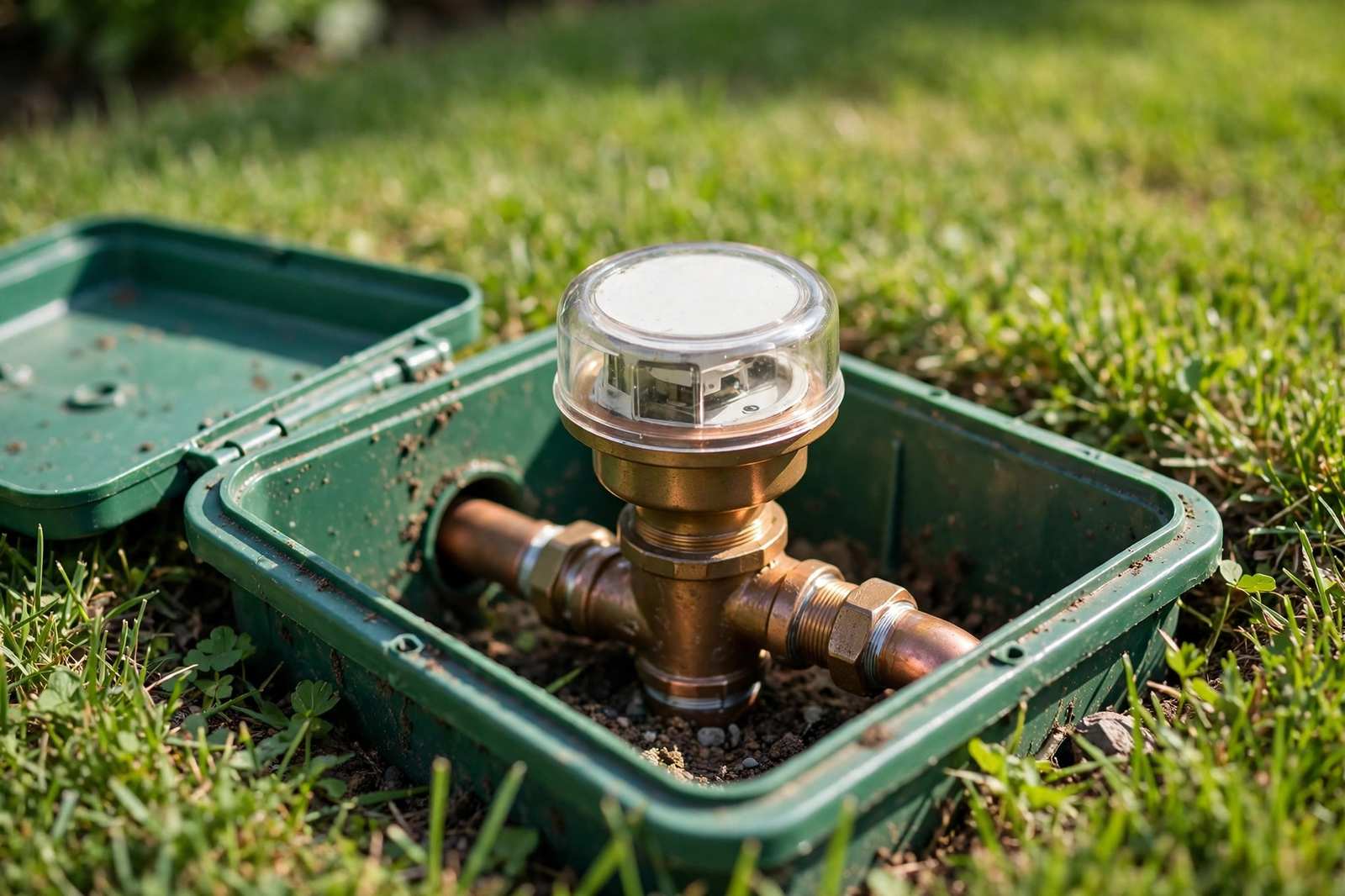
The meter check is the clearest test a homeowner can do without tools. The idea is simple. Turn off every use of water in the house and yard, note the meter reading and any small movement indicator on the meter, wait without using water, then read it again. If the reading changes while nothing is supposed to be running, water is going somewhere.
That is the overview, and the details matter enough that we recommend following the full steps rather than improvising. Our guide to checking your water meter for a leak walks through finding the meter, reading the dials and digital displays California utilities use, shutting off fixtures in the right order, and timing the test so irrigation, ice makers, and water softeners do not spoil the result.
Tell everyone in the house the test is running, so nobody flushes or starts laundry midway, and check that irrigation will not start during the wait. Photograph the first reading instead of trusting memory. A meter that does not move is good news, though it does not rule out a leak that only happens when a specific fixture, zone, or pump runs. A meter that moves steadily with everything off is strong evidence of an active leak.
Usage Culprits People Forget
When usage really is the cause, the culprit is often something the household set in motion and then forgot. Review these before assuming the worst:
- Irrigation schedules changed for summer and never changed back, or a controller reset after an outage and now waters more often or for longer.
- Guests, family visits, or someone working from home, adding showers, laundry, cooking, and flushing that blend into the month.
- Filling or topping off a pool or spa, repairing a pool, or a hose left running to water new planting or clean outdoor areas.
- A water softener regenerating more often than it should, or getting stuck in a regeneration cycle.
- New landscaping, a new lawn, or young trees that were watered heavily while they established.
- An evaporative cooler, humidifier, or other appliance that uses water quietly in the background.
Irrigation deserves a second look because it is both a usage culprit and a leak culprit. A controller error is usage. A cracked line or stuck valve on the same system is a leak. Walking the yard while each zone runs will often separate the two. Look for geysers from broken heads, soggy low spots, water running down hard surfaces, and zones that stay wet long after the cycle ends.
Softener problems surprise many owners. A softener can begin regenerating too often as settings drift or valves wear, sending water to a drain where nobody sees it. If your spike arrived with no visible change in the house, ask whether the softener, filtration system, or water heater has been serviced or adjusted recently.
Leak Culprits, Ranked by How Silently They Waste Water
If the evidence points to a leak, these are the usual suspects, ordered by how quietly they can waste water without announcing themselves.
First, toilet flappers and fill valves. A worn flapper lets tank water seep into the bowl around the clock, and a faulty fill valve can run a toilet intermittently all day and night. The water stays inside the plumbing and goes straight down the drain, so you may hear nothing at all. A toilet that refills on its own when nobody has flushed has already told you its answer.
Second, irrigation laterals and valves. A line cracked underground or a valve that does not fully close loses water into soil, where it disappears. Because systems run early in the morning, these leaks can persist through an entire season. Uneven growth, persistently soft ground, and a meter that moves only when the irrigation supply is open are the main clues.
Third, the service line, the pipe that carries water from the meter to the house. A leak here wastes water before it reaches a single fixture, so the house can behave normally while the meter keeps turning. Wet ground along the line path and a meter check that stays positive even with the house shut off valve closed point toward this pipe. Our water meter leak detection service focuses on confirming exactly where supply is being lost.
Fourth, slab leaks. A supply line under a concrete floor can lose water into the ground below while warmth, dampness, or a faint sound is the only sign above. Slab leaks rank last here because they often do eventually produce a clue, a warm spot or damaged flooring, that the first three culprits may never give. They still need professional pinpointing, because sound under concrete rarely sits directly above the break.
When the Evidence Says Call a Professional
Call a leak detection professional when your meter moves with everything off, when usage stays high for a second bill with no explanation, or when any physical sign joins the numbers, such as running water sounds, warm or damp floors, wet soil, or falling pressure. Also call when your own checks conflict. A still meter with rising usage can mean an intermittent leak tied to irrigation, a toilet, or a softener cycle, and intermittent faults are exactly what isolation testing is designed to catch.
Before that call, gather what you have. Bring the last few bills, your meter check readings and photos, and a short list of recent changes, such as guests, pool work, or landscape work. If you want to repeat the test first, the full steps are in our water meter leak check guide, and a second test at a different time of day can confirm a borderline result.
A professional visit separates the systems, tests sections under pressure, and listens for the leak so repair happens in one targeted place. Guessing leads to repeated digging and replaced parts. Testing leads to a location.
If the meter test and the bill agree that water is being lost, the remaining question is only where. Leak Detection California answers that question with a pinpoint survey rather than exploratory demolition, anywhere in the state.
If your bill has spiked and the evidence points to a leak anywhere in California, call Leak Detection California at (833) 382-2711. We will review what your bill and meter are telling you, pinpoint the source without unnecessary damage, and help you stop the waste before the next bill arrives.
Frequently Asked Questions
How much of a bill increase counts as a spike?
Any increase you cannot explain after comparing usage, season, and household changes deserves attention. Compare this bill with last month and with the same period last year, and check the reading dates carefully. If usage, not just the total owed, has jumped and stayed high, treat it as a spike worth investigating promptly rather than waiting.Can a running toilet really double a bill?
Yes, it can push a bill up sharply, and in some homes it can account for a very large share of total use. A leaking flapper or fill valve sends water down the drain around the clock, day and night. Because that water never stops, even a modest continuous flow adds up across a full billing period.What if the meter check shows nothing?
A still meter is good news, but it does not rule out every leak. Some faults only waste water when a toilet refills, an irrigation zone runs, a softener regenerates, or a pool pump is on. Repeat the check at another time, test systems one by one, and watch the next bill before deciding the problem has gone.Should I call the water company or a leak detection service first?
Start with your water company if you suspect a billing error, an estimated reading, or a rate change, and ask them to confirm the reading. If usage is genuinely high, your meter moves with everything off, or you have physical signs of water, call a leak detection service next to pinpoint where the water is going.More From the Blog

Water Leak Emergency: What to Do in the First 60 Minutes
Shut off the main valve, make the area safe, protect your belongings, and document damage. A clear first-hour plan for a California water leak emergency.
Read article →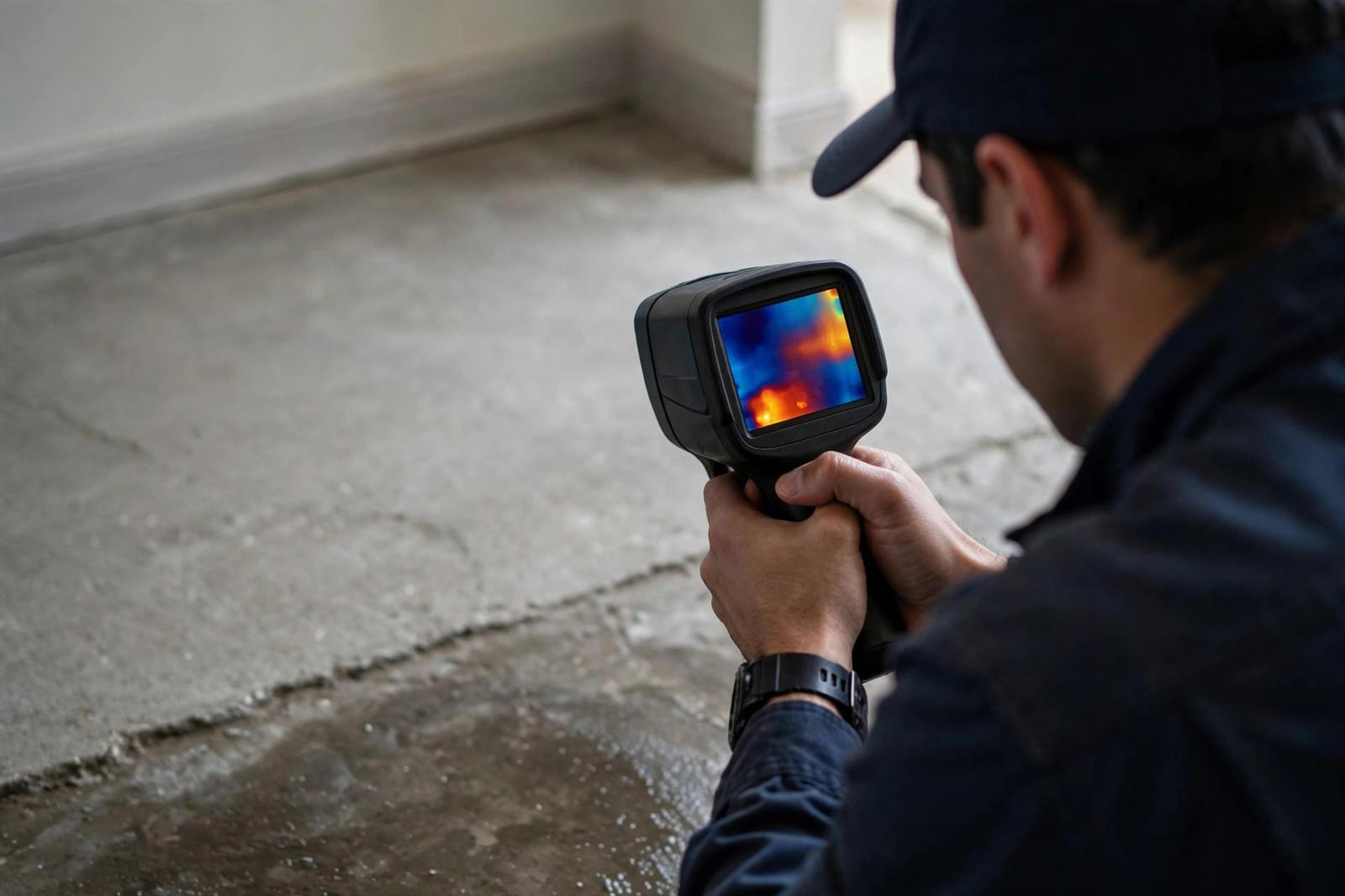
Why Slab Leaks Are So Common in Southern California
Clay soils, hard water, aging copper, and slab construction combine across Southern California. Here is why slab leaks cluster there and how they are found.
Read article →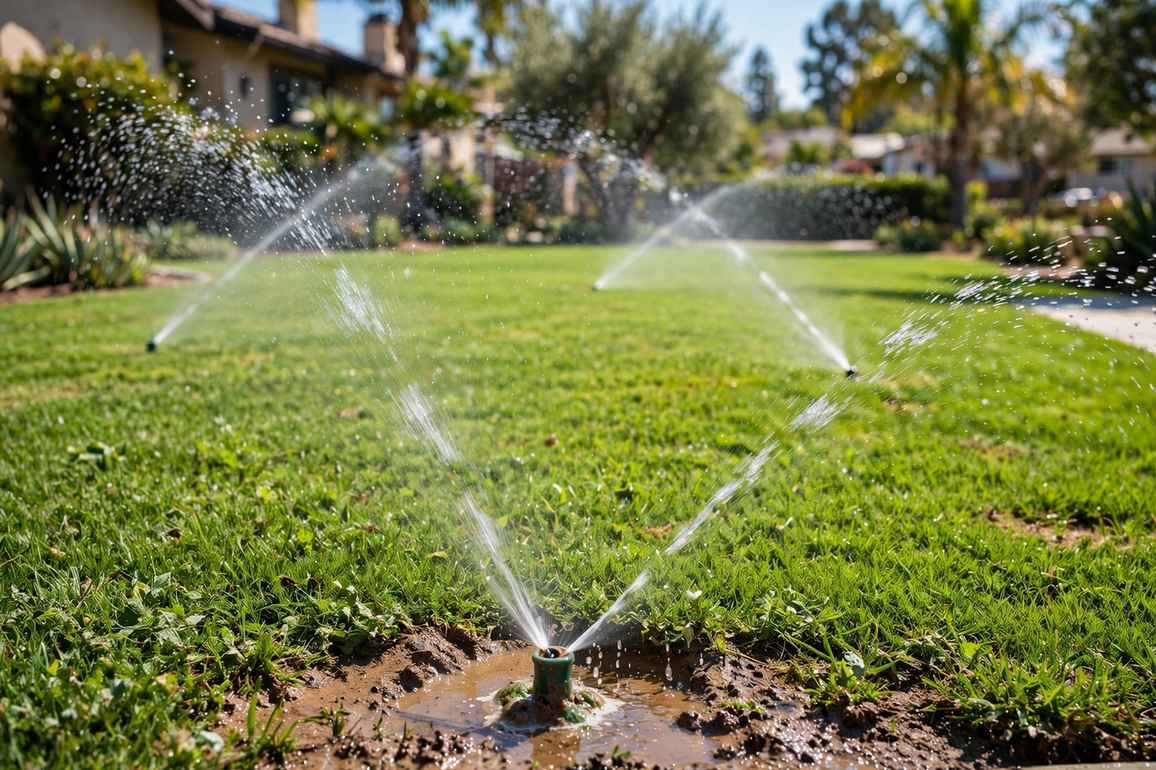
Irrigation Leaks: The Hidden Cause of a Doubling Water Bill
Broken laterals, stuck valves, and cracked heads waste water silently on a timer. Learn the yard signs, run the meter test, and pinpoint the break.
Read article →