 Leak Detection California
Slab leaks are so common in Southern California because much of the region was built slab on grade over expansive clay soils, with copper water lines running under the concrete. Those soils swell when wet and shrink when dry, hard water corrodes copper from the inside, and small seismic shifts move pipes against the slab. Over time, that combination wears a pinhole or crack into a line that stays pressurized day and night.
Built on Slabs, With the Plumbing Underneath
Drive through tract neighborhoods built from the postwar years through the 1980s and you will see the pattern repeated street after street. Single story ranch homes, two story tract houses, condos, and townhomes sit on a concrete slab poured directly on prepared ground. In slab on grade construction, there is no crawl space and no basement to inspect. The water lines, and in many homes the main distribution lines, run under or through that slab to reach kitchens, bathrooms, and laundry rooms.
Post tension slabs add another layer to the story. Builders stretch high strength steel cables inside the concrete and tighten them after the pour, which helps the slab resist cracking on difficult soils. It is a sound building method used widely across Southern California, and it also means any repair that requires opening the floor must be planned with care. You cannot simply cut concrete without locating cables first. That is one reason accurate, non invasive pinpointing matters so much before anyone picks up a saw.
When a line under a slab fails, the water has nowhere obvious to go. It may travel along the underside of the slab, wick up through a crack, or pool under flooring. The first visible sign is often far from the actual break. A warm patch in a hallway or damp carpet in a bedroom can trace back to the same under slab line. Proper slab leak detection closes that gap between where water shows up and where it is actually escaping.
Expansive Clay Soils That Never Sit Still
Much of Southern California sits on clay rich soils that change volume with moisture. After winter rain or heavy irrigation, clay absorbs water and expands. During long dry stretches and summer heat, it loses moisture and shrinks away. Engineers call this a shrink swell cycle, and a house feels it as slow, repeated movement under the foundation. The slab may heave slightly in one season and settle in another, doors may stick for a few months and then swing freely again, and hairline cracks may open and close.
Pipes under the slab resist that cycle. A copper line held by concrete and soil is stressed each time the ground shifts around it. Soil that shrinks can leave voids, removing support. Soil that swells can press unevenly against the slab. Over years, that stress concentrates at bends, joints, and points where a pipe contacts the slab edge. A line does not need a dramatic event to fail. It needs enough small movements, in the same weak spot, for long enough.
The risk is not the same in every neighborhood, which is why local knowledge helps during diagnosis. The general pattern below is a starting point for understanding your home, not a verdict on any single property.
| Area Type | Common Soil and Ground Conditions | Foundation and Slab Risk Factors | What Homeowners Often Notice First |
|---|---|---|---|
| Coastal | Sandy layers mixed with clay, higher moisture near the surface, salt air exposure for exterior metals | Moisture swings near slab edges, corrosion pressure on copper, slabs on flatter lots with drainage toward the house | Damp flooring near exterior walls, musty smells, meter movement with no visible leak indoors |
| Inland valley | Expansive clay is common, hot dry summers followed by concentrated winter rain, heavy irrigation in landscaped yards | Strong shrink swell cycles, large seasonal movement, long runs of under slab copper in tract homes | Warm floor spots, cracking tile or grout, doors sticking seasonally, sudden bill increases |
| Foothill | Clay and decomposed granite, sloped lots, varied fill and native soil across a single property | Uneven soil support, drainage and runoff concentrating on one side, movement at slope transitions | Foundation cracks, uneven floors, leaks appearing on the downhill side of the house |
Neighborhoods served by crews offering leak detection in Long Beach include coastal blocks where moisture and older copper meet, while inland communities face the sharper dry and wet swings that stress clay. The soil story differs. The result under the slab can look very similar.
Hard Water, Copper, and Pinhole Corrosion
Southern California water is hard across much of the region, meaning it carries a higher load of dissolved minerals, mainly calcium and magnesium. Hard water alone does not doom a pipe, but inside older copper lines it contributes to scale buildup and, in certain water chemistry conditions, to pitting corrosion that works through the pipe wall at a single small point. The result is a pinhole leak, a spray so fine it may run for weeks before it soaks through flooring or raises a bill enough to notice.
Pinholes rarely arrive as a one time story. If water chemistry and pipe age produced one pit, other sections have lived in the same conditions. That does not mean the whole house must be replumbed after a single leak. It does mean the diagnosis should look beyond the wet spot. Pressure, pipe age, and prior leak history inform whether a spot repair, a reroute over the slab, or a larger plan makes sense.
- Pinhole leaks often start as a fine mist or slow seep, not a dramatic burst.
- Blue green staining at visible copper joints can signal corrosion is active in the system.
- Repeated leaks in the same house within a short period suggest a system wide issue worth discussing.
- Water softening and filtration change water chemistry, so mention any system you have during the visit.
Hot water lines tend to fail first in many slab homes. Hot water speeds up corrosion reactions, and hot lines expand and contract more with use. That is why one classic sign is so telling. If a section of tile, wood, or vinyl floor feels warm when no heating vent or sunlight explains it, a hot line under that area may be leaking and heating the slab around the break.
Small Earthquakes, Aging Homes, and Time
Southern California moves. Most seismic activity is too small to feel, but micro movement over decades still shifts soil, slabs, and the pipes that pass through them. A pipe that was centered in a sleeve or cushioned by soil at installation can end up bearing against concrete after years of tiny shifts. Vibration and abrasion at that contact point thin the wall until it opens. No single quake needs to be blamed. The cumulative effect is enough.
Age multiplies every other factor. Housing built in the 1960s, 1970s, and 1980s now carries copper that has been pressurized and stressed for decades, and under a slab it cannot be inspected at all. Communities with large tracts from that era, including those served by leak detection in Temecula, combine aging copper with clay soils and hard water in one package. Together, they explain why slab leaks cluster in certain streets, with neighbors sometimes discovering similar problems within a few years of each other.
Renovations can play a role too. New flooring over a slab can hide early damp signs, and a remodel changes pressure and use patterns on old lines. Owners of that housing stock should treat the warning signs seriously and act while the leak is still a pinpoint repair.
The Signs Homeowners Notice, and the Ones They Miss
Warm floors are the sign most people have heard of, but the full list is longer. Learn it in full from our slab leak warning signs guide and compare it with what you are seeing at home. Common signs include the sound of water running or hissing when no fixture is in use, a water meter that keeps moving after you shut off everything inside, and a bill that rises without a change in habits, guests, or irrigation.
Physical signs build over time. Look for cracks in tile or grout, flooring that buckles or separates, carpet that feels damp in one area, and baseboards that swell. A musty smell that cleaning does not remove often means moisture is living under flooring. Outside, one patch of landscaping that stays green and soft while the rest dries can mean water is escaping near the foundation.
The missed signs are the quiet ones. Low pressure gets blamed on a faucet. A water heater that cycles more often gets blamed on age, when a hot line leak is forcing it to replace lost hot water around the clock. A faint sound at night is often the clearest clue. If you hear water and cannot tie it to an appliance, have the meter checked and the system tested.
How Non Invasive Detection Pinpoints a Leak Under Concrete
Finding a leak under a slab without tearing up floors on guesswork is a process of narrowing. A technician starts with the basics, confirming the meter moves with the house shut off, checking pressure, and isolating whether the leak is on a hot or cold line, and whether it is inside the house, in the yard, or under the slab at all. Many suspected slab leaks turn out to be a running toilet, an irrigation fault, or a line in a wall. Testing first prevents opening a floor for the wrong problem.
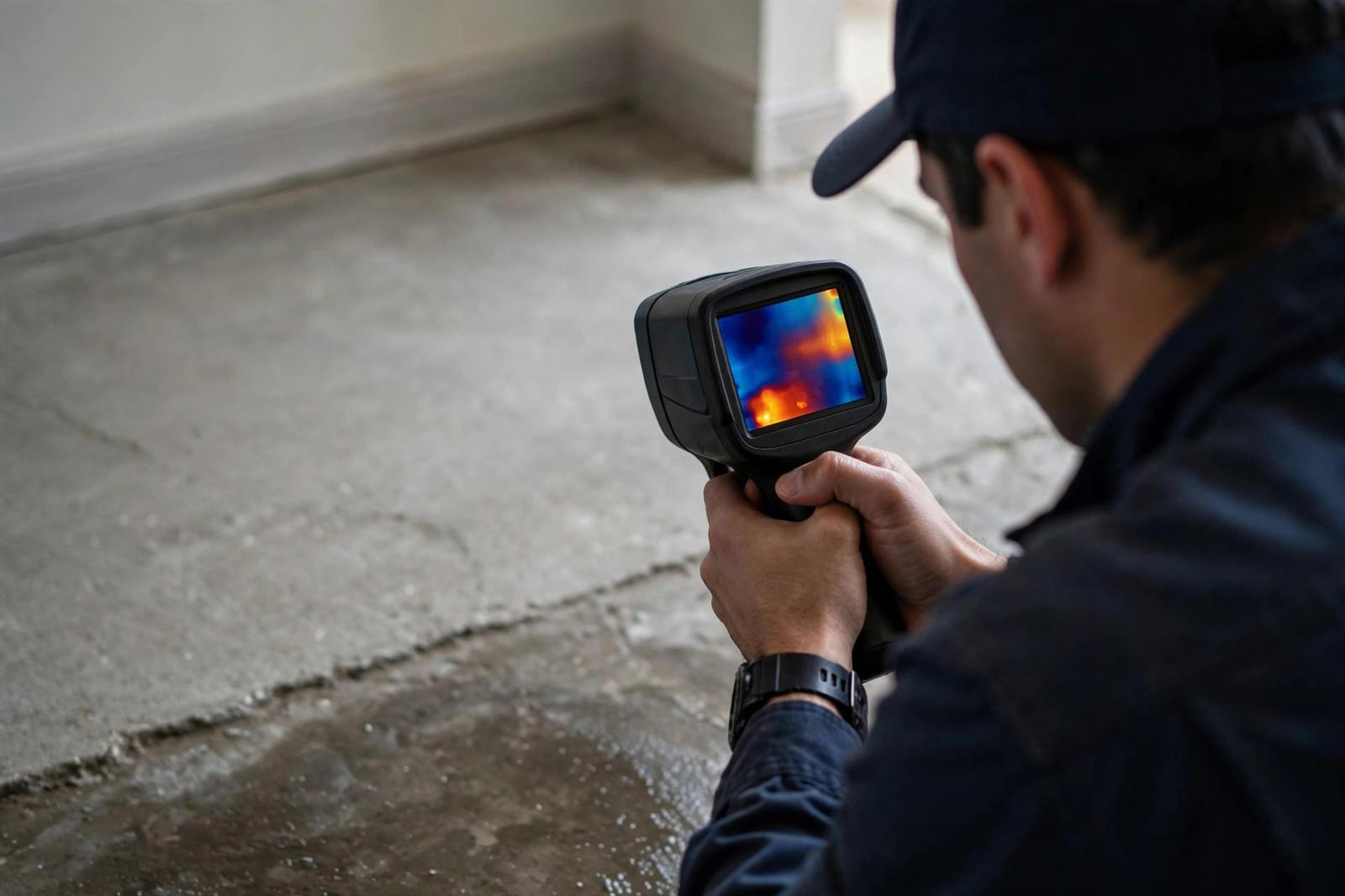
Once an under slab leak is confirmed, acoustic listening equipment does much of the work. Pressurized water escaping a pipe makes a distinct sound, and sensitive ground microphones pick it up through concrete and flooring. The technician works a grid, comparing sound intensity to locate the strongest point. Thermal imaging adds a second layer for hot line leaks, showing the warm plume in the slab around the break.
The value of professional slab leak detection is the size of the opening that follows. A pinpointed leak may need only a small, planned section of flooring and concrete opened, with post tension cables located and avoided first. A guessed leak can mean several openings and damaged flooring that did not need to be touched. After the repair, the system is pressure tested again to confirm no second break was hiding behind the first.
Slab work is one specialty among fifteen. The leak detection services index lays out the rest, from pool circuits to underground service lines, so the symptom you have can be matched to the right visit the first time.
If you have a warm floor, a moving meter, or a bill you cannot explain, do not wait for cracks to make the decision for you. Call Leak Detection California at (833) 382-2711 for non invasive detection that finds the leak under your slab before anyone opens your floor.
Frequently Asked Questions
Are slab leaks more common in older homes?
Yes, generally. Homes built in the 1960s through the 1980s carry copper lines that have spent decades under pressure, exposed to hard water and soil movement. Age alone does not cause a leak, but it multiplies the other factors. Newer homes can leak too, especially where soil movement or installation damage stresses a line.Can a slab leak undermine the foundation?
It can if it runs long enough. Escaping water washes soil out from under the slab, softens expansive clay unevenly, and leaves voids that remove support. Over time that can contribute to settling, cracking, and floor damage. Early detection limits how much water reaches the soil, which is why a moving meter should never be ignored.How is an under-slab leak found without digging?
Technicians confirm the leak with meter and pressure tests, isolate hot and cold lines, then use acoustic listening equipment to hear escaping water through the concrete. Thermal imaging helps locate hot line leaks by showing warmth in the slab. The strongest, confirmed point is marked, so any opening for repair stays small and planned.Does a slab leak always need the floor opened?
Not always in the same way. Some leaks are repaired through a small, pinpointed opening in the floor. Others are better solved by rerouting the line over the slab through walls or ceilings, leaving the broken section abandoned below. The right choice depends on pipe condition, leak location, and whether the line has failed before.More From the Blog

Water Leak Emergency: What to Do in the First 60 Minutes
Shut off the main valve, make the area safe, protect your belongings, and document damage. A clear first-hour plan for a California water leak emergency.
Read article →
Your Water Bill Spiked: Is It a Leak or Just Higher Rates?
A higher total does not always mean a leak. Compare usage with last year, do a simple meter check, and learn which culprits waste water silently and which are just rates.
Read article →
Irrigation Leaks: The Hidden Cause of a Doubling Water Bill
Broken laterals, stuck valves, and cracked heads waste water silently on a timer. Learn the yard signs, run the meter test, and pinpoint the break.
Read article →