 Leak Detection California
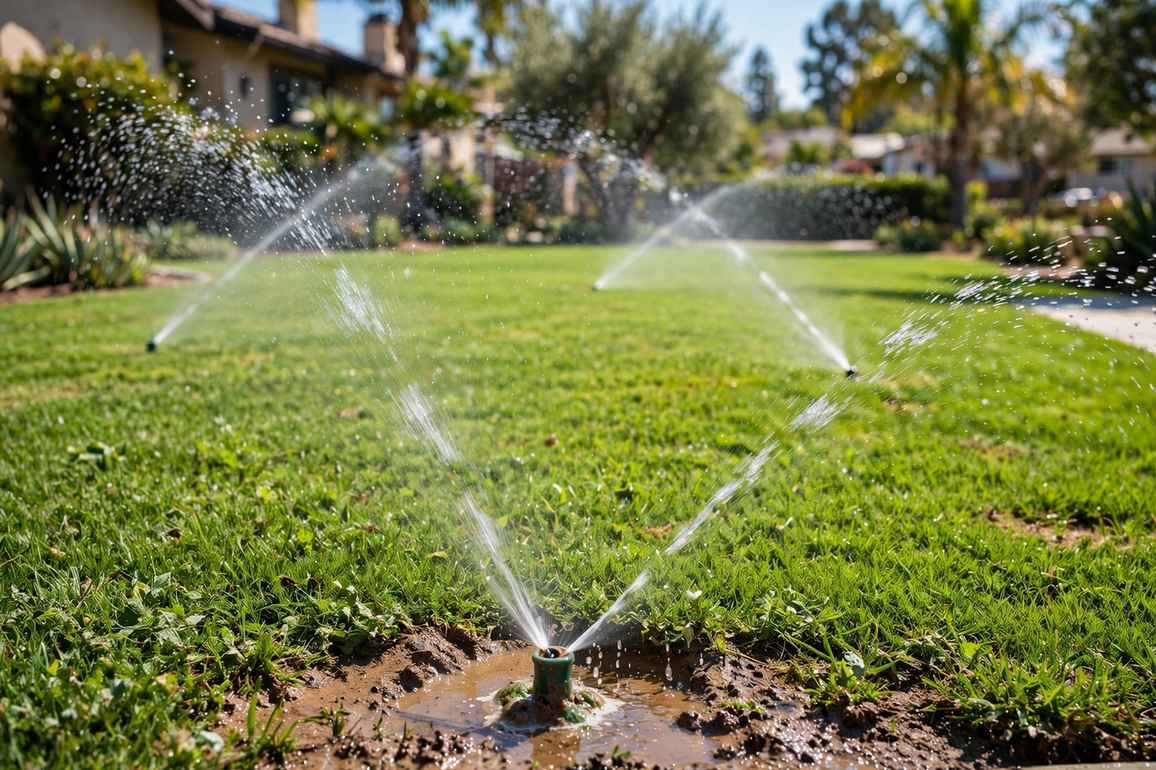
Yes, an irrigation leak can double your water bill, because sprinkler lines run on timers, often before dawn, and a broken lateral, stuck valve, or cracked head can pour water into the soil for weeks without ever showing inside your house. The water goes into the ground, not across your floor, so the only early warning is usually the meter, the bill, and a few soft or overgrown patches in the yard. Isolating the irrigation system with a simple meter test is the fastest way to find out.
How Irrigation Lines Actually Leak
A residential irrigation system is a network, not a single pipe. A main line carries pressurized water from the house supply to a set of control valves. Each valve opens one zone at a time, feeding lateral lines that branch across the yard to sprinkler heads, rotors, or drip emitters. A leak can live in any part of that chain, and each location behaves a little differently. Main line leaks run whenever the system is pressurized. Lateral leaks usually run only while their zone is on, which is why they hide so well.
Cracked lateral lines are the everyday failure. PVC laterals sit shallow in the soil, where shovels, aerators, edging tools, and shifting ground all reach them. A crack may spray only during a watering cycle, soaking one area and starving heads farther down the line. Stuck valves create a different pattern. A valve with debris in its diaphragm, a worn seal, or a failing solenoid may never fully close, so its zone weeps around the clock even when the controller says the system is off. From the meter, that looks exactly like a pipe leak.
Broken heads are the most visible failure and still get missed for months. A head sheared by a mower, cracked by a car tire at the curb strip, or pushed sideways by roots gushes during its cycle and turns a corner of the yard into a swamp while the rest of the zone goes dry. Root intrusion rounds out the list. Tree and shrub roots follow irrigation moisture, press against shallow lines and fittings, work into drip emitters and joints, and slowly deform or split pipe as they thicken year after year.
- Cracked or split lateral lines, usually from tools, ground movement, or roots.
- Valves stuck partly open from debris, worn diaphragms, or failed solenoids.
- Broken, tilted, or missing sprinkler heads that flood one spot and starve the rest of the zone.
- Leaking fittings, manifolds, and valve boxes where connections loosen over time.
- Rodent damage and chewed drip tubing in planted beds.
- A leaking backflow preventer or a main line break between the meter and the valves.
Professional irrigation and sprinkler leak detection starts by separating these possibilities, because the repair for a stuck valve and the repair for a cracked lateral in the middle of a lawn are very different jobs.
The Signs in the Yard People Explain Away
Irrigation leaks advertise themselves in the landscape, just quietly. The classic sign is a soggy patch that never dries, even during a hot, dry week when the rest of the yard is thirsty. Mushrooms appearing in a line or cluster, especially in turf, mean constant moisture below the surface. So does uneven growth. Grass over a leaking lateral often grows faster, greener, and thicker than the surrounding lawn, while areas past the break, robbed of pressure, turn thin and pale. One zone can show both patterns at once, lush at the leak and struggling at the far heads.
Sound and pressure tell their own story. A hissing near a valve box, a head, or a planted bed when the system should be off points to water still moving under pressure. Zones losing pressure show heads that barely pop up, rotors that stop mid rotation, and spray that falls short of its usual reach. Check the valve boxes themselves. A box full of mud or standing water on a dry day is a strong clue that a valve, manifold, or nearby fitting is leaking. Erosion channels, sinking soil over a line, and pavement that stays wet along one edge long after watering ends all belong on the same list.
Inland and valley homeowners see these signs peak in summer, when systems run most and a leak wastes the most. Properties receiving leak detection in Temecula often combine large landscaped lots, multiple zones, and long lateral runs, which gives a hidden break plenty of room to stay hidden. The yard can look acceptable from the street while one zone quietly floods below the surface.
The Meter Test That Isolates Irrigation
You can learn a lot before anyone visits, with a test that takes a few minutes and no tools beyond access to your meter and your irrigation shutoff. Most California properties have a dedicated irrigation shutoff valve, often near the main house shutoff, the backflow preventer, or the valve boxes. If you do not know yours, finding it now, in calm conditions, is worth the effort.
Here is the sequence. First, make sure no water is running inside the house, no laundry, no dishwasher, no ice maker filling, and check your meter. Most meters have a small leak indicator, often a triangle or dial, that moves when water flows. Note whether it moves. Second, shut off the irrigation supply at its dedicated valve and watch the meter again. If the indicator stops, the leak is on the irrigation side. If it keeps moving, the leak is in the house supply or plumbing, and a water meter leak detection visit can separate those branches properly. Third, with the irrigation back on and the house fixtures off, run one zone at a time and walk it. Look for geysers, soggy spots, heads that fail to rise, and pavement runoff that should not be there.
Write down what you find, zone by zone, and take a photo of the meter reading at the start and end. That record saves real time during a detection visit. One caution belongs here. Do not leave the whole property shut off for days to test a theory, and do not dig along a line to follow a wet patch. Wet soil spreads well beyond a break, and digging by guess usually finds mud, not pipe.
Why These Leaks Waste So Much Water, So Quietly
An indoor leak announces itself. It stains, drips, pools, and damages things you care about, so you act. An irrigation leak drains into soil that is designed to absorb water, on a schedule that runs while you are asleep, in a part of the property you may not walk every day. A cracked lateral or partly open valve loses water under pressure for the full length of every cycle, cycle after cycle, week after week. Even a modest break, repeated across long summer watering schedules, adds up to a volume that surprises homeowners when they finally compare bills across seasons.
The waste goes beyond the bill. Constant saturation rots roots in the very beds the system waters, invites fungal problems in turf, erodes soil from under walkways and driveways, and can undermine walls or create mosquito habitat in standing water. Overwatered slopes in California carry their own risk, since saturated soil is heavier and less stable. Meanwhile the areas past the break go dry, so owners often respond by running the system longer, which pours even more water out of the leak. It is a common and understandable trap. Longer cycles cannot fix a pressure loss. They feed it.
Homeowners in agricultural and suburban communities alike run into this pattern, from large valley lots served by leak detection in Fresno to smaller coastal yards. The system size changes. The physics does not. Pressurized water, a hidden opening, and an automatic timer will waste water steadily until someone isolates the fault.
How Technicians Isolate Zones and Pinpoint the Break
A detection visit turns your meter test observations into a precise location. The technician confirms which side of the system is losing water, then works zone by zone, checking pressure and flow behavior for each valve. A zone that cannot build pressure, a valve that weeps when closed, or a main line that loses pressure with all zones off each points to a different section of the network. Valve boxes are opened and inspected, the backflow preventer is checked, and the controller settings are reviewed, because an overlong schedule can mimic a leak on a bill even though the hardware is sound.
For underground breaks, acoustic listening equipment helps locate escaping water along laterals and mains, and probing and pressure isolation narrow the segment further. Dye and shutdown tests can confirm whether a wet area is irrigation water or drainage from elsewhere. The goal is a marked spot, ideally a small area of turf or soil, where the break actually is. That precision is the difference between opening a few square feet at the right fitting and trenching a yard along a guessed line.
That is also where the repair scope benefit shows up. Dedicated irrigation and sprinkler leak detection lets the repair match the fault. A stuck valve gets a valve repair or replacement. One cracked lateral gets a short section replaced, not the whole zone. A root crushed fitting gets repaired and the root problem addressed so it does not return next season. Pinpointing also gives you a clear before and after check, the meter still with the system pressurized and zones cycling normally, so you know the loss has actually stopped.
What to Do Once You Suspect an Irrigation Leak
Start with the meter test above, and if the irrigation side is implicated, cut watering to the affected zone if your controller allows it, or close the irrigation shutoff if one zone cannot be isolated. Keep the rest of your landscape on a lean schedule rather than shutting everything down in summer heat, which can stress plants and turf quickly. Photograph soggy areas, mushrooms, and any valve box holding water, and pull your last few water bills to show when usage changed. Those details shorten the visit and sharpen the diagnosis.
Do not authorize a full system replacement based on a bill alone, and do not accept trenching as the first step. Most irrigation leaks are single faults in a system that otherwise works. Find the fault, repair the fault, verify at the meter. If the technician finds aging components throughout, that broader conversation can happen with test results in hand, not guesses.
If your bill has doubled and the house is dry, suspect the yard before you suspect your habits. Call Leak Detection California at (833) 382-2711 to have your zones isolated and the break pinpointed, so you stop paying for water your landscape never receives.
Frequently Asked Questions
How much water can an irrigation leak waste?
It depends on the size of the break, system pressure, and how long and how often the zone runs. Even a modest crack or partly open valve loses water on every cycle, week after week, often while you sleep. That steady, repeated loss is why irrigation leaks commonly show up as a bill that jumps sharply.How do I know the leak is in the irrigation and not the house?
Use the meter test. With no water running indoors, check whether your meter leak indicator moves. Then close the dedicated irrigation shutoff and look again. If the indicator stops, the loss is on the irrigation side. If it keeps moving, the leak is in the house plumbing or main supply line.Can a stuck valve look like a leak?
Yes. A valve with debris in it, a worn diaphragm, or a failing solenoid may never fully close, so its zone seeps around the clock even when the controller is off. At the meter and on your bill, that constant flow looks like a broken pipe. Inspecting and testing each valve separates the two causes.Where do irrigation leaks happen most often?
Most often at lateral lines near heads and fittings, at valves and manifolds inside valve boxes, at heads damaged by mowers or vehicles, and where roots press on shallow lines in planted beds. Drip tubing and emitters also fail in beds. These shallow, high wear points account for most residential irrigation losses.More From the Blog

Water Leak Emergency: What to Do in the First 60 Minutes
Shut off the main valve, make the area safe, protect your belongings, and document damage. A clear first-hour plan for a California water leak emergency.
Read article →
Your Water Bill Spiked: Is It a Leak or Just Higher Rates?
A higher total does not always mean a leak. Compare usage with last year, do a simple meter check, and learn which culprits waste water silently and which are just rates.
Read article →
Why Slab Leaks Are So Common in Southern California
Clay soils, hard water, aging copper, and slab construction combine across Southern California. Here is why slab leaks cluster there and how they are found.
Read article →