 Leak Detection California
Your water meter can tell you whether water is moving through your plumbing when nothing in the house should be using it. Shut off every fixture and appliance, wait, and watch the meter: any continued movement points to water going somewhere it should not go. That simple test does not locate the leak by itself, but it gives you a clear starting point before you open walls, dig up a yard, or call for help. This guide walks through the test step by step, explains what each part of the meter means, and shows how to narrow the problem to the house side or the service line side.
Find Your Water Meter First
For most California homes, the meter sits in a small box near the street, close to the sidewalk or curb, often at the front edge of the property. The box may be concrete, plastic, or metal, and the lid can be round or rectangular. Some lids have a small reading window, while others lift fully. Look for a box marked with the word water, or a lid that sits flush with the ground along the line where the main supply enters the property. In newer subdivisions, the box may sit in a strip of lawn or a sidewalk panel. In older neighborhoods, it may hide under a thin layer of soil, mulch, or ground cover that has grown over the edge.
Open the lid with care, since lids can be heavy and edges can pinch. Inside, you may find dirt, leaves, or standing water after rain or irrigation. Clear the debris gently with a gloved hand so you can see the meter face. Do not force a stuck valve or a corroded fitting. If the box is full of mud, or you cannot see the dial at all, note what you found rather than forcing the issue. A box that stays flooded after dry weather can itself be a clue worth mentioning when you call.
Take a photo of the meter face before you start, if your camera can capture it clearly in the box. It records the starting reading for later reference. If your home has a separate irrigation meter, confirm which meter serves the house first, since testing the wrong meter will mislead you.
Read the Dial and the Leak Indicator
Most residential meters have a row of numbers that record total usage, plus a smaller dial or spinning element that moves with even a small flow. The number row works like an odometer: it moves slowly during normal use and should hold still when nothing is running. The smaller element is the part to watch during a leak test. It may be a triangular or star shaped indicator, a small needle dial, or a tiny wheel. On some digital meters, flow shows as a changing number or a small icon that moves when water flows. Designs vary by meter brand and water district, so spend a minute learning what you are looking at before you draw a conclusion.
Write down the full number reading, including every digit, at the start of the test. Do not round it, and do not guess a digit you cannot read. If the display is cloudy, wipe the face gently and try again from a different angle. A clear starting number matters because the test depends on change, not on the size of the number itself. A high total does not prove a leak, and a low total does not rule one out.
The leak indicator is useful because it responds to a slow flow that the main number row may not show right away. A dripping toilet valve or a slow irrigation leak can keep it turning even when the change in the main numbers looks tiny. That is why a visual check of the indicator, followed by a timed reading of the main numbers, gives a stronger result than either check alone. For a fuller walkthrough, see our guide on how to check your water meter for a leak, and for warning signs inside the home, see signs of a hidden water leak.
Shut Everything Off and Run the Test
A meter test only works if nothing in the house uses water during the test period. It is easy to miss a quiet water user: a toilet refilling after a flush, a washing machine mid cycle, a dishwasher on a delay start, an ice maker filling, or an irrigation controller can all move the meter and ruin the result. Plan the test for a time when no one needs water, and tell everyone in the house that taps, showers, toilets, and appliances must stay off until you finish.
Walk through the house and confirm each fixture is off, rather than assuming it is. Check the items in this list before you read the meter a second time:
- All faucets, showers, and tubs, including outdoor hose bibs and utility sinks
- All toilets, with the tank full and the handle at rest, not mid refill
- Washing machine, dishwasher, and any appliance that draws water on a timer
- Ice maker, water dispenser, and water filtration system, if they can cycle on their own
- Irrigation controller, set to off for the test period, not just between watering days
- Pool autofill and any outdoor water feature with an automatic top up
Once everything is off, read the meter and record the number and the position of the indicator. Wait at least 30 minutes, and longer if you can, before reading it again. An hour gives a slow leak more time to show itself, and it reduces the chance that a brief draw you missed will confuse the result. Do not use any water during that waiting period, and ask others in the house to do the same. When the time is up, read the meter again in the same way, from the same angle if possible, and compare the two readings. If the indicator kept moving, or if the number changed, water moved through the meter while the house was supposed to be still. If nothing changed at all, that result is useful too, and the next section explains how to read it.
What the Meter Result May Mean
A meter test gives you a pattern, not a diagnosis. The table below matches common results with what each result may point to, and what to check next. Use it as a starting point, not as a final answer, since more than one cause can produce the same pattern. A toilet valve problem, for example, can look like a pipe leak on the meter, and only an isolation step or an inspection can separate the two.
| What you see at the meter | What it may mean | What to check next |
|---|---|---|
| Indicator still, number unchanged | No water moved during the test period | Repeat the test for a longer period if a bill or a damp spot still worries you |
| Indicator turning slowly, number barely changed | A small, steady draw somewhere in the system | Check toilets, ice makers, and irrigation valves first, then isolate the house side |
| Indicator turning steadily, number clearly higher | A larger flow, such as a running toilet or an open line | Shut the house main valve and retest to separate house plumbing from the service line |
| Indicator spinning fast, number climbing quickly | A major flow that needs prompt attention | Shut the main valve, limit water use, and seek professional help promptly |
| Meter box stays wet or muddy in dry weather | Water may be reaching the box from below ground | Note the condition, avoid digging, and describe it when you call for help |
A still meter during one test does not prove the plumbing is sound for all time. Some leaks only flow under certain conditions, such as when a toilet valve sticks after a flush or when an irrigation zone opens. If a bill rose sharply, if a damp spot appeared, or if you hear water running when fixtures are off, repeat the test at a different time of day. A bill change alone can have more than one cause, and our post on whether a water bill spike means a leak or a rate change explains how to sort a usage change from a billing change. Keep your two readings and the time between them, since that record helps a technician judge the flow.
Isolate the House Side From the Service Line
Once you know water is moving, the next useful question is where it is going. A house side leak sits in plumbing inside the home or in yard lines after the main shutoff valve. A service line leak sits in the underground line between the meter and the house valve. You can narrow it down with a second meter test, using the main shutoff valve for the house.
Find the main shutoff valve for the house. It often sits where the main line enters the home, in a garage, near a water heater, or on an exterior wall. Turn it off, then confirm that indoor taps run dry after a brief sputter as pressure drops. Do not force a valve that will not turn, since a broken valve creates a new problem. If it will not close fully, stop there and note that the isolation test could not be completed. With the house valve closed, read the meter, wait the same period as before, and read it again.
If the meter holds still with the house valve closed, the flow was on the house side, which points to indoor plumbing, a fixture, or a yard line fed after the valve. If it keeps moving with the valve closed, the flow is likely before that valve, toward the service line between the meter and the house. That result does not pinpoint the exact spot, but it narrows the search a great deal. A professional with acoustic listening equipment and pressure testing tools can then focus on the right section. Our water meter leak detection service and our water service line leak detection service describe how a technician follows up a meter result with a targeted inspection.
When to Call a Professional
Call for professional help when the meter keeps moving after you have shut fixtures off, when the isolation test points to the service line, when you find a wet or muddy meter box in dry weather, or when you see water damage, a damp floor, a warm spot on a slab, or a soft patch of lawn that does not match the surrounding ground. Call promptly, too, if the meter spins fast, if you cannot close the main valve, or if the meter itself looks damaged, since those cases can worsen quickly and can be hard to manage with household tools alone. A technician can confirm the flow, locate the source with specialized equipment, and explain the repair options in plain terms before any digging or wall opening begins.
Before the visit, gather details that will save time on site: your starting and ending readings, the length of each test, whether the house valve was open or closed, and what you checked indoors. Note any damp spots, sounds of running water, or changes in water pressure, and where each symptom appears. Clear access to the meter box and the main valve helps the technician start without delay. If you face an active leak with visible water damage, review our emergency leak detection service and our guide on water leak emergency steps for what to do first while help is on the way.
For a meter result you cannot explain, or a leak you cannot locate on your own, call Leak Detection California at (833) 382-2711. A trained technician can verify the meter reading, narrow the leak to the house side or the service line, and locate the source so the repair can be focused and direct.
Frequently Asked Questions
Where is my home water meter usually located?
For most California homes, the meter sits in a small box near the street, close to the sidewalk or curb at the front edge of the property. Clear leaves and soil from the lid gently so you can see the meter face, and take a photo of the starting reading before you test.How long should I wait during a water meter leak test?
Shut off every fixture and appliance, record the starting reading, then wait at least 30 minutes before reading the meter again. An hour gives a slow leak more time to show itself and reduces the chance that a brief draw you missed will confuse the result.What does it mean if the meter moves while everything is off?
Movement means water passed through the meter while the house was supposed to be still, which points to a leak or a quiet water user you missed, such as a toilet valve or an irrigation controller. Recheck fixtures first, then use the house main valve to narrow the problem to the house side or the service line.How can I tell a house leak from a service line leak?
Close the main shutoff valve for the house and repeat the meter test. If the meter holds still with the valve closed, the flow was on the house side. If it keeps moving with the valve closed, the flow is likely in the service line between the meter and the house.More From the Blog

Water Leak Emergency: What to Do in the First 60 Minutes
Shut off the main valve, make the area safe, protect your belongings, and document damage. A clear first-hour plan for a California water leak emergency.
Read article →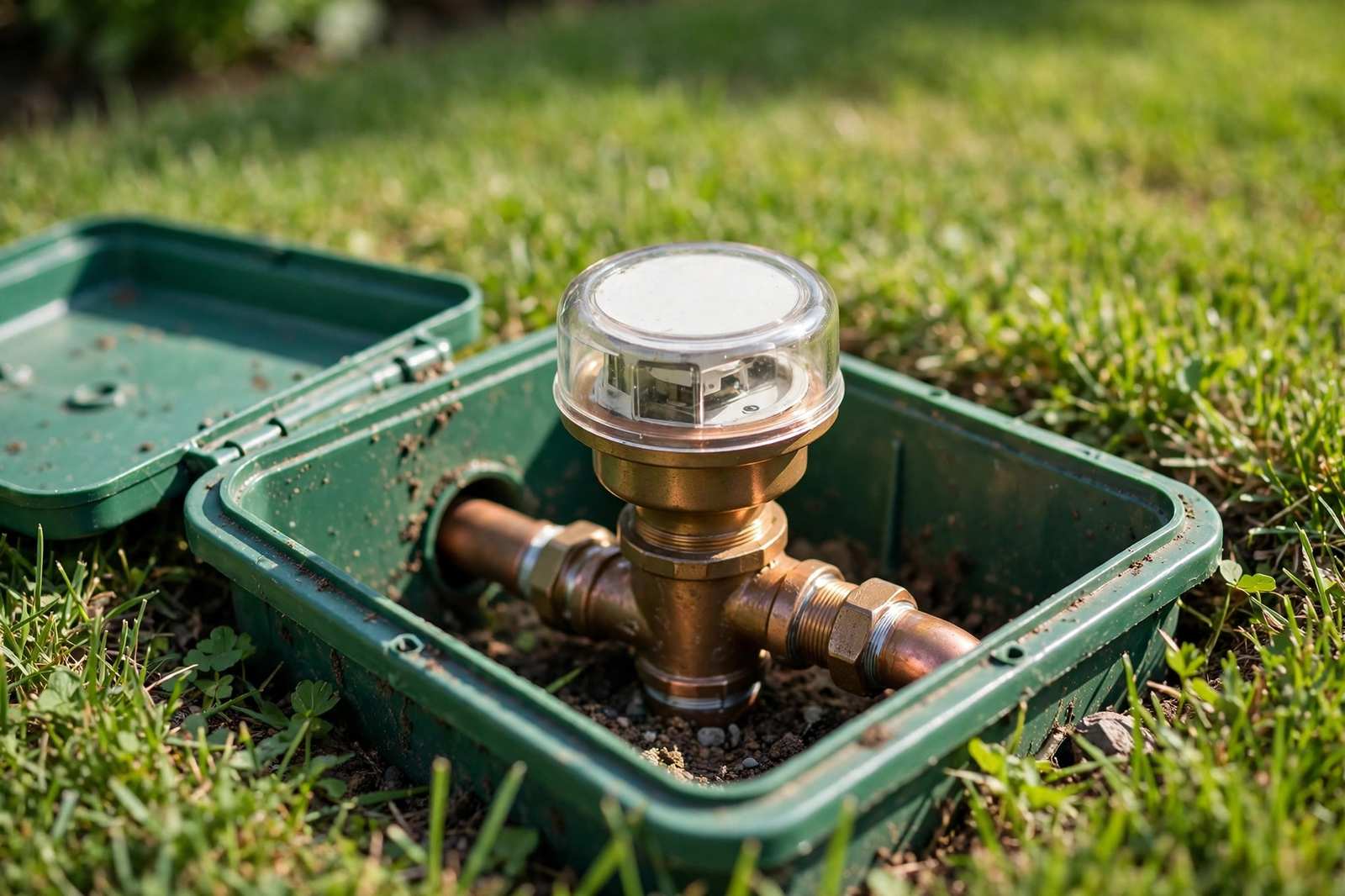
Your Water Bill Spiked: Is It a Leak or Just Higher Rates?
A higher total does not always mean a leak. Compare usage with last year, do a simple meter check, and learn which culprits waste water silently and which are just rates.
Read article →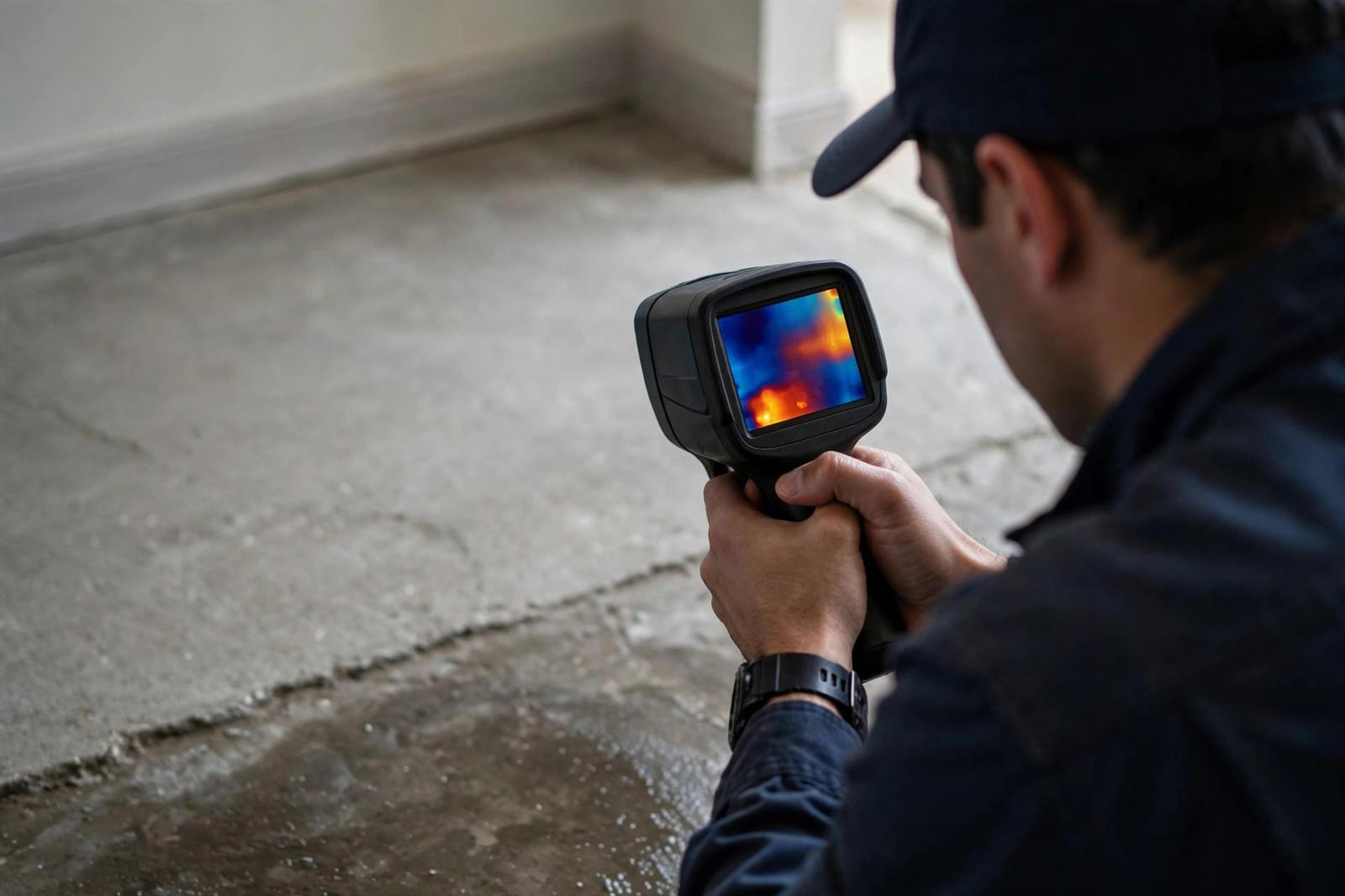
Why Slab Leaks Are So Common in Southern California
Clay soils, hard water, aging copper, and slab construction combine across Southern California. Here is why slab leaks cluster there and how they are found.
Read article →