 Leak Detection California
If you suspect a hidden leak in a Los Angeles home, start by mapping the house in your mind: which bathrooms sit above which rooms, where the laundry sits, where the water heater lives, and how water reaches the yard. Los Angeles homes span a wide range of ages and layouts, from older houses with original lines to newer builds with long runs to distant bathrooms, and from single story homes on slabs to multi-story homes with stacked plumbing. A leak in such a house rarely announces itself cleanly. It can stain a ceiling far from the fixture that caused it, warm a floor in a room with no plumbing at all, or raise a bill slowly while the only visible clue is a faint mark on a wall. This guide explains where Los Angeles leaks hide, which signs deserve a prompt check, and how detection narrows the search to one area.
How Los Angeles Housing Shapes Leak Patterns
Age is the first factor. Older Los Angeles homes often carry supply and drain lines that have served for decades, with joints, valves, and fixtures that have been repaired in stages. A line that was patched years ago can start to seep at the patch, and a valve that was never fully replaced can weep at its stem. Newer homes are not exempt. Long runs to primary suites, laundry rooms on upper floors, and kitchens placed far from the main line mean more joints and more places for a slow seep to hide behind finished walls.
Layout is the second factor. In multi-story homes, bathrooms stacked above kitchens and living rooms mean a leak above damages everything below, and the stain often appears in a room that has no water fixture of its own. In single story homes on slabs, the risk shifts underfoot, where a supply line can seep under concrete and show up as a warm patch, a buckled floorboard, or a damp baseboard. In homes with additions, the junction between old and new construction deserves attention, because pipe runs that cross that junction may have been joined under difficult access, and movement at the junction can stress those joints over time.
Lot and yard layout is the third factor. Los Angeles lots often carry long service lines from the street, irrigation systems, pool equipment lines where a pool is present, and hose bibs on several walls. Each of those is a possible source when a bill climbs or a yard patch stays soft. A systematic check looks at house, yard, and pool areas in turn, rather than assuming the first damp spot is the source. The guide to signs of a hidden water leak covers the indoor pattern, and the water leak detection service page describes how a whole property visit is sequenced.
Ceiling and Wall Leaks in Multi-Story Homes
Ceiling stains are among the most common first signs in Los Angeles, and they are also among the most misleading if read alone. Water travels along joists, pipes, and wall cavities before it finds a weak point in a ceiling, so the stain may sit a room away from the break. Note the shape and behavior of the stain. Does it darken after showers, after laundry, or after a dishwasher cycle? Does it stay the same size for weeks, or grow steadily? Does it dry and return, or stay damp constantly? A stain that darkens after a specific fixture runs points toward that fixture's drain or supply. A stain that stays damp regardless of use points more toward a supply line under constant pressure.
Walls tell a similar story. Bubbling paint, peeling wallpaper, warped trim, and a musty smell in one section of wall often point to a seep behind that wall, but the source may sit in an adjacent room. Check the rooms on both sides of the wall, and the room above if there is one. Open closets that back onto bathrooms, because a leak can soak a closet wall long before it reaches an open room. Check the cabinet under a sink on the other side of the wall, and look for a trap or supply line that shows corrosion or a damp cabinet floor.
Do not open a large section of ceiling or wall to chase a stain. A small inspection opening at a guessed spot can miss the break by a wide margin and still damage finishes. Detection uses moisture readings, acoustic listening, and section isolation to narrow the area first, so any opening that follows is focused. If the stain is growing quickly, if a ceiling is sagging, or if water is dripping steadily, treat it as urgent: shut off the main valve if you can do so safely, keep power away from wet areas, and arrange help promptly. The ceiling and wall leak detection service covers this pattern, and the emergency steps article gives a first-hour plan for active water.
Slab, Yard, and Service Line Leaks
Single story Los Angeles homes on slabs face a different set of clues. Walk floors in the morning, when a warm patch from a hot water line stands out against cooler flooring. Look for tile that sounds hollow, wood that cups, grout that stays damp, and baseboards that warp in one area. Outside, look for soil that stays soft near the foundation, a walkway section that stays wet after dry days, and a hose bib that drips when fully closed. A slab or yard leak may also reduce pressure inside, especially when several fixtures run at once, or cause a water heater to cycle more often than usual.
Service lines deserve attention when the bill climbs but the house shows no indoor sign. The line from the meter to the house runs underground, often under driveways, walkways, or planting, and a break there can soak soil without ever entering the home. A meter test is the key check: turn off every tap, appliance, and irrigation zone, note the reading, wait, and read it again. If the reading moves, water is leaving the system somewhere, and the next step is to isolate the house from the yard line to see which side is losing water. That isolation step is a detection task, not a digging task, because it uses valves and pressure checks to divide the system into testable sections.
Yard lines and irrigation add a further layer. A break in an irrigation lateral can run through every watering cycle, soaking soil while the lawn above shows only uneven growth or a weak head. Test zones one at a time, note the zone that behaves oddly, and check valve boxes for standing water when the system is off. If a pool is present, a pool leak can also mimic a yard leak, because pool water loss and yard damp can appear together. The pool leak signs article explains how to separate pool loss from a plumbing leak, and the pool leak detection service covers pool system testing.
- Ceiling stain that darkens after a specific fixture runs, pointing to that fixture's drain or supply.
- Warm floor patch in the morning, pointing to a hot water line under a slab.
- Soft soil near the foundation or a walkway that stays wet in dry weather.
- Meter that moves with everything off, pointing to an active supply leak.
- One irrigation zone with weak heads while other zones run normally.
- Pressure that drops when several fixtures run at once.
Water Pressure, Discoloration, and Sounds
Pressure changes are easy to dismiss, yet they often arrive before visible damage. A shower that weakens over weeks, a faucet that sputters, or pressure that falls when a second fixture opens can point to a line that is losing water, a valve that is failing, or scale building inside an aging line. Pressure that drops suddenly, with no work done on the system, deserves a prompt check, especially if it arrives alongside a damp sign or a rising bill. Note which fixtures are affected and whether the change is constant or only appears at certain times of day.
Discolored water is another clue, and it needs careful reading. Rusty or brown water after a period without use can point to corrosion inside steel lines, while cloudy water that clears after running may have a simpler explanation. Persistent discoloration, especially from a single fixture or a single side of the house, is worth noting, because it can indicate a line that is deteriorating at a joint or a section. Do not rely on color alone. Pair it with pressure, meter readings, and any damp signs, and pass the full pattern to the technician.
Sounds help too, when the house is quiet. Stand near walls that carry plumbing late at night, with fixtures off, and listen for a faint hiss, a trickle, or running water where none should be. A hiss behind a wall can indicate a pressurized supply leak, while a trickle after a fixture is used can point to a drain issue. Sounds are not proof on their own, since pipes can transmit normal sounds from elsewhere in the system, but a sound that persists in one place, night after night, is a useful flag. Acoustic listening equipment refines that flag by locating the loudest point along a line, which is why a reported sound often speeds up a detection visit.
What a Detection Visit Looks Like in Los Angeles
A detection visit usually starts with conversation, not equipment. The technician will ask where signs appeared, when they appeared, what the meter showed, and what work or remodels the house has had. That history shapes the testing order. A house with a new ceiling stain above a kitchen will be tested differently from a house with a warm slab patch and no indoor stain. Bring your notes, including meter readings, bill changes, and photos of stains or damp areas over time, because a sequence of photos can show growth that a single visit cannot.
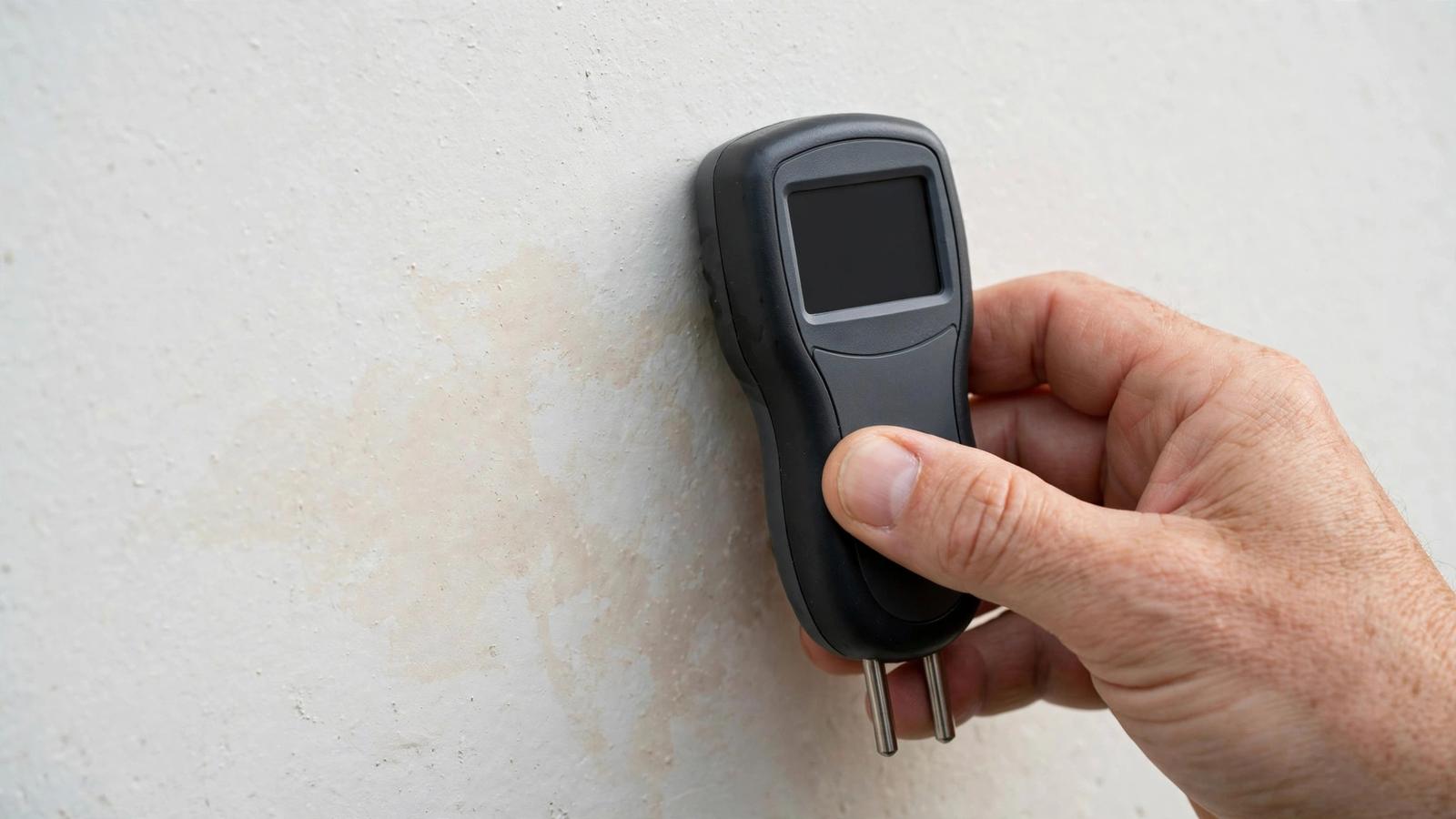
Testing then proceeds by isolation. The house system is divided into sections, each section is pressurized or meter checked in turn, and the losing section is narrowed step by step. Moisture readings map damp across walls and floors, acoustic listening follows the sound of escaping water, and thermal readings highlight warm areas from hot water lines. The goal at each step is to shrink the search area, not to confirm a guess. When the source is pinpointed, the technician can describe the location, the line involved, and the smallest practical access for repair, so the repair team works on the right spot.
That sequence is why early detection matters in a large city home. A Los Angeles house can hide a leak behind several layers of finish, and each layer opened in the wrong place adds restoration work. A visit that narrows the source first keeps the repair focused, even in a multi-story home or a house with long pipe runs. The guide to how leak detection works explains the sequence in more detail, and the guide comparing DIY checks with professional detection helps you decide which checks to do yourself and which to leave to equipment.
| Clue | What to note | Why it matters |
|---|---|---|
| Ceiling stain | Which fixtures sit above, and when it darkens | Separates supply leaks from drain or fixture leaks |
| Warm floor patch | Time of day, and whether it returns daily | Points to a hot water slab line versus sun on tile |
| Meter movement | Readings and times with everything off | Confirms active water loss, not just a damp patch |
| Pressure drop | Which fixtures, and whether constant | Narrows the losing section of the system |
| Yard soft spot | Location, and whether irrigation was running | Separates yard lines from service lines |
When to Call for Leak Detection in Los Angeles
Call promptly when a sign keeps returning, when water use rises without a clear reason, or when damp, odor, and floor changes appear together. Call sooner if water is actively spreading, if a ceiling is sagging, if a floor is buckling, or if a meter test shows steady movement while everything is off. In those cases, shut off the main valve if you can do so safely, keep power away from wet areas, and move valuables off the floor while you arrange help.
Before the visit, gather the details that save time on site: rooms where signs appeared, meter readings, recent plumbing work, remodel history, and irrigation zone numbers that behaved oddly. Clear access to sinks, water heaters, meter boxes, and the areas around damp walls helps the technician test sections in order. If you live in a multi-unit building, note whether a neighbor has reported damp, since a shared line can explain a sign that seems to come from nowhere inside your own unit.
If you are seeing these signs in a Los Angeles home, call Leak Detection California at (833) 382-2711. We will talk through what you have seen, arrange a non-invasive detection visit, and pinpoint the leak so you can plan one targeted repair with confidence. You can also review the Los Angeles leak detection page for the areas served and the systems tested on a typical visit.
Frequently Asked Questions
What are early signs of a hidden leak in a Los Angeles home?
Look for ceiling stains, bubbling paint, warped trim, warm floor patches, soft yard soil, pressure drops, and a bill that climbs without a change in habits. Two signs in the same area deserve a prompt check.Why does a ceiling stain appear far from the leak?
Water travels along joists, pipes, and wall cavities before it finds a weak point in a ceiling, so the stain may sit a room away from the break. Noting which fixtures sit above and when the stain darkens helps narrow the source.How do I check my water meter for a leak?
Turn off every tap, appliance, and irrigation zone, note the meter reading, wait, then read it again. If the reading moves while nothing is in use, water is going somewhere and a leak is a likely explanation.When should I call for leak detection in Los Angeles?
Call promptly when a sign keeps returning, when water use rises without a clear reason, or when damp, odor, or floor changes appear together. You can reach Leak Detection California at (833) 382-2711 to arrange a visit and narrow the source.More From the Blog

Water Leak Emergency: What to Do in the First 60 Minutes
Shut off the main valve, make the area safe, protect your belongings, and document damage. A clear first-hour plan for a California water leak emergency.
Read article →
Your Water Bill Spiked: Is It a Leak or Just Higher Rates?
A higher total does not always mean a leak. Compare usage with last year, do a simple meter check, and learn which culprits waste water silently and which are just rates.
Read article →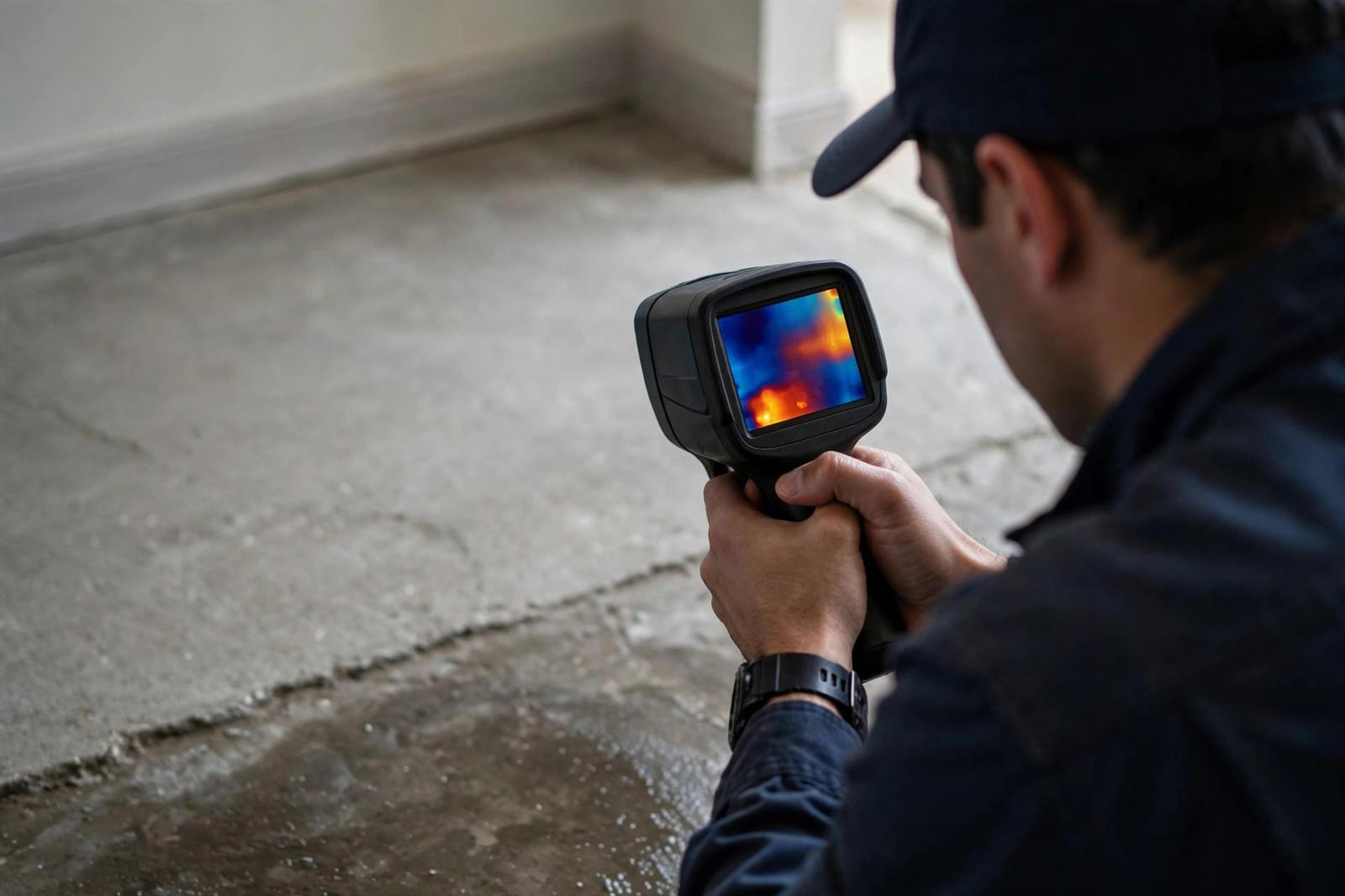
Why Slab Leaks Are So Common in Southern California
Clay soils, hard water, aging copper, and slab construction combine across Southern California. Here is why slab leaks cluster there and how they are found.
Read article →