 Leak Detection California
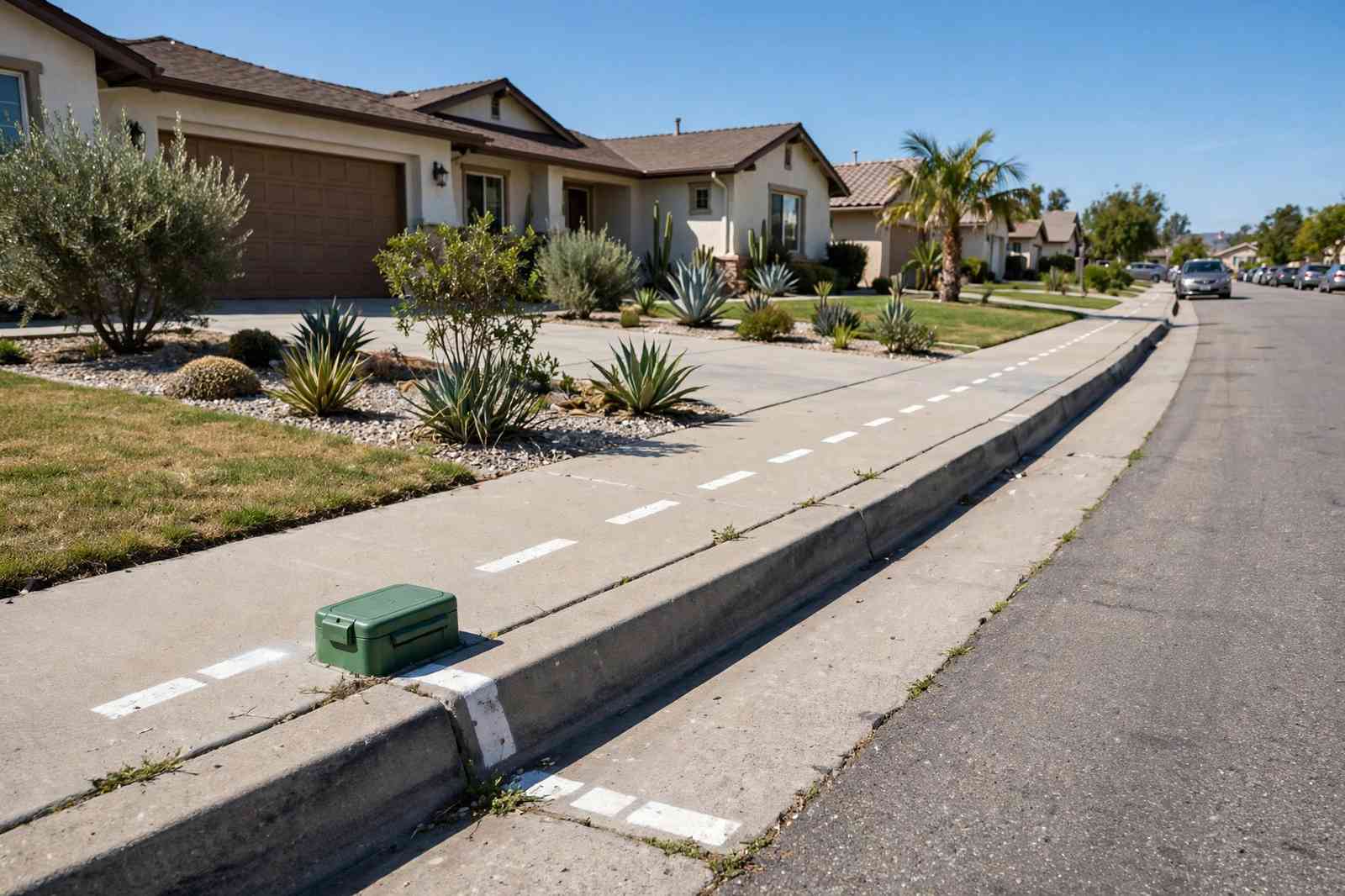
The water service line is the pipe that carries water from the street meter to your home, and a leak in that line can be hard to spot, because most of the pipe is buried. There may be no indoor stain, no dripping tap, and no puddle in a room. The clues often appear outside instead: a patch of yard that stays damp, a bill that climbs, a drop in pressure, or a meter that moves when every tap in the house is off. This guide explains how a service line works, which signs point to it, how to separate it from an irrigation or indoor leak, and when to call a detection specialist.
What the Service Line Is, and Where It Runs
A service line usually runs from the water meter, often near the street or in a yard meter box, to the point where it enters the home. The exact route varies with the layout of the property, the position of the meter, and any later changes to the yard, driveway, or landscaping. A line may run under a lawn, a path, a driveway, or a planted area, and it may share a trench or a corridor with other utilities. Because the line is buried, a leak does not show as a visible drip. Water escapes into the surrounding soil, and the first sign may be damp ground some distance from the actual break, because water follows soil, roots, and the path of least resistance.
Service line material and age also vary. Homes built in different eras may have different pipe materials, and a line that was repaired or partly replaced may contain more than one material, with joints where sections meet. Those joints, and any point where the line bends, enters the home, or passes under a hard surface, deserve attention when a leak is suspected. Ground movement, root growth, and repeated wetting and drying can all strain a buried line over time, but none of those factors on its own proves a leak. The useful evidence is a pattern: damp ground, meter movement, pressure change, and a bill pattern that line up together.
It helps to know where your meter box sits and where the line enters your home, even if you never need to dig. Note the meter position, the entry point, and any valve boxes or access points in the yard. That simple map helps a technician plan a detection visit, because the search can follow the likely route rather than covering the whole yard. If you are unsure where the line runs, say so, rather than guessing, because a wrong guess can lead to digging in the wrong area. A water service line leak detection visit is designed to trace the line and test it without excavation first.
Yard Signs That Point to a Service Line Leak
Yard signs are often the first clue, especially in dry weather when a wet patch stands out against dry ground. Look for soil that stays damp long after watering or rain, grass that grows faster or greener in one patch, ground that feels soft or spongy underfoot, or a section of paving that shifts slightly. A service line leak may also show as a damp patch near the meter box, near the entry point, or along the likely route between them. A patch that appears in the same place repeatedly, and that grows when water is used in the home, is more suggestive than a patch that appears only after rain.
Check the meter box area itself. A meter box that stays wet inside, a box lid that sits unevenly because the ground beneath it has softened, or water that returns to the box after it is bailed out can all point to a leak near the meter or on the service side. Be careful around a meter box: do not reach into standing water, do not touch wiring or other utilities that may share the area, and do not try to open a sealed meter. A visual look, with photographs and notes about whether water returns, is enough for a technician to plan the next step. Our guide to yard meter box leak detection explains what a technician checks in that area.
Also watch for signs that are easy to dismiss. A small sinkhole or a dip in a lawn, a path that settles in one area, or a plant that suddenly grows much faster in one spot can all follow a buried leak, because escaping water changes soil and root growth. None of those signs on its own proves a service line leak, and each can have another explanation, such as irrigation, drainage, or animal activity. The pattern matters: a dip or a lush patch that sits on or near the likely service line route, paired with meter movement, is a stronger clue than either sign alone. Note the position, photograph it over time, and mention the likely route when you call.
Pressure Drops, Bills, and Noisy Pipes
A service line leak can change how water behaves inside the home, even when no indoor leak is visible. Pressure may drop, especially when more than one tap runs at once, or a shower may lose strength when another fixture is used. Air in the system, a hissing sound near the meter or the entry point, or a tap that sputters after a period of no use can also occur, though each of those symptoms can have other causes, such as a municipal supply change or air in a different part of the system. Note when the symptom appears, whether it affects the whole home or one area, and whether it changes after the main valve is closed and reopened.
The water bill is often the clearest indoor clue. A service line leak usually runs constantly, so the bill may climb steadily rather than jumping only on certain days. Compare recent bills with earlier periods, and note whether the increase is steady and unexplained by a change in household use or irrigation. A bill that climbs while indoor use stays the same, and while irrigation is off or unchanged, points toward a constant leak somewhere in the pressurised system, which includes the service line. Our article on whether a bill spike means a leak or higher rates explains how to read that pattern.
The meter test is the key check. Turn off every tap, appliance, and irrigation zone, note the meter reading, wait, and read it again. If the reading moves while nothing is in use, water is leaving the system somewhere. That test alone does not prove a service line leak, because an indoor slab leak, a toilet leak, or an irrigation valve leak can also move the meter. The next step is isolation: closing the main shutoff valve to the home, then watching the meter again. If the meter keeps moving with the home isolated, the leak is likely on the service side of that valve, between the meter and the home. If the meter stops, the leak is likely inside the home or in an irrigation branch. That distinction is exactly what a technician tests, and it should be done carefully, with the valve operated gently, because an old valve can be stiff or fragile.
Separating a Service Line Leak From Other Leaks
Several leaks can look like a service line leak, so separation matters before any digging starts. An irrigation leak can produce a damp yard patch and a climbing bill, but it usually follows irrigation use: the patch grows when a zone runs, and the meter moves mainly when irrigation is on. A service line leak usually runs constantly, so the meter moves even with irrigation off and every indoor tap off. Testing irrigation zones one at a time, while watching the meter, can separate those two causes. Our guide to irrigation leaks and the water bill walks through that zone check.
An indoor leak can also move the meter, but it usually produces an indoor clue as well: a warm floor patch from a slab leak, a stain below a bathroom, damp at a wall base, or a toilet that refills on its own. A service line leak, by contrast, may produce no indoor sign at all, apart from a pressure drop or a bill increase. That absence of an indoor sign, paired with a yard patch on the likely route and a meter that moves with the home isolated, forms a strong service line pattern. An underground pipe leak detection visit can test a buried line and compare it with indoor runs, so the search does not start with excavation.
A drain leak is a different category altogether, because drains are not pressurised. A drain leak usually shows only when water runs through that drain, and it does not move the water meter. If the meter stays still with everything off, but a yard patch appears after heavy indoor use, a drain or a surface water cause becomes more likely. That distinction saves time and avoids digging up a pressurised line for a problem that sits in a drain or in drainage. When the pattern is mixed, or when isolation testing is unclear, a professional check with listening and pressure equipment is the sensible next step.
- Run the meter test with everything off, including irrigation zones and appliances that may fill automatically.
- Note whether the meter moves constantly, only when irrigation runs, or only when an indoor fixture is used.
- Map the likely service line route from the meter box to the home entry point, and note any damp patch on that route.
- Check the meter box for water that returns after bailing, without touching the meter or other utilities inside.
- Note pressure changes, including whether they affect the whole home or one area, and when they first appeared.
- Keep dated photographs of yard patches, meter readings, and bill patterns for the technician.
How a Detection Visit Finds a Buried Service Line Leak
A detection visit for a service line usually starts with the meter and isolation tests described above, because those tests narrow the search from the whole property to one side of the main valve. The technician then listens along the likely route, using acoustic equipment that can pick up the sound of water escaping under pressure through soil and paving. Thermal imaging is less useful for a deep buried line than for a slab leak, so acoustic listening, pressure testing, and tracer methods, where appropriate, play a larger role. The goal is a location that is precise enough for a focused excavation, rather than a trench along the whole route.
Pressure testing can also help. A section of line can be isolated and pressurised, and a pressure drop over time can confirm a leak in that section, even when no surface sign is visible. That test, combined with listening, can separate a leak in the service line from a leak in a branch or an irrigation main. A general how leak detection works guide explains those methods in plain terms, including what each method can and cannot show. Ask the technician to explain which methods were used on your line and which sections were ruled out, because that detail guides the repair and avoids reopening the same area later.
The table below summarises how common patterns tend to behave. It is a guide for observation, not a diagnosis, and a mixed pattern still deserves a professional check.
| Pattern you notice | More likely service line | More likely another cause |
|---|---|---|
| Meter movement | Moves with home isolated | Stops with home isolated, moves with irrigation on |
| Yard patch | On the meter to home route, stays damp | In one irrigation zone, grows only when that zone runs |
| Indoor signs | None, apart from pressure drop | Warm floor patch, stain, or toilet refill pattern |
| Bill pattern | Steady, constant climb | Seasonal climb linked to irrigation use |
| Timing | Constant, day and night | Linked to a fixture, a zone, or rain |
Do not dig to find a service line leak yourself. Buried lines share ground with other utilities, and digging without locating those utilities can be dangerous and can damage a line that was not leaking. Mark the damp area, photograph it, keep the meter notes, and leave excavation to a crew working from a detection report. A precise location means a smaller excavation, a shorter repair, and less disruption to a lawn, a path, or a driveway.
When to Call for Service Line Leak Detection
Call promptly when a yard patch stays damp in dry weather, when the meter moves with everything off, when pressure drops across the whole home, or when a bill climbs steadily without a change in use. Call urgently when water surfaces actively, when a yard area sinks or collapses, or when water pools near electrical equipment or a meter box that contains other utilities. A prompt call matters for a service line leak, because a buried leak runs constantly and can saturate a wide area of soil before it produces an obvious surface sign.
Before the visit, gather your notes: meter readings before and after the waiting period, the result of any isolation test, bill pattern, yard photographs over time, and the likely route from meter to home. Clear access to the meter box and to the entry point if you can do so safely, and note any recent yard work, planting, or driveway work, because that history can point to a section of line that was disturbed. Mention any other utilities you know about in the area, so the technician can plan the listening and testing route safely.
If a yard patch will not dry, your meter moves with everything off, or your bill climbs steadily in a California home, call Leak Detection California at (833) 382-2711. We will talk through your meter test, the yard pattern, and the likely service line route, then arrange a detection visit to pinpoint the leak before any digging starts.
Frequently Asked Questions
What is a water service line leak?
It is a leak in the buried pipe that carries water from the street meter to your home. Because most of the pipe is buried, the clues often appear outside, as a damp yard patch, a climbing bill, a pressure drop, or a meter that moves when every tap is off.How does the isolation test help find a service line leak?
Turn off every tap and appliance, then check the meter. Then close the main shutoff valve to the home and watch the meter again. If the meter keeps moving with the home isolated, the leak is likely on the service side of that valve. If it stops, the leak is likely inside the home or in an irrigation branch.How do I tell a service line leak from an irrigation leak?
An irrigation leak usually follows irrigation use and grows when a zone runs. A service line leak usually runs constantly, so the meter moves even with irrigation off and every indoor tap off. Testing irrigation zones one at a time while watching the meter helps separate the two.When should I call for service line leak detection?
Call promptly when a yard patch stays damp in dry weather, when the meter moves with everything off, when pressure drops across the whole home, or when a bill climbs steadily. You can reach Leak Detection California at (833) 382-2711.More From the Blog

Water Leak Emergency: What to Do in the First 60 Minutes
Shut off the main valve, make the area safe, protect your belongings, and document damage. A clear first-hour plan for a California water leak emergency.
Read article →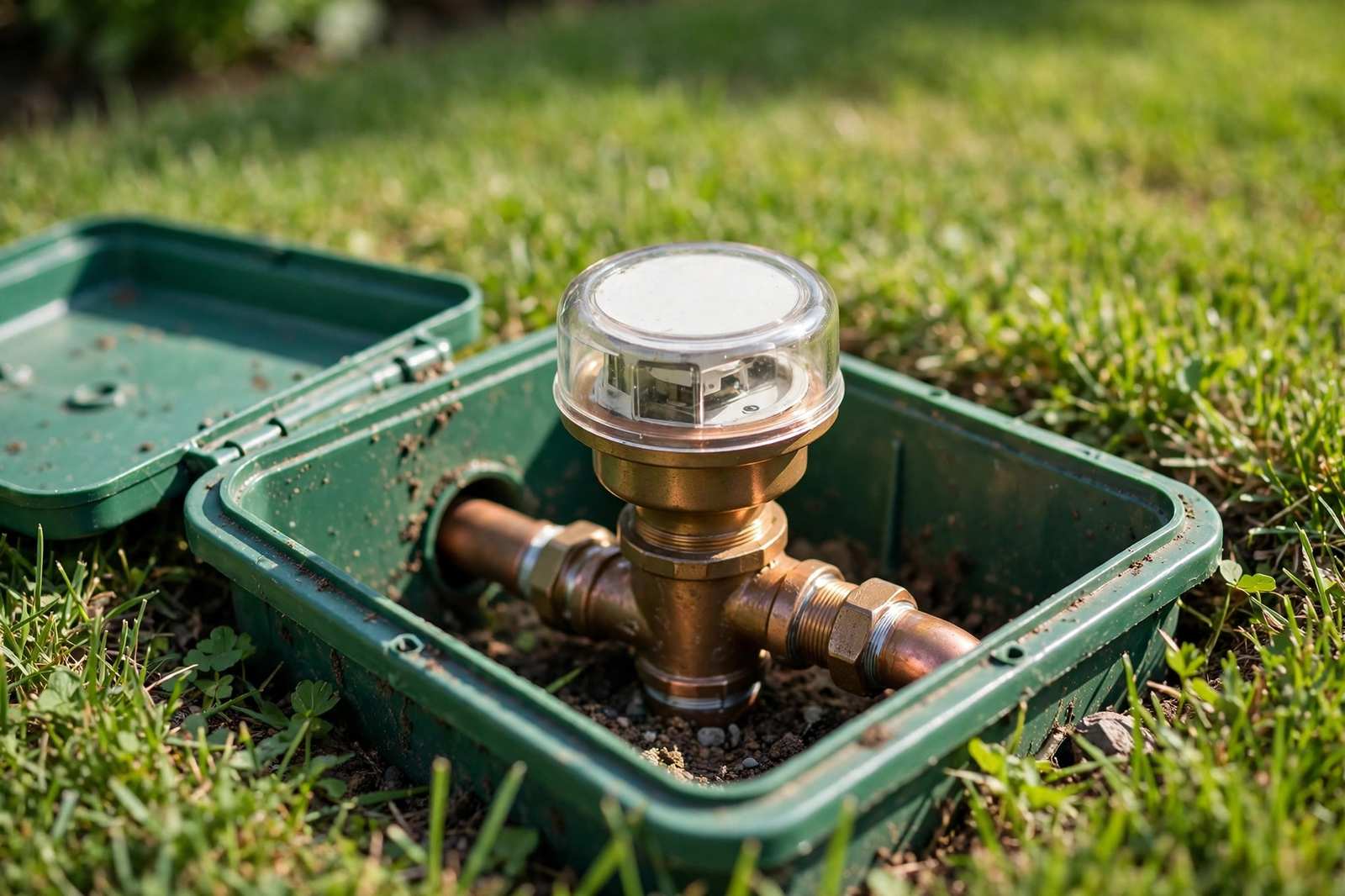
Your Water Bill Spiked: Is It a Leak or Just Higher Rates?
A higher total does not always mean a leak. Compare usage with last year, do a simple meter check, and learn which culprits waste water silently and which are just rates.
Read article →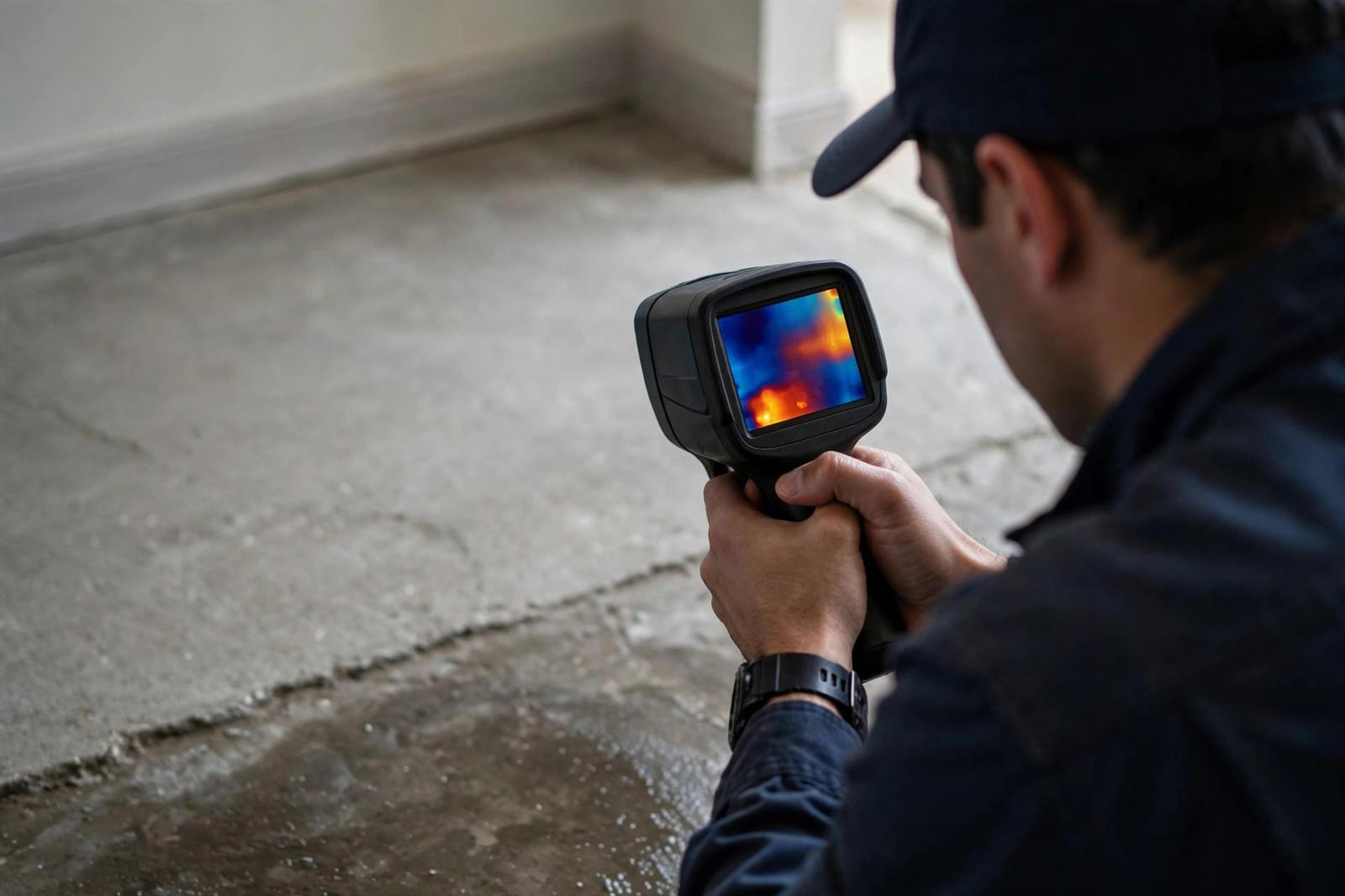
Why Slab Leaks Are So Common in Southern California
Clay soils, hard water, aging copper, and slab construction combine across Southern California. Here is why slab leaks cluster there and how they are found.
Read article →