 Leak Detection California
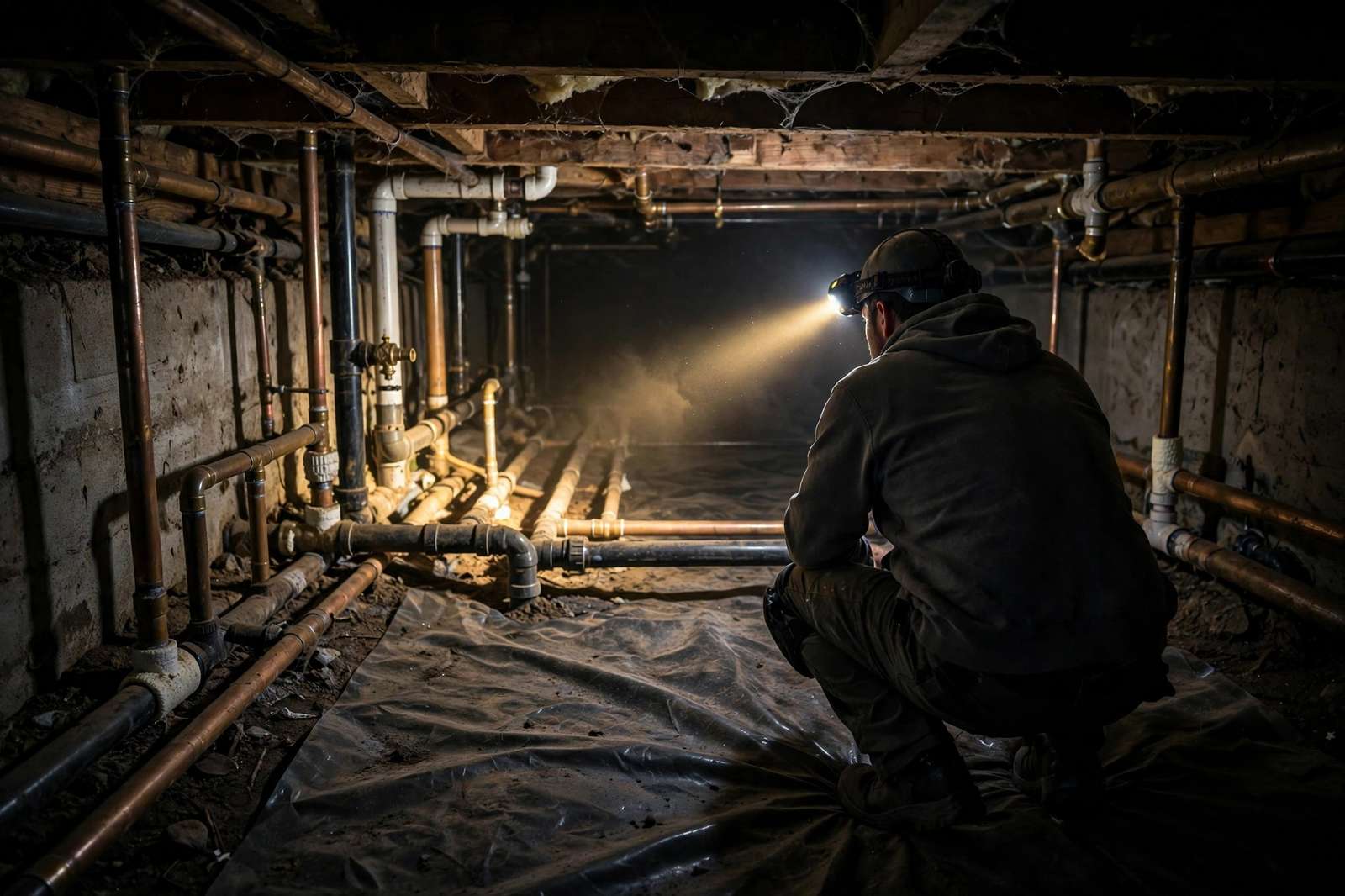
If you suspect a crawlspace leak in a California home, the most useful first move is to look for the clues inside the home, not just under it. Crawlspaces are rarely visited, and a leak beneath the floor can run for weeks while the only evidence appears upstairs: a musty smell, a floor that feels springy in one spot, doors that start to stick, or a damp patch at the base of a wall. Water under a home spreads quietly through soil and framing, and by the time it shows itself clearly, it has often been at work for some time. This guide walks through why crawlspace leaks go unnoticed, which indoor clues matter, what commonly leaks down there, and when to call a leak detection specialist.
Why Crawlspace Leaks Go Unnoticed
Crawlspaces hide leaks for a simple reason: nobody looks at them. The access hatch may sit in a closet or an exterior wall, the space itself is low and awkward, and a slow leak under the floor produces no sound in the rooms above. Soil absorbs the water, framing soaks it up gradually, and insulation sags slowly rather than failing all at once. A homeowner can live above a leak for a season and notice nothing more than a faint smell or a floor that feels slightly different underfoot.
California crawlspaces vary widely. Older homes often have vented crawlspaces with exposed soil, where moisture shows as damp earth, musty air, and staining on joists. Newer homes may have sealed or partially sealed spaces with vapour barriers, where a leak pools on the barrier or finds its way to a low corner. In both styles, the same rule applies: water follows gravity and the path of least resistance, so the wettest point under the home may sit some distance from the broken pipe. That is why indoor clues, mapped carefully, matter as much as anything seen underneath.
Seasonal change adds to the problem. Wet winters raise soil moisture and can mask a plumbing leak as general damp, while dry summers can make a single damp patch under the home look like a leftover from winter. The test is persistence. General damp dries out when conditions change. A plumbing leak keeps the same area wet, or keeps it returning, regardless of season. Noting dates, weather, and whether a patch dries between checks turns a vague worry into a clear pattern.
Damp, Odour and Floor Clues Inside the Home
The most common indoor clue is smell. A musty odour that lingers in one room, strengthens near floor vents or along a particular wall, and returns after airing often means damp below that part of the home. The smell may be strongest in the morning, when the house has been closed overnight, or after a bath or laundry cycle that sends water through pipes under the floor. Note which rooms smell, when the smell is strongest, and whether it follows plumbing use, because that pattern helps a technician narrow the area before anyone enters the crawlspace.
Floor changes are the second group of clues. A floor that feels springy, uneven, or slightly raised in one area can mean framing or subfloor below has absorbed moisture. Tiles that loosen, grout that darkens in one patch, or hardwood that cups along a few boards all deserve attention when they appear together with damp or smell. Doors and windows that begin to stick can also trace back to moisture below, as framing swells subtly. Any one of these signs alone may have a simple explanation, but two signs in the same area, such as a springy floor plus a musty smell, are a strong reason to investigate further.
Wall base clues complete the picture. Look for paint that bubbles or peels near the floor, skirting that warps away from the wall, or discolouration at the base of a wall in a bathroom, kitchen, or laundry room. These marks often sit directly above a damp crawlspace area, because moisture wicks upward into the wall base. A crawlspace leak detection visit maps moisture across the floor above and the space below, comparing readings to find the wettest point rather than guessing from one stain alone.
Common Crawlspace Leak Sources
Several kinds of pipe run through or beneath crawlspaces, and each fails in its own way. Supply lines carry pressurised water to bathrooms, kitchens, and laundry rooms, and a pinhole or weeping joint in a supply line can release a steady trickle that soaks soil and framing around the clock. Because supply lines stay pressurised, these leaks rarely stop on their own, and a meter test that shows movement with fixtures off is a strong clue that a supply line is involved.
Drain lines behave differently. They only carry water during use, so a drain leak shows itself after showers, baths, laundry, or dishwashing, and may dry out between uses. A cracked drain joint, a loose connection, or a line stressed by ground movement can release water under the home in bursts that match household routines. If damp or smell strengthens after heavy bathroom use and fades during quiet periods, a drain line moves up the list. Waste lines deserve prompt attention for hygiene reasons as well as structural ones, so do not delay a visit when a drain source is suspected.
Water heaters, softeners, and other equipment near or above the crawlspace can also contribute. A water heater drain valve that weeps, a softener discharge line that drains poorly, or condensation on cold water lines in humid conditions can all add moisture under the home. Condensation clues include widespread light damp rather than one concentrated wet area, and problems that worsen in humid spells. A technician can separate condensation from an active leak by comparing moisture patterns and checking whether damp follows plumbing use or weather. Our guide to signs of a hidden water leak covers these indoor clues in more detail.
A Safe Look Without Crawling Into Trouble
Crawlspaces can be hazardous: low headroom, exposed nails and wiring, standing water, pests, and poor air quality are all possible, and a wet crawlspace can hide electrical risks. Never enter a crawlspace that contains standing water near wiring, never work alone underneath a home, and never crawl into a space you cannot move through safely. If access is awkward, the hatch is blocked, or you cannot see clearly, stay out and gather clues from inside the home instead. Good notes and photos from above are often enough for a technician to plan a safe inspection.
- Walk each room and note musty smells by room, time of day, and whether they follow baths, laundry, or rain.
- Check floors for springiness, unevenness, loose tiles, or cupping boards, and mark the affected area.
- Look at wall bases in bathrooms, kitchens, and laundry rooms for bubbling paint, warped skirting, or discolouration.
- Run the meter test: turn off every tap, appliance, and irrigation zone, note the reading, wait, then read it again.
- Check under sinks and around toilets for drips that could travel downward into the crawlspace.
- Photograph floor changes, wall base marks, and any visible hatch area, with dates, for the technician.
The meter test is especially useful for crawlspace suspects, because it separates supply leaks from drain leaks. If the meter moves with everything off, a pressurised supply line is likely involved, and the leak is active around the clock. If the meter stays still but damp follows bathroom use, a drain line is more likely. Our guide on how to check your water meter for a leak explains the test, and a water service line leak detection visit can follow up when the evidence points to a buried line feeding the home rather than a line under the floor itself.
| Clue you notice | Source it suggests | Sensible next step |
|---|---|---|
| Musty smell in one room, returns after airing | Damp framing or soil below that room | Map smell by room and timing, book inspection |
| Springy or uneven floor in one area | Moisture in subfloor or framing | Mark the area, check wall bases nearby |
| Meter moves with fixtures off | Pressurised supply line | Book detection promptly, keep use low |
| Damp follows baths or laundry only | Drain line or joint | Note use pattern, avoid delay |
| Widespread light damp, no single wet spot | Condensation or ventilation | Check cold lines and vents, compare patterns |
Keep the crawlspace hatch accessible and the area around it clear before a visit, and tell the technician about any known wiring, past flooding, or pest problems in the space. That information helps the inspection stay safe and efficient.
Booking a Crawlspace Detection Visit
A professional visit starts with questions: when you first noticed the smell or floor change, whether it follows use or weather, what the meter showed, and where the hatch sits. The technician then maps moisture across floors and wall bases above, and inspects the crawlspace with moisture meters, listening equipment, and thermal imaging where it helps. For supply suspects, section isolation narrows the line involved. For drain suspects, use patterns and joint inspection narrow the search. The aim is a precise location and a clear explanation of what likely caused the leak and what repair options fit, so you can plan one targeted repair with confidence.
Before the visit, gather anything that helps: photos of floor changes and wall base marks, meter readings with dates, and notes about smells, sounds, and use patterns. Clear the hatch area, note any pets or access constraints, and tell the technician if you have already turned water off. If you are weighing a home check against a professional visit, our guide to DIY versus professional leak detection sets out where safe home checks end and specialist equipment begins. If water is visibly pooling under the home, if floors sag, or if you smell sewage, treat it as urgent and keep people out of the affected rooms while you call.
Crawlspace leaks reward early attention, because the damage they cause is hidden by the very space they occupy. A seasonal routine helps: a room by room walk a few times a year, a meter check whenever anything looks odd, and a prompt call when signs persist or combine. If you are seeing musty smells, springy floors, or damp wall bases that point below the floor, call Leak Detection California at (833) 382-2711. We will talk through what you have noticed, help you run the meter check, and arrange a water leak detection visit, so a crawlspace leak is found while the repair is still a focused one.
Frequently Asked Questions
What are early signs of a crawlspace leak?
Look for a musty smell that returns after airing, a floor that feels springy or uneven in one area, loose tiles or cupping boards, doors that stick, and bubbling paint or warped skirting at wall bases. Two signs in the same area deserve a closer look.How do I tell a supply leak from a drain leak under the home?
A supply leak stays pressurised, so a meter test with fixtures off will usually show movement around the clock. A drain leak only appears during use, so damp or smell that follows baths or laundry points more toward a drain line.Is it safe to enter my own crawlspace to look for a leak?
Only with care: never enter a crawlspace with standing water near wiring, never work alone underneath a home, and never crawl into a space you cannot move through safely. Notes and photos from inside the home are often enough to plan a professional inspection.When should I call for crawlspace leak detection?
Call promptly when a smell or floor change persists, when a meter test shows movement, or when damp follows a clear use pattern. Call urgently if floors sag, water pools visibly, or you smell sewage. You can reach Leak Detection California at (833) 382-2711.More From the Blog

Water Leak Emergency: What to Do in the First 60 Minutes
Shut off the main valve, make the area safe, protect your belongings, and document damage. A clear first-hour plan for a California water leak emergency.
Read article →
Your Water Bill Spiked: Is It a Leak or Just Higher Rates?
A higher total does not always mean a leak. Compare usage with last year, do a simple meter check, and learn which culprits waste water silently and which are just rates.
Read article →
Why Slab Leaks Are So Common in Southern California
Clay soils, hard water, aging copper, and slab construction combine across Southern California. Here is why slab leaks cluster there and how they are found.
Read article →