 Leak Detection California
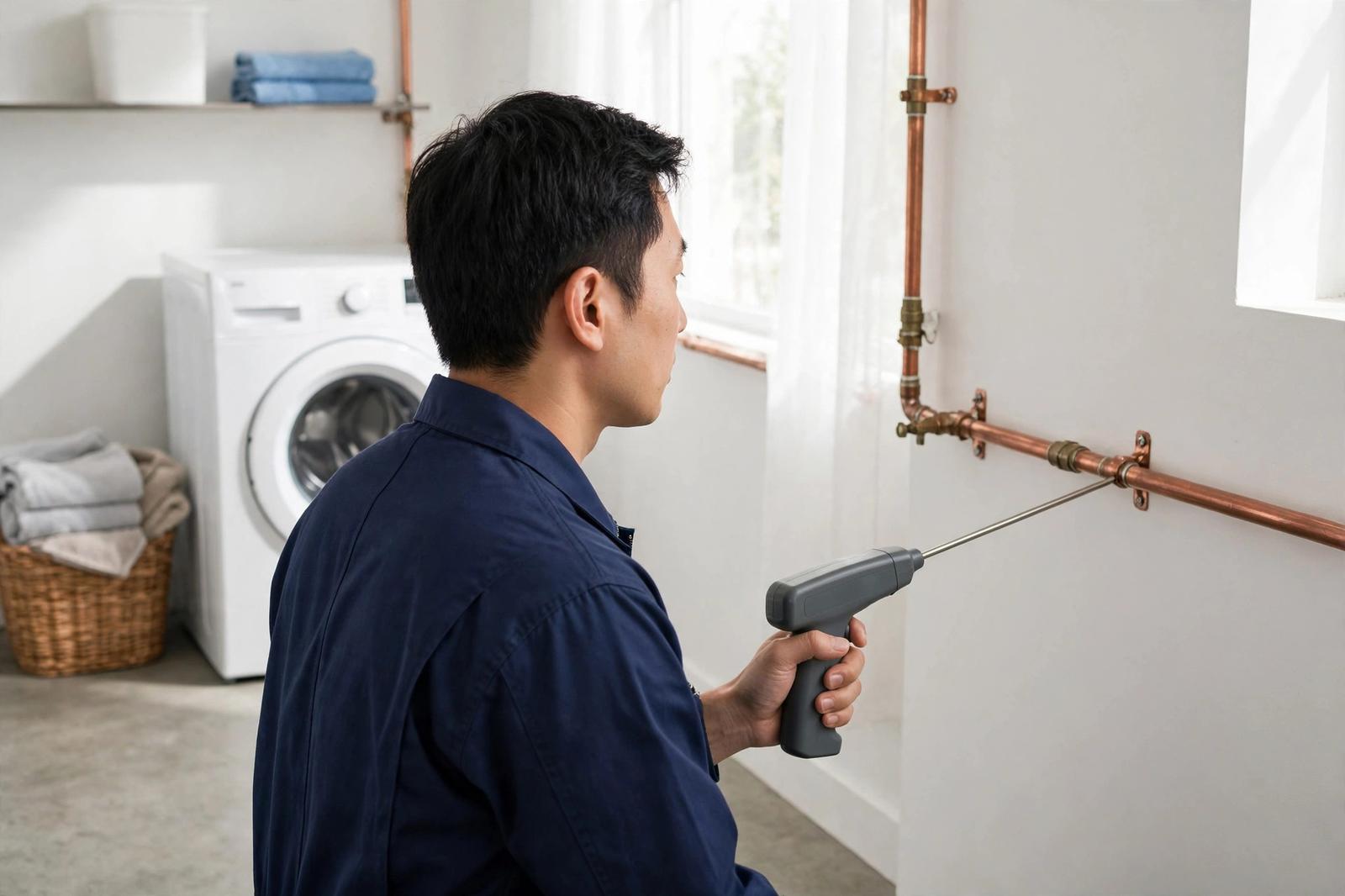
If you think your water heater is leaking, check the base, the connections, and the floor around it before the water reaches walls, stored items, or a room below. A water heater leak often starts small: a slow drip at a fitting, a damp patch under the tank, or a drain pan that holds water when it should be dry. Left alone, that slow drip can soak a wall, warp flooring, and damage items stored nearby, and in a garage or closet it can go unnoticed for weeks. This guide explains the signs to check, how to tell a heater problem from a nearby plumbing leak, and when to call for detection instead of guessing at the source.
First Checks Around the Water Heater
Start with a slow look at the whole heater, top to bottom, with a flashlight. Check the top connections where hot and cold lines enter the tank, and look for corrosion, white or green crust on fittings, and damp on the pipes just above the tank. Check the sides for streaks or rust trails that run down from a fitting, and check the base where the tank meets the floor. A damp ring at the base, a floor that stays wet after mopping, or a drain pan that holds water are all flags worth noting, even if the water amount looks small.
Look at the temperature and pressure relief valve, usually on the side or top of the tank with a discharge pipe running down toward the floor. A relief pipe that drips steadily, or a floor area below it that stays wet, can point to pressure or temperature issues, a failing valve, or a tank problem that needs professional attention. Do not plug, cap, or block a relief pipe, and do not lift the relief valve repeatedly as a test, since that valve is a safety device and mishandling it can cause scalding water to discharge. Note what you see, photograph it if you can do so safely, and pass that note to a professional.
Check the area around the heater as well. In a garage, look at the wall behind the heater, the floor drain if there is one, and stored items near the base. In a closet, check the walls on both sides and the floor in the adjacent room, because water can travel under a wall and appear next door. In an attic or upper floor installation, check the ceiling below for stains, because a heater leak above can damage the room underneath before the heater room itself looks wet. If you are unsure whether the water comes from the heater or from a nearby line, the water leak detection service page explains how a visit separates one source from another, and the guide to signs of a hidden water leak covers the wider pattern of damp that returns to one place.
Puddles, Rust, and Damp Walls: Reading the Signs
Not every wet patch near a heater means the tank itself has failed. A supply connection can weep, a fitting can corrode, a drain valve can drip, or a nearby line can leak and pool near the heater because the floor slopes that way. The pattern helps separate those causes. A drip that comes from a visible fitting, stops when a valve is closed, or appears only when hot water runs points toward that fitting or line. A damp base with no visible drip, rust trails down the tank body, or water that returns after the area is dried and fittings are tight points more toward the tank itself.
Rust deserves careful attention. Surface rust on a fitting or a pipe is common in damp areas and does not always mean a tank has failed. Rust that appears as streaks running down the tank, rust around the base seam, or rust combined with a damp floor and a musty smell is a stronger flag. Look for paint or coating that bubbles on the tank, for a seam that looks swollen or distorted, and for water that appears discolored when hot water first runs. Discolored hot water alone can have several causes, so pair it with the physical signs around the tank rather than treating color as proof on its own.
Damp walls near a heater also need a careful read. A wall that backs onto a bathroom or laundry can show damp from that neighboring room, not from the heater. Check both sides of shared walls, note which fixtures sit nearby, and see whether the damp grows after showers, laundry, or heavy hot water use. A wall that stays damp constantly, regardless of use, points more toward a pressurized supply line. A wall that dampens only after a fixture runs points more toward a drain or a fixture connection. That timing distinction is one of the most useful details you can give a technician, because it narrows the testing order on arrival.
Sounds, Smells, and Hot Water Behavior
Listen to the heater when the house is quiet. Popping, rumbling, or crackling sounds during heating can indicate sediment buildup inside the tank, which is common in areas with hard water and does not by itself prove a leak. A hiss near a fitting, a steady drip into a pan, or the sound of running water when no fixture is in use is different, because it suggests water escaping somewhere in the system. Note where the sound seems to come from, and whether it stops when the main valve is closed, since that detail helps separate a heater issue from a line issue elsewhere in the house.
Smells add another clue. A musty smell around a heater closet or garage can indicate damp that has persisted long enough to affect wood, drywall, or stored items. A sulfur-like smell in hot water alone, without damp around the tank, often points to water chemistry or a heater component rather than a leak, but it is still worth noting alongside any physical signs. Do not ignore a smell that appears with damp, because damp plus odor plus a floor change is a pattern that deserves a prompt check, even if the amount of visible water looks small.
Hot water behavior can also flag a problem. Water that runs out faster than usual, water that arrives unevenly at distant fixtures, a heater that cycles more often, or hot water that turns lukewarm sooner than it used to can all indicate a system issue, though none of them proves a leak on its own. Pair behavior changes with physical signs: a heater that cycles often plus a damp base is a stronger pattern than cycling alone. Keep a short note of when behavior changed, what changed, and what you saw around the tank, because that timeline helps a technician decide whether the heater, a line, or a valve deserves testing first.
- Damp ring at the tank base, or a drain pan that holds water when it should be dry.
- Corrosion, crust, or rust trails on top connections, fittings, or the tank body.
- Relief pipe that drips steadily, or a floor area below it that stays wet.
- Hiss, steady drip, or running water sound near the heater with fixtures off.
- Musty smell in the heater closet or garage, especially with damp walls or flooring.
- Hot water behavior that changed at the same time as damp appeared.
How to Tell a Heater Leak From a Nearby Leak
The hardest part of a heater check is location, because water pools at the lowest point, not necessarily at the source. A line above the heater, a valve on a nearby wall, or a drain from an adjacent room can all send water toward the heater base. Dry the area thoroughly, place a dry towel or paper around the base and under each visible fitting, and check it after a period without using hot water. Towels that stay dry point away from an active drip at those fittings. A towel under one fitting that soaks while others stay dry points toward that fitting. A base that becomes damp again even when fittings stay dry points more toward the tank or a line below floor level.
Use the water meter test to confirm whether water is moving at all. Turn off every tap, appliance, and irrigation zone, note the meter reading, wait, and read it again. If the reading moves, water is leaving the system somewhere. If it does not move, a supply leak is less likely, though a drain leak or a fixture that only leaks during use can still be present. The water meter check article explains the test step by step, and the water meter detection service covers meter-based visits for homeowners who want a professional confirmation.
Do not attempt to open a tank, replace internal components, or work on gas or electrical connections yourself unless you are qualified to do so. Water heaters combine hot water, pressure, gas or high voltage electricity, and a relief system, and mishandling any of those can cause injury or further damage. Your role as a homeowner is observation and containment: note the signs, keep the area dry where you can do so safely, move stored items away from damp, and arrange a professional check. If water is spreading, if a ceiling below is sagging, or if electrical outlets near wet areas are involved, shut off the main water valve if you can do so safely, keep power away from wet areas, and treat the situation as urgent.
Protecting Floors, Walls, and Stored Items
While you wait for a check, small containment steps can limit damage. Move boxes, tools, and stored items away from the damp area, and place them where they can dry. If a drain pan is present, note whether it holds water and whether its drain line runs clear, but do not rely on a pan to contain a growing leak. Wipe up standing water with towels, improve airflow around the area, and avoid stacking items against a damp wall, since trapped moisture damages finishes and encourages odor. Photograph the damp area, the fittings, and the floor over time, because a sequence of photos shows growth that a single photo cannot.
Resist the urge to paint over a stain or seal a damp wall before the source is found. Paint and sealant can trap moisture behind a surface and hide the pattern that points to the source, making the next inspection harder. Similarly, do not cover a damp base with new flooring or a rug in the hope that the problem will dry out on its own. A slow leak rarely resolves itself, and covering it usually means the next sign appears larger, in a wall or a room below, after more damage has occurred. Finding the source first, then repairing finishes, is the order that keeps restoration work small.
Think about the rooms around the heater as well. A heater in a garage can affect a shared wall with a living room. A heater in a closet can affect the room on the other side of that closet wall. A heater on an upper floor can affect the ceiling below. Check those neighboring areas for stains, soft flooring, or a smell that was not there before, and include them in your note to the technician. A pattern that spans two rooms often points to the source more clearly than a single damp patch viewed alone.
| What you see | What it suggests | What to do next |
|---|---|---|
| Drip at a visible fitting | Fitting or connection seep | Note the fitting, photograph it, avoid forcing valves |
| Damp base, fittings dry | Tank or below floor line | Meter test, then professional detection |
| Relief pipe dripping steadily | Pressure, temperature, or valve issue | Do not cap the pipe, arrange a prompt check |
| Damp in a neighboring room | Water travelling under a wall or floor | Check both sides of shared walls, note the pattern |
| Musty smell plus damp | Damp persisting over time | Improve airflow, move stored items, arrange a check |
When to Call for Water Heater Leak Detection
Call promptly when damp returns after drying, when a pan holds water repeatedly, when rust trails appear on the tank, when a relief pipe drips steadily, or when damp, odor, and floor changes appear together. Call sooner if water is actively spreading, if a ceiling below is sagging, if power outlets near wet areas are involved, or if a meter test shows steady movement while everything is off. The emergency steps article gives a first-hour plan for active water, and the emergency leak detection service is the route for urgent cases.
Before the visit, gather a short note: where damp appeared, which fittings showed corrosion or drips, meter readings if you took them, recent work on the heater or nearby plumbing, and photos showing change over time. Clear access to the heater, the meter box, and the areas around damp walls helps the technician test sections in order. If the heater sits in a tight closet, clearing stored items from around it before arrival saves time on site and lets testing start without moving boxes first.
If you are seeing these signs around a water heater in a California home, call Leak Detection California at (833) 382-2711. We will talk through what you have seen, arrange a non-invasive detection visit, and pinpoint whether the source is the heater, a fitting, or a nearby line, so you can plan one targeted repair with confidence.
Frequently Asked Questions
What are early signs of a water heater leak?
Look for a damp ring at the base, a drain pan that holds water, corrosion or rust trails on fittings, a relief pipe that drips steadily, and a musty smell in the heater closet or garage. Damp that returns after drying is a strong flag.How do I tell a heater leak from a nearby plumbing leak?
Dry the area, place towels under each visible fitting, and check after a period without hot water use. A towel under one fitting that soaks points to that fitting, while a base that dampens again with fittings dry points more toward the tank or a line below floor level.Is a dripping relief pipe dangerous?
Do not plug, cap, or block a relief pipe, and do not lift the valve repeatedly as a test, since it is a safety device and mishandling it can cause scalding water to discharge. Note what you see and arrange a prompt professional check.When should I call for water heater leak detection?
Call promptly when damp returns after drying, when a pan holds water repeatedly, when rust trails appear, or when damp, odor, and floor changes appear together. You can reach Leak Detection California at (833) 382-2711 to arrange a visit.More From the Blog

Water Leak Emergency: What to Do in the First 60 Minutes
Shut off the main valve, make the area safe, protect your belongings, and document damage. A clear first-hour plan for a California water leak emergency.
Read article →
Your Water Bill Spiked: Is It a Leak or Just Higher Rates?
A higher total does not always mean a leak. Compare usage with last year, do a simple meter check, and learn which culprits waste water silently and which are just rates.
Read article →
Why Slab Leaks Are So Common in Southern California
Clay soils, hard water, aging copper, and slab construction combine across Southern California. Here is why slab leaks cluster there and how they are found.
Read article →