 Leak Detection California
A slab leak in a Long Beach home is a water leak under the concrete slab that the house sits on, and it matters because it can stay hidden while it quietly damages flooring, walls, and the ground beneath the home. The practical question for a homeowner is whether the signs showing up in the house point to one, and what to do next without tearing the home apart to find out. Modern detection work answers that question by narrowing the search first, using sound, pressure, and thermal clues to point to a location before any repair decision is made. If you notice warm flooring, damp patches, a running-water sound, or a water bill that changed without an obvious reason, a focused slab leak check is the sensible next step.
Why slab leaks deserve attention in Long Beach homes
Many Long Beach homes were built on concrete slabs, with water lines running under or through that slab rather than through an accessible crawl space or basement. That layout shapes how a leak behaves. When a line under the slab develops a leak, the water has nowhere visible to go at first. It can spread through soil and concrete and surface some distance from the actual break. That is why a damp spot on one side of a room does not always mean the leak sits directly beneath it, and why guessing at a repair spot can waste effort.
Coastal conditions add another layer of consideration, in general terms rather than as a claim about any one house. Homes near the coast live with moisture in the air and soil conditions that shift with the seasons, and older plumbing systems have simply had more years of daily use. Pipes expand and contract as hot and cold water pass through them, and joints age over time. None of this means every older coastal home will develop a slab leak. It means that when signs appear in this kind of home, a slab leak belongs on the list of causes worth checking rather than being dismissed as a spill or a one-off damp patch.
The other reason slab leaks deserve prompt attention is the way damage compounds. A small leak under a slab can soften flooring adhesive, warp wood flooring, and keep a section of flooring damp enough to notice underfoot. Left alone, the damp area can spread, and the repair conversation can grow from one located leak into a wider conversation about flooring and finishes. Early detection does not change the fact that a leak exists, but it does change the size of the problem you are solving. That is the whole point of slab leak detection: find the location with evidence, then decide on repair from a known starting point.
Warning signs to watch for in a Long Beach home
Slab leaks rarely announce themselves with a visible pipe break. They show up as changes in the home that are easy to explain away, one at a time, until the pattern becomes hard to ignore. A warm patch on a floor that should feel the same temperature as the rest of the room is one of the better-known signs, because a hot water line leak warms the concrete and the flooring above it. Damp carpet, a tile that feels loose, or a section of flooring that looks darker than the area around it can point the same way. So can a faint sound of running water when no tap, appliance, or toilet is in use.
Water bill changes belong on this list too, with a caveat. A bill can rise for many reasons, including a change in household use or a rate change, so a higher bill alone does not prove a leak. But a bill that climbs while household habits stay the same is worth treating as a prompt to look further. Our guide to whether a water bill spike means a leak or a rate change walks through that distinction. Musty smells are another quiet signal. A persistent musty odor in one room, particularly near the floor, can mean moisture is present even when no damp patch is visible yet.
| Sign | What it may point to |
|---|---|
| Warm spot on the floor | A hot water line leak warming the slab beneath that area |
| Damp carpet, tile, or wood flooring | Water reaching the surface from below the slab |
| Sound of running water with everything off | Water moving through a line that should be still |
| Water bill change with no change in use | A hidden leak somewhere in the system, possibly under the slab |
| Musty smell near the floor in one room | Ongoing moisture that has not yet shown as a visible patch |
| Cracks or buckling in flooring | Prolonged moisture affecting flooring materials above the slab |
One sign is a reason to pay attention. Two or more signs in the same area are a stronger reason to arrange a check. It also helps to note when each sign first appeared and whether it is getting worse, because that timeline helps the technician decide where to start. For a fuller list of what to look for, see our guide to slab leak warning signs.
How detection pinpoints a leak without broad demolition
The fear that stops many homeowners from calling is the image of a floor torn up across several rooms in search of a leak. Good detection work is designed to avoid exactly that outcome. The technician starts with the signs and the layout of the home, then uses listening equipment, pressure testing, and thermal imaging to narrow the search step by step. Listening equipment picks up the sound of water escaping a pressurized line, often too faint for the unaided ear to place with confidence. Pressure testing helps confirm whether a particular line is losing pressure. Thermal imaging can reveal temperature differences in the floor that line up with a hot water leak.
None of these tools works in isolation, and that is the point. A warm spot on a thermal image is a clue, not a verdict. A sound is a clue, not a verdict. When several clues point to the same area, the search area shrinks from a whole room to a section of floor. That is what makes the next step, repair, a contained job rather than an exploratory one. A repair contractor can then work from a marked location instead of opening floor in several places hoping to find the break. The technician may also trace lines and check fixtures first, to rule out a simpler explanation such as a toilet or an appliance connection before concluding the problem sits under the slab.
This evidence-first approach is also what separates a slab leak check from a guess based on a single damp patch. Damp patches can mislead, because water travels. Sound and pressure readings are harder to misread, and when they agree, the location that emerges is one a homeowner can act on. If the readings do not point to a slab leak, that is useful information too, because it redirects attention to the real source.
What happens on a detection visit
A detection visit in a Long Beach home usually follows a straightforward sequence. The technician begins by asking about the signs you have noticed and when they appeared, because that tells the technician which rooms and which lines to check first. From there, the visit typically includes:
- A walkthrough of the affected rooms, checking flooring, walls, and fixtures for visible signs of moisture or damage.
- Listening checks with acoustic equipment to locate the sound of water escaping under the slab.
- Pressure testing on the relevant lines to confirm whether a line is losing pressure and which line is involved.
- Thermal imaging where a hot water leak is suspected, to map temperature differences across the floor.
- A review of the water meter and main shutoff behavior, to confirm whether water is moving when all uses are off.
- A plain explanation of what was found, where the leak appears to be, and what the next options are.
The visit is diagnostic, not a repair visit in itself, and it is fair to ask at the start what the visit will cover and what kind of report you will receive at the end. A useful report names the suspected location and describes the evidence that points there. That record is what a repair contractor works from. If you need help urgently, because water is spreading or a floor is actively buckling, our emergency leak detection service is set up for that kind of call.
Homeowners sometimes ask whether they should shut off the water before the visit. If water is actively damaging flooring, shutting off the main supply is a reasonable protective step, and you can mention it when you call. If the signs are stable, leaving the system as it is can actually help, because pressure and sound readings depend on water being present in the lines. Either way, neither choice should delay the call itself.
After a location is found: next steps
Once a location has been identified, the conversation changes from searching to deciding. The usual next step is a repair discussion with a qualified plumber, who will look at the marked location, the type of line involved, and the condition of the surrounding flooring, and then explain the repair options that fit that situation. In some cases the repair is a direct fix at the located point. In others, the discussion may include rerouting a section of line above the slab or through a different path. Both approaches start from the same located point, which is why the detection step matters so much.
Flooring deserves its own line in that conversation. Detection narrows the area, but a repair at a located point may still involve opening a section of floor, and the homeowner should understand in advance what that section looks like and what restoration will involve afterward. Asking those questions before repair begins prevents surprises. It is also worth keeping the detection report with your home records, because a documented leak location and repair can matter later for insurance questions or for a future buyer asking about the home's plumbing history. This post is educational only and does not promise any insurance outcome, since every policy and claim is different.
There is also a broader lesson worth carrying from a slab leak experience. Once a home has had one slab leak, the homeowner has a baseline: they know what the signs looked like and how the detection process worked. That familiarity makes the next check faster, because the next warm spot or damp patch can be compared against a known pattern instead of starting from zero. Homeowners who want the wider regional picture can also read our overview of slab leaks in Southern California.
When to call for slab leak detection in Long Beach
Call when the pattern points to a hidden leak rather than a one-off spill: a warm spot that does not go away, a damp patch that returns after drying, a running-water sound with everything off, a musty smell that stays in one room, or a water bill that changed without a change in use. Any one of these is enough to ask the question, and two together are enough to stop waiting. Waiting rarely improves a slab leak, because the leak continues while the decision is postponed. An early check is diagnostic work that leaves the home intact while it narrows the answer.
If you are seeing these signs in your Long Beach home, start with a detection visit that gives you a location and a report you can act on. Our local page for leak detection in Long Beach covers the service for homes in the area, and our team can talk through the signs you have noticed and arrange a visit. For slab leak detection in Long Beach, call (833) 382-2711.
Frequently Asked Questions
What are the early signs of a slab leak in a Long Beach home?
Warm spots on the floor, damp carpet or tile, a running-water sound with everything off, a musty smell near the floor, and a water bill change with no change in use are common early signs. One sign is worth noting, and two or more in the same area are a stronger reason to arrange a detection check.Can a slab leak be located without tearing up the whole floor?
Yes, detection work is meant to narrow the search first. Listening equipment, pressure testing, and thermal imaging are used together to point to an area, so repair decisions start from a marked location rather than from exploratory demolition across several rooms.What happens during a slab leak detection visit?
The technician asks about the signs and when they appeared, walks through the affected rooms, checks sound and pressure on the relevant lines, uses thermal imaging where a hot water leak is suspected, and explains what was found and what the next options are.What should I do after a leak location is found?
Discuss repair options with a qualified plumber, using the detection report as the starting point. Ask in advance what section of floor a repair may involve and what restoration will look like afterward, and keep the report with your home records.More From the Blog

Water Leak Emergency: What to Do in the First 60 Minutes
Shut off the main valve, make the area safe, protect your belongings, and document damage. A clear first-hour plan for a California water leak emergency.
Read article →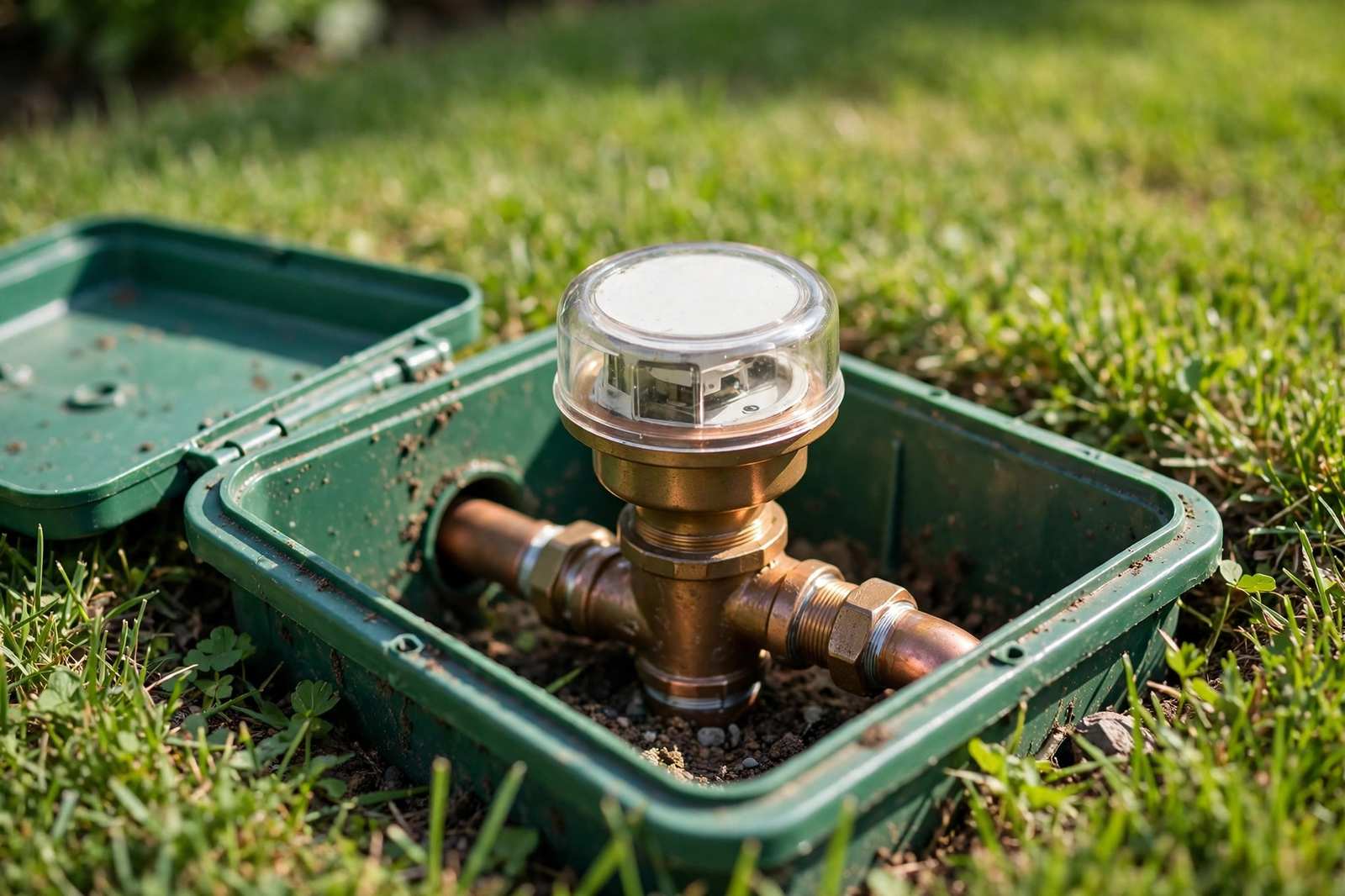
Your Water Bill Spiked: Is It a Leak or Just Higher Rates?
A higher total does not always mean a leak. Compare usage with last year, do a simple meter check, and learn which culprits waste water silently and which are just rates.
Read article →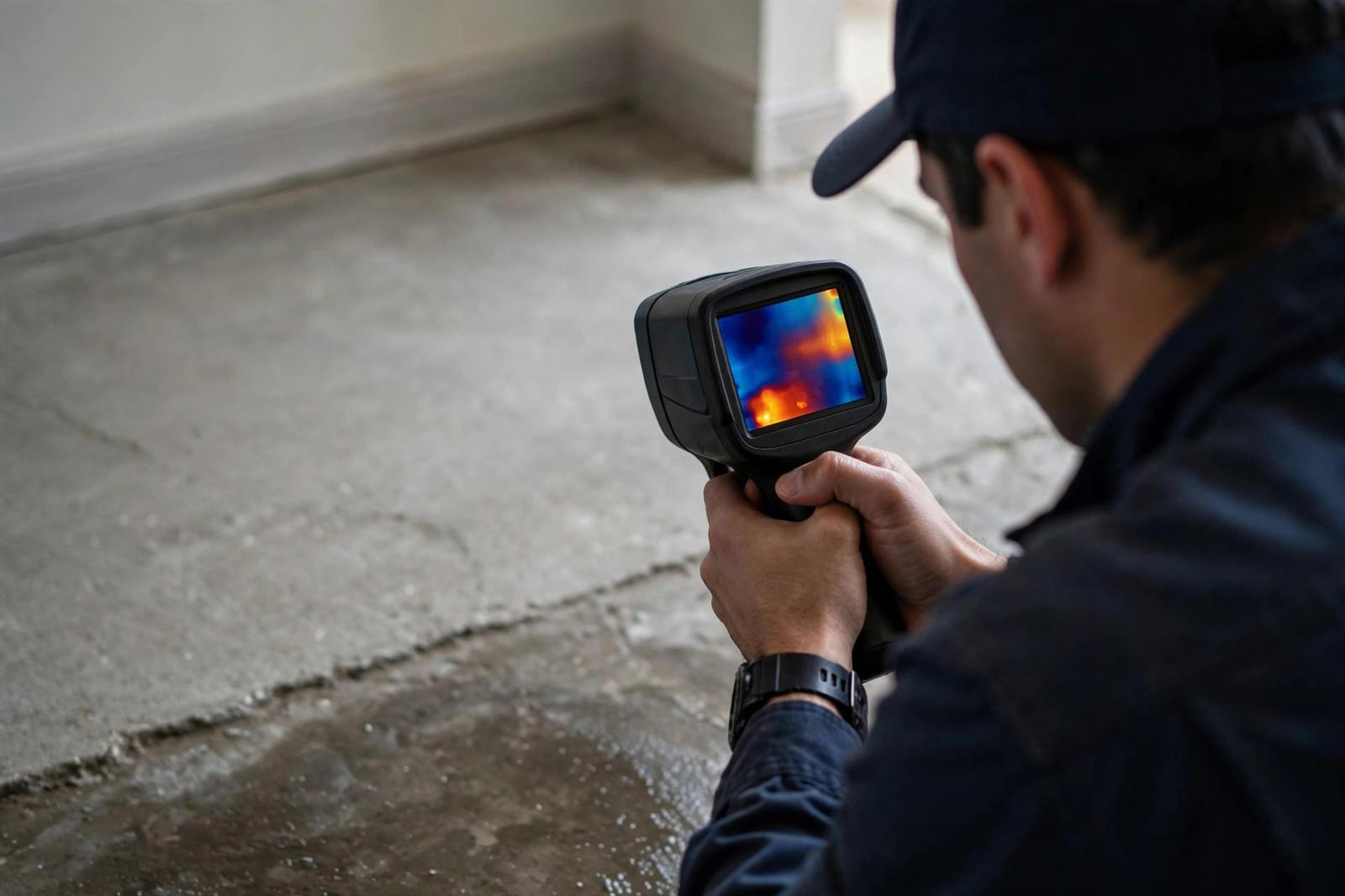
Why Slab Leaks Are So Common in Southern California
Clay soils, hard water, aging copper, and slab construction combine across Southern California. Here is why slab leaks cluster there and how they are found.
Read article →