 Leak Detection California
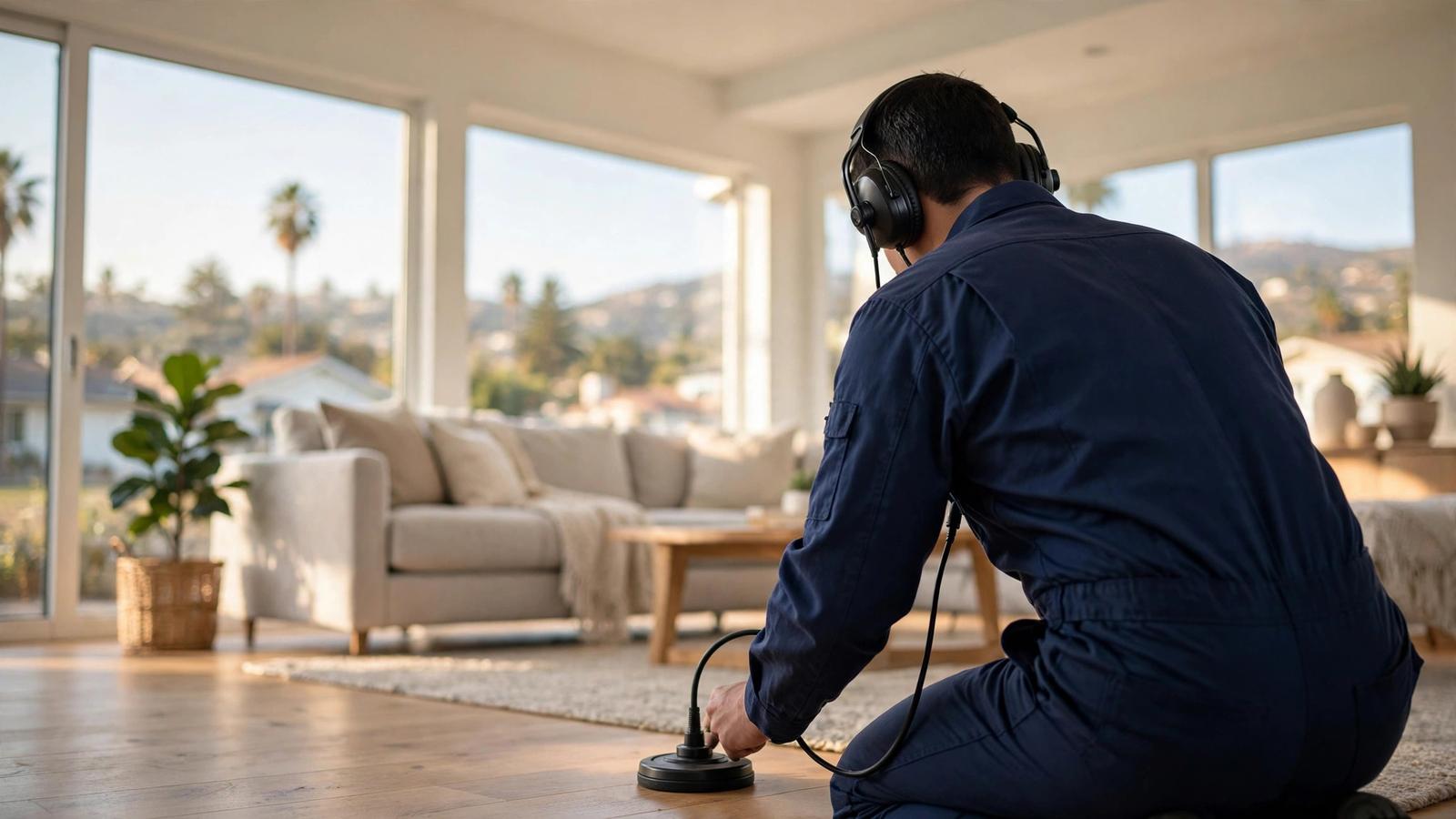
A hidden leak is one of the few household problems that reliably gets more expensive the longer it's ignored. What starts as a pinhole in a copper line becomes saturated drywall, then swollen baseboards, then a musty room that needs remediation, not just plumbing. Each stage multiplies what the final fix demands in materials, labor, and disruption to your home.
Finding the source early is what breaks that chain. A Dinuba leak detection visit that locates a break this week can mean a single wall patch; the same leak discovered months later can mean flooring, framing, and mold work. If your bill has crept up or something smells damp in your Dinuba home, calling sooner is simply the cheaper move. We cover 1 ZIP code across the area, and early answers beat late repairs every single time.
Leak Detection Notes for Dinuba Homes
Dinuba is a Tulare County farming city in the central San Joaquin Valley, where older town homes, mid century houses, and newer subdivisions sit on flat irrigated ground among citrus groves and vineyards. Agricultural wells, hard valley water, and hot summers shape its leak work: scale narrows older pipe, yard lines run to outbuildings and orchard irrigation, and dry soil absorbs a slow loss before it surfaces. Many homes mix original pipe with later additions.
Dinuba homeowners should watch for a well pump that runs when the house is quiet, a green strip crossing otherwise dry summer ground, and a bill or pump runtime that climbs steadily. Shutting off irrigation for a day and rechecking the pump or meter separates a field line loss from a house leak in a practical first step.
Leak Detection Services in Dinuba
Specialized detection for every kind of leak, see all 15 services.
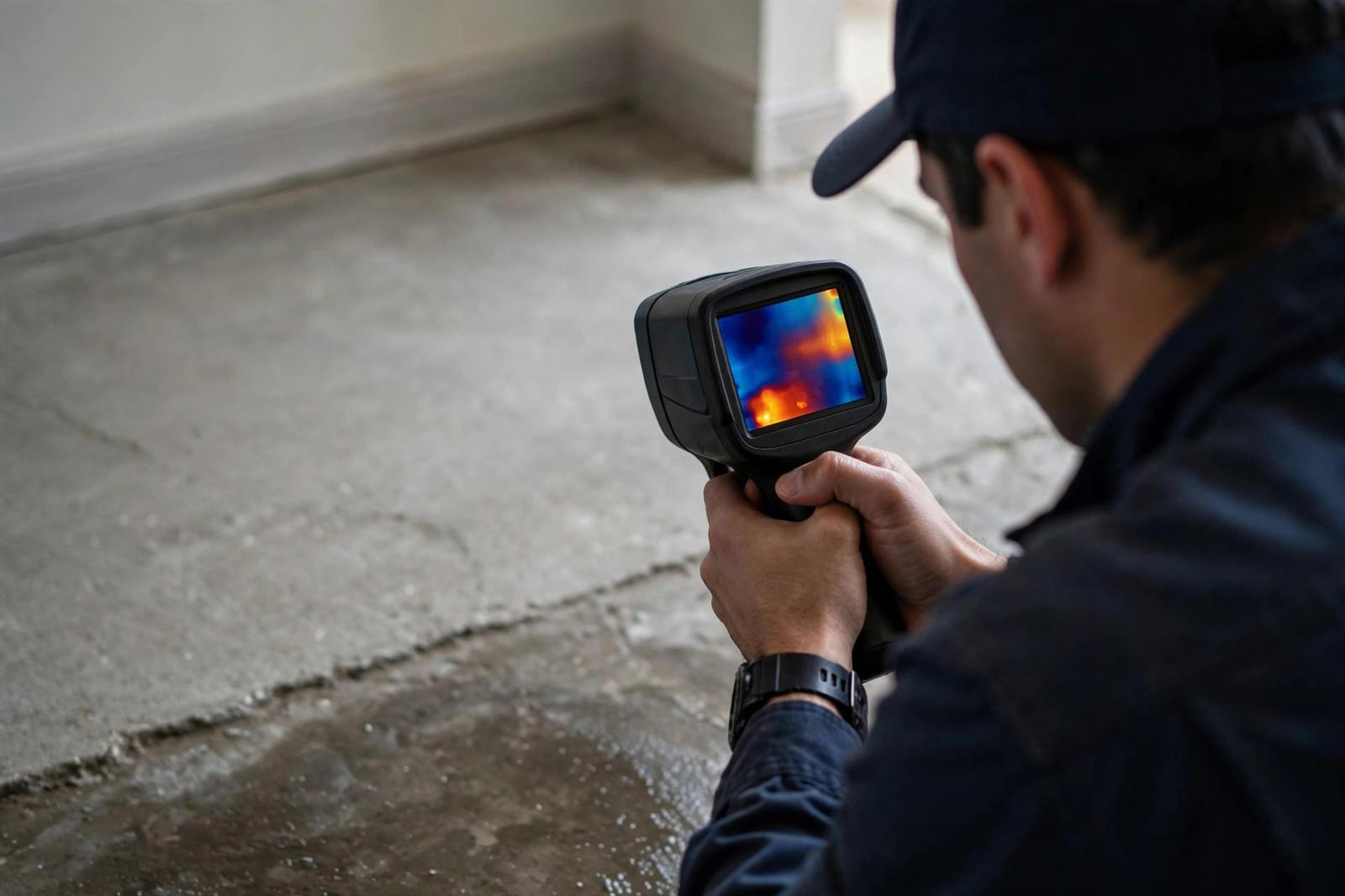
Slab Leak Detection
A slab leak is a leak in the water supply or drain lines that run beneath your home's concrete slab foundation…
Learn more →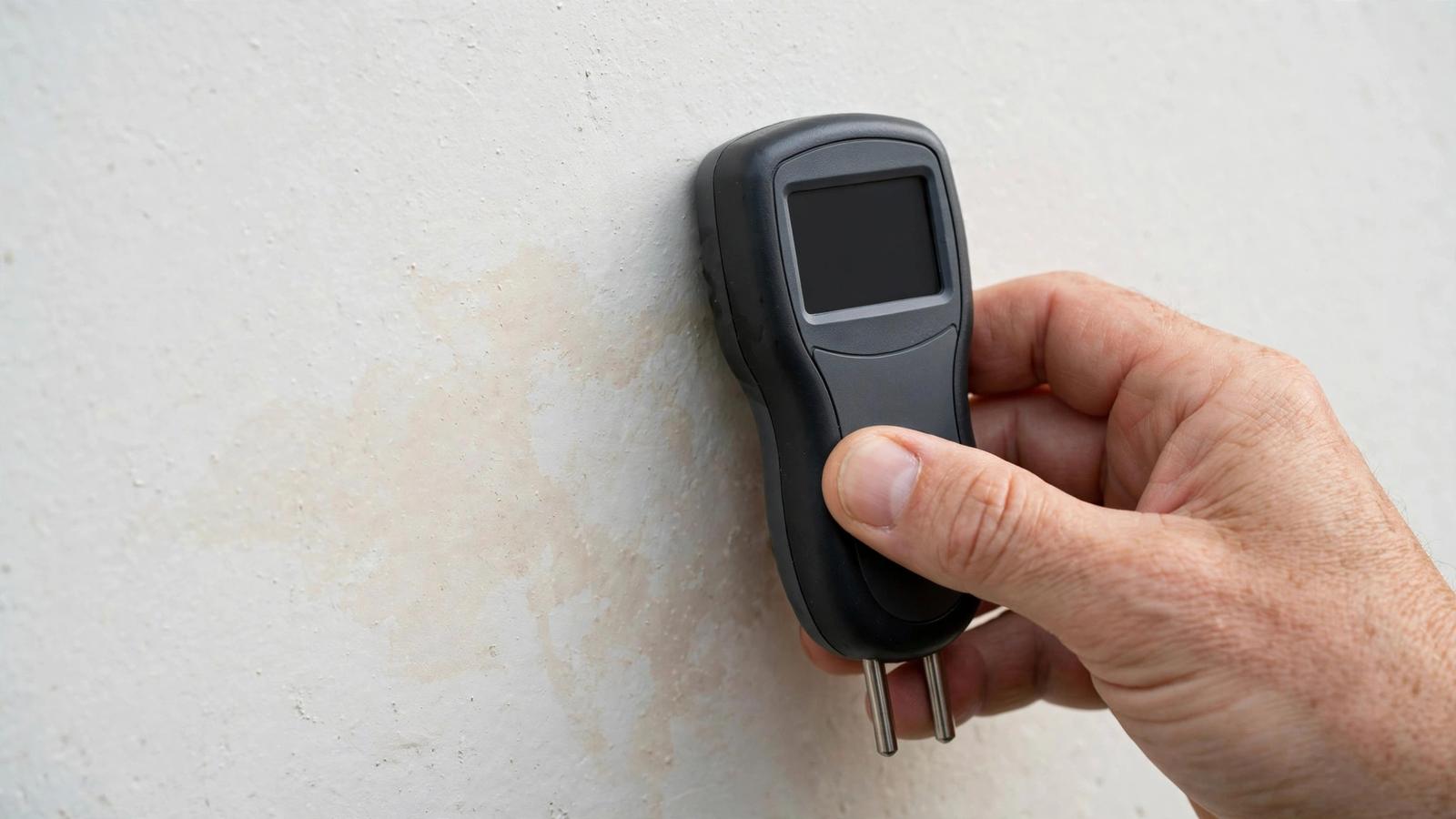
Ceiling & Wall Leak Detection
Ceiling and wall leak detection is the art of finding water hiding inside your home's structure. A brown stain…
Learn more →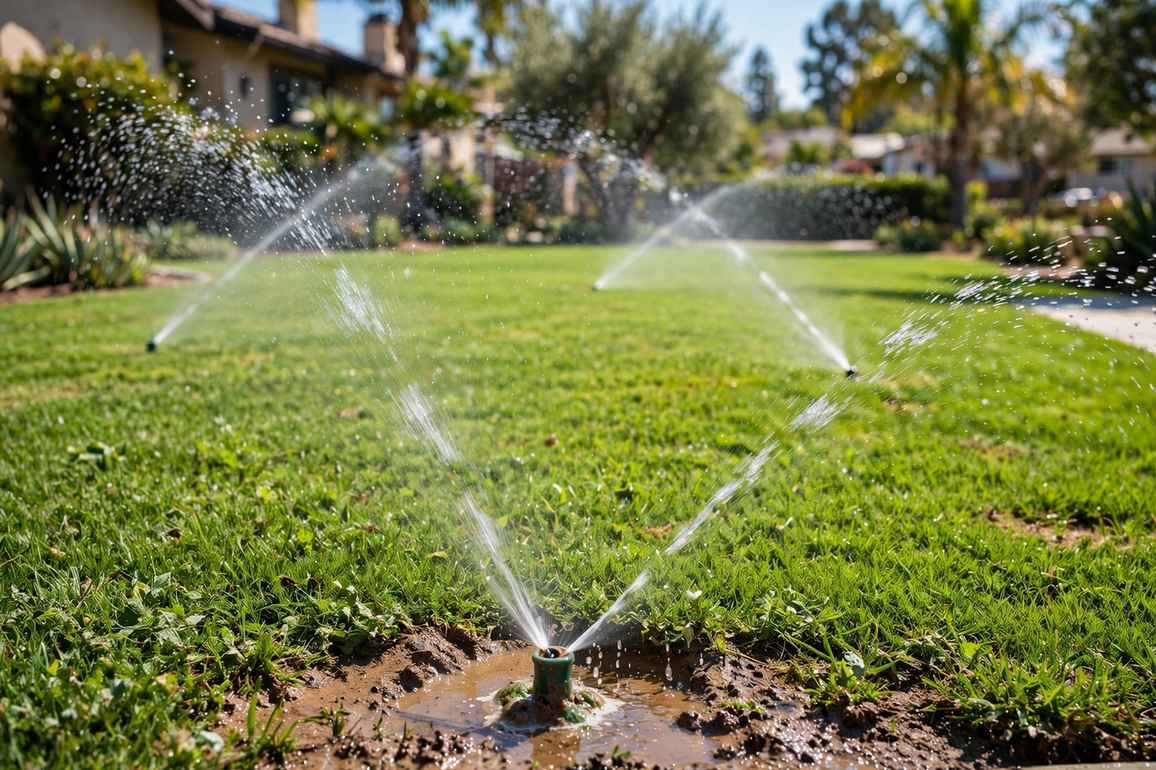
Irrigation & Sprinkler Leak Detection
Irrigation and sprinkler leak detection is the process of finding water losses in landscape watering systems:…
Learn more →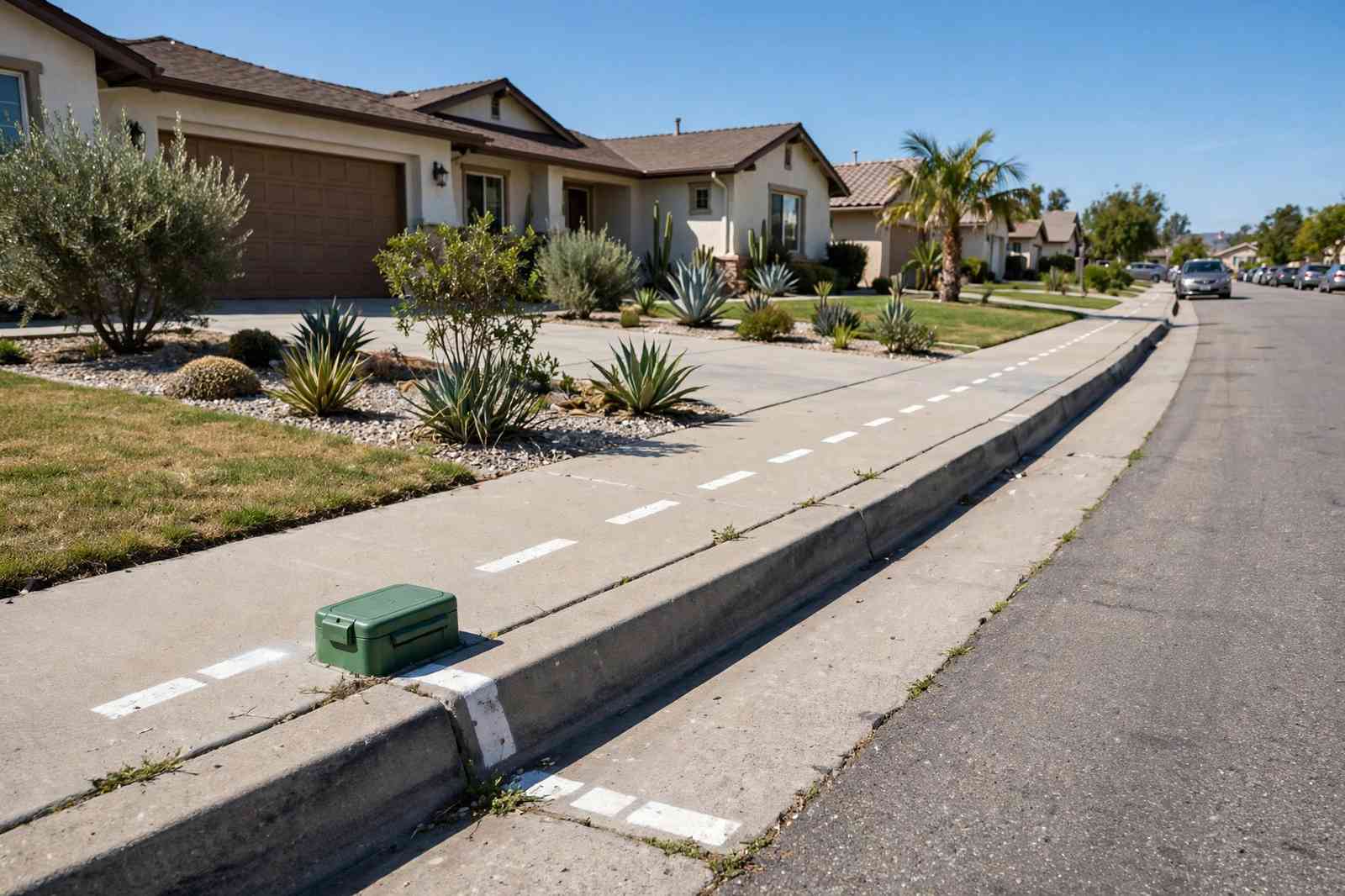
Water Service Line Leak Detection
Water service line leak detection targets one specific pipe: the pressurized line running from the street's wa…
Learn more →Signs You May Need Leak Detection in Dinuba
Not every leak happens indoors. Between irrigation systems, pool plumbing, and main service lines, Dinuba properties have plenty of buried water lines, and outdoor leaks can waste enormous volumes before anyone notices, because there's no wall to stain and no floor to warp. Outdoor warning signs include:
- A pool losing water faster than evaporation can explain
- Soggy or spongy lawn areas that never seem to dry out
- One patch of grass growing noticeably faster and greener than the rest
- Water pooling near the foundation or along walkways
- The meter spinning with the house shut off but irrigation valves open
- Hissing or running water audible near hose bibs or valve boxes
- Settling or cracking in driveways and patios, from soil washing away underneath
Outdoor leaks get their own toolkit, line tracing, pressure testing, and acoustic equipment tuned for soil. If your Dinuba yard is telling this kind of story, a targeted outdoor inspection will sort irrigation trouble from a supply-line break without digging up the whole property.
How We Find Leaks in Dinuba
When a leak won't reveal itself to sound or heat, tracer gas changes the game. The water line is drained and filled with a harmless hydrogen-nitrogen mix; because hydrogen molecules are tiny, they escape through the break and rise to the surface, where a sensitive sniffer traces the gas plume back to within inches of the leak. It's remarkably precise for slab leaks and long buried runs where acoustic signals get muddy.
Pressure testing answers a different but equally important question: which line is actually leaking? By isolating sections of plumbing and monitoring gauges, a technician can prove whether the culprit is the hot line, the cold line, a bathroom branch, or the main service, before a single instrument is aimed at a wall. That diagnosis prevents the all-too-common mistake of opening the wrong area.
| Method | What it finds |
|---|---|
| Tracer gas | Pinpoint location of slab and buried-line leaks |
| Pressure testing | Which line or branch is losing water |
| Electronic line tracing | The underground path of buried pipes |
| Dye testing | Drain, shower-pan, and toilet-base leaks |
For Dinuba homes, these two methods often work as a pair: pressure testing narrows the search to one line, tracer gas walks it to the exact break, methodical leak detection that replaces guesswork with measurements at every step.
What a Leak Detection Visit Looks Like
Knowing what happens during a visit takes the mystery out of it. Here is how a typical leak detection appointment unfolds:
- The call: you describe the symptoms, bill spike, sounds, stains, and we schedule, often for the same day.
- Meter check on arrival: the technician verifies water is actually escaping by watching the meter with fixtures off, establishing there's a real leak to find.
- Systematic sweep: acoustic listening, thermal imaging, and moisture readings work across the suspected area, narrowing from rooms to square feet to inches.
- Pinpoint and mark: the confirmed location is marked directly on the floor or wall, so there's no ambiguity later.
- Findings and next steps: you get a clear explanation of what was found and where, plus guidance on getting the repair itself scheduled.
Most visits wrap up in a single appointment, and because the methods are non-invasive, your home looks the same when we leave as when we arrived, minus the mystery of where the water was going.
Areas We Serve in Dinuba
Our technicians provide leak detection throughout Dinuba, California, covering 1 zip code:
Show the zip code we serve in Dinuba
- 93618
Nearby Cities We Serve
Also serving neighboring communities around Dinuba, see all 988 California cities.
Why Homeowners in Dinuba Call Us
What sets a leak detection visit apart is what happens after the instruments come out: certainty. Our process is built to confirm, not assume, each reading is cross-checked with a second method before a location is marked, so the mark on your floor is a promise your plumber can trust. Because we specialize in detection only and never sell repairs, there's no incentive to exaggerate or invent problems. Add same-day availability, licensed and insured technicians, and full coverage across California including Dinuba, and you get answers you can act on, fast, honest, and precise.