 Leak Detection California
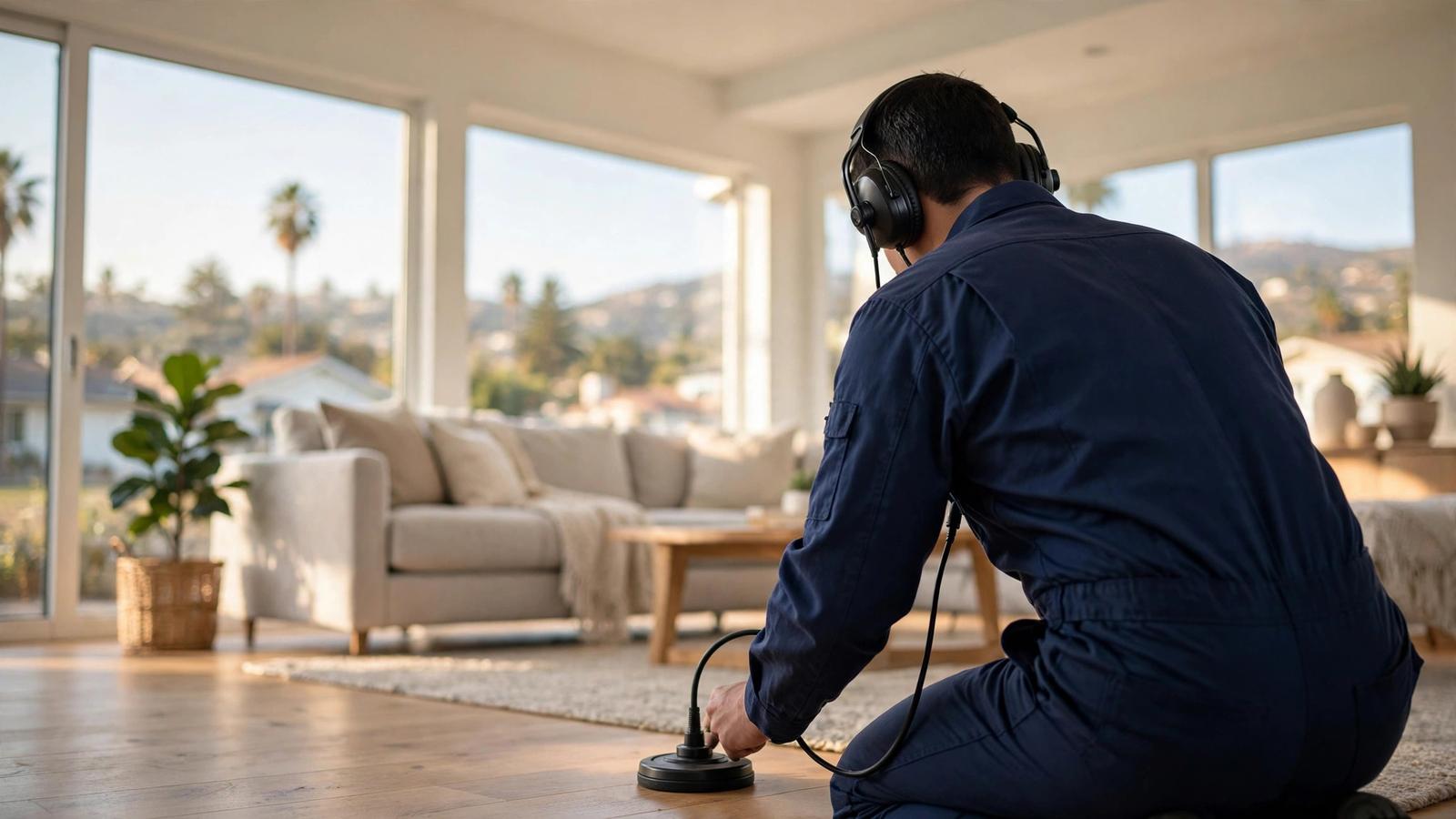
California homes have a plumbing personality all their own. Slab-on-grade foundations are everywhere, which means supply lines often run beneath concrete instead of through an accessible crawlspace. Irrigation systems crisscross most Brea yards, pools are common, and older neighborhoods still carry original galvanized or polybutylene piping that tends to fail from the inside out.
That mix shapes how leaks get found here. A wet patch in the yard might be irrigation, a supply line, or a pool line, and each demands a different test. Our leak detection approach for Brea starts by ruling things out in the right order: meter behavior, line isolation, then targeted instruments, so nobody pays to chase the wrong system. Across the area's 3 ZIP codes, we read these California-specific patterns every week, and recognizing them quickly is half the job.
Leak Detection Notes for Brea Homes
Brea is an Orange County city at the foot of the Puente Hills, with a housing stock that runs from mid century tract homes to newer hillside subdivisions and downtown condos. Foothill slopes, older tract plumbing, and warm inland summers shape its leak work: slab foundations are common in the tract neighborhoods, hillside homes add long buried runs, and mature trees send roots toward aging sewer and water lines. Irrigation is heavy in the summer months.
Brea homeowners should watch for a warm patch on a slab floor, a bill that climbs steadily over several months, and a meter dial that turns with all fixtures off. A damp spot that appears in a yard after irrigation has been off for days is another useful clue, since it separates a plumbing loss from ordinary watering.
Leak Detection Services in Brea
Specialized detection for every kind of leak, see all 15 services.

Emergency Leak Detection
Emergency leak detection is rapid-response diagnosis when water is actively damaging your property right now:…
Learn more →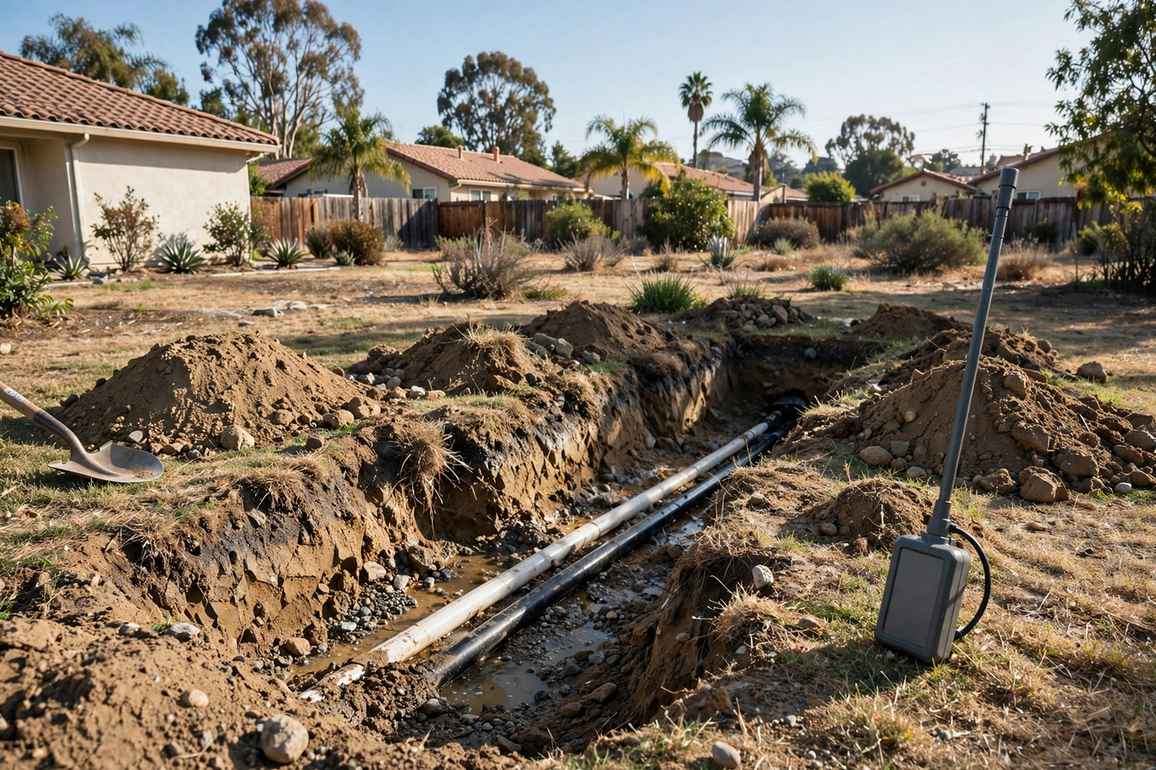
Underground Pipe Leak Detection
Underground pipe leak detection is the tracing, locating, and leak-pinpointing of buried water lines: the deep…
Learn more →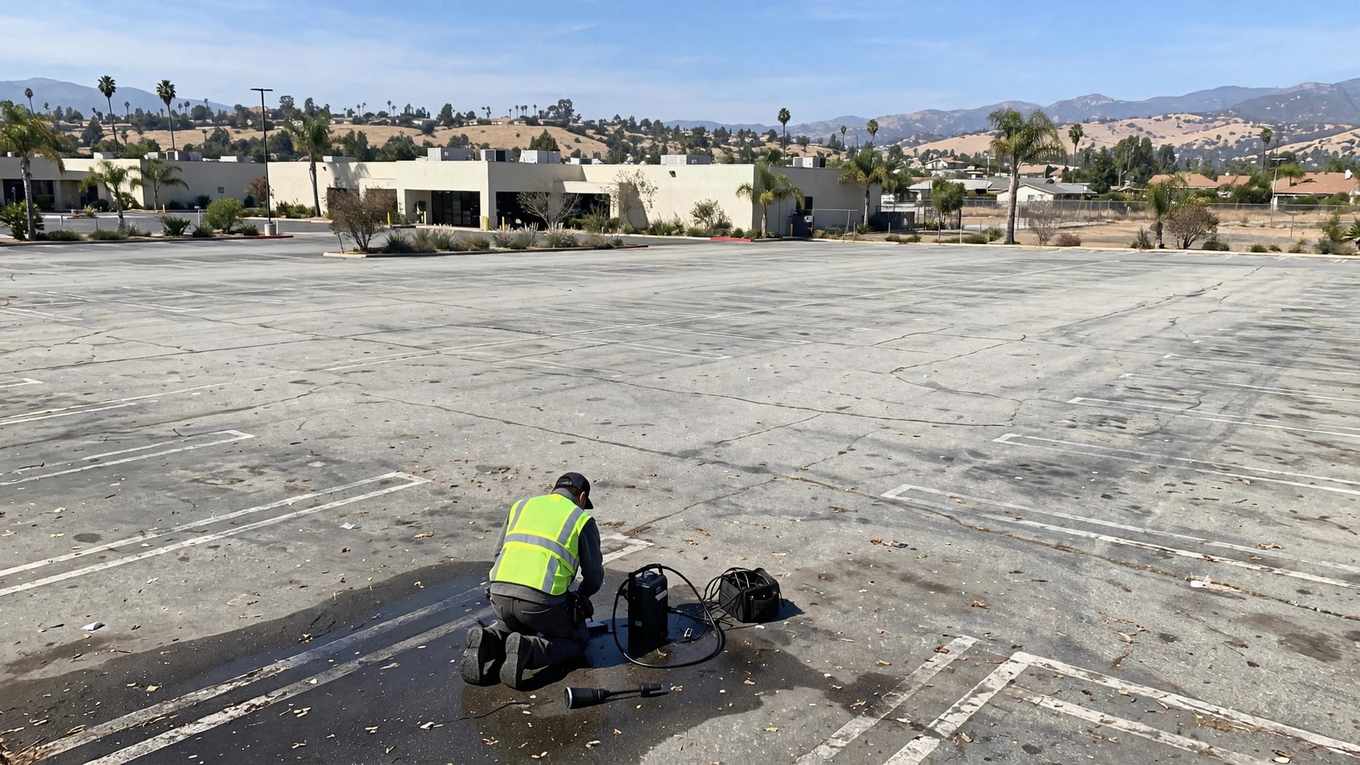
Parking Lot Leak Detection
Parking lot leak detection is the location of subsurface water leaks beneath paved commercial lots: the buried…
Learn more →
Pool & Spa Leak Detection
Pool and spa leak detection is the diagnosis of water loss from swimming pools, spas, and their equipment: dis…
Learn more →Signs You May Need Leak Detection in Brea
Some leaks announce themselves through damage rather than sound or smell. By the time drywall is soft or paint is peeling, water has usually been traveling inside the structure for a while, which is why Brea homeowners should treat visible damage as a symptom worth tracing, not just patching. Common damage-driven signs include:
- Peeling or bubbling paint on walls and ceilings
- Mold or mildew growth appearing in rooms that aren't humid by nature
- Warped or buckling flooring, especially near bathrooms and kitchens
- Stains spreading across ceilings or down walls
- Cracks in the foundation that seem to be widening or damp at the base
- Cabinetry swelling under sinks or around dishwashers
- Persistent condensation on interior walls
Patching the cosmetic damage without finding the source guarantees a repeat performance. When we respond to these calls in Brea, the instruments go straight to the damaged area and work outward until the entry point is confirmed, then your repair crew knows exactly where to open up.
How We Find Leaks in Brea
When a leak won't reveal itself to sound or heat, tracer gas changes the game. The water line is drained and filled with a harmless hydrogen-nitrogen mix; because hydrogen molecules are tiny, they escape through the break and rise to the surface, where a sensitive sniffer traces the gas plume back to within inches of the leak. It's remarkably precise for slab leaks and long buried runs where acoustic signals get muddy.
Pressure testing answers a different but equally important question: which line is actually leaking? By isolating sections of plumbing and monitoring gauges, a technician can prove whether the culprit is the hot line, the cold line, a bathroom branch, or the main service, before a single instrument is aimed at a wall. That diagnosis prevents the all-too-common mistake of opening the wrong area.
| Method | What it finds |
|---|---|
| Tracer gas | Pinpoint location of slab and buried-line leaks |
| Pressure testing | Which line or branch is losing water |
| Electronic line tracing | The underground path of buried pipes |
| Dye testing | Drain, shower-pan, and toilet-base leaks |
For Brea homes, these two methods often work as a pair: pressure testing narrows the search to one line, tracer gas walks it to the exact break, methodical leak detection that replaces guesswork with measurements at every step.
What a Leak Detection Visit Looks Like
The visit works best when you know your role in it. Here's the flow:
- Before we arrive: clear access to the water heater, main shutoff, and any stained or suspect areas, and note when you first saw symptoms.
- Isolation tests: the technician shuts off individual lines and watches the meter, determining whether the leak is on the hot side, cold side, or a specific branch.
- Instrument sweep: acoustic and thermal gear scan the narrowed zone, converging on the break's location.
- Precision confirmation: if the location needs to be tighter, common with slab leaks, tracer gas or line tracing refines it to inches.
- Written findings: you get the confirmed location, marked and documented, ready to hand to your repair plumber.
Preparation takes ten minutes and pays off in a faster, more accurate visit. Brea homeowners who clear access and jot down their symptom history consistently get the quickest pinpoint results from their leak detection visit.
Areas We Serve in Brea
Our technicians provide leak detection throughout Brea, California, covering 3 zip codes:
Show all 3 zip codes we serve in Brea
- 92821
- 92822
- 92823
Nearby Cities We Serve
Also serving neighboring communities around Brea, see all 988 California cities.
Why Homeowners in Brea Call Us
What sets a leak detection visit apart is what happens after the instruments come out: certainty. Our process is built to confirm, not assume, each reading is cross-checked with a second method before a location is marked, so the mark on your floor is a promise your plumber can trust. Because we specialize in detection only and never sell repairs, there's no incentive to exaggerate or invent problems. Add same-day availability, licensed and insured technicians, and full coverage across California including Brea, and you get answers you can act on, fast, honest, and precise.