 Leak Detection California
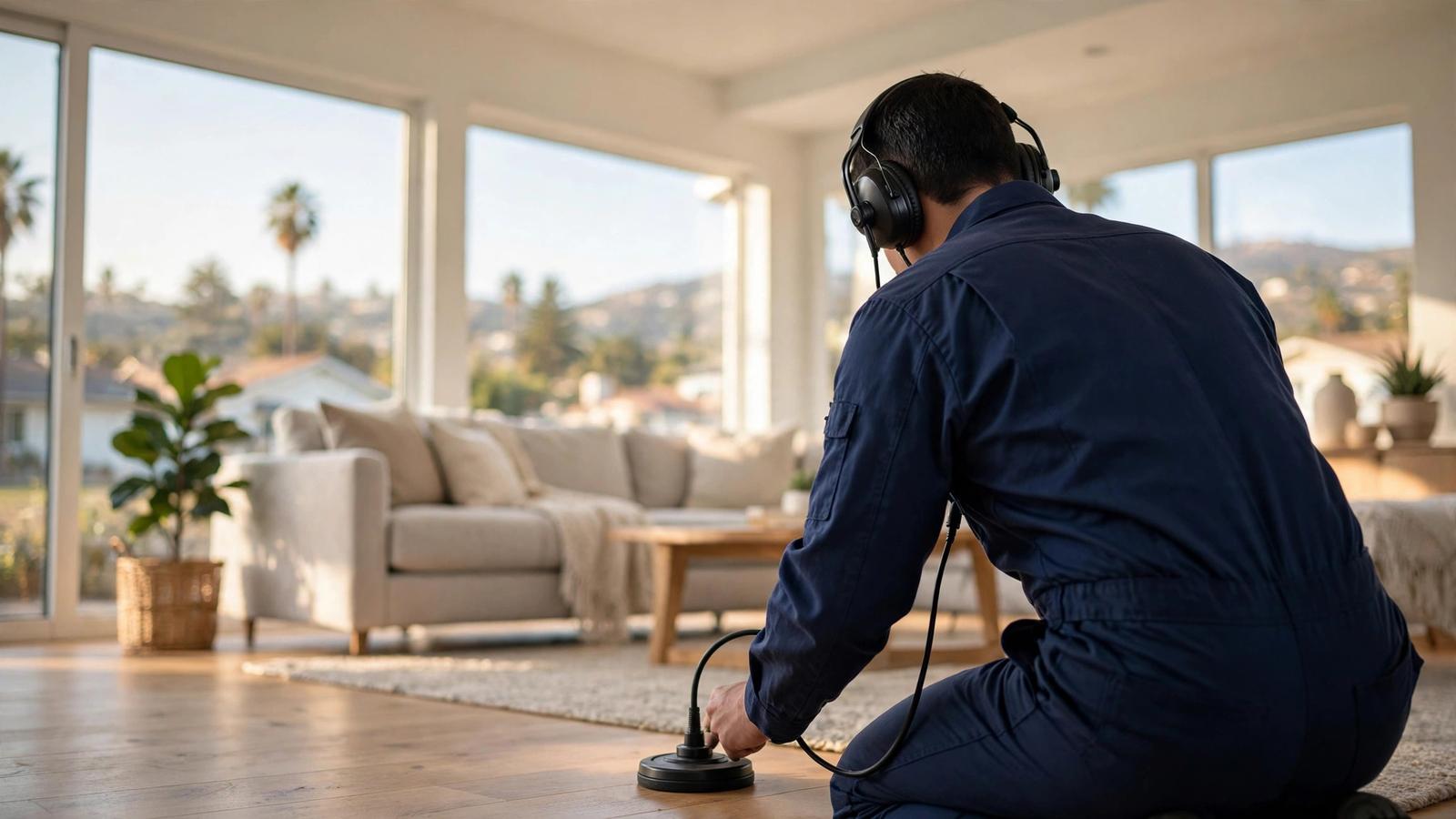
When you manage rentals in Corona, a tenant's report of a stain or a musty smell lands on your desk as both a maintenance ticket and a liability question. Small water issues escalate fast in occupied units: tenants notice, documentation matters, and waiting turns a minor repair into a habitability complaint.
That's why property managers across the area's 7 ZIP codes call us for fast, documented leak detection: we pinpoint the source with non-invasive methods first, mark the exact location, and hand over clear findings you can forward to your plumber or attach to the work order. No exploratory demolition in your unit, no vague guesses in the report. For Corona landlords and managers, quick certainty about what's leaking, and where, keeps tenants satisfied, documentation clean, and repair costs contained.
Leak Detection Notes for Corona Homes
Corona is a Riverside County city in the western Inland Empire, where mid century tract homes, newer master planned neighborhoods, and older town properties sit on flat valley floor near the Santa Ana Mountains. Slab foundations, aging tract plumbing, and heavy irrigation shape its leak work: copper lines under slabs are a common failure point in the older tracts, mature trees press on yard lines, and hot inland summers keep lawns watered for months. Many homes mix original pipe with later additions.
Corona homeowners should watch for a warm or damp spot on a slab floor, a bill that climbs without extra watering, and a meter that moves with the house quiet. Turning irrigation off for a couple of days and rechecking the meter separates a yard loss from a house line loss in a practical first step.
Leak Detection Services in Corona
Specialized detection for every kind of leak, see all 15 services.
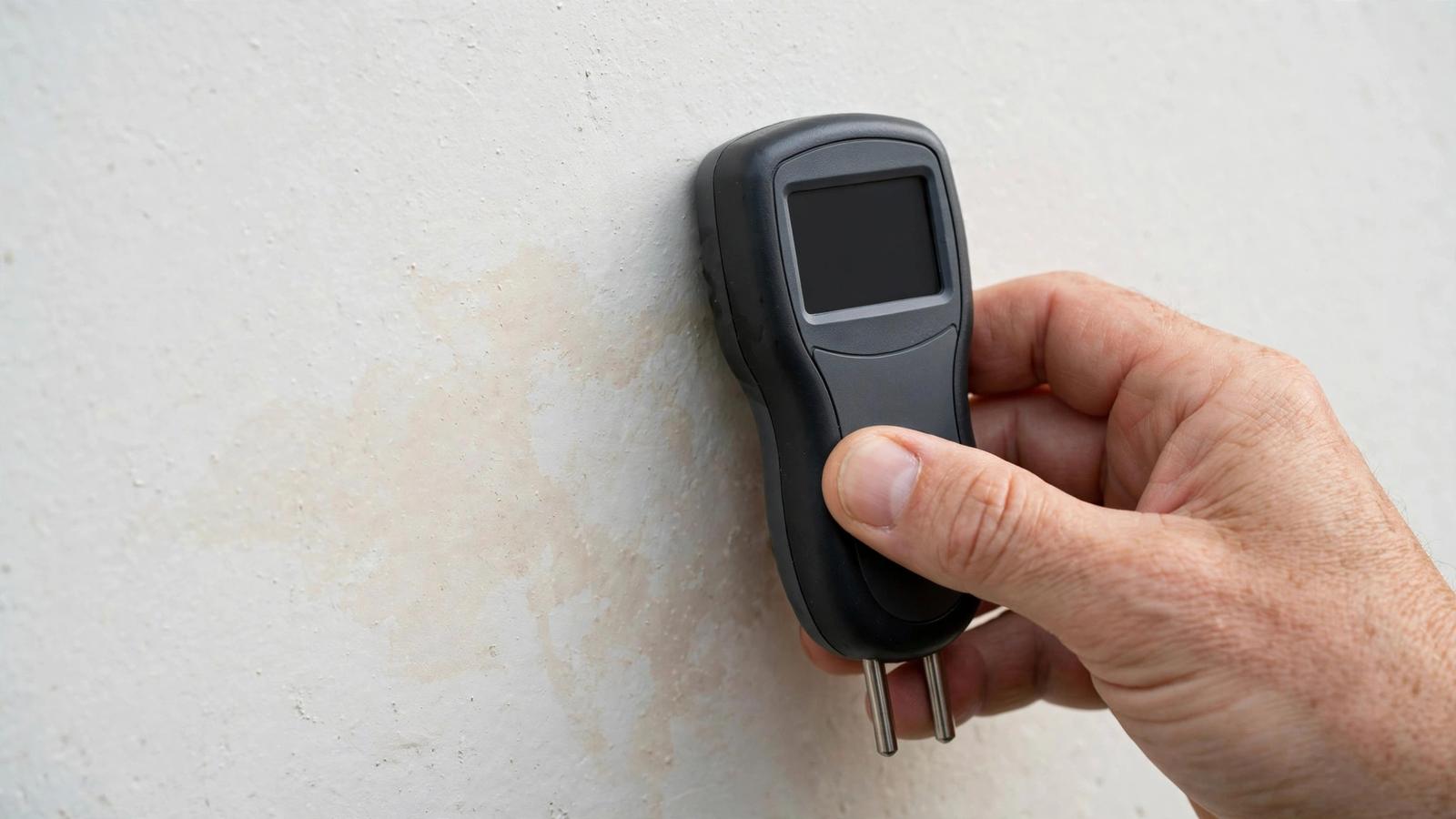
Ceiling & Wall Leak Detection
Ceiling and wall leak detection is the art of finding water hiding inside your home's structure. A brown stain…
Learn more →
Commercial Leak Detection
Commercial leak detection is the location of hidden water leaks in non-residential properties: office building…
Learn more →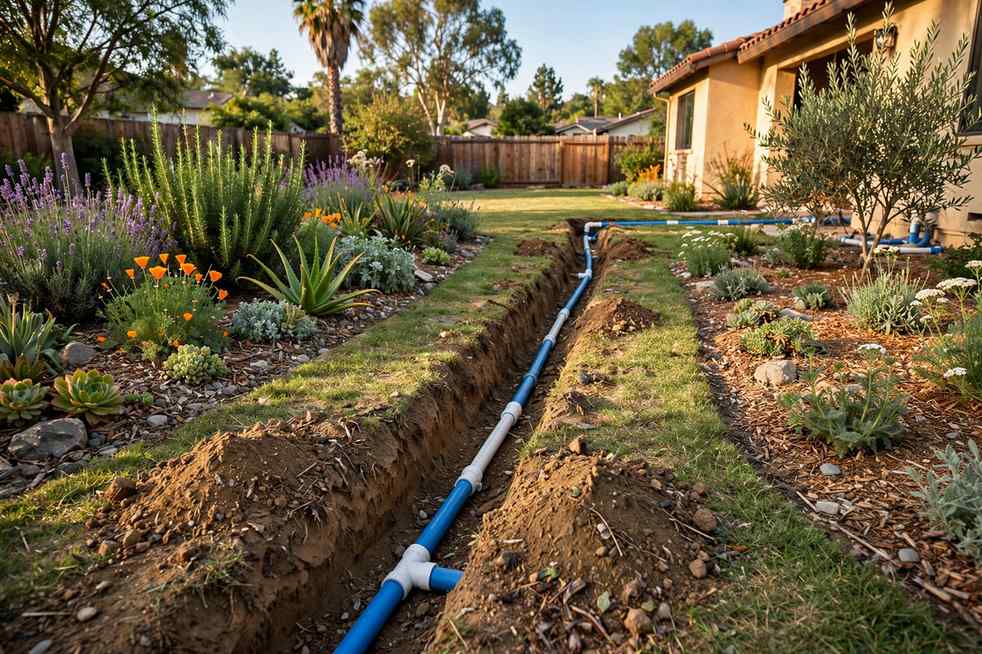
Outdoor Water Line Leak Detection
Outdoor water line leak detection covers the potable water lines that distribute water around your yard after…
Learn more →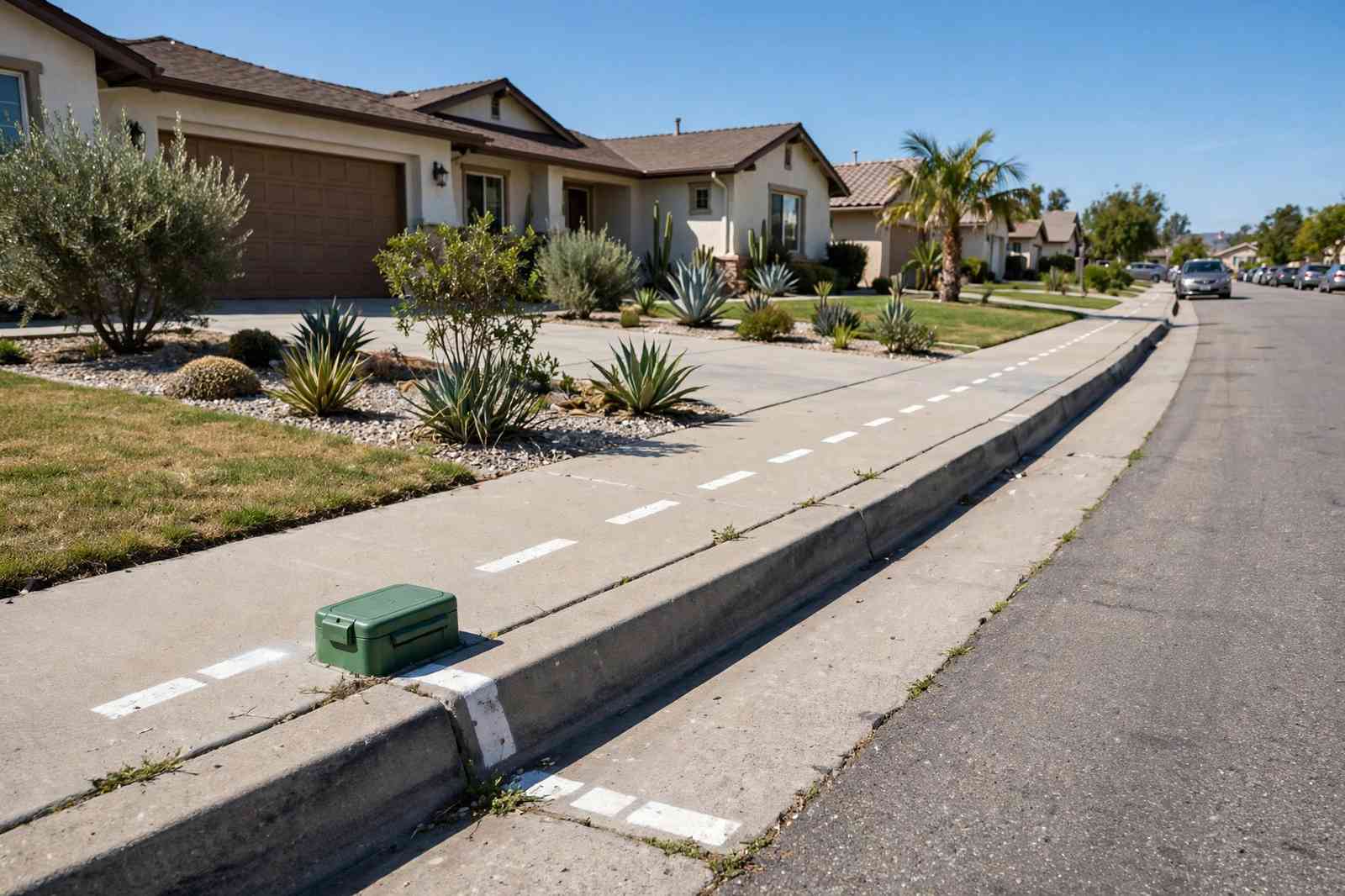
Water Service Line Leak Detection
Water service line leak detection targets one specific pipe: the pressurized line running from the street's wa…
Learn more →Signs You May Need Leak Detection in Corona
Not every leak happens indoors. Between irrigation systems, pool plumbing, and main service lines, Corona properties have plenty of buried water lines, and outdoor leaks can waste enormous volumes before anyone notices, because there's no wall to stain and no floor to warp. Outdoor warning signs include:
- A pool losing water faster than evaporation can explain
- Soggy or spongy lawn areas that never seem to dry out
- One patch of grass growing noticeably faster and greener than the rest
- Water pooling near the foundation or along walkways
- The meter spinning with the house shut off but irrigation valves open
- Hissing or running water audible near hose bibs or valve boxes
- Settling or cracking in driveways and patios, from soil washing away underneath
Outdoor leaks get their own toolkit, line tracing, pressure testing, and acoustic equipment tuned for soil. If your Corona yard is telling this kind of story, a targeted outdoor inspection will sort irrigation trouble from a supply-line break without digging up the whole property.
How We Find Leaks in Corona
Half the battle with a buried leak is knowing where the pipe even runs. Electronic line tracing solves that: a signal is induced onto the pipe, and a receiver above ground follows it, mapping the line's exact path and depth. On Corona properties where original plumbing plans are long gone, this map is what makes everything else possible, you can't pinpoint a break on a line you can't find.
Once the path is known, moisture meters take over the confirmation work. Pin and pinless meters measure moisture content in drywall, wood, and concrete, drawing a contour map of the wet zone that shows both the epicenter and how far water has traveled. For drain-side problems, shower pans, tub overflows, toilet bases, dye testing is the simple, decisive tool: colored dye goes in the fixture, and if it appears where it shouldn't, the path is proven.
This is non-invasive leak detection done properly: confirm before you cut. Mapping the line, measuring the moisture, and proving the path with dye means the repair crew opens exactly the right spot, and nothing else. That discipline is the difference between a one-day fix and a week of exploratory demolition.
What a Leak Detection Visit Looks Like
The visit works best when you know your role in it. Here's the flow:
- Before we arrive: clear access to the water heater, main shutoff, and any stained or suspect areas, and note when you first saw symptoms.
- Isolation tests: the technician shuts off individual lines and watches the meter, determining whether the leak is on the hot side, cold side, or a specific branch.
- Instrument sweep: acoustic and thermal gear scan the narrowed zone, converging on the break's location.
- Precision confirmation: if the location needs to be tighter, common with slab leaks, tracer gas or line tracing refines it to inches.
- Written findings: you get the confirmed location, marked and documented, ready to hand to your repair plumber.
Preparation takes ten minutes and pays off in a faster, more accurate visit. Corona homeowners who clear access and jot down their symptom history consistently get the quickest pinpoint results from their leak detection visit.
Areas We Serve in Corona
Our technicians provide leak detection throughout Corona, California, covering 7 zip codes:
Show all 7 zip codes we serve in Corona
- 92877
- 92878
- 92879
- 92880
- 92881
- 92882
- 92883
Nearby Cities We Serve
Also serving neighboring communities around Corona, see all 988 California cities.
Why Homeowners in Corona Call Us
We do one thing: find leaks precisely, without tearing your property apart first. Non-invasive leak detection is our default on every visit, acoustic, thermal, and pressure-based tools locate the break before anything is opened, so the repair that follows is small and exactly placed. Same-day appointments are available across California because water damage doesn't wait, and our technicians arrive with professional-grade equipment, not guesswork. We're licensed and insured, and we serve the entire state, including Corona, with the same careful, evidence-first approach on every job. That's the whole model: one specialty, done properly.