 Leak Detection California

California homes have a plumbing personality all their own. Slab-on-grade foundations are everywhere, which means supply lines often run beneath concrete instead of through an accessible crawlspace. Irrigation systems crisscross most Richmond yards, pools are common, and older neighborhoods still carry original galvanized or polybutylene piping that tends to fail from the inside out.
That mix shapes how leaks get found here. A wet patch in the yard might be irrigation, a supply line, or a pool line, and each demands a different test. Our leak detection approach for Richmond starts by ruling things out in the right order: meter behavior, line isolation, then targeted instruments, so nobody pays to chase the wrong system. Across the area's 7 ZIP codes, we read these California-specific patterns every week, and recognizing them quickly is half the job.
Leak Detection Services in Richmond
Specialized detection for every kind of leak, see all 15 services.
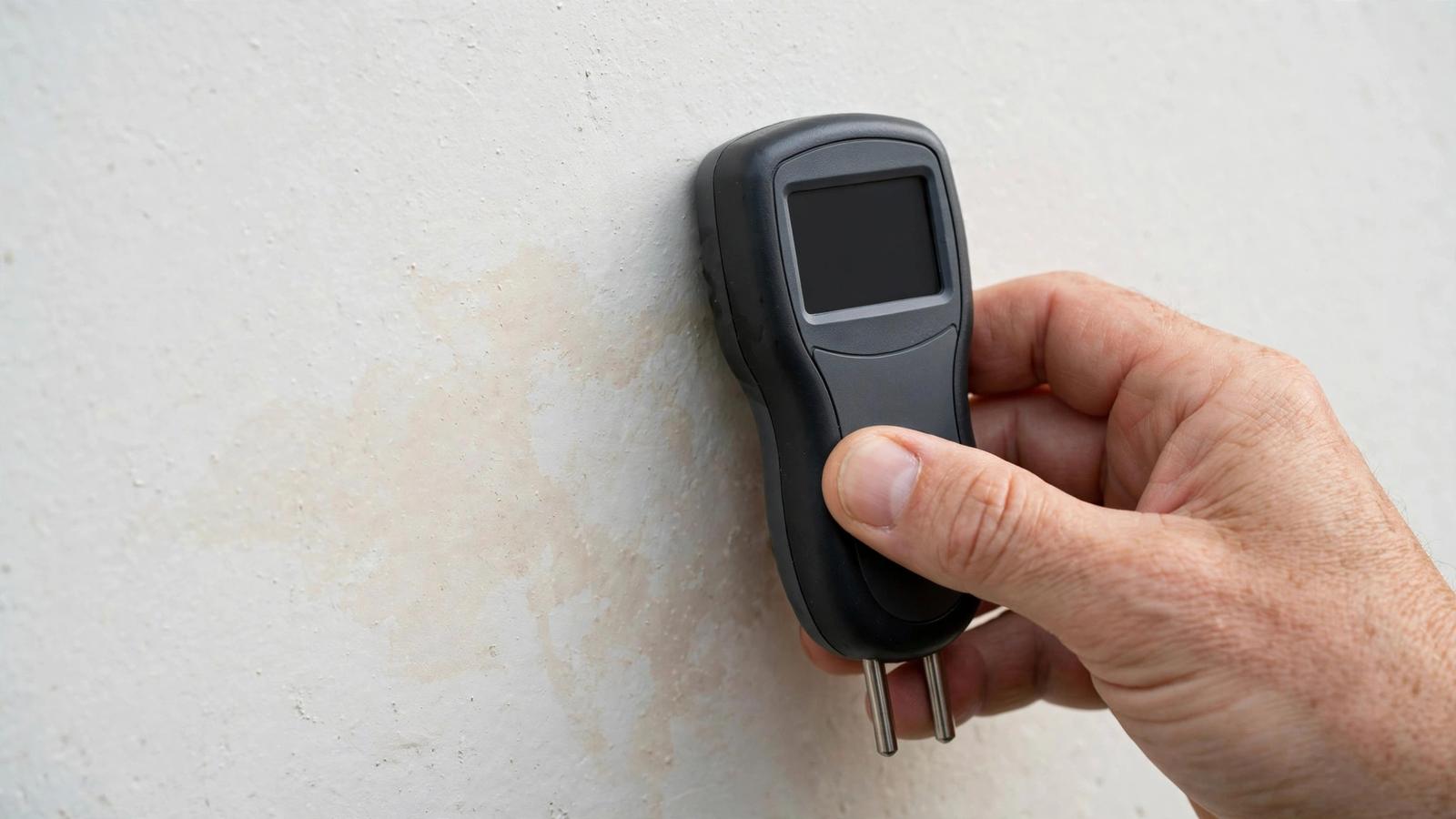
Ceiling & Wall Leak Detection
Ceiling and wall leak detection is the art of finding water hiding inside your home's structure. A brown stain…
Learn more →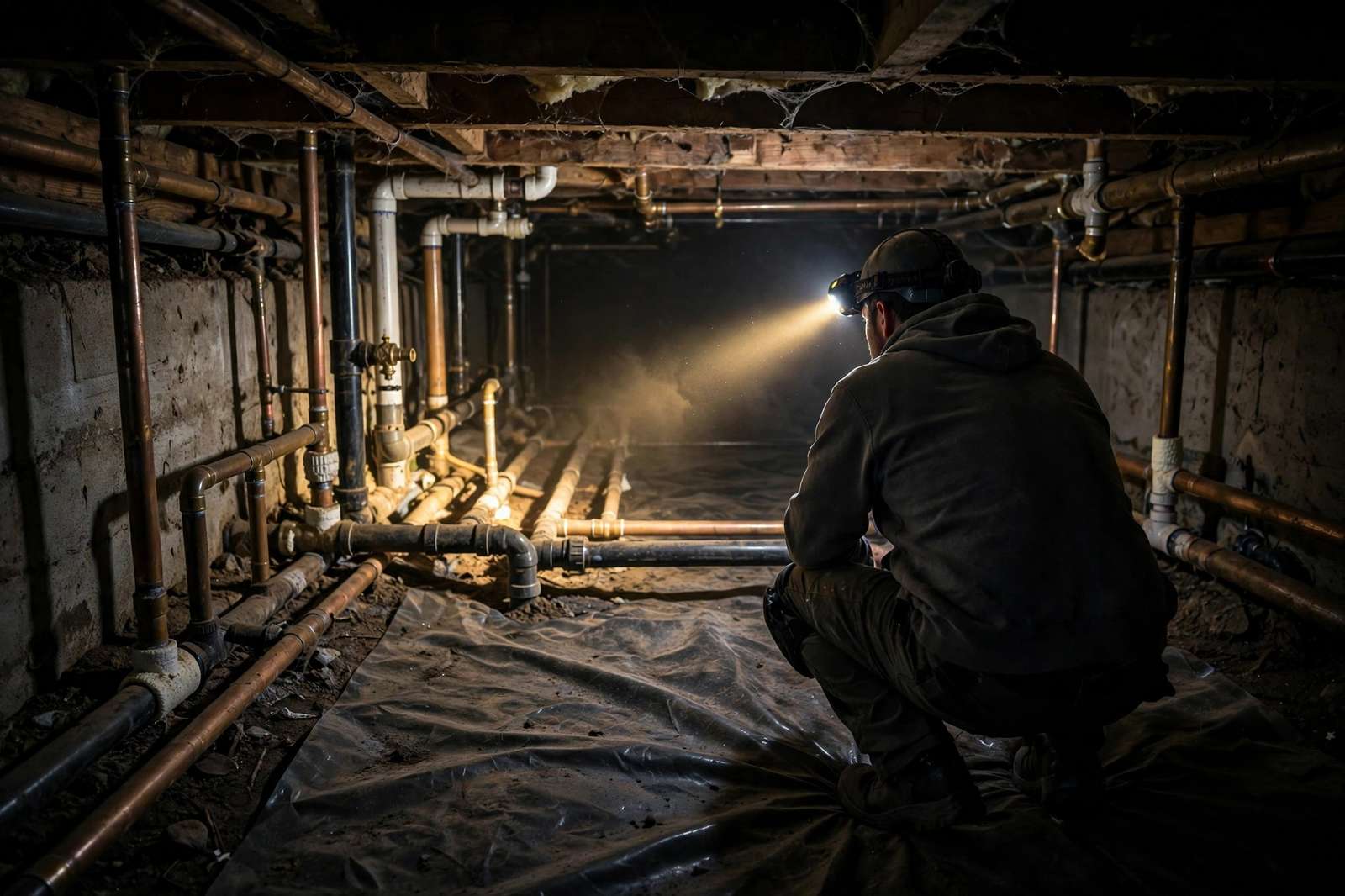
Crawlspace Leak Detection
Crawlspace leak detection is the inspection and diagnosis of water intrusion beneath homes built over a crawls…
Learn more →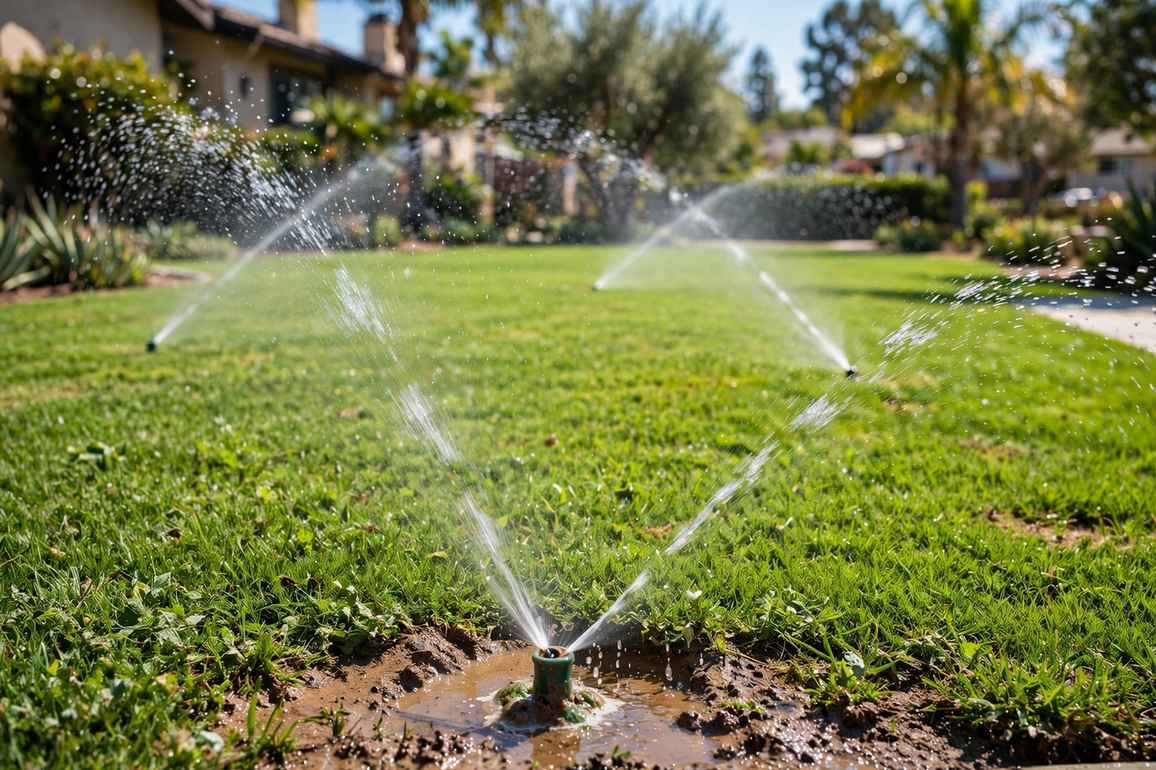
Irrigation & Sprinkler Leak Detection
Irrigation and sprinkler leak detection is the process of finding water losses in landscape watering systems:…
Learn more →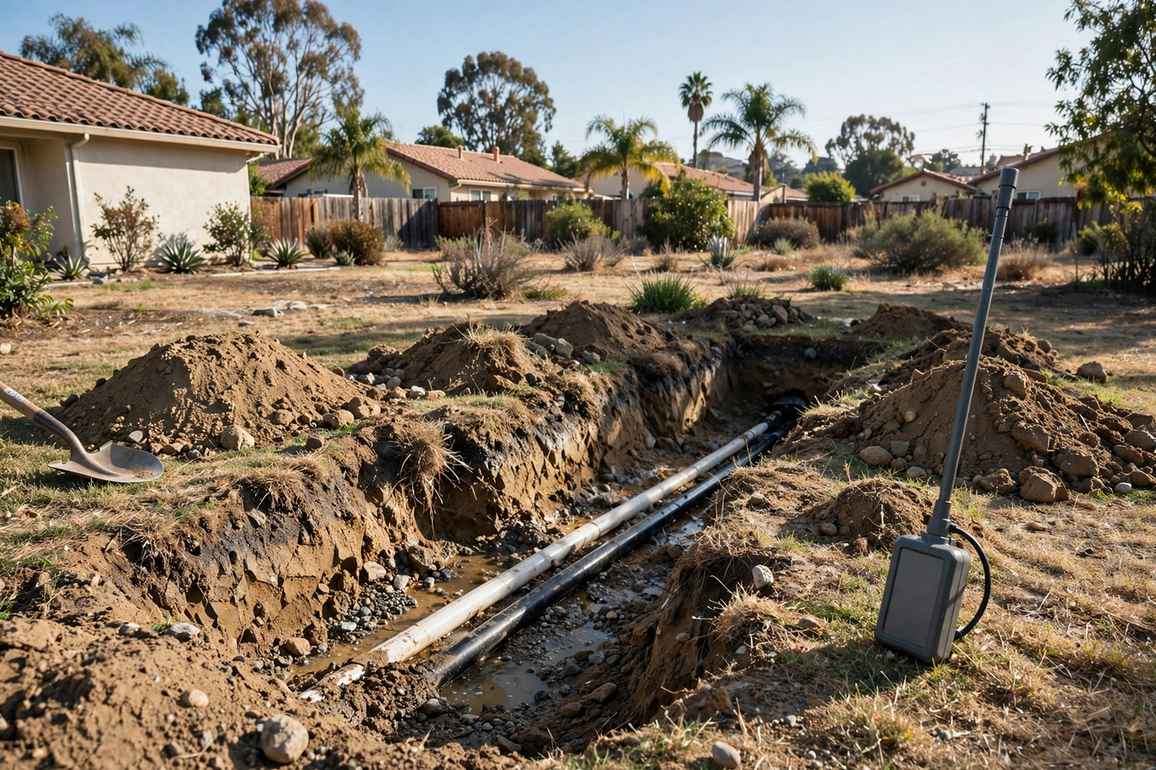
Underground Pipe Leak Detection
Underground pipe leak detection is the tracing, locating, and leak-pinpointing of buried water lines: the deep…
Learn more →Signs You May Need Leak Detection in Richmond
Leaks rarely announce themselves directly. More often they leave a trail of small, easy-to-dismiss clues, and in Richmond, the earlier you connect the dots, the less damage the water does in the meantime. Watch for these:
- Water bill climbing with no change in your household's usage
- Meter still spinning after every fixture and appliance is shut off
- Running-water sounds behind walls when nothing is on
- Low pressure at faucets that used to flow strongly
- Warm spots on the floor, often a sign of a hot-water line leaking under the slab
- Suspiciously lush grass in one patch of an otherwise ordinary yard
- Musty odor in a room with no obvious moisture source
- Stains or bubbling paint on ceilings and walls
One sign alone can have an innocent explanation; two or more pointing the same way is worth investigating. Our leak detection visits for Richmond homes start from exactly these symptoms, and each one tells the technician where to aim the instruments first.
How We Find Leaks in Richmond
Every leak leaves a signature, sound, heat, pressure, or chemistry, and professional locating is really about reading the right signature with the right instrument. For pressurized supply lines, acoustic listening is the workhorse: highly sensitive ground microphones and listening discs pick up the hiss of water escaping through a pinhole, and a trained ear distinguishes a leak's sound from normal pipe noise. It shines on copper and PEX lines under slabs and behind walls.
Thermal imaging reads a different signature. Infrared cameras detect the temperature differences caused by evaporating moisture, making hidden wet areas behind drywall or under flooring visible as cool patterns. It's fast, completely non-invasive, and excellent for mapping how far moisture has already spread.
| Method | What it finds |
|---|---|
| Acoustic listening | Pressurized supply-line leaks under slabs and behind walls |
| Thermal imaging | Moisture spread and hidden wet areas behind surfaces |
| Moisture meters | Exact moisture levels in drywall, wood, and concrete |
| Pressure testing | Which line or section is losing pressure |
In practice, Richmond jobs rarely rely on a single method: a thermal scan maps the wet zone, acoustic gear pinpoints the break inside it, and a moisture meter confirms the boundaries, layered leak detection that keeps the final repair opening as small as possible.
What a Leak Detection Visit Looks Like
A good leak detection visit follows the evidence in order, broad to narrow. Expect this sequence:
- Walkthrough: the technician tours the property with you, noting every symptom, stains, sounds, warm spots, the meter's behavior, and forms an initial hypothesis.
- Non-invasive scan: thermal cameras and moisture meters map the affected area without opening anything, showing where water has traveled.
- Targeted confirmation: acoustic equipment, pressure tests, or tracer gas zero in on the break itself, proving the location rather than estimating it.
- Marked location: the exact spot is marked and photographed, giving your plumber an unambiguous target.
- Detection-only report: you receive clear findings to hand to whoever does the repair, we locate leaks; your chosen plumber fixes them.
That handoff is deliberate. Because we don't sell repairs, there's no incentive to exaggerate, the findings are simply what the instruments showed, documented for your Richmond home.
Areas We Serve in Richmond
Our technicians provide leak detection throughout Richmond, California, covering 7 zip codes:
Show all 7 zip codes we serve in Richmond
- 94801
- 94802
- 94804
- 94805
- 94807
- 94808
- 94850
Nearby Cities We Serve
Also serving neighboring communities around Richmond, see all 988 California cities.
Why Homeowners in Richmond Call Us
We do one thing: find leaks precisely, without tearing your property apart first. Non-invasive leak detection is our default on every visit, acoustic, thermal, and pressure-based tools locate the break before anything is opened, so the repair that follows is small and exactly placed. Same-day appointments are available across California because water damage doesn't wait, and our technicians arrive with professional-grade equipment, not guesswork. We're licensed and insured, and we serve the entire state, including Richmond, with the same careful, evidence-first approach on every job. That's the whole model: one specialty, done properly.