 Leak Detection California
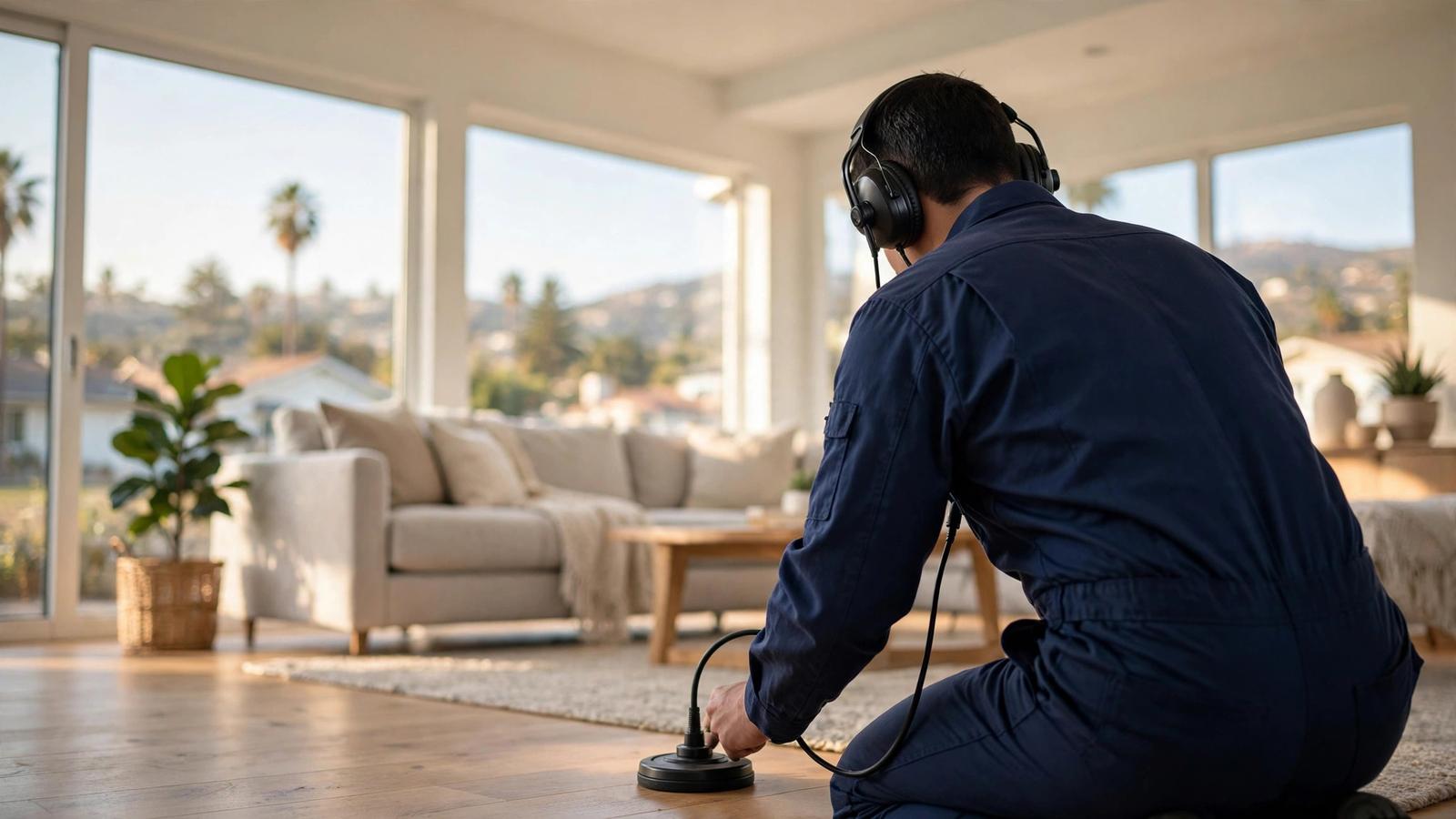
Leak detection used to mean opening walls and hoping the first cut found something. Today's approach is the reverse: prove the location first, open things up only when the evidence says so. Acoustic sensors pick up the hiss of pressurized water escaping through a pinhole; thermal cameras reveal the cool signatures of evaporating moisture behind drywall; tracer gas and pressure testing confirm which line is compromised.
Each Le Grand job gets the combination that fits the symptoms, not a one-size-fits-all sweep. A warm spot on the floor points one way; a meter that spins with everything off points another. For Le Grand homeowners across the 1 ZIP code we cover, the goal is identical: narrow the search to inches before a single tile is lifted, so the repair that follows is smaller, quicker, and over sooner.
Leak Detection Services in Le Grand
Specialized detection for every kind of leak, see all 15 services.
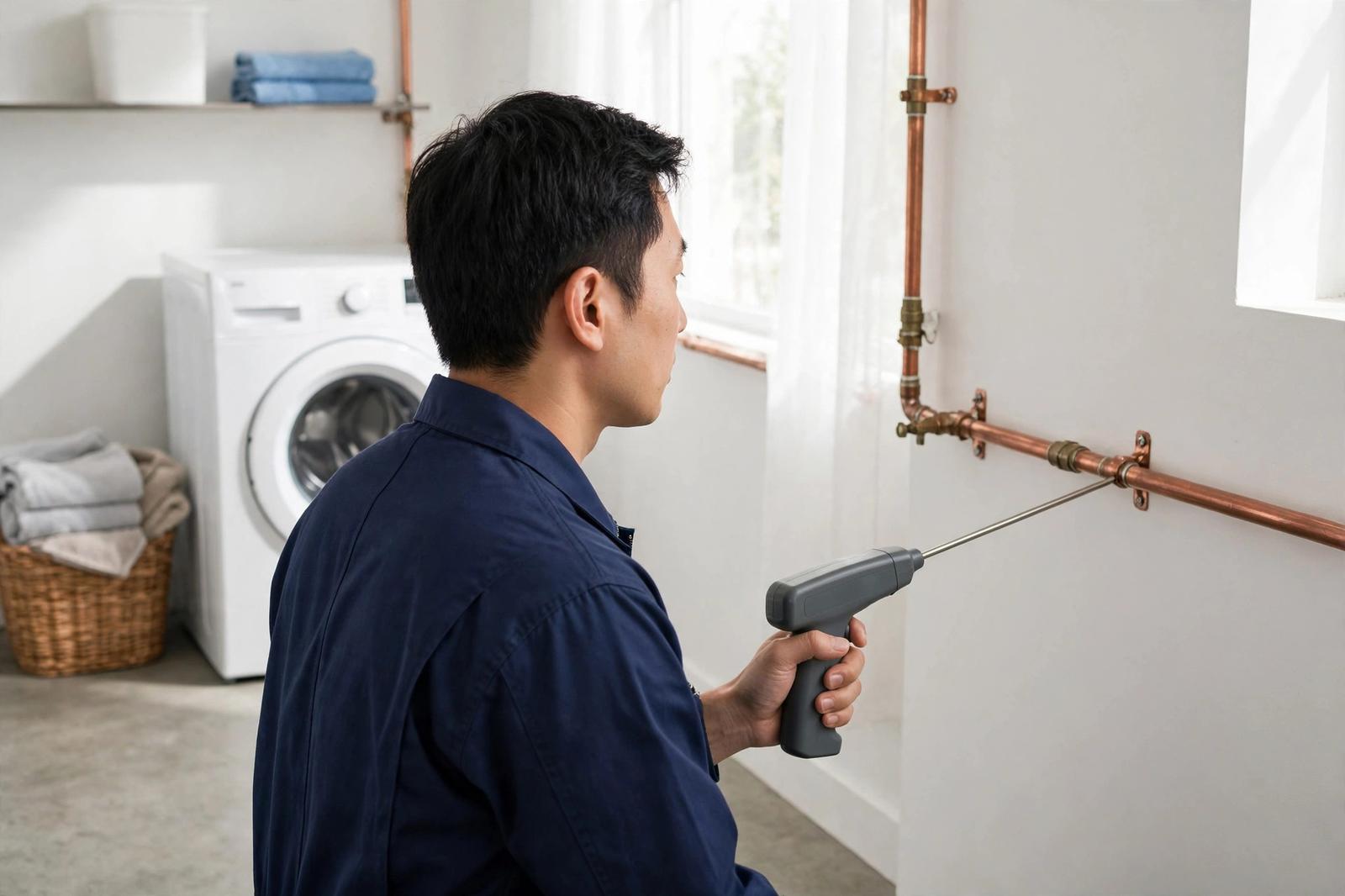
Water Leak Detection
Water leak detection is the specialized process of finding hidden plumbing leaks with non-invasive technology…
Learn more →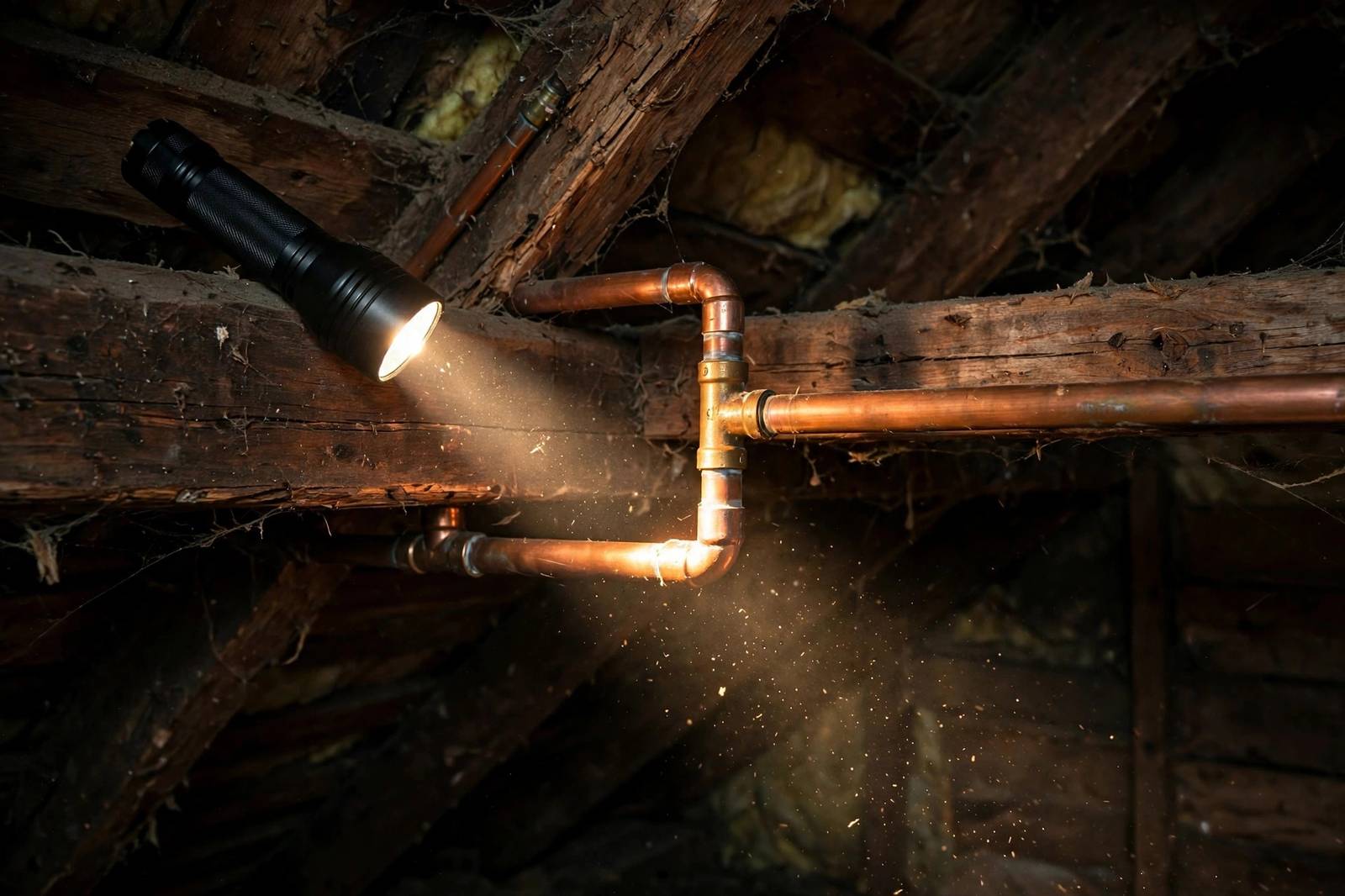
Attic Leak Detection
Attic leak detection is the process of tracing moisture found in an attic back to its true source. It is trick…
Learn more →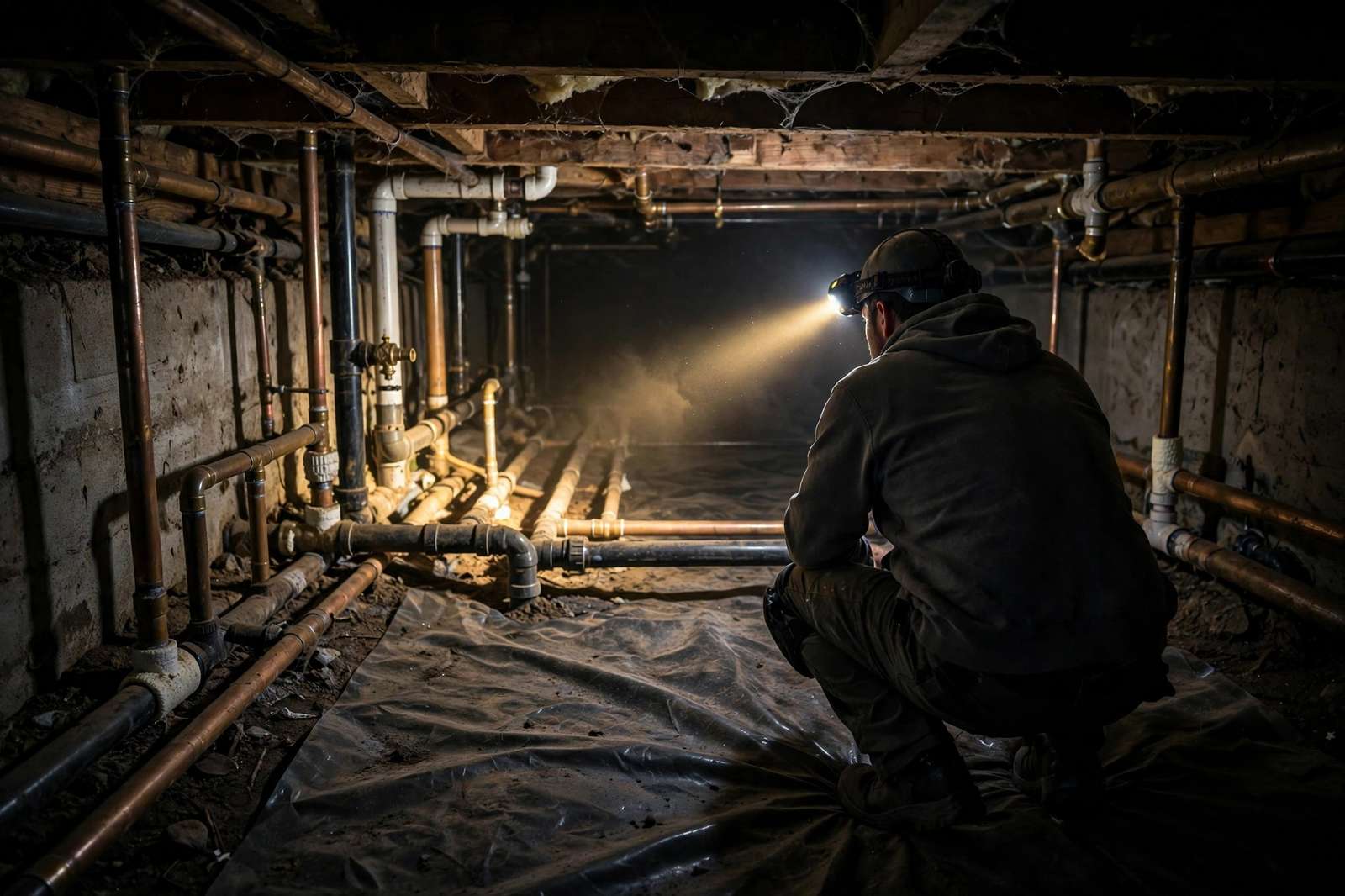
Crawlspace Leak Detection
Crawlspace leak detection is the inspection and diagnosis of water intrusion beneath homes built over a crawls…
Learn more →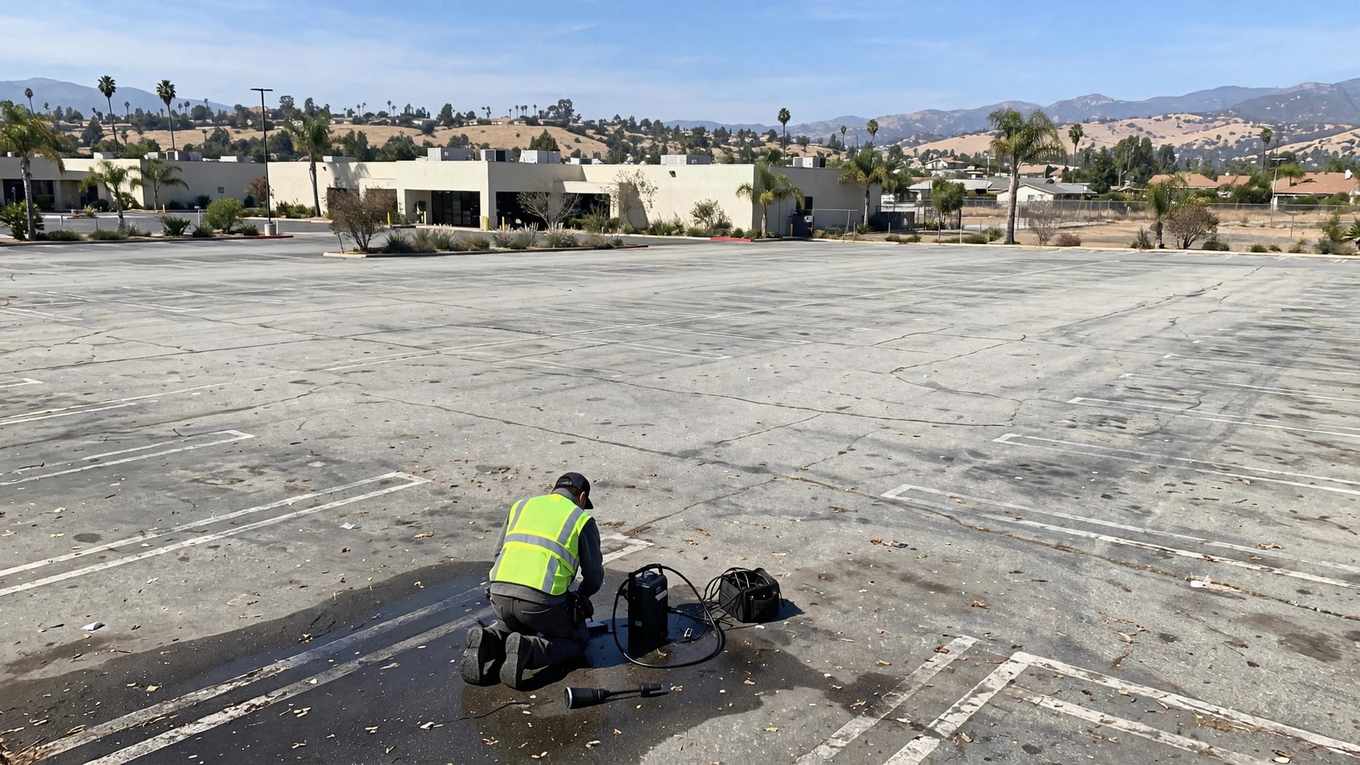
Parking Lot Leak Detection
Parking lot leak detection is the location of subsurface water leaks beneath paved commercial lots: the buried…
Learn more →Signs You May Need Leak Detection in Le Grand
Some leaks announce themselves through damage rather than sound or smell. By the time drywall is soft or paint is peeling, water has usually been traveling inside the structure for a while, which is why Le Grand homeowners should treat visible damage as a symptom worth tracing, not just patching. Common damage-driven signs include:
- Peeling or bubbling paint on walls and ceilings
- Mold or mildew growth appearing in rooms that aren't humid by nature
- Warped or buckling flooring, especially near bathrooms and kitchens
- Stains spreading across ceilings or down walls
- Cracks in the foundation that seem to be widening or damp at the base
- Cabinetry swelling under sinks or around dishwashers
- Persistent condensation on interior walls
Patching the cosmetic damage without finding the source guarantees a repeat performance. When we respond to these calls in Le Grand, the instruments go straight to the damaged area and work outward until the entry point is confirmed, then your repair crew knows exactly where to open up.
How We Find Leaks in Le Grand
Endoscopic cameras, slim, flexible borescopes slipped through a tiny opening, let a technician see inside wall cavities, under tubs, and behind fixtures without removing anything larger than a switch plate. When acoustic or thermal readings suggest a general area, a camera confirms what's actually happening inside: the corroded fitting, the split joint, the slow drip caught in the act. Seeing the leak removes the last shred of doubt before repair work begins.
No single instrument covers every scenario, which is why a proper visit layers methods. Sound finds pressurized breaks; thermal maps moisture; pressure testing isolates the line; cameras confirm visually. The technician's real skill is choosing the sequence, starting broad and inexpensive, then deploying the precise tools only where the evidence points.
| Method | What it finds |
|---|---|
| Endoscopic cameras | Visual confirmation inside walls and cavities |
| Acoustic listening | Pressurized leaks under slabs and behind walls |
| Thermal imaging | Hidden moisture patterns behind surfaces |
| Tracer gas | Exact break location on buried lines |
Across Le Grand, that layered method is what separates genuine leak detection from an expensive guess. When every step is confirmed by an instrument, the mark on the floor is a promise, and the repair that follows is exactly as big as it needs to be, and no bigger.
What a Leak Detection Visit Looks Like
A good leak detection visit follows the evidence in order, broad to narrow. Expect this sequence:
- Walkthrough: the technician tours the property with you, noting every symptom, stains, sounds, warm spots, the meter's behavior, and forms an initial hypothesis.
- Non-invasive scan: thermal cameras and moisture meters map the affected area without opening anything, showing where water has traveled.
- Targeted confirmation: acoustic equipment, pressure tests, or tracer gas zero in on the break itself, proving the location rather than estimating it.
- Marked location: the exact spot is marked and photographed, giving your plumber an unambiguous target.
- Detection-only report: you receive clear findings to hand to whoever does the repair, we locate leaks; your chosen plumber fixes them.
That handoff is deliberate. Because we don't sell repairs, there's no incentive to exaggerate, the findings are simply what the instruments showed, documented for your Le Grand home.
Areas We Serve in Le Grand
Our technicians provide leak detection throughout Le Grand, California, covering 1 zip code:
Show the zip code we serve in Le Grand
- 95333
Nearby Cities We Serve
Also serving neighboring communities around Le Grand, see all 988 California cities.
Why Homeowners in Le Grand Call Us
What sets a leak detection visit apart is what happens after the instruments come out: certainty. Our process is built to confirm, not assume, each reading is cross-checked with a second method before a location is marked, so the mark on your floor is a promise your plumber can trust. Because we specialize in detection only and never sell repairs, there's no incentive to exaggerate or invent problems. Add same-day availability, licensed and insured technicians, and full coverage across California including Le Grand, and you get answers you can act on, fast, honest, and precise.