 Leak Detection California
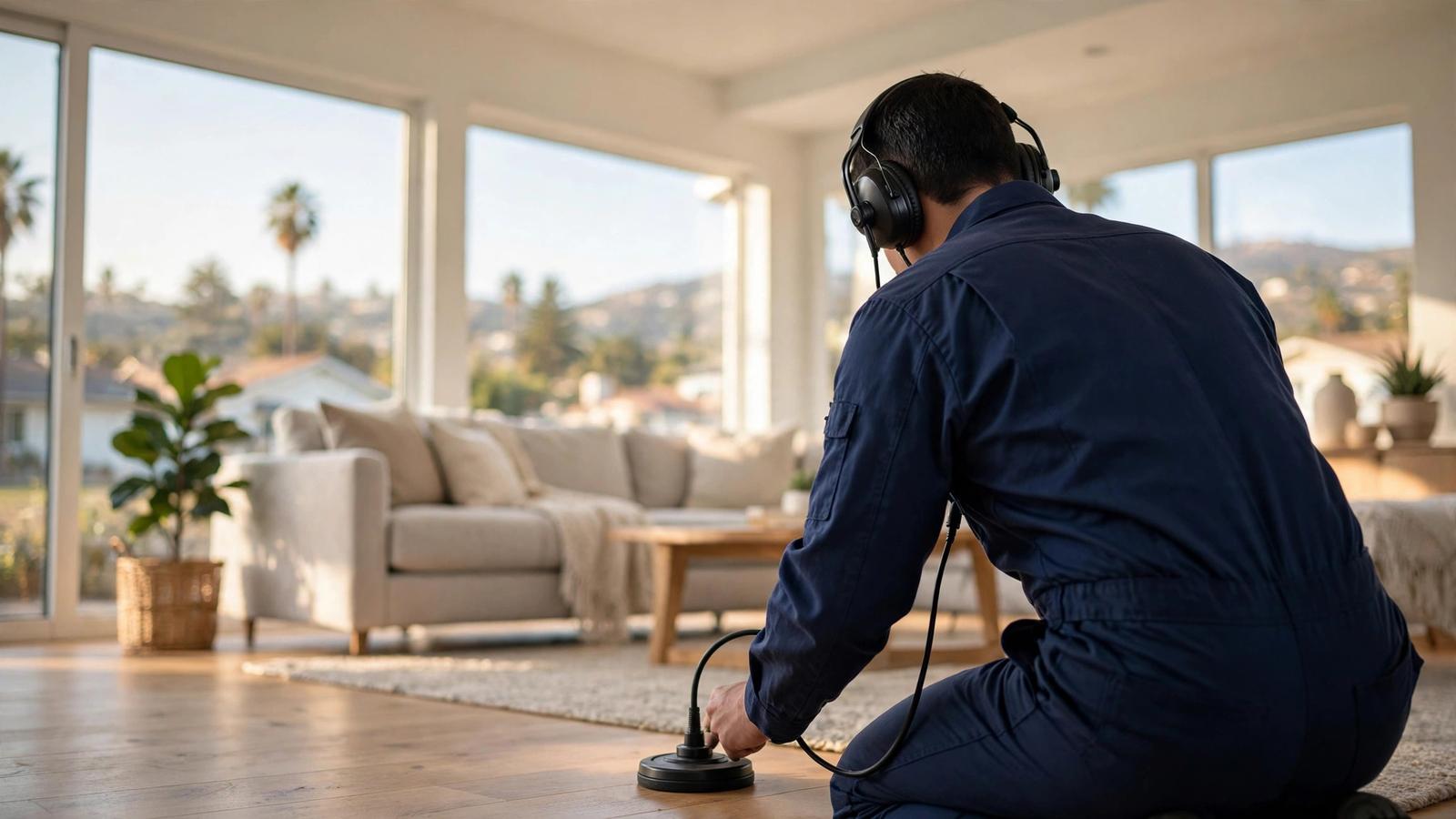
Leak detection used to mean opening walls and hoping the first cut found something. Today's approach is the reverse: prove the location first, open things up only when the evidence says so. Acoustic sensors pick up the hiss of pressurized water escaping through a pinhole; thermal cameras reveal the cool signatures of evaporating moisture behind drywall; tracer gas and pressure testing confirm which line is compromised.
Each Glendale job gets the combination that fits the symptoms, not a one-size-fits-all sweep. A warm spot on the floor points one way; a meter that spins with everything off points another. For Glendale homeowners across the 14 ZIP codes we cover, the goal is identical: narrow the search to inches before a single tile is lifted, so the repair that follows is smaller, quicker, and over sooner.
Leak Detection Notes for Glendale Homes
Glendale is a large Los Angeles County city, where early 1900s homes, mid century neighborhoods, and hillside builds share foothill streets and flat valley floor. Older homes often carry aging pipe and layered repairs, while hillside lots give escaping water a downhill path, so a leak can surface well below the actual break, sometimes near a driveway or a lower terrace. Later tracts add slab foundations and irrigation sized for suburban lots.
Coastal influence softens the climate, but summer heat still pushes irrigation hard, and a cracked zone line can run for weeks behind green turf. For Glendale homeowners, the meter test is the simplest check. Turn everything off, including irrigation, and watch the dial. If it moves, water is leaving the system, and a zone by zone irrigation check will usually separate a household leak from a yard one before any repair is planned.
Leak Detection Services in Glendale
Specialized detection for every kind of leak, see all 15 services.
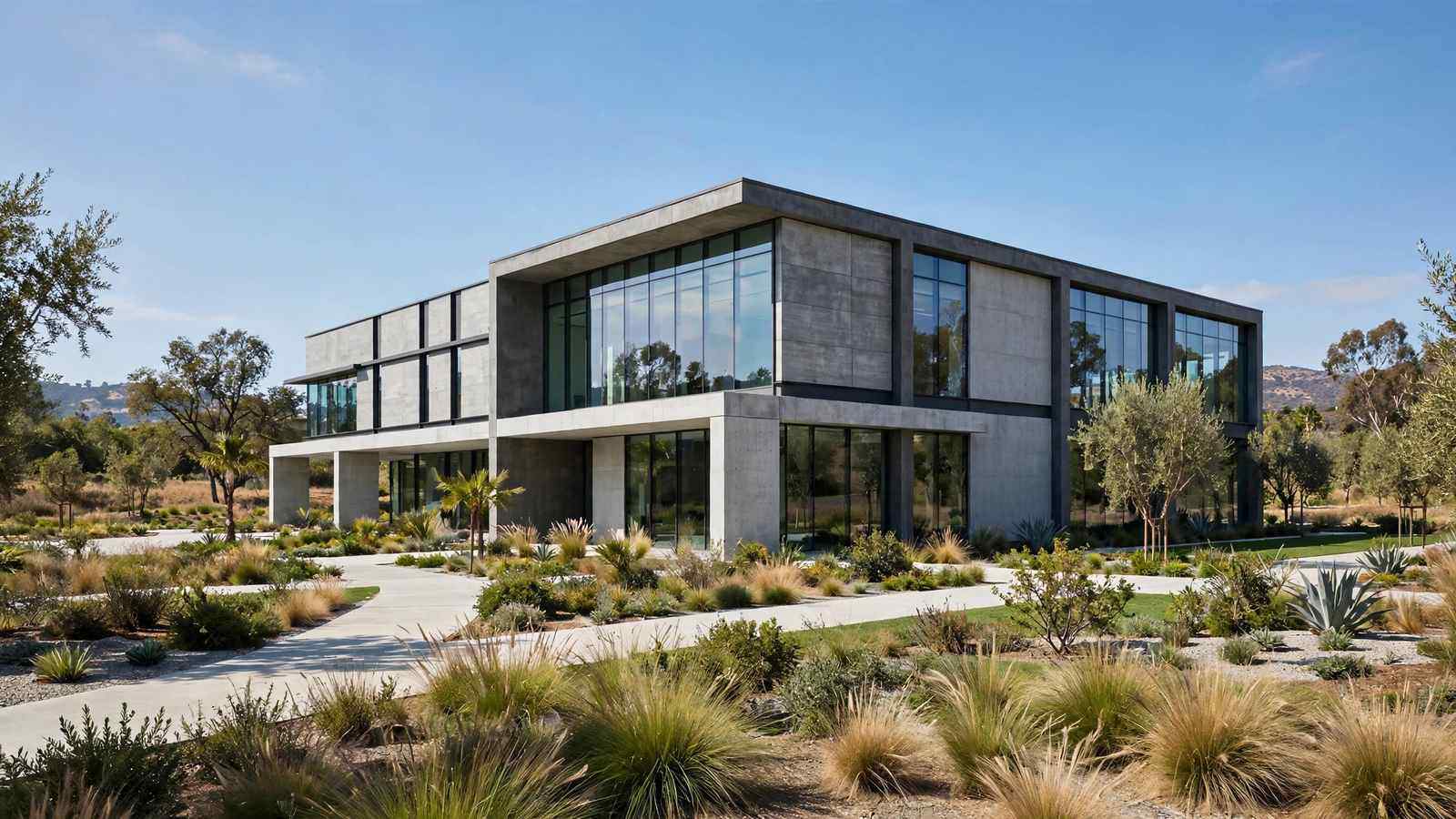
Commercial Leak Detection
Commercial leak detection is the location of hidden water leaks in non-residential properties: office building…
Learn more →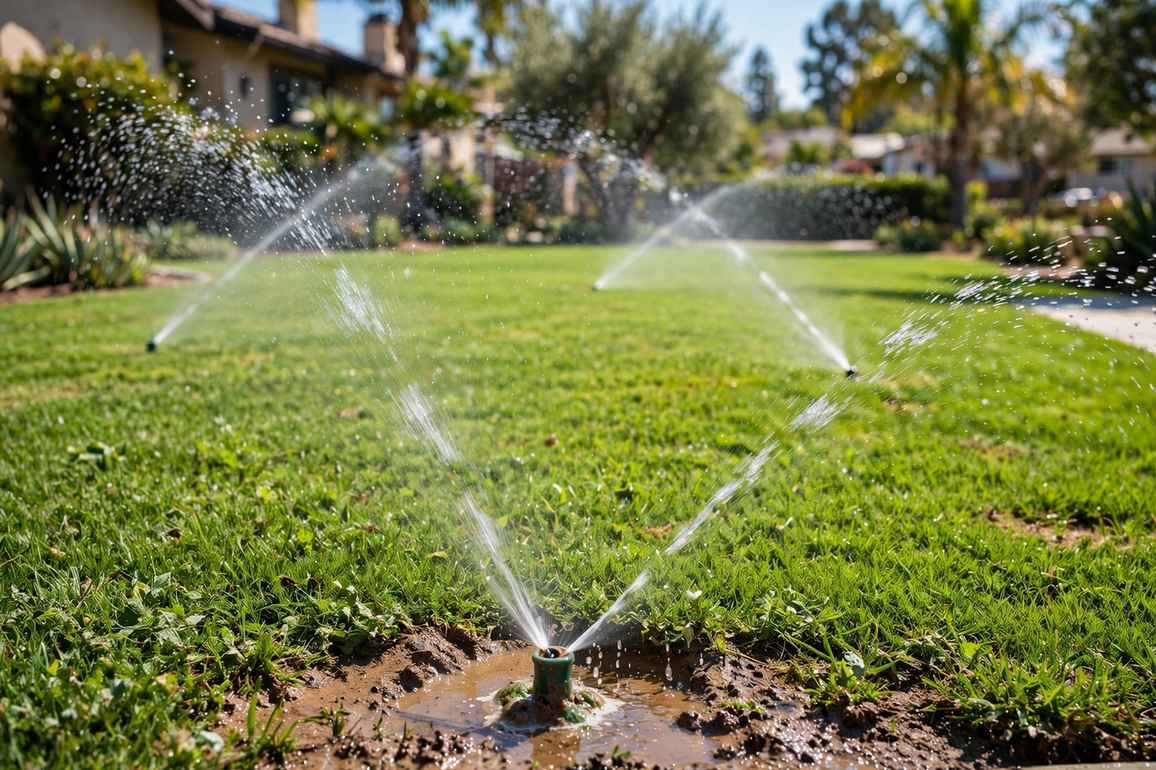
Irrigation & Sprinkler Leak Detection
Irrigation and sprinkler leak detection is the process of finding water losses in landscape watering systems:…
Learn more →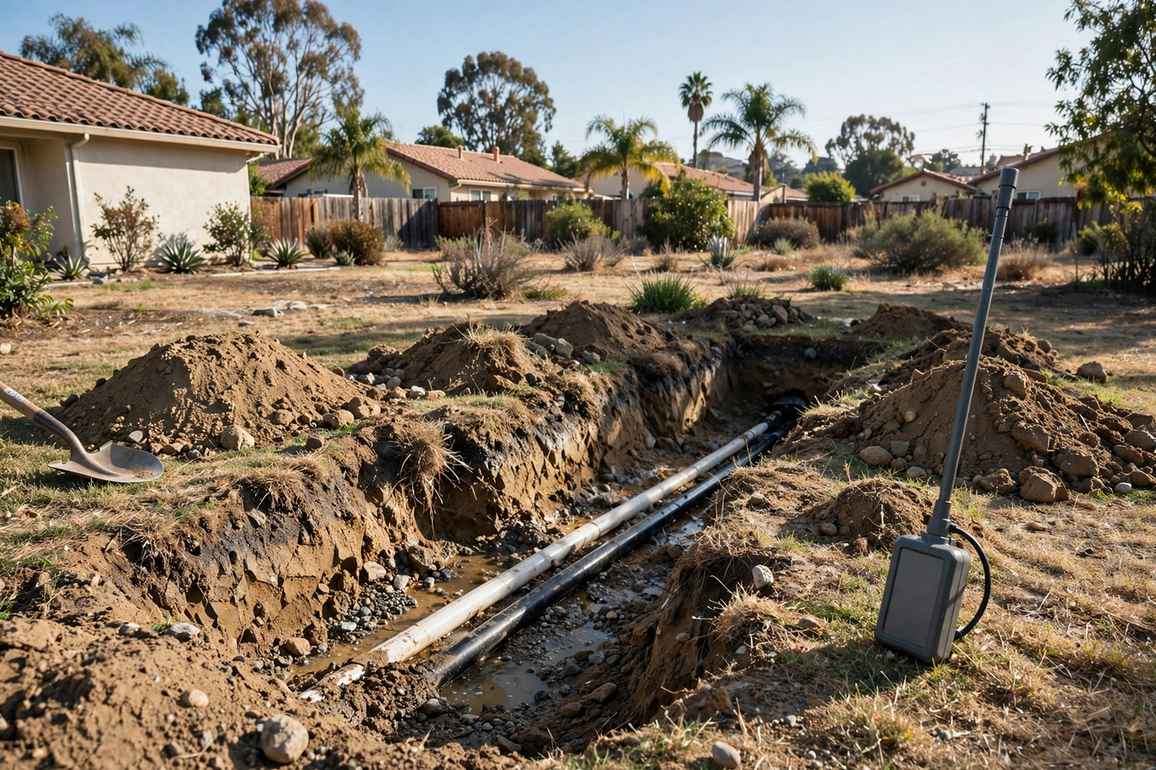
Underground Pipe Leak Detection
Underground pipe leak detection is the tracing, locating, and leak-pinpointing of buried water lines: the deep…
Learn more →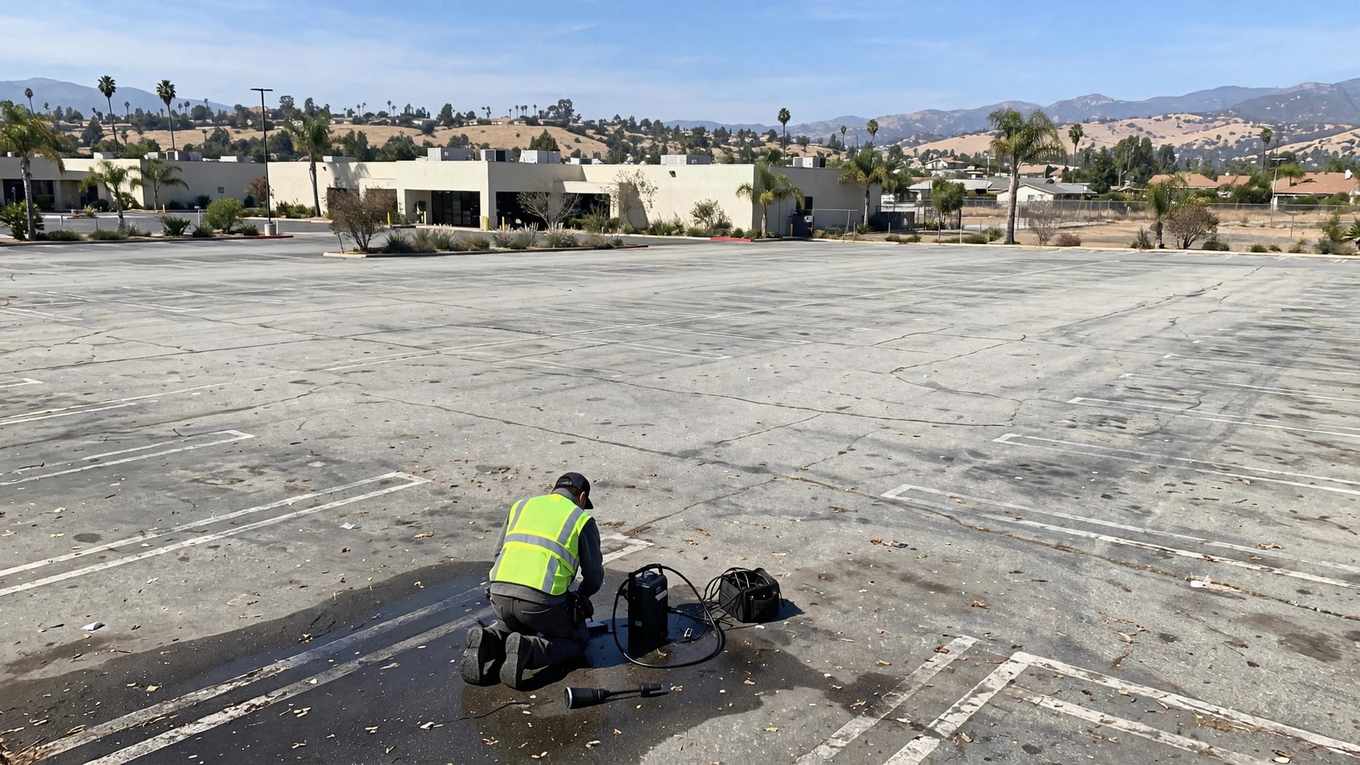
Parking Lot Leak Detection
Parking lot leak detection is the location of subsurface water leaks beneath paved commercial lots: the buried…
Learn more →Signs You May Need Leak Detection in Glendale
Leaks rarely announce themselves directly. More often they leave a trail of small, easy-to-dismiss clues, and in Glendale, the earlier you connect the dots, the less damage the water does in the meantime. Watch for these:
- Water bill climbing with no change in your household's usage
- Meter still spinning after every fixture and appliance is shut off
- Running-water sounds behind walls when nothing is on
- Low pressure at faucets that used to flow strongly
- Warm spots on the floor, often a sign of a hot-water line leaking under the slab
- Suspiciously lush grass in one patch of an otherwise ordinary yard
- Musty odor in a room with no obvious moisture source
- Stains or bubbling paint on ceilings and walls
One sign alone can have an innocent explanation; two or more pointing the same way is worth investigating. Our leak detection visits for Glendale homes start from exactly these symptoms, and each one tells the technician where to aim the instruments first.
How We Find Leaks in Glendale
Endoscopic cameras, slim, flexible borescopes slipped through a tiny opening, let a technician see inside wall cavities, under tubs, and behind fixtures without removing anything larger than a switch plate. When acoustic or thermal readings suggest a general area, a camera confirms what's actually happening inside: the corroded fitting, the split joint, the slow drip caught in the act. Seeing the leak removes the last shred of doubt before repair work begins.
No single instrument covers every scenario, which is why a proper visit layers methods. Sound finds pressurized breaks; thermal maps moisture; pressure testing isolates the line; cameras confirm visually. The technician's real skill is choosing the sequence, starting broad and inexpensive, then deploying the precise tools only where the evidence points.
| Method | What it finds |
|---|---|
| Endoscopic cameras | Visual confirmation inside walls and cavities |
| Acoustic listening | Pressurized leaks under slabs and behind walls |
| Thermal imaging | Hidden moisture patterns behind surfaces |
| Tracer gas | Exact break location on buried lines |
Across Glendale, that layered method is what separates genuine leak detection from an expensive guess. When every step is confirmed by an instrument, the mark on the floor is a promise, and the repair that follows is exactly as big as it needs to be, and no bigger.
What a Leak Detection Visit Looks Like
The visit works best when you know your role in it. Here's the flow:
- Before we arrive: clear access to the water heater, main shutoff, and any stained or suspect areas, and note when you first saw symptoms.
- Isolation tests: the technician shuts off individual lines and watches the meter, determining whether the leak is on the hot side, cold side, or a specific branch.
- Instrument sweep: acoustic and thermal gear scan the narrowed zone, converging on the break's location.
- Precision confirmation: if the location needs to be tighter, common with slab leaks, tracer gas or line tracing refines it to inches.
- Written findings: you get the confirmed location, marked and documented, ready to hand to your repair plumber.
Preparation takes ten minutes and pays off in a faster, more accurate visit. Glendale homeowners who clear access and jot down their symptom history consistently get the quickest pinpoint results from their leak detection visit.
Areas We Serve in Glendale
Our technicians provide leak detection throughout Glendale, California, covering 14 zip codes:
Show all 14 zip codes we serve in Glendale
- 91201
- 91202
- 91203
- 91204
- 91205
- 91206
- 91207
- 91208
- 91209
- 91210
- 91221
- 91222
- 91225
- 91226
Nearby Cities We Serve
Also serving neighboring communities around Glendale, see all 988 California cities.
Why Homeowners in Glendale Call Us
What sets a leak detection visit apart is what happens after the instruments come out: certainty. Our process is built to confirm, not assume, each reading is cross-checked with a second method before a location is marked, so the mark on your floor is a promise your plumber can trust. Because we specialize in detection only and never sell repairs, there's no incentive to exaggerate or invent problems. Add same-day availability, licensed and insured technicians, and full coverage across California including Glendale, and you get answers you can act on, fast, honest, and precise.