 Leak Detection California

It usually starts with the water bill: a jump you can't explain, month after month, even though your habits haven't changed. In Dana Point, that unexplained spike is one of the most common reasons homeowners request leak detection, because a hidden leak can run quietly for weeks behind walls, under a slab, or along a buried supply line before it ever leaves a visible stain or a soft spot in the flooring.
The frustrating part is how little a symptom reveals about the source. A damp patch on the downstairs ceiling rarely sits directly beneath the actual break. Our work is to close that gap with evidence instead of guesswork, so any repair starts in the right place. We take calls from the 92629 ZIP code around Dana Point, and the sooner a leak is located, the smaller the eventual repair stays.
Leak Detection Notes for Dana Point Homes
Dana Point is an Orange County coastal city, where older beach era homes, mid century houses, and newer hillside builds sit on bluffs and terraces above the harbor and the Pacific. Coastal fog, salt air, and older beach plumbing shape its leak work: salt ages exposed fittings, hillside lots add long service runs, and fog dampness can hide a slow leak. Many properties mix original pipe with extensive remodel work, and year round irrigation keeps yards watered.
Dana Point homeowners should watch for a meter that moves with everything closed, a damp terrace patch that survives a fog free week, and a bill that rises without a household change. Coastal dampness is broad, while a plumbing leak stays local, and noting which patch persists helps a technician start in the right place.
Leak Detection Services in Dana Point
Specialized detection for every kind of leak, see all 15 services.
Water Leak Detection
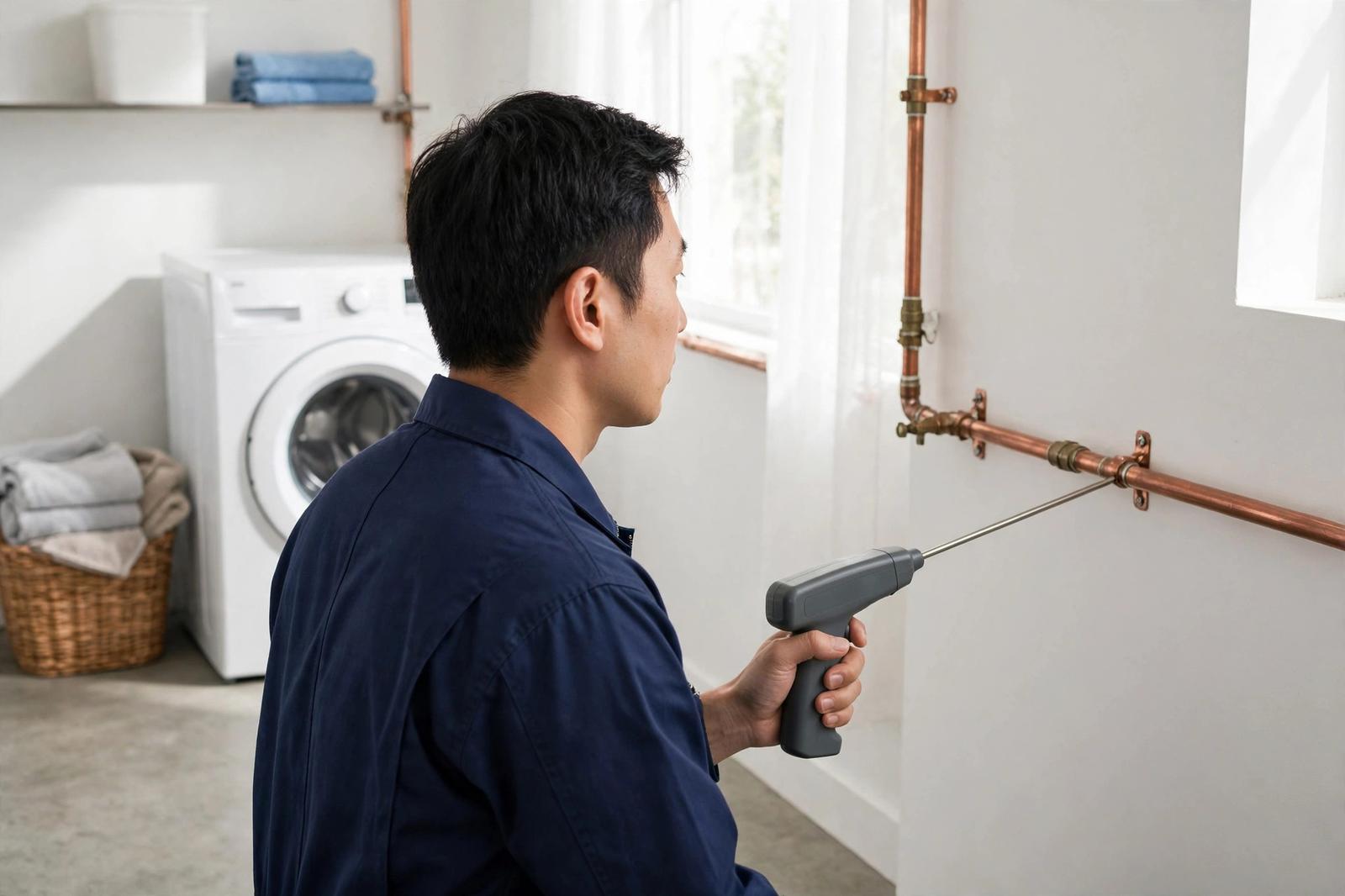
Water leak detection is the specialized process of finding hidden plumbing leaks with non-invasive technology…
Learn more →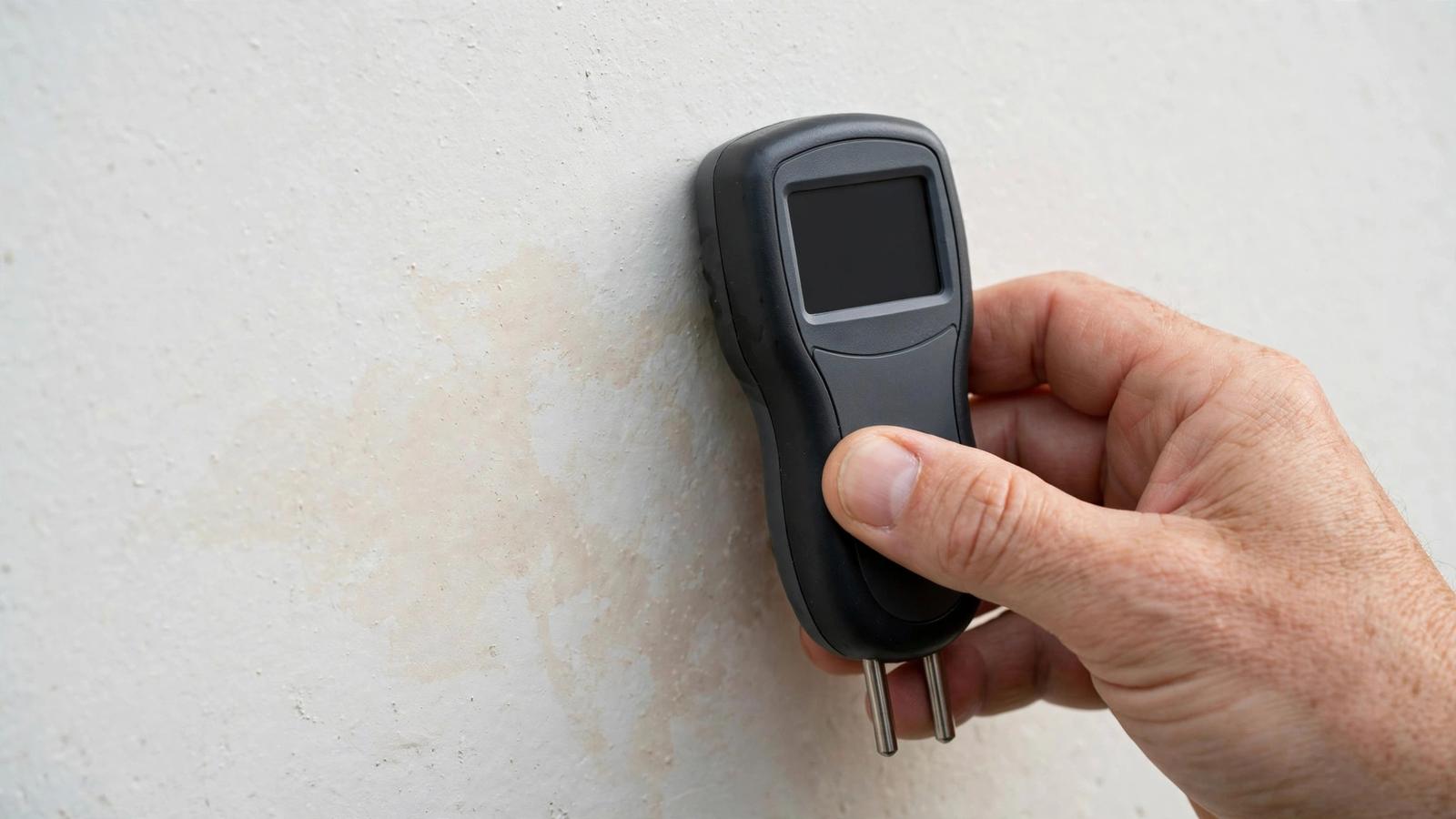
Ceiling & Wall Leak Detection
Ceiling and wall leak detection is the art of finding water hiding inside your home's structure. A brown stain…
Learn more →
Commercial Leak Detection
Commercial leak detection is the location of hidden water leaks in non-residential properties: office building…
Learn more →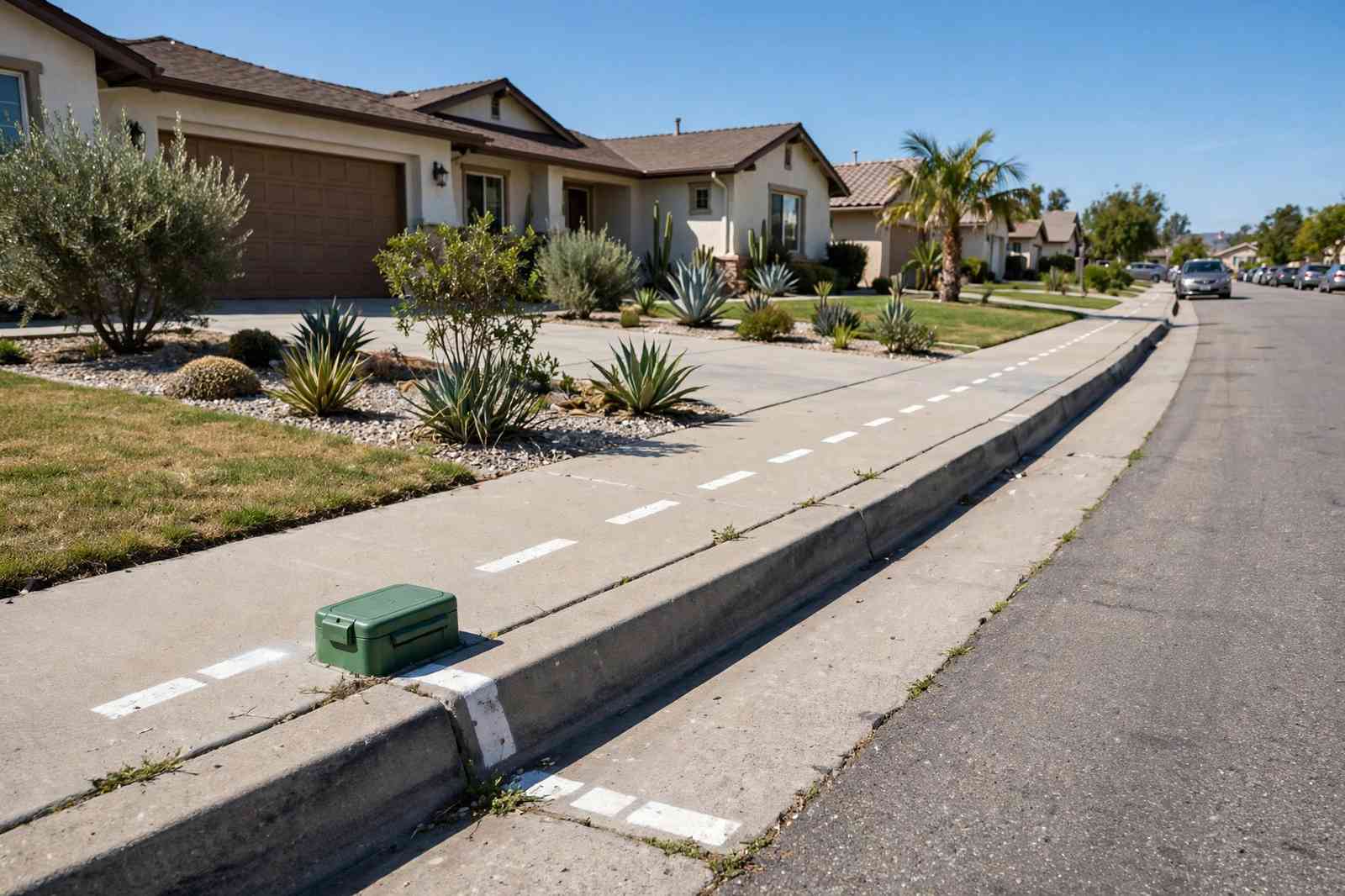
Water Service Line Leak Detection
Water service line leak detection targets one specific pipe: the pressurized line running from the street's wa…
Learn more →Signs You May Need Leak Detection in Dana Point
Leaks rarely announce themselves directly. More often they leave a trail of small, easy-to-dismiss clues, and in Dana Point, the earlier you connect the dots, the less damage the water does in the meantime. Watch for these:
- Water bill climbing with no change in your household's usage
- Meter still spinning after every fixture and appliance is shut off
- Running-water sounds behind walls when nothing is on
- Low pressure at faucets that used to flow strongly
- Warm spots on the floor, often a sign of a hot-water line leaking under the slab
- Suspiciously lush grass in one patch of an otherwise ordinary yard
- Musty odor in a room with no obvious moisture source
- Stains or bubbling paint on ceilings and walls
One sign alone can have an innocent explanation; two or more pointing the same way is worth investigating. Our leak detection visits for Dana Point homes start from exactly these symptoms, and each one tells the technician where to aim the instruments first.
How We Find Leaks in Dana Point
Half the battle with a buried leak is knowing where the pipe even runs. Electronic line tracing solves that: a signal is induced onto the pipe, and a receiver above ground follows it, mapping the line's exact path and depth. On Dana Point properties where original plumbing plans are long gone, this map is what makes everything else possible, you can't pinpoint a break on a line you can't find.
Once the path is known, moisture meters take over the confirmation work. Pin and pinless meters measure moisture content in drywall, wood, and concrete, drawing a contour map of the wet zone that shows both the epicenter and how far water has traveled. For drain-side problems, shower pans, tub overflows, toilet bases, dye testing is the simple, decisive tool: colored dye goes in the fixture, and if it appears where it shouldn't, the path is proven.
This is non-invasive leak detection done properly: confirm before you cut. Mapping the line, measuring the moisture, and proving the path with dye means the repair crew opens exactly the right spot, and nothing else. That discipline is the difference between a one-day fix and a week of exploratory demolition.
What a Leak Detection Visit Looks Like
A good leak detection visit follows the evidence in order, broad to narrow. Expect this sequence:
- Walkthrough: the technician tours the property with you, noting every symptom, stains, sounds, warm spots, the meter's behavior, and forms an initial hypothesis.
- Non-invasive scan: thermal cameras and moisture meters map the affected area without opening anything, showing where water has traveled.
- Targeted confirmation: acoustic equipment, pressure tests, or tracer gas zero in on the break itself, proving the location rather than estimating it.
- Marked location: the exact spot is marked and photographed, giving your plumber an unambiguous target.
- Detection-only report: you receive clear findings to hand to whoever does the repair, we locate leaks; your chosen plumber fixes them.
That handoff is deliberate. Because we don't sell repairs, there's no incentive to exaggerate, the findings are simply what the instruments showed, documented for your Dana Point home.
Areas We Serve in Dana Point
Our technicians provide leak detection throughout Dana Point, California, covering 1 zip code:
Show the zip code we serve in Dana Point
- 92629
Nearby Cities We Serve
Also serving neighboring communities around Dana Point, see all 988 California cities.
Why Homeowners in Dana Point Call Us
California is all we serve, and that focus shows in the work. Slab foundations, irrigation networks, pool plumbing, older galvanized lines, these are the patterns our technicians read every day, so Dana Point jobs benefit from experience matched to how homes here are actually built. Every appointment leads with non-invasive methods, offers same-day scheduling, and ends with a clearly marked, documented location. Licensed, insured, and equipped with the full professional toolkit, that's the standard for leak detection on every visit, in every ZIP code we cover. When detection is all you do, you get very good at it.