 Leak Detection California
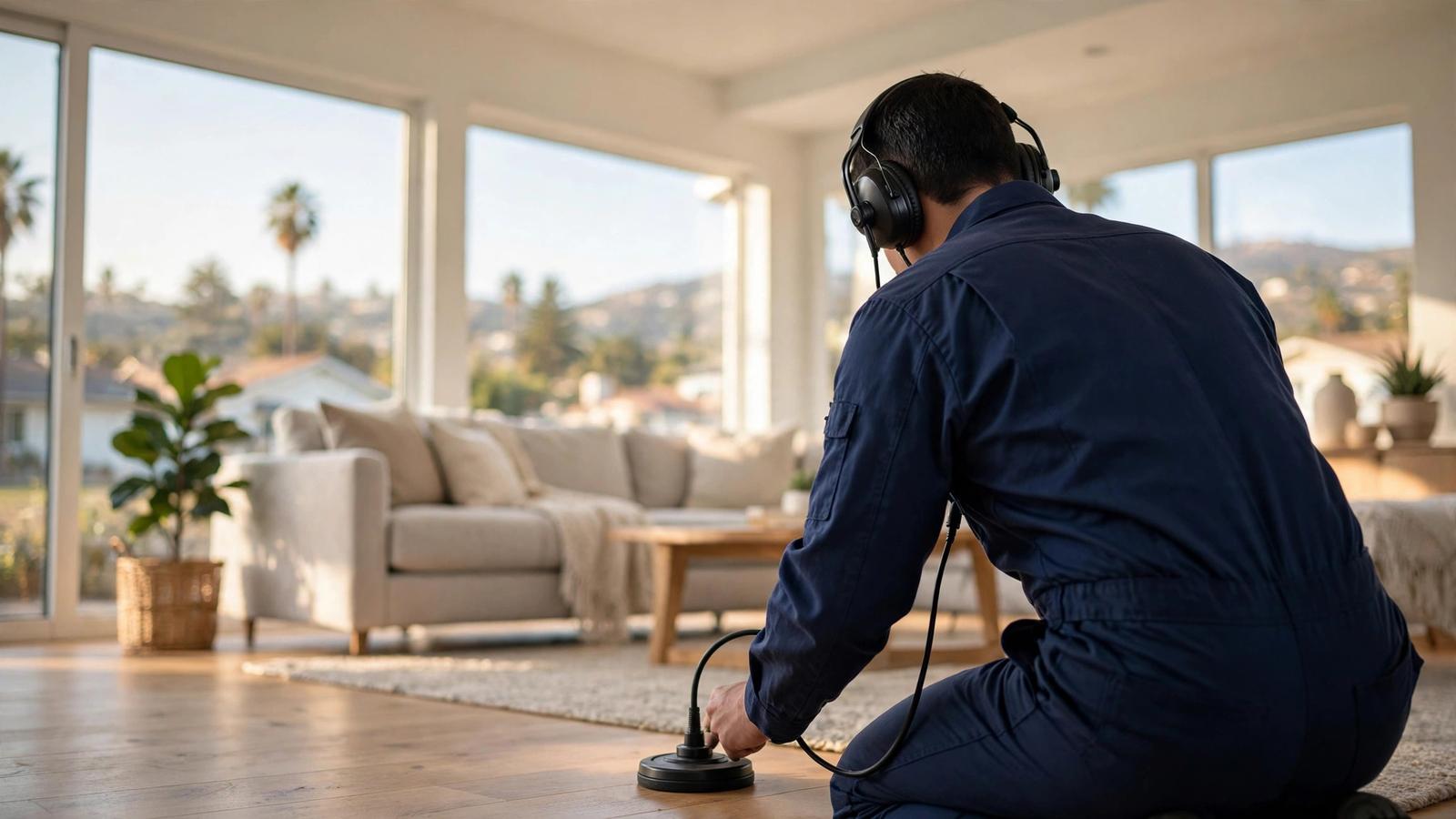
A hidden leak is one of the few household problems that reliably gets more expensive the longer it's ignored. What starts as a pinhole in a copper line becomes saturated drywall, then swollen baseboards, then a musty room that needs remediation, not just plumbing. Each stage multiplies what the final fix demands in materials, labor, and disruption to your home.
Finding the source early is what breaks that chain. A Covina leak detection visit that locates a break this week can mean a single wall patch; the same leak discovered months later can mean flooring, framing, and mold work. If your bill has crept up or something smells damp in your Covina home, calling sooner is simply the cheaper move. We cover 3 ZIP codes across the area, and early answers beat late repairs every single time.
Leak Detection Notes for Covina Homes
Covina is a Los Angeles County city in the San Gabriel Valley, where pre war homes, mid century tracts, and newer subdivisions sit on flat valley floor at the foot of the mountains. Older plumbing eras, slab foundations, and warm inland summers shape its leak work: galvanized lines in the oldest homes narrow with age, copper under slabs is a common failure point in the tracts, and heavy summer irrigation can mask a slow loss. Many homes have been remodeled, mixing new pipe with original runs.
Covina homeowners should watch for a warm spot on a slab floor, low pressure at one fixture while others run fine, and a meter dial that creeps with everything shut off. Noting which symptom appears helps aim the first inspection, since each one points at a different part of the system.
Leak Detection Services in Covina
Specialized detection for every kind of leak, see all 15 services.
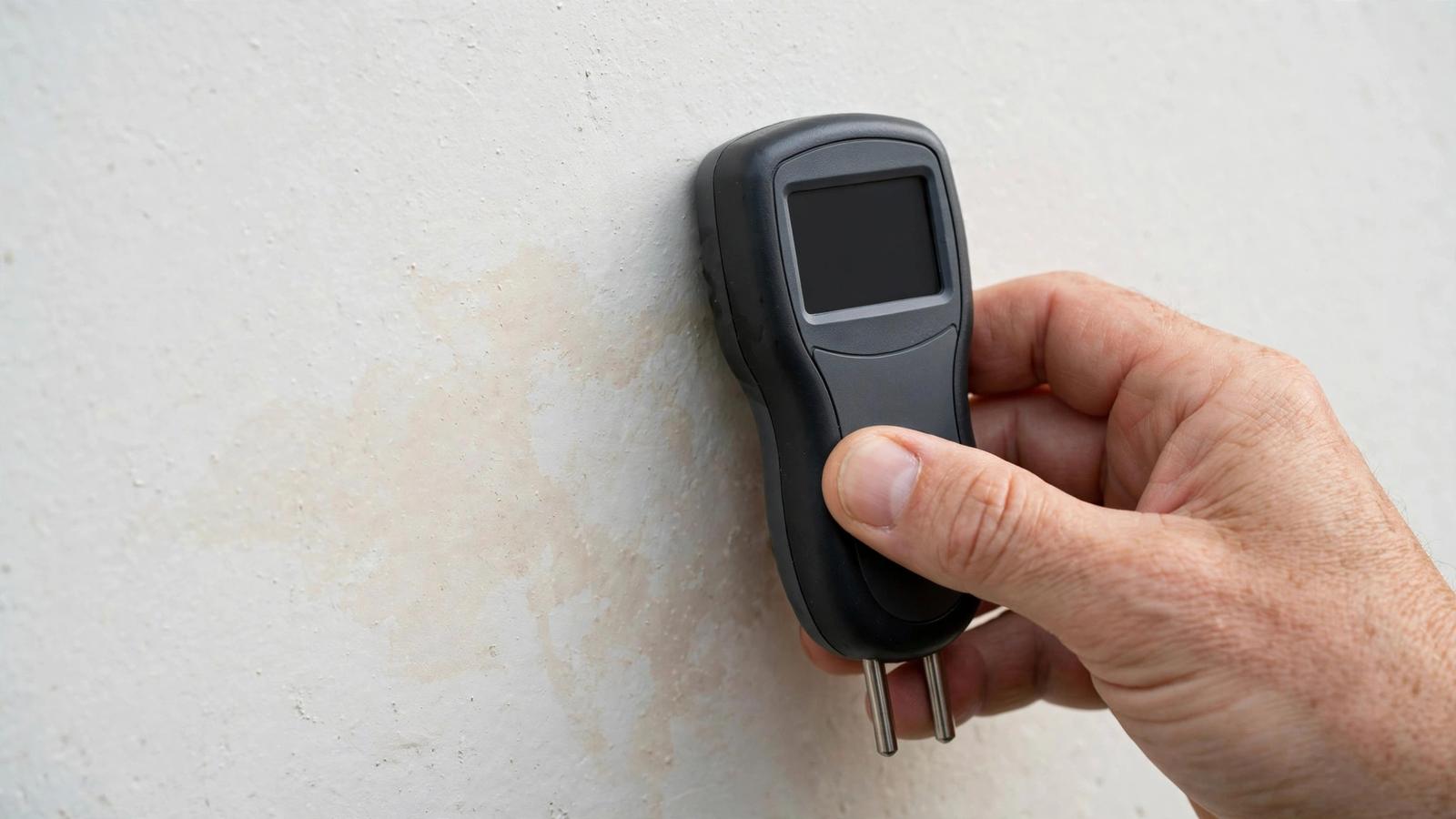
Ceiling & Wall Leak Detection
Ceiling and wall leak detection is the art of finding water hiding inside your home's structure. A brown stain…
Learn more →
Emergency Leak Detection
Emergency leak detection is rapid-response diagnosis when water is actively damaging your property right now:…
Learn more →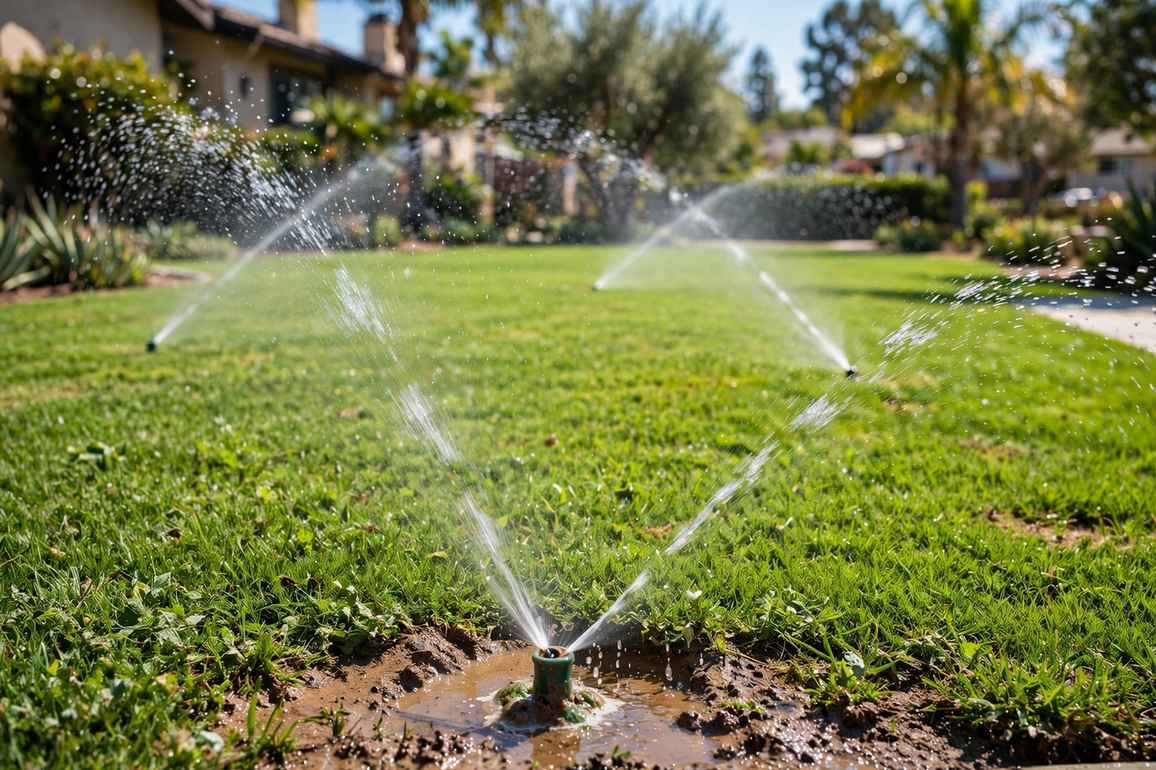
Irrigation & Sprinkler Leak Detection
Irrigation and sprinkler leak detection is the process of finding water losses in landscape watering systems:…
Learn more →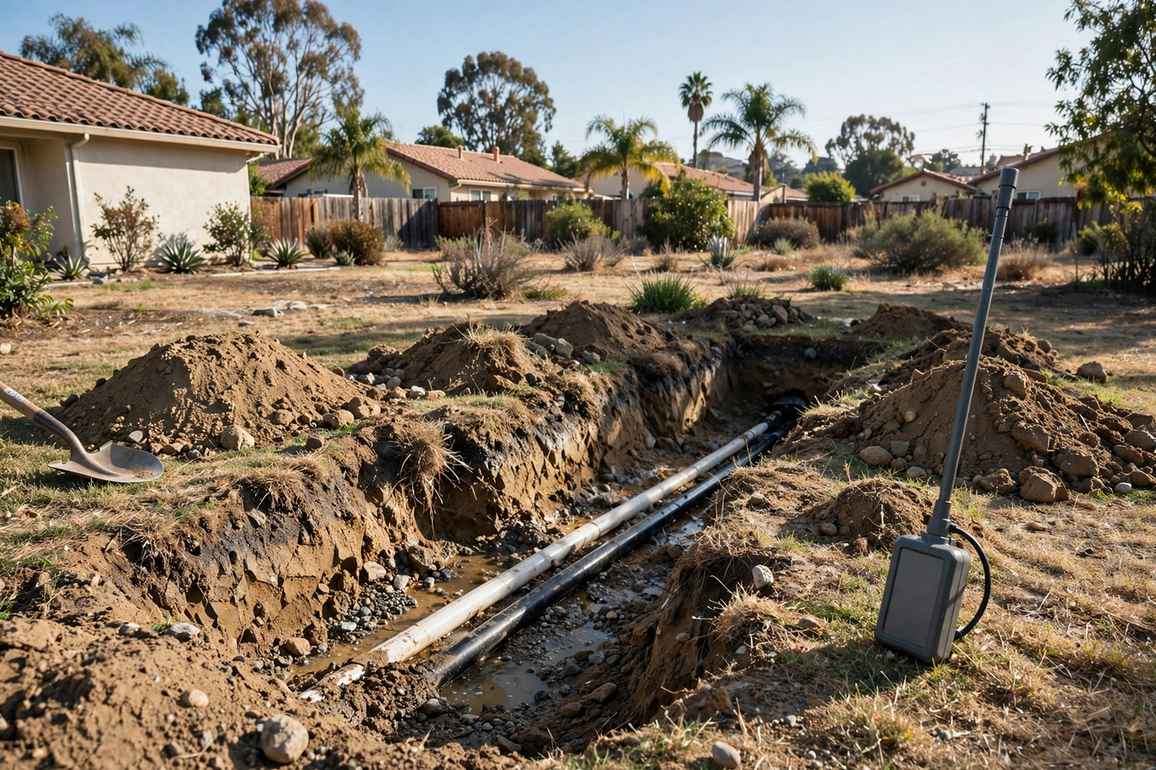
Underground Pipe Leak Detection
Underground pipe leak detection is the tracing, locating, and leak-pinpointing of buried water lines: the deep…
Learn more →Signs You May Need Leak Detection in Covina
Some leaks announce themselves through damage rather than sound or smell. By the time drywall is soft or paint is peeling, water has usually been traveling inside the structure for a while, which is why Covina homeowners should treat visible damage as a symptom worth tracing, not just patching. Common damage-driven signs include:
- Peeling or bubbling paint on walls and ceilings
- Mold or mildew growth appearing in rooms that aren't humid by nature
- Warped or buckling flooring, especially near bathrooms and kitchens
- Stains spreading across ceilings or down walls
- Cracks in the foundation that seem to be widening or damp at the base
- Cabinetry swelling under sinks or around dishwashers
- Persistent condensation on interior walls
Patching the cosmetic damage without finding the source guarantees a repeat performance. When we respond to these calls in Covina, the instruments go straight to the damaged area and work outward until the entry point is confirmed, then your repair crew knows exactly where to open up.
How We Find Leaks in Covina
Half the battle with a buried leak is knowing where the pipe even runs. Electronic line tracing solves that: a signal is induced onto the pipe, and a receiver above ground follows it, mapping the line's exact path and depth. On Covina properties where original plumbing plans are long gone, this map is what makes everything else possible, you can't pinpoint a break on a line you can't find.
Once the path is known, moisture meters take over the confirmation work. Pin and pinless meters measure moisture content in drywall, wood, and concrete, drawing a contour map of the wet zone that shows both the epicenter and how far water has traveled. For drain-side problems, shower pans, tub overflows, toilet bases, dye testing is the simple, decisive tool: colored dye goes in the fixture, and if it appears where it shouldn't, the path is proven.
This is non-invasive leak detection done properly: confirm before you cut. Mapping the line, measuring the moisture, and proving the path with dye means the repair crew opens exactly the right spot, and nothing else. That discipline is the difference between a one-day fix and a week of exploratory demolition.
What a Leak Detection Visit Looks Like
Knowing what happens during a visit takes the mystery out of it. Here is how a typical leak detection appointment unfolds:
- The call: you describe the symptoms, bill spike, sounds, stains, and we schedule, often for the same day.
- Meter check on arrival: the technician verifies water is actually escaping by watching the meter with fixtures off, establishing there's a real leak to find.
- Systematic sweep: acoustic listening, thermal imaging, and moisture readings work across the suspected area, narrowing from rooms to square feet to inches.
- Pinpoint and mark: the confirmed location is marked directly on the floor or wall, so there's no ambiguity later.
- Findings and next steps: you get a clear explanation of what was found and where, plus guidance on getting the repair itself scheduled.
Most visits wrap up in a single appointment, and because the methods are non-invasive, your home looks the same when we leave as when we arrived, minus the mystery of where the water was going.
Areas We Serve in Covina
Our technicians provide leak detection throughout Covina, California, covering 3 zip codes:
Show all 3 zip codes we serve in Covina
- 91722
- 91723
- 91724
Nearby Cities We Serve
Also serving neighboring communities around Covina, see all 988 California cities.
Why Homeowners in Covina Call Us
What sets a leak detection visit apart is what happens after the instruments come out: certainty. Our process is built to confirm, not assume, each reading is cross-checked with a second method before a location is marked, so the mark on your floor is a promise your plumber can trust. Because we specialize in detection only and never sell repairs, there's no incentive to exaggerate or invent problems. Add same-day availability, licensed and insured technicians, and full coverage across California including Covina, and you get answers you can act on, fast, honest, and precise.