 Leak Detection California

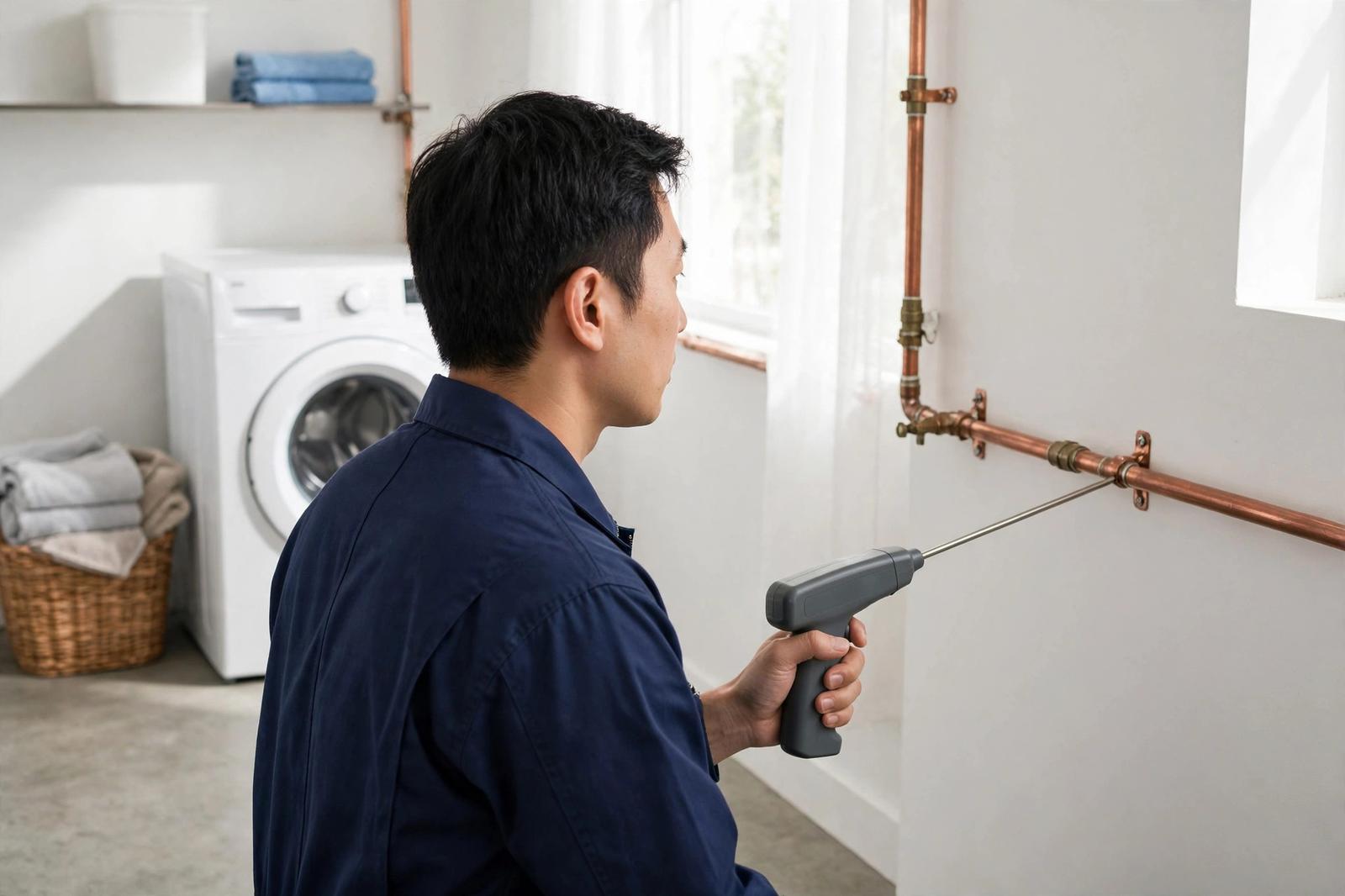
Leak detection used to mean opening walls and hoping the first cut found something. Today's approach is the reverse: prove the location first, open things up only when the evidence says so. Acoustic sensors pick up the hiss of pressurized water escaping through a pinhole; thermal cameras reveal the cool signatures of evaporating moisture behind drywall; tracer gas and pressure testing confirm which line is compromised.
Each Cerritos job gets the combination that fits the symptoms, not a one-size-fits-all sweep. A warm spot on the floor points one way; a meter that spins with everything off points another. For Cerritos homeowners across the 1 ZIP code we cover, the goal is identical: narrow the search to inches before a single tile is lifted, so the repair that follows is smaller, quicker, and over sooner.
Leak Detection Notes for Cerritos Homes
Cerritos is a Los Angeles County city in the southeastern county, where mid century tract homes, newer subdivisions, and condos sit on flat coastal plain ground. Slab foundations, aging tract plumbing, and year round irrigation shape its leak work: copper lines under slabs are a common failure point in the older tracts, while newer homes add manifold systems with their own fitting risks. Mature trees in the older tracts add root pressure on yard lines.
Cerritos homeowners should watch for a warm patch on a floor, a bill that climbs month after month, and a meter dial that creeps with everything shut off. If the yard stays wet a day after sprinklers stop, that patch deserves a closer look, since irrigation alone should dry out in this climate, and a meter check with everything off confirms the loss before any repair is planned.
Leak Detection Services in Cerritos
Specialized detection for every kind of leak, see all 15 services.
Water Leak Detection
Water leak detection is the specialized process of finding hidden plumbing leaks with non-invasive technology…
Learn more →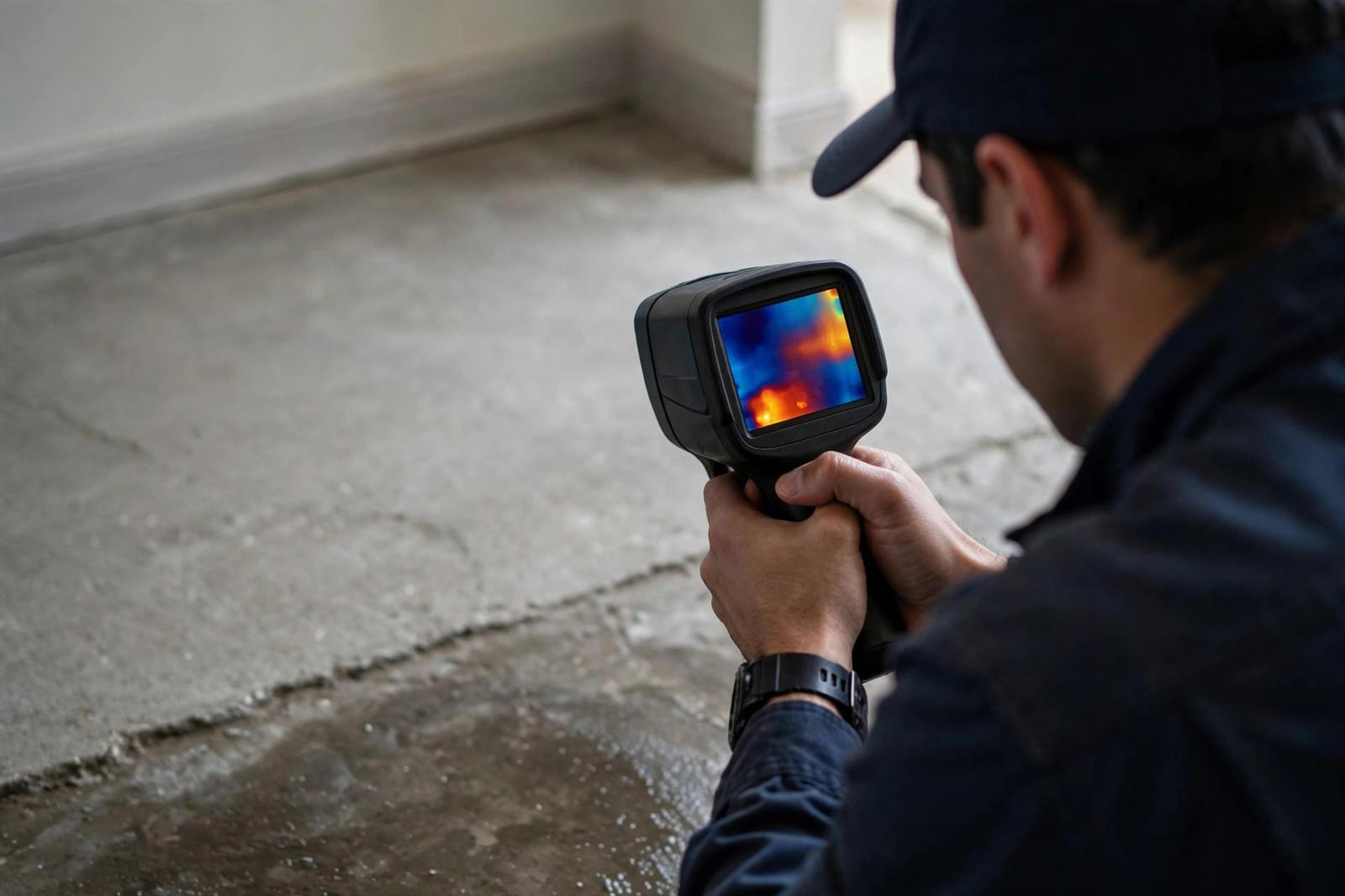
Slab Leak Detection
A slab leak is a leak in the water supply or drain lines that run beneath your home's concrete slab foundation…
Learn more →
Emergency Leak Detection
Emergency leak detection is rapid-response diagnosis when water is actively damaging your property right now:…
Learn more →
Pool & Spa Leak Detection
Pool and spa leak detection is the diagnosis of water loss from swimming pools, spas, and their equipment: dis…
Learn more →Signs You May Need Leak Detection in Cerritos
Not every leak happens indoors. Between irrigation systems, pool plumbing, and main service lines, Cerritos properties have plenty of buried water lines, and outdoor leaks can waste enormous volumes before anyone notices, because there's no wall to stain and no floor to warp. Outdoor warning signs include:
- A pool losing water faster than evaporation can explain
- Soggy or spongy lawn areas that never seem to dry out
- One patch of grass growing noticeably faster and greener than the rest
- Water pooling near the foundation or along walkways
- The meter spinning with the house shut off but irrigation valves open
- Hissing or running water audible near hose bibs or valve boxes
- Settling or cracking in driveways and patios, from soil washing away underneath
Outdoor leaks get their own toolkit, line tracing, pressure testing, and acoustic equipment tuned for soil. If your Cerritos yard is telling this kind of story, a targeted outdoor inspection will sort irrigation trouble from a supply-line break without digging up the whole property.
How We Find Leaks in Cerritos
Endoscopic cameras, slim, flexible borescopes slipped through a tiny opening, let a technician see inside wall cavities, under tubs, and behind fixtures without removing anything larger than a switch plate. When acoustic or thermal readings suggest a general area, a camera confirms what's actually happening inside: the corroded fitting, the split joint, the slow drip caught in the act. Seeing the leak removes the last shred of doubt before repair work begins.
No single instrument covers every scenario, which is why a proper visit layers methods. Sound finds pressurized breaks; thermal maps moisture; pressure testing isolates the line; cameras confirm visually. The technician's real skill is choosing the sequence, starting broad and inexpensive, then deploying the precise tools only where the evidence points.
| Method | What it finds |
|---|---|
| Endoscopic cameras | Visual confirmation inside walls and cavities |
| Acoustic listening | Pressurized leaks under slabs and behind walls |
| Thermal imaging | Hidden moisture patterns behind surfaces |
| Tracer gas | Exact break location on buried lines |
Across Cerritos, that layered method is what separates genuine leak detection from an expensive guess. When every step is confirmed by an instrument, the mark on the floor is a promise, and the repair that follows is exactly as big as it needs to be, and no bigger.
What a Leak Detection Visit Looks Like
Knowing what happens during a visit takes the mystery out of it. Here is how a typical leak detection appointment unfolds:
- The call: you describe the symptoms, bill spike, sounds, stains, and we schedule, often for the same day.
- Meter check on arrival: the technician verifies water is actually escaping by watching the meter with fixtures off, establishing there's a real leak to find.
- Systematic sweep: acoustic listening, thermal imaging, and moisture readings work across the suspected area, narrowing from rooms to square feet to inches.
- Pinpoint and mark: the confirmed location is marked directly on the floor or wall, so there's no ambiguity later.
- Findings and next steps: you get a clear explanation of what was found and where, plus guidance on getting the repair itself scheduled.
Most visits wrap up in a single appointment, and because the methods are non-invasive, your home looks the same when we leave as when we arrived, minus the mystery of where the water was going.
Areas We Serve in Cerritos
Our technicians provide leak detection throughout Cerritos, California, covering 1 zip code:
Show the zip code we serve in Cerritos
- 90703
Nearby Cities We Serve
Also serving neighboring communities around Cerritos, see all 988 California cities.
Why Homeowners in Cerritos Call Us
California is all we serve, and that focus shows in the work. Slab foundations, irrigation networks, pool plumbing, older galvanized lines, these are the patterns our technicians read every day, so Cerritos jobs benefit from experience matched to how homes here are actually built. Every appointment leads with non-invasive methods, offers same-day scheduling, and ends with a clearly marked, documented location. Licensed, insured, and equipped with the full professional toolkit, that's the standard for leak detection on every visit, in every ZIP code we cover. When detection is all you do, you get very good at it.