 Leak Detection California
If your mailing address starts with 919, you're in our regular service rotation, and that includes Boulevard. We run leak detection routes across the whole 919 area, so a call from Boulevard usually lands on a day we're already nearby, which is how same-day appointments stay realistic instead of aspirational.
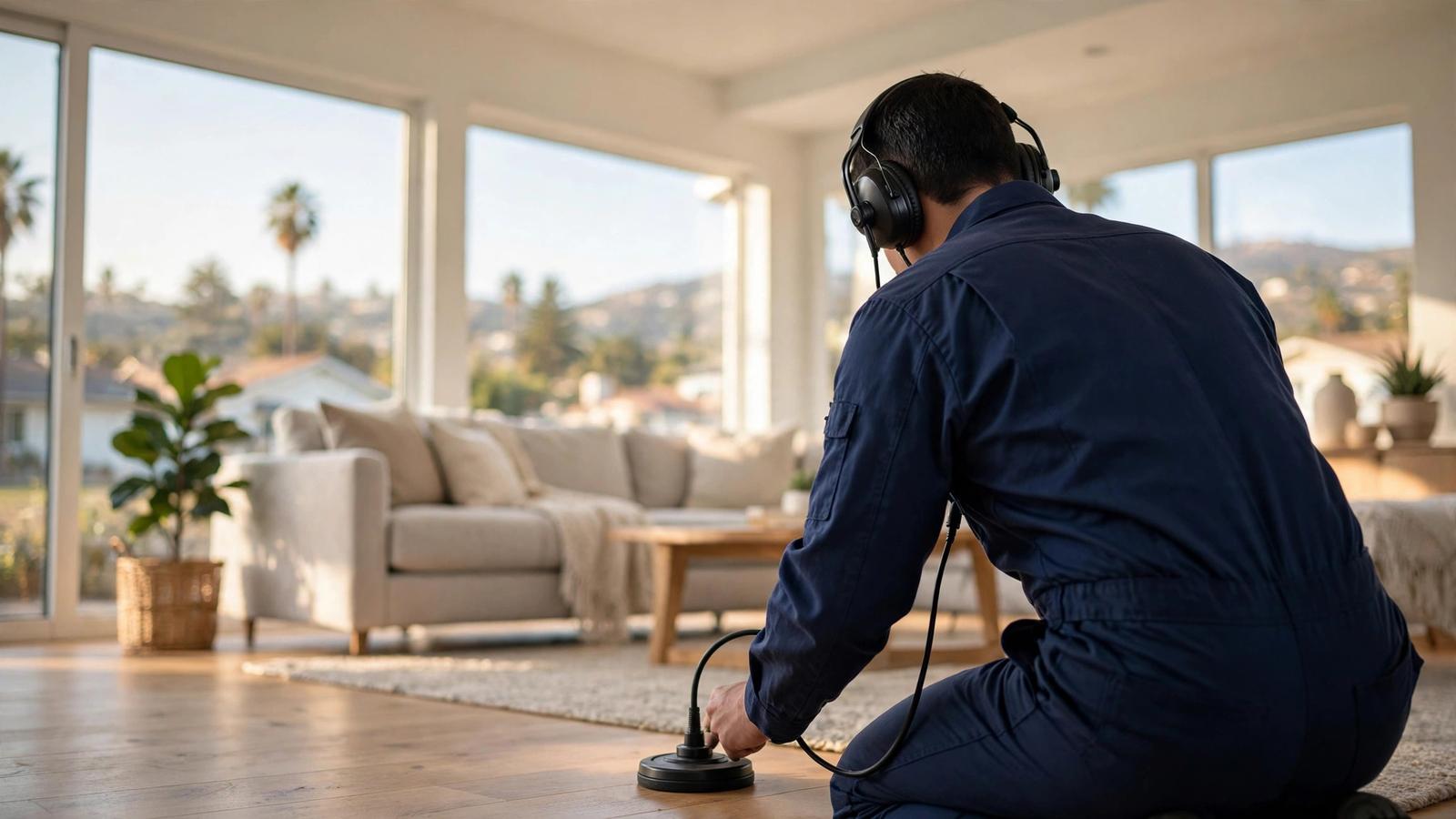
What happens on the visit doesn't change from town to town: meter behavior first, then line isolation, then acoustic listening and thermal imaging to narrow the search to inches. The only thing that changes is the drive. We cover the 91905 ZIP code around Boulevard, and whether the culprit turns out to be a slab line, an irrigation lateral, or a pool return, the goal is identical, find it precisely, open up as little as possible, and hand you a clear answer.
Leak Detection Notes for Boulevard Homes
Boulevard is a high desert community in eastern San Diego County, near the mountains along the border, where homes range from older ranch properties to newer rural builds on large lots. Thin rocky soil, hot summers, and cold winter nights shape its leak work: exposed pipe and fittings face wide temperature swings, long private water runs cross open ground, and many homes rely on wells or hauled water rather than a city main. A leak out here can drain a tank or a well system quietly for days.
Because supply is precious and distances are long, Boulevard homeowners should watch for a well pump that runs more often than usual, a storage tank level that drops overnight, and a damp patch or unusually green strip along a buried line route. A meter or pump check with all fixtures closed is the simplest first test, and it points the search at the house side or the yard side before any digging starts.
Leak Detection Services in Boulevard
Specialized detection for every kind of leak, see all 15 services.
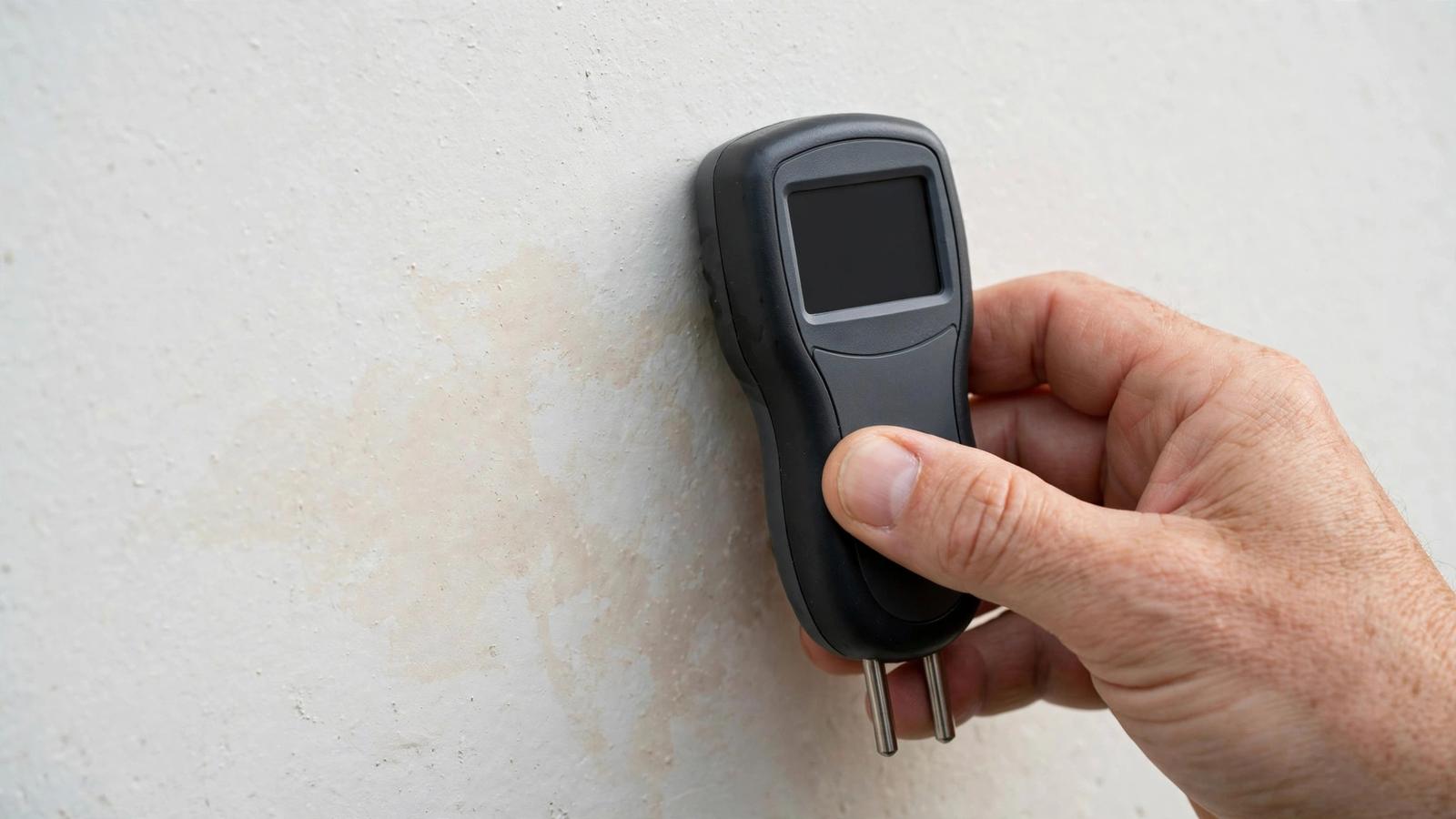
Ceiling & Wall Leak Detection
Ceiling and wall leak detection is the art of finding water hiding inside your home's structure. A brown stain…
Learn more →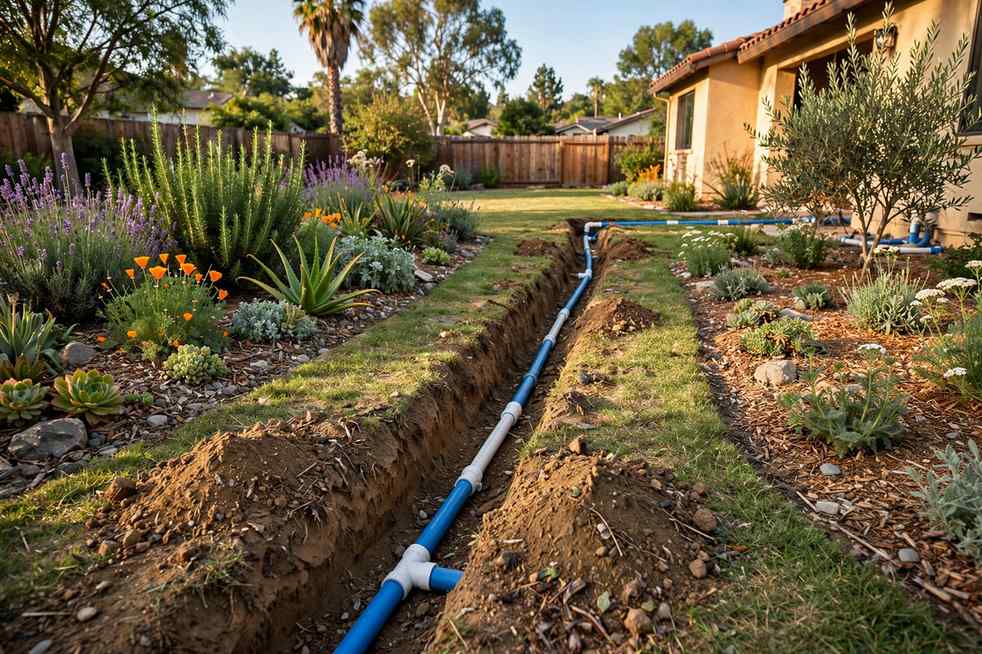
Outdoor Water Line Leak Detection
Outdoor water line leak detection covers the potable water lines that distribute water around your yard after…
Learn more →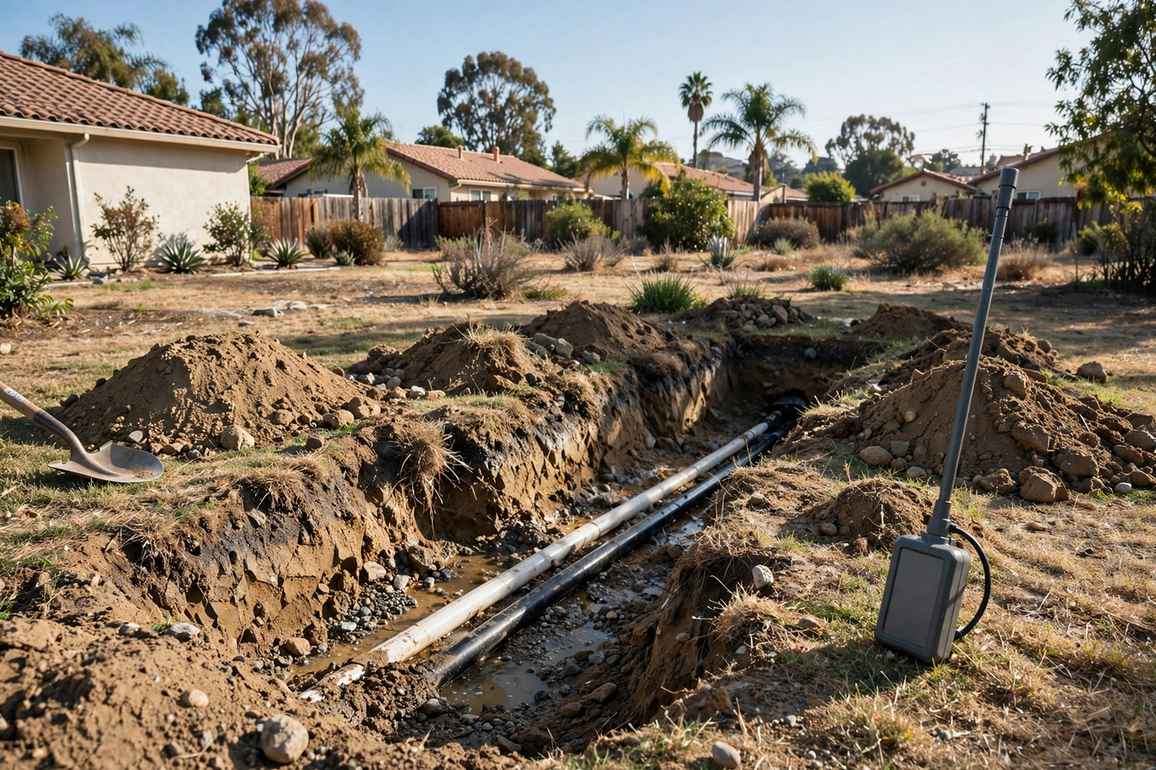
Underground Pipe Leak Detection
Underground pipe leak detection is the tracing, locating, and leak-pinpointing of buried water lines: the deep…
Learn more →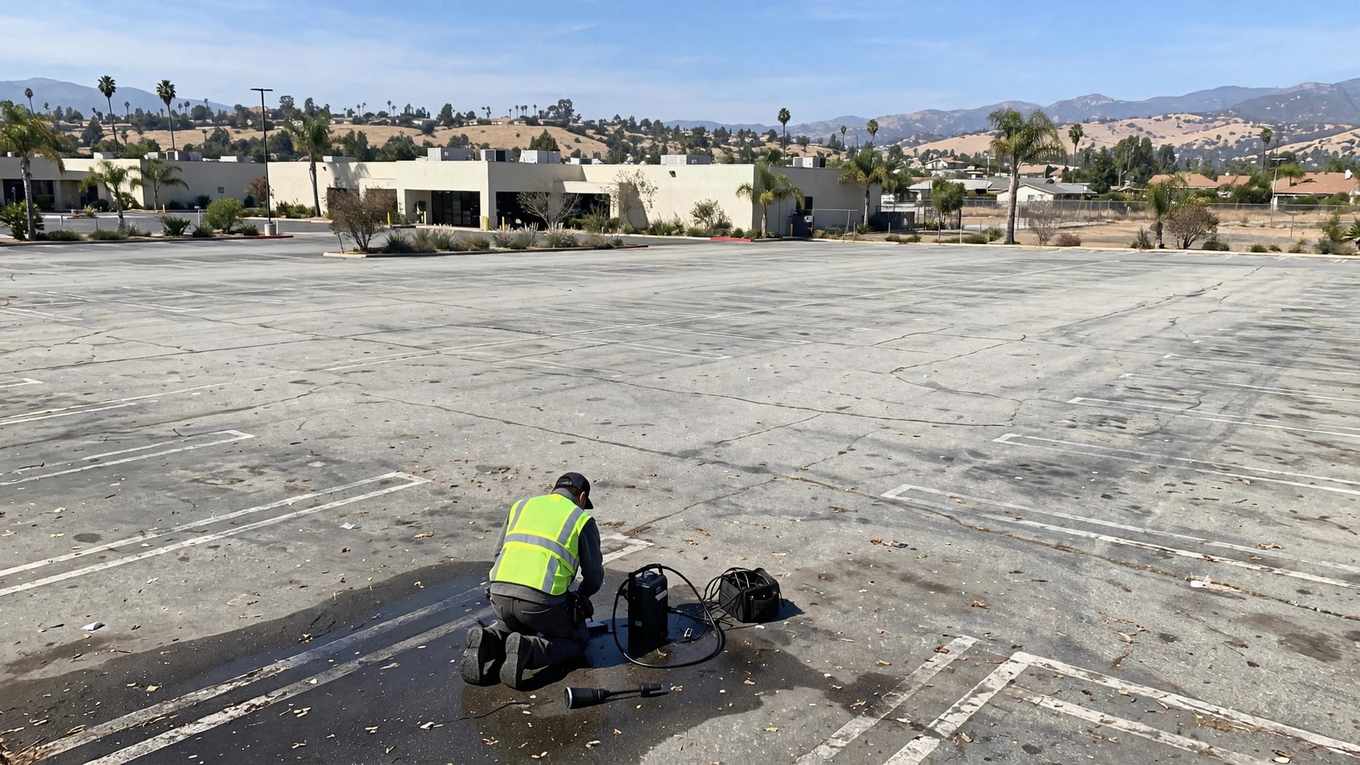
Parking Lot Leak Detection
Parking lot leak detection is the location of subsurface water leaks beneath paved commercial lots: the buried…
Learn more →Signs You May Need Leak Detection in Boulevard
Some leaks announce themselves through damage rather than sound or smell. By the time drywall is soft or paint is peeling, water has usually been traveling inside the structure for a while, which is why Boulevard homeowners should treat visible damage as a symptom worth tracing, not just patching. Common damage-driven signs include:
- Peeling or bubbling paint on walls and ceilings
- Mold or mildew growth appearing in rooms that aren't humid by nature
- Warped or buckling flooring, especially near bathrooms and kitchens
- Stains spreading across ceilings or down walls
- Cracks in the foundation that seem to be widening or damp at the base
- Cabinetry swelling under sinks or around dishwashers
- Persistent condensation on interior walls
Patching the cosmetic damage without finding the source guarantees a repeat performance. When we respond to these calls in Boulevard, the instruments go straight to the damaged area and work outward until the entry point is confirmed, then your repair crew knows exactly where to open up.
How We Find Leaks in Boulevard
When a leak won't reveal itself to sound or heat, tracer gas changes the game. The water line is drained and filled with a harmless hydrogen-nitrogen mix; because hydrogen molecules are tiny, they escape through the break and rise to the surface, where a sensitive sniffer traces the gas plume back to within inches of the leak. It's remarkably precise for slab leaks and long buried runs where acoustic signals get muddy.
Pressure testing answers a different but equally important question: which line is actually leaking? By isolating sections of plumbing and monitoring gauges, a technician can prove whether the culprit is the hot line, the cold line, a bathroom branch, or the main service, before a single instrument is aimed at a wall. That diagnosis prevents the all-too-common mistake of opening the wrong area.
| Method | What it finds |
|---|---|
| Tracer gas | Pinpoint location of slab and buried-line leaks |
| Pressure testing | Which line or branch is losing water |
| Electronic line tracing | The underground path of buried pipes |
| Dye testing | Drain, shower-pan, and toilet-base leaks |
For Boulevard homes, these two methods often work as a pair: pressure testing narrows the search to one line, tracer gas walks it to the exact break, methodical leak detection that replaces guesswork with measurements at every step.
What a Leak Detection Visit Looks Like
A good leak detection visit follows the evidence in order, broad to narrow. Expect this sequence:
- Walkthrough: the technician tours the property with you, noting every symptom, stains, sounds, warm spots, the meter's behavior, and forms an initial hypothesis.
- Non-invasive scan: thermal cameras and moisture meters map the affected area without opening anything, showing where water has traveled.
- Targeted confirmation: acoustic equipment, pressure tests, or tracer gas zero in on the break itself, proving the location rather than estimating it.
- Marked location: the exact spot is marked and photographed, giving your plumber an unambiguous target.
- Detection-only report: you receive clear findings to hand to whoever does the repair, we locate leaks; your chosen plumber fixes them.
That handoff is deliberate. Because we don't sell repairs, there's no incentive to exaggerate, the findings are simply what the instruments showed, documented for your Boulevard home.
Areas We Serve in Boulevard
Our technicians provide leak detection throughout Boulevard, California, covering 1 zip code:
Show the zip code we serve in Boulevard
- 91905
Nearby Cities We Serve
Also serving neighboring communities around Boulevard, see all 988 California cities.
Why Homeowners in Boulevard Call Us
We do one thing: find leaks precisely, without tearing your property apart first. Non-invasive leak detection is our default on every visit, acoustic, thermal, and pressure-based tools locate the break before anything is opened, so the repair that follows is small and exactly placed. Same-day appointments are available across California because water damage doesn't wait, and our technicians arrive with professional-grade equipment, not guesswork. We're licensed and insured, and we serve the entire state, including Boulevard, with the same careful, evidence-first approach on every job. That's the whole model: one specialty, done properly.