 Leak Detection California
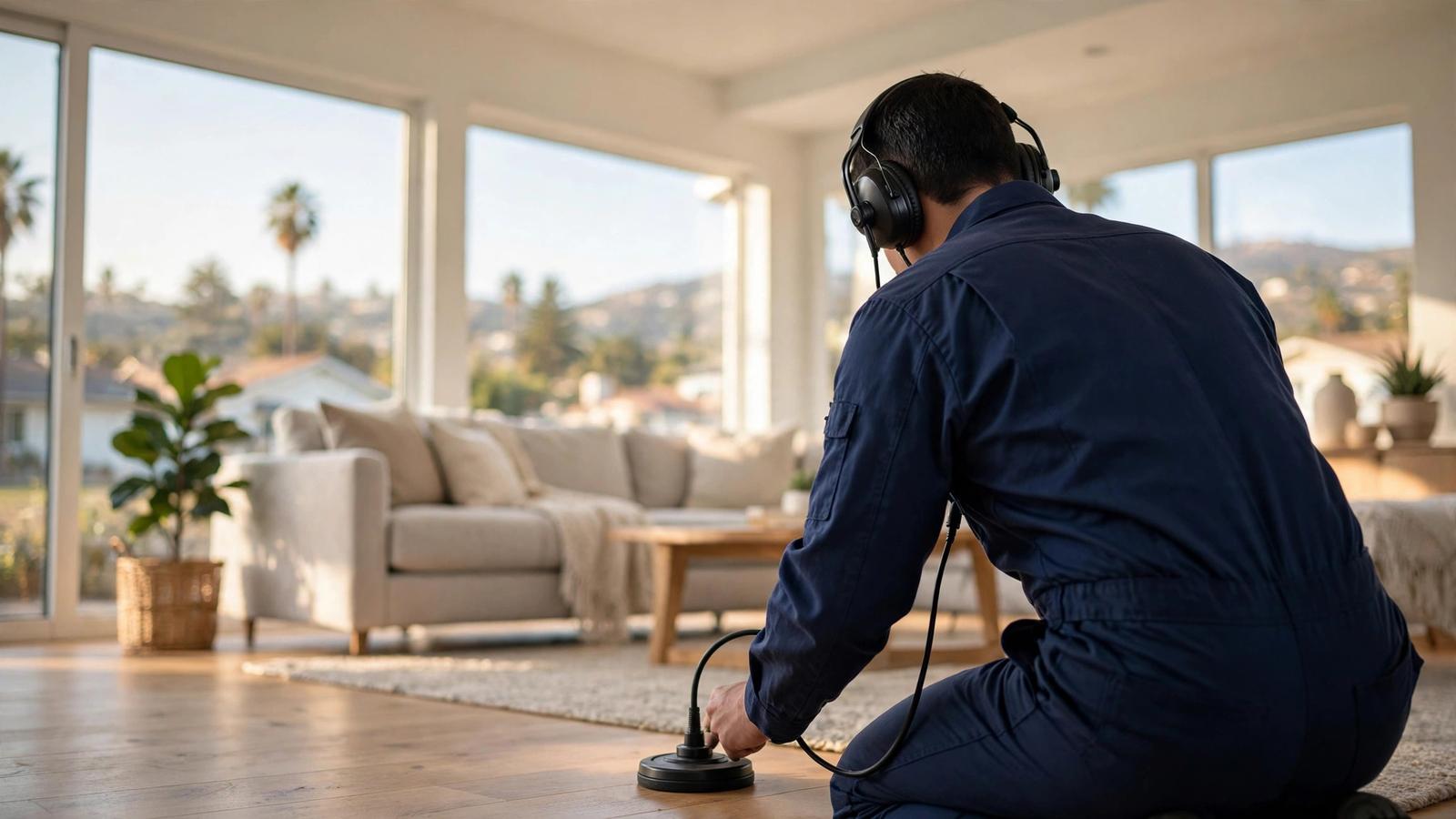
California homes have a plumbing personality all their own. Slab-on-grade foundations are everywhere, which means supply lines often run beneath concrete instead of through an accessible crawlspace. Irrigation systems crisscross most Baker yards, pools are common, and older neighborhoods still carry original galvanized or polybutylene piping that tends to fail from the inside out.
That mix shapes how leaks get found here. A wet patch in the yard might be irrigation, a supply line, or a pool line, and each demands a different test. Our leak detection approach for Baker starts by ruling things out in the right order: meter behavior, line isolation, then targeted instruments, so nobody pays to chase the wrong system. Across the area's 1 ZIP code, we read these California-specific patterns every week, and recognizing them quickly is half the job.
Leak Detection Notes for Baker Homes
Baker is a Mojave Desert town of older desert homes and small commercial buildings along the highway, built for extreme heat and very low rainfall. Desert conditions define its leak work: hard water scales pipe interiors, intense summer heat stresses exposed fittings and irrigation parts, and sandy, fast draining soils swallow a slow loss without ever showing a puddle. Older homes carry aging pipe that has spent decades in that hard water.
In the desert, the meter is the most honest witness, because the ground hides almost everything else. Baker homeowners should watch for a dial that creeps with everything closed, a bill that climbs without a household change, and a patch of ground that stays damp or green while the surrounding desert stays dry. Testing the house apart from the yard at the meter will usually show where the search should begin.
Leak Detection Services in Baker
Specialized detection for every kind of leak, see all 15 services.

Commercial Leak Detection
Commercial leak detection is the location of hidden water leaks in non-residential properties: office building…
Learn more →
Irrigation & Sprinkler Leak Detection
Irrigation and sprinkler leak detection is the process of finding water losses in landscape watering systems:…
Learn more →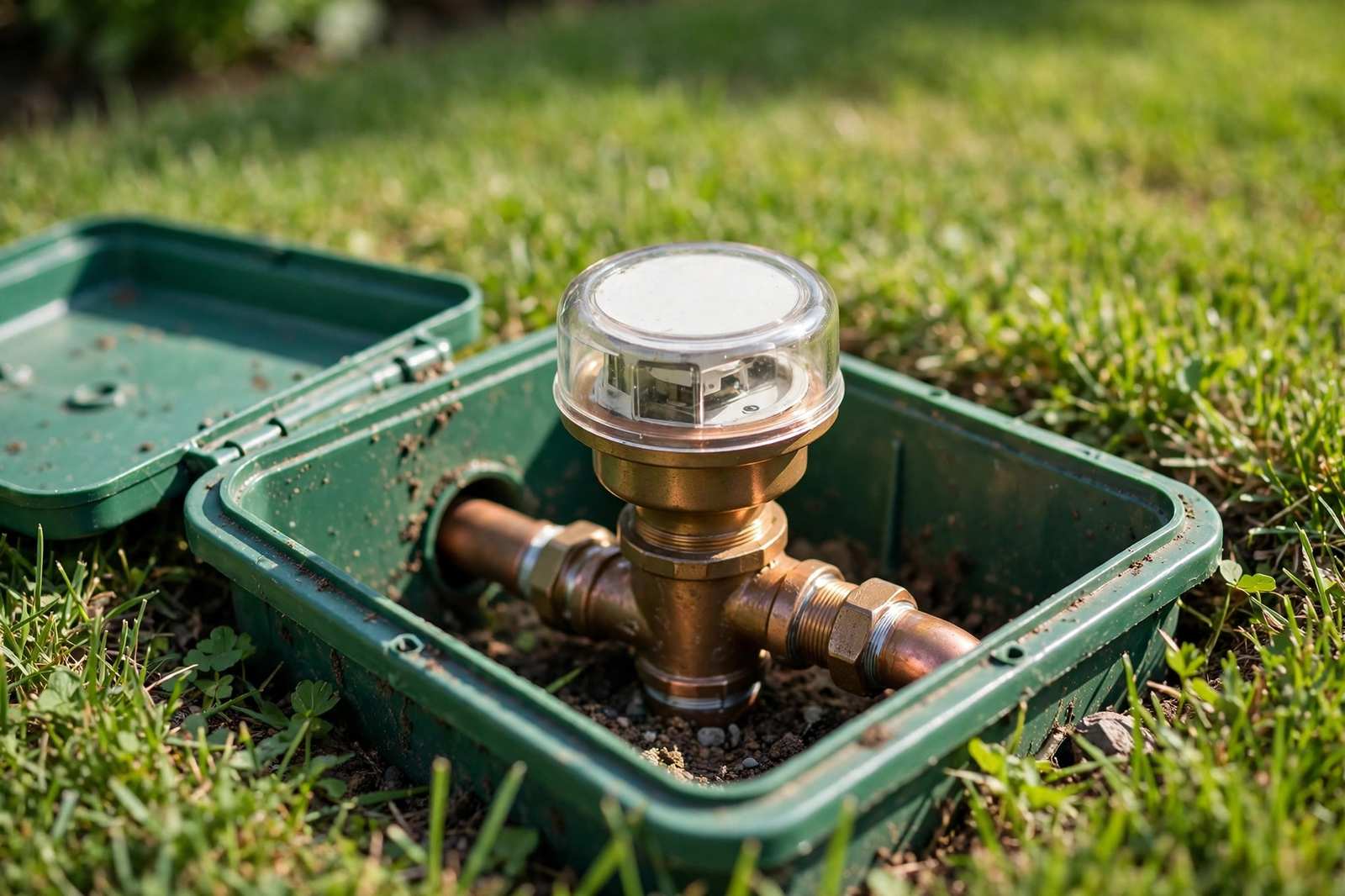
Water Meter Leak Detection
Water meter leak detection is the use of your water meter as a diagnostic instrument. That unassuming dial or…
Learn more →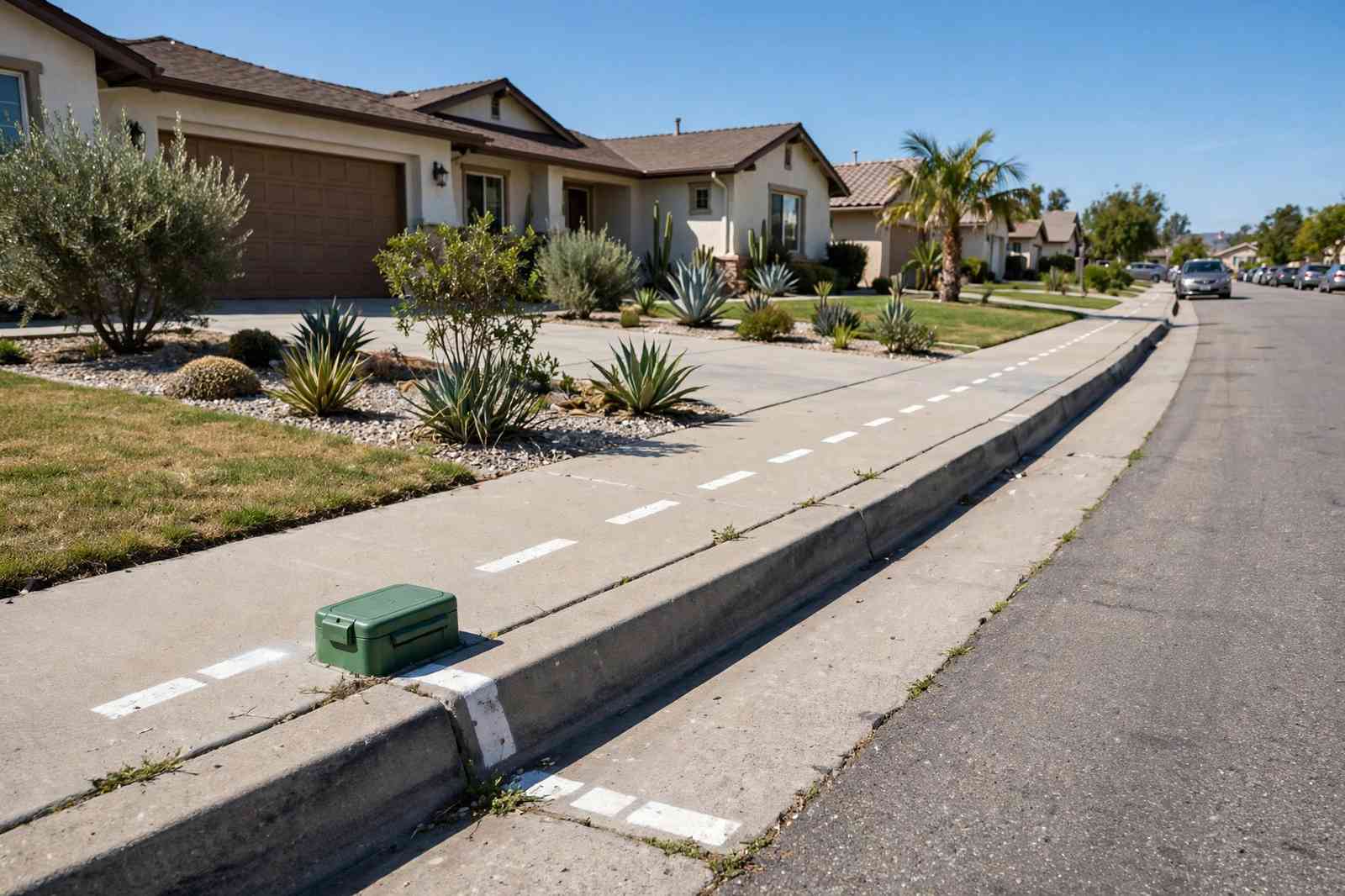
Water Service Line Leak Detection
Water service line leak detection targets one specific pipe: the pressurized line running from the street's wa…
Learn more →Signs You May Need Leak Detection in Baker
Not every leak happens indoors. Between irrigation systems, pool plumbing, and main service lines, Baker properties have plenty of buried water lines, and outdoor leaks can waste enormous volumes before anyone notices, because there's no wall to stain and no floor to warp. Outdoor warning signs include:
- A pool losing water faster than evaporation can explain
- Soggy or spongy lawn areas that never seem to dry out
- One patch of grass growing noticeably faster and greener than the rest
- Water pooling near the foundation or along walkways
- The meter spinning with the house shut off but irrigation valves open
- Hissing or running water audible near hose bibs or valve boxes
- Settling or cracking in driveways and patios, from soil washing away underneath
Outdoor leaks get their own toolkit, line tracing, pressure testing, and acoustic equipment tuned for soil. If your Baker yard is telling this kind of story, a targeted outdoor inspection will sort irrigation trouble from a supply-line break without digging up the whole property.
How We Find Leaks in Baker
Half the battle with a buried leak is knowing where the pipe even runs. Electronic line tracing solves that: a signal is induced onto the pipe, and a receiver above ground follows it, mapping the line's exact path and depth. On Baker properties where original plumbing plans are long gone, this map is what makes everything else possible, you can't pinpoint a break on a line you can't find.
Once the path is known, moisture meters take over the confirmation work. Pin and pinless meters measure moisture content in drywall, wood, and concrete, drawing a contour map of the wet zone that shows both the epicenter and how far water has traveled. For drain-side problems, shower pans, tub overflows, toilet bases, dye testing is the simple, decisive tool: colored dye goes in the fixture, and if it appears where it shouldn't, the path is proven.
This is non-invasive leak detection done properly: confirm before you cut. Mapping the line, measuring the moisture, and proving the path with dye means the repair crew opens exactly the right spot, and nothing else. That discipline is the difference between a one-day fix and a week of exploratory demolition.
What a Leak Detection Visit Looks Like
The visit works best when you know your role in it. Here's the flow:
- Before we arrive: clear access to the water heater, main shutoff, and any stained or suspect areas, and note when you first saw symptoms.
- Isolation tests: the technician shuts off individual lines and watches the meter, determining whether the leak is on the hot side, cold side, or a specific branch.
- Instrument sweep: acoustic and thermal gear scan the narrowed zone, converging on the break's location.
- Precision confirmation: if the location needs to be tighter, common with slab leaks, tracer gas or line tracing refines it to inches.
- Written findings: you get the confirmed location, marked and documented, ready to hand to your repair plumber.
Preparation takes ten minutes and pays off in a faster, more accurate visit. Baker homeowners who clear access and jot down their symptom history consistently get the quickest pinpoint results from their leak detection visit.
Areas We Serve in Baker
Our technicians provide leak detection throughout Baker, California, covering 1 zip code:
Show the zip code we serve in Baker
- 92309
Nearby Cities We Serve
Also serving neighboring communities around Baker, see all 988 California cities.
Why Homeowners in Baker Call Us
What sets a leak detection visit apart is what happens after the instruments come out: certainty. Our process is built to confirm, not assume, each reading is cross-checked with a second method before a location is marked, so the mark on your floor is a promise your plumber can trust. Because we specialize in detection only and never sell repairs, there's no incentive to exaggerate or invent problems. Add same-day availability, licensed and insured technicians, and full coverage across California including Baker, and you get answers you can act on, fast, honest, and precise.